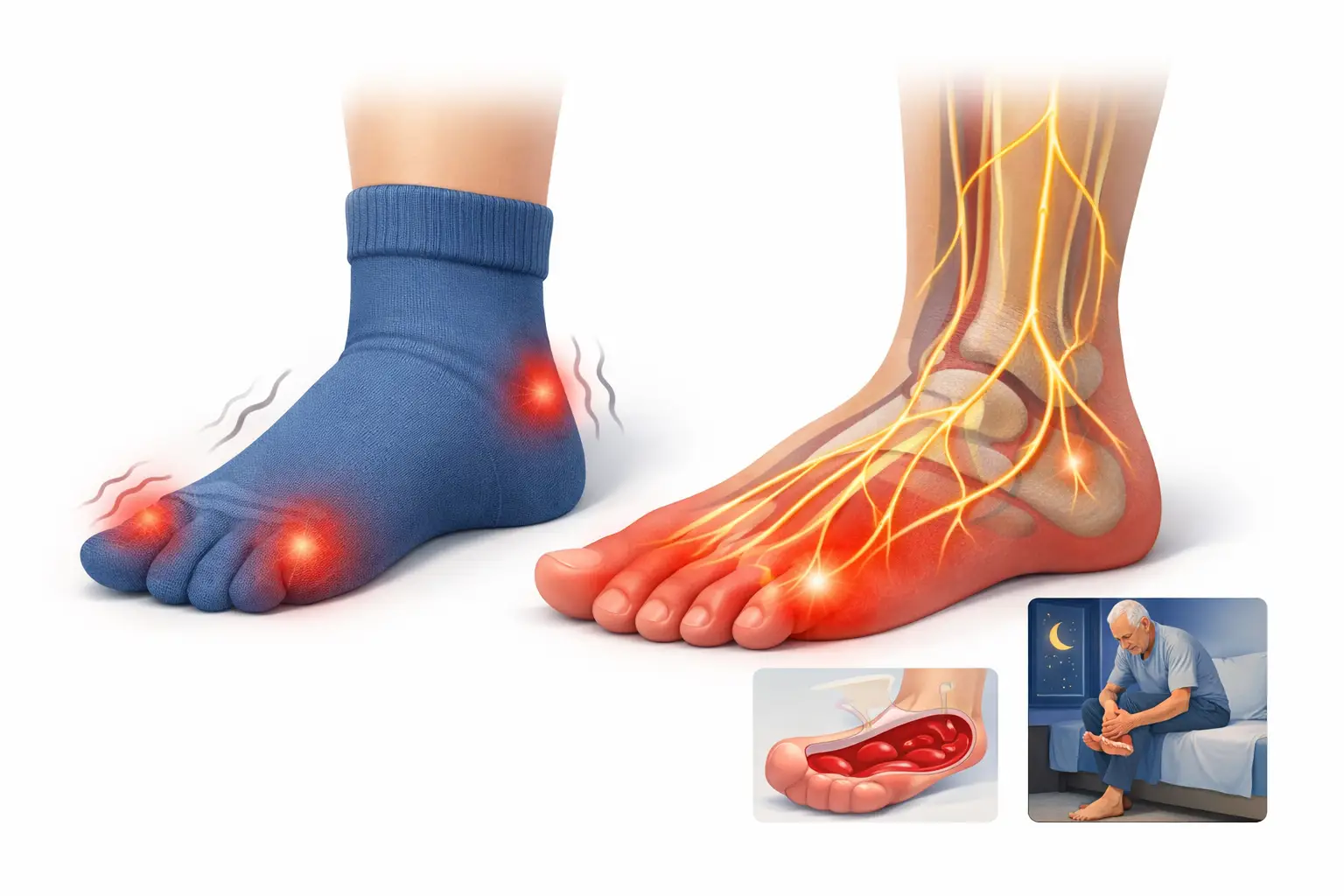
Socks can hurt your feet because of tight elastic, toe seams, rough fabric, swelling, skin irritation, foot shape changes, or increased nerve sensitivity. When normal touch from socks feels painful, burning, or hard to tolerate, it may be related to allodynia, peripheral neuropathy, diabetes, vitamin B12 deficiency, medication effects, or circulation problems. Persistent, worsening, one-sided, or unexplained symptoms should be discussed with a healthcare professional.
If you have ever thought, why do socks hurt my feet, the problem is usually not the sock alone. For many adults, especially after 45, sock discomfort can be an early clue that the skin, nerves, circulation, or foot structure has become more sensitive than it used to be. A seam that once felt harmless may now burn, itch, pinch, or leave a deep mark. That change is worth paying attention to.
Sock pain is a symptom, not a diagnosis. In some people it comes down to fit and fabric. In others, it reflects irritated nerves, swelling, reduced circulation, skin inflammation, or pressure from bunions, hammertoes, and other structural changes. The key is to look at the pattern, not just the sock.
Why do socks hurt my feet? Start with the type of pain
The first useful question is what “hurt” means in your case. Some people feel tightness around the ankle or calf. Others notice burning on the top of the foot, tenderness at the toes, itching under the fabric, or pain from the seam rubbing one exact spot. Those details matter because they point to different causes.
A tight, squeezing feeling often suggests compression, swelling, or a sock band that is too restrictive for your current foot and leg shape. Burning, tingling, pins-and-needles, or unusual sensitivity can suggest nerve irritation. Itching or rash raises the possibility of dry skin, eczema, athlete’s foot, or contact irritation from dyes or fibers. Pain limited to bunions, curled toes, or toenails may be more about pressure and shoe fit than about the sock itself.
This is one reason some people say socks hurt, while barefoot they feel somewhat better. The fabric may not be the root problem. It may simply be the thing that makes an underlying issue more noticeable.
Possible Reasons Socks Hurt Your Feet
| Possible Cause | Why Socks May Hurt | Clues to Notice |
|---|---|---|
| Tight elastic | Compresses skin or swollen tissue. | Deep sock marks, tightness around the ankle. |
| Toe seams | Rubs sensitive toes or joints. | Pain across the toes, worse with certain socks. |
| Rough fabric | Irritates dry or sensitive skin. | Itching, stinging, redness. |
| Skin irritation | Inflamed skin reacts to fabric. | Rash, peeling, cracks, athlete’s foot signs. |
| Swelling | Socks feel tighter as the day goes on. | Ankle marks, heaviness, puffy feet. |
| Nerve sensitivity | Normal touch feels painful. | Burning, tingling, numbness, sensitivity. |
| Peripheral neuropathy | Damaged nerves misread touch signals. | Symptoms in both feet, worse at night. |
| B12 deficiency | Low B12 may affect nerve function. | Tingling, numbness, fatigue, balance issues. |
| Circulation problems | Pressure feels worse with poor blood flow. | Cold feet, color changes, cramping. |
This table is educational and does not diagnose the cause of sock-related foot pain. Persistent, worsening, one-sided, painful, or circulation-related symptoms should be discussed with a healthcare professional.
Nerve sensitivity is a common reason socks feel painful
One of the most common explanations for sock discomfort is increased nerve sensitivity. When sensory nerves become irritated, the brain can interpret normal touch as unpleasant or even painful. Doctors sometimes call this allodynia, which means a stimulus that should not hurt – such as fabric brushing the skin – starts to feel painful.
This can happen with peripheral nerve irritation from several causes, including diabetes, alcohol-related nerve damage, medication effects, thyroid problems, and nutritional deficiencies such as low vitamin B12. Not everyone with a B12 deficiency develops foot symptoms, but B12 plays an important role in nerve function. In some adults, tingling, numbness, burning, or unusual sensitivity in the feet can be part of the picture.
That does not mean every case of sock pain is a vitamin problem. It does mean that if socks suddenly become hard to tolerate along with numbness, balance changes, or persistent tingling, it is reasonable to discuss nerve health with a clinician rather than assuming you just need softer fabric.
Tight elastic, seams, and bunching can create pressure points
Sometimes the explanation is more mechanical than medical. Socks that are too small, too tight at the cuff, or poorly shaped for the foot can create concentrated pressure in places that are already vulnerable.
The elastic band is a frequent issue. If it leaves deep indentations, the sock may be compressing swollen tissue or pressing on skin that has become fragile with age. Compression-style socks can be useful for some people, but the level of compression matters. A garment designed for medical use should fit correctly. Wearing a random tight sock for long hours is different from wearing properly selected compression hosiery.
Seams can also be a problem, especially across the toes. If you have prominent joints, toenail thickening, hammertoes, or bunions, even a modest seam can rub enough to cause pain. Bunching under the arch or heel can create friction that feels minor at first but worsens throughout the day.
Material matters too. Wool, synthetic blends, and rougher knits can bother people with dry skin or sensory sensitivity. In contrast, a smoother, cushioned, seam-minimized sock may reduce irritation.
Skin conditions can make normal socks feel intolerable
A healthy skin barrier usually tolerates everyday fabric without much trouble. When the skin becomes dry, inflamed, cracked, or infected, socks can suddenly feel abrasive.
Common contributors include eczema, contact dermatitis, athlete’s foot, and severe dryness. Older adults often notice thinner, drier skin on the feet, especially in winter or after frequent hot showers. Cracks around the heels or toes can make any fabric feel sharp. Fungal infections may cause scaling, itching, and raw skin between the toes, where socks trap warmth and moisture.
Some people also react to laundry detergents, fabric softeners, sock dyes, or specific fibers. In that case, the feet may itch, sting, or develop a rash only when certain socks are worn. If one brand or fabric consistently causes trouble while another does not, irritation or allergy becomes more likely.
Swelling and circulation changes can make socks feel too tight
Feet and lower legs commonly change with age. Mild swelling from long periods of sitting, standing, hot weather, venous insufficiency, heart or kidney issues, or certain medications can make socks feel restrictive even if the labeled size is correct.
Reduced circulation can also change how the feet perceive pressure and temperature. Some people with circulation problems describe cold feet, cramping, color changes, or discomfort from anything snug around the ankle. A sock band may not cause the circulation issue, but it can draw attention to it.
If your socks leave pronounced marks, your feet swell as the day goes on, or one leg is more swollen than the other, that deserves closer attention. Sudden swelling, severe pain, pale or blue color, or a cold foot should not be brushed off as a clothing issue.
Foot shape changes with age, and socks may stop fitting the same way
Feet are not static. Over time, arches can flatten, toes can drift, joints can stiffen, and soft tissues can change. A sock that fit well ten years ago may now pull across the toes, press on a bunion, or twist around the forefoot.
This becomes even more noticeable when shoes are also snug. Many cases of “sock pain” are really a combination of sock pressure plus shoe pressure. The sock slightly increases bulk, the shoe squeezes the foot, and the result is pain at the end of the day. If the discomfort appears only when socks and shoes are worn together, footwear deserves equal scrutiny.
Socks Hurt vs Shoes Hurt vs Bedsheets Hurt
Socks hurting your feet is not always the same as shoes hurting your feet or bedsheets bothering your skin.
If socks hurt
If socks hurt, the issue may involve toe seams, elastic pressure, rough fabric, swelling, skin irritation, or pain from light touch. This article focuses on sock-related sensitivity.
If shoes hurt
If shoes hurt, the problem may be more related to shoe fit, narrow toe boxes, pressure points, bunions, hammertoes, arch changes, or footwear that compresses the foot.
If bedsheets hurt
If bedsheets hurt, light-touch sensitivity may be more noticeable at night. This can overlap with nerve sensitivity or allodynia, especially when even soft fabric feels painful.
The pattern matters
Pain only with one type of sock suggests fit or fabric. Pain from many types of light touch, including socks, sheets, and shoes, may point more toward nerve sensitivity.
What to check at home before assuming a bigger problem
A few practical checks can help clarify what is happening. Look for redness, indentations, rash, scaling, blisters, cracks, swelling, or changes in skin color. Notice whether symptoms are worse with one pair of socks, one pair of shoes, or one time of day.
Also pay attention to whether the sensation is limited to contact or continues after the sock comes off. If the feet keep burning, tingling, or feeling numb even when barefoot, nerve-related causes become more likely. If discomfort improves quickly once the sock is removed, fit, fabric, or swelling may be playing a larger role.
For many people, the most useful trial is simple: switch to a non-binding, soft, well-cushioned, seam-minimized sock in the correct size for several days. If that change makes a major difference, the problem may be largely mechanical or skin-related. If it does not, it is worth thinking more broadly.
When sock pain may point to a health issue
Signs the nerves may be involved
If socks feel painful along with numbness, tingling, burning, balance problems, or reduced ability to sense temperature, nerve irritation should be on the list of possibilities. Adults researching nerve-health support often wonder about nutrients, and vitamin B12 is one of the better-known ones because deficiency can affect the nervous system. Still, self-diagnosing based on symptoms alone is risky. Similar symptoms can come from several different conditions.
Signs circulation or swelling may be involved
If you notice heavy legs, ankle swelling, color changes, leg fatigue, or worsening pressure marks later in the day, fluid retention or vascular issues may be contributing. That is especially relevant if the discomfort centers around the sock band rather than the foot surface.
Signs a skin problem may be involved
If there is itching, peeling, rash, cracking, or tenderness in one localized area, skin irritation or infection becomes more likely than a nerve problem.
Red Flags: When Sock Pain Needs Medical Attention
Sock discomfort is often related to fit, fabric, skin irritation, or pressure. However, some patterns may suggest nerve, circulation, infection, or swelling problems that should be evaluated.
- New numbness, burning, tingling, or weakness
- Foot wounds, blisters, ulcers, or signs of infection
- One foot or one leg becoming suddenly swollen
- Pale, blue, cold, or painful feet
- Pain that wakes you at night or keeps getting worse
- Diabetes with new foot pain or reduced sensation
When to seek medical advice
Persistent foot pain from socks is not always urgent, but some patterns should prompt medical evaluation. These include new numbness, burning, weakness, foot wounds, symptoms that disturb sleep, significant swelling, and color or temperature changes in the foot. People with diabetes should be particularly cautious, because minor friction problems can progress more easily when sensation is reduced.
A clinician may look at circulation, skin health, shoe fit, and possible nerve causes. Depending on the bigger picture, they may also consider lab work for issues such as vitamin B12 status, blood sugar, thyroid function, or other contributors to neuropathic symptoms.
What to Ask Your Doctor About Sock-Related Foot Pain
If socks suddenly feel painful or uncomfortable, it can help to bring specific details to your appointment. Your clinician may want to know whether the discomfort is related to pressure, skin irritation, swelling, circulation, or nerve sensitivity.
- Could this be allodynia or another sign of nerve sensitivity?
- Should I be checked for peripheral neuropathy, diabetes, vitamin B12 deficiency, or thyroid problems?
- Could swelling or circulation changes be making socks feel too tight?
- Do my shoes or foot shape changes suggest pressure points?
- Should I see a podiatrist, neurologist, or vascular specialist?
Practical ways to reduce sock-related foot pain
Choose socks with a smooth interior, minimal toe seams, and a non-binding cuff. Make sure the size matches your actual foot size rather than the size you used years ago. If swelling is common, check fit later in the day when feet are at their largest.
Keep the skin moisturized, but avoid leaving excess cream between the toes where moisture can build up. Review your shoes as carefully as your socks, since a narrow toe box can turn a tolerable sock into a painful one. And if you suspect nerve sensitivity, do not just keep buying softer socks indefinitely. The better next step may be a proper medical conversation about what changed and why.
Sometimes the answer to why socks hurt your feet is simple. Sometimes it is an early signal that your feet need more attention than they used to. Either way, the goal is not to tolerate it – it is to understand what your body may be trying to tell you.
Frequently Asked Questions
Why do socks hurt my feet?
Socks can hurt because of tight elastic, seams, rough fabric, dry skin, swelling, foot shape changes, or nerve sensitivity. If the pain feels burning, tingling, or continues after removing socks, nerves may be involved.
Can neuropathy make socks painful?
Yes. Neuropathy can make normal touch feel uncomfortable or painful in some people. This may happen with burning, tingling, numbness, cold sensations, or sensitivity to fabric.
What is allodynia in the feet?
Allodynia means pain from something that normally should not hurt, such as socks, bedsheets, or light touch. It can happen when sensory nerves become irritated or overly sensitive.
Can low B12 make my feet sensitive to socks?
Low vitamin B12 can affect nerve function and may contribute to tingling, numbness, burning, balance changes, or unusual foot sensitivity in some people. Testing is better than guessing. NIH ODS states that vitamin B12 is required for nervous system function and healthy red blood cell formation.
Should I worry if socks suddenly hurt my feet?
A one-time issue may be from tight socks or skin irritation. Repeated, worsening, one-sided, burning, numb, or weakness-related symptoms should be discussed with a healthcare professional.
Medical Disclaimer:
This content is for educational purposes only and does not diagnose, treat, cure, or replace professional medical care. Vitamin B12 deficiency, neuropathy symptoms, nerve pain, numbness, tingling, burning feet, balance problems, fatigue, and related health concerns can have many possible causes, including diabetes, vitamin deficiencies, medication effects, alcohol exposure, autoimmune conditions, infections, circulation problems, gastrointestinal or absorption issues, spinal conditions, or nerve compression.
Information about supplements, nutrition, lifestyle, sleep, movement, testing, or symptom support should not be used as a substitute for evaluation by a qualified healthcare professional. Supplements may not be appropriate for everyone and may interact with medications or medical conditions.
New, worsening, spreading, severe, one-sided, or unexplained symptoms — including numbness, weakness, balance problems, falls, wounds, foot ulcers, skin color changes, severe pain, chest pain, shortness of breath, bowel or bladder changes, facial drooping, trouble speaking, confusion, or sudden neurologic symptoms — should be discussed with a qualified healthcare professional or emergency service promptly.

- Can Low B12 Cause Dizziness? - July 9, 2026
- B12 Deficiency and Cracked Corners of the Mouth - July 9, 2026
- Can Low B12 Cause Dry Mouth? - July 8, 2026