Quick Answer:
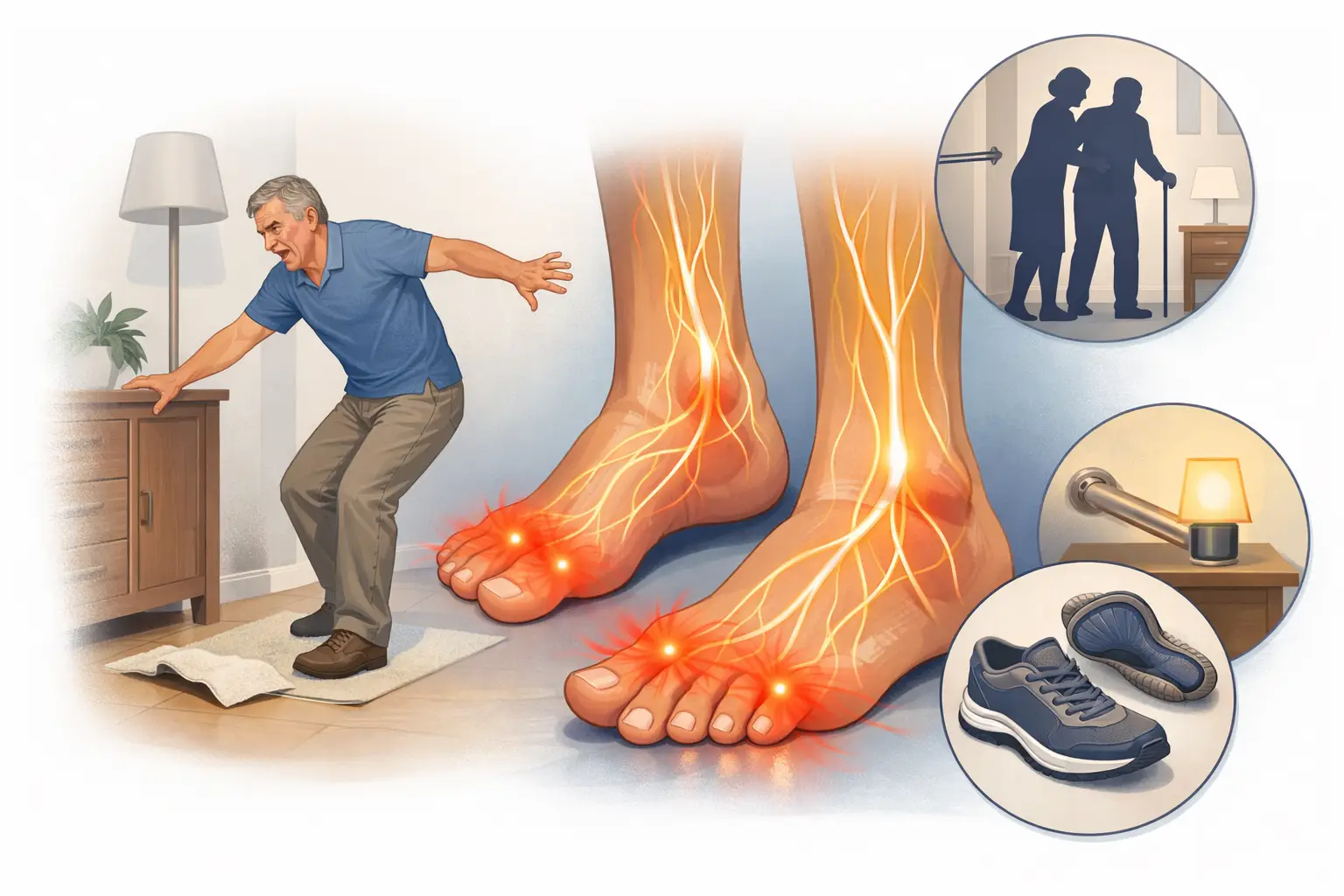
Peripheral neuropathy can increase fall risk by reducing foot sensation, balance feedback, ankle control, and walking confidence. Numbness, burning feet, weakness, poor position sense, and dizziness can make stairs, dark rooms, uneven ground, and nighttime walking more dangerous. Fall prevention usually starts with safer footwear, better lighting, removing home hazards, medication review, and targeted balance or strength training.
A small loss of sensation in the feet can create a big change in balance. That is why fall prevention peripheral neuropathy concerns deserve attention early, not after a close call. For adults over 45, numbness, tingling, burning, or reduced foot awareness can quietly affect walking, stairs, nighttime trips to the bathroom, and even standing up from a chair.
Peripheral neuropathy does not affect everyone the same way. Some people mainly notice burning pain. Others feel numbness, weakness, or a “walking on cotton” sensation. From a fall-risk standpoint, numbness and poor position sense are especially relevant because the brain gets less reliable feedback from the feet and ankles. When that sensory input drops, balance can become slower and less accurate, particularly on uneven ground or in dim lighting.
Why peripheral neuropathy raises fall risk
Walking is partly automatic, but it depends on constant information from the feet, eyes, inner ear, muscles, and joints. Peripheral neuropathy can disrupt that system by reducing feeling in the soles, changing pressure awareness, and sometimes weakening the small muscles that help stabilize the foot.
The result is often subtle at first. You may catch your toe on a rug, feel unsteady when turning quickly, or avoid dark hallways because your footing feels uncertain. Some people widen their stance or look down more often while walking. Those adjustments can help temporarily, but they also signal that balance is under more strain.
Pain can add a second problem. If your feet hurt, you may change the way you walk to avoid pressure. That altered gait can shorten stride length, reduce ankle movement, and make tripping more likely. Certain medications used for nerve pain may also cause dizziness or drowsiness in some people, which further increases fall risk.
Fall prevention for peripheral neuropathy starts with identifying your weak points
Common Fall Risks in Peripheral Neuropathy
| Risk Factor | Why It Matters | Practical Step |
|---|---|---|
| Foot Numbness | Reduces awareness of the floor, steps, and obstacles. | Use stable shoes and avoid walking barefoot. |
| Poor Lighting | Makes it harder to compensate for reduced foot sensation. | Add night lights in hallways, bathrooms, and stairs. |
| Loose Rugs | Can catch the foot and increase tripping risk. | Remove loose rugs or secure them firmly. |
| Weak Ankles or Legs | Reduces stability during turns, stairs, and uneven surfaces. | Ask about physical therapy or balance training. |
| Dizziness or Drowsiness | May worsen reaction time and steadiness. | Review medications with a clinician or pharmacist. |
The most useful fall-prevention strategy is not a generic checklist. It is figuring out where your personal risk shows up. For one person, the main issue is poor sensation at night. For another, it is leg weakness getting out of a car. For someone else, it is balance loss on curbs, grass, or stairs.
A few signs suggest that a more focused plan is needed. These include recent stumbles, needing furniture for support, difficulty walking in the dark, feeling unsteady when closing your eyes, trouble sensing the floor under your feet, and avoiding certain surfaces because they feel unsafe. If any of those sound familiar, the goal is not panic. It is early correction.
A clinical review also matters because the word neuropathy describes a pattern, not a single cause. Vitamin B12 deficiency, diabetes, alcohol-related nerve injury, medication effects, thyroid disorders, and other conditions can contribute. If neuropathy symptoms are new, worsening, or unexplained, a medical evaluation is the appropriate next step. That is especially true if symptoms are asymmetric, rapidly progressive, or paired with marked weakness.
Key Takeaways
- Peripheral neuropathy can reduce foot awareness and make balance less reliable.
- Numbness and poor position sense are especially important for fall risk.
- Loose rugs, poor lighting, slick floors, and unsafe footwear can increase risk.
- Strength and balance training may help improve stability and confidence.
- Medication review matters if dizziness, drowsiness, or lightheadedness are present.
- New, worsening, or one-sided symptoms should be medically evaluated.
The home is where many falls happen
Most fall prevention advice sounds obvious until you notice how often the same hazards appear in real homes. Neuropathy changes how well you detect edges, texture shifts, and small obstacles. A low rug corner or poorly lit step becomes more than an annoyance.
Lighting is one of the highest-value fixes. Hallways, bathrooms, entryways, and staircases should be bright enough that floor changes are easy to see. Motion-sensor night lights can help with early-morning walking, when balance and alertness may be reduced.
Floor safety matters just as much. Loose rugs, cluttered walkways, slick bathroom surfaces, and electrical cords across traffic areas should be addressed first. Handrails on both sides of stairs are helpful when available, and grab bars in showers or near toilets can add stability during position changes.
Furniture layout deserves attention too. If you frequently sidestep around a coffee table or squeeze through narrow spaces, your home may be asking too much of your balance system. The safer setup is the one that lets you walk normally without twisting, rushing, or stepping over objects.
Footwear can help or hurt
People with neuropathy often focus on comfort, which is understandable, but comfort alone is not enough for fall prevention. The best shoe for someone at higher fall risk is stable, secure, and predictable.
A good everyday shoe usually has a firm heel counter, low heel height, non-slip outsole, and a fit that holds the foot without squeezing it. Slip-on shoes, floppy slippers, and worn-out athletic shoes can be risky because they reduce stability or increase the chance of catching the toe. Walking barefoot may also be less safe if sensation is reduced.
Socks matter more than many people realize. Thick, slippery socks on smooth floors can create a hidden hazard. If feet run cold and socks are necessary indoors, grippy options are generally safer than standard dress socks on wood or tile.
For readers interested in nutritional support for nerve health, it is reasonable to ask whether deficiencies are part of the picture. Vitamin B12 is one example because low levels can contribute to neuropathy symptoms in some adults, especially with certain dietary patterns, stomach issues, or medication use. But supplementation should be guided by the underlying cause and lab context, not by the assumption that all numbness is a B12 problem.
According to the NIH Office of Dietary Supplements, vitamin B12 is essential for neurological function, and low levels may contribute to numbness, tingling, balance problems, and other nerve-related symptoms.
Strength and balance training are often underused
One of the most practical ways to lower fall risk is targeted movement training. This is not about intense workouts. It is about improving the systems that neuropathy tends to weaken: ankle control, leg strength, weight shifting, reaction time, and balance confidence.
Physical therapy can be particularly useful when neuropathy affects gait or when someone has already started limiting activity due to fear of falling. A therapist can watch how you move, identify specific deficits, and tailor exercises to your actual risk pattern. That may include sit-to-stand practice, step training, calf and hip strengthening, tandem balance work, or strategies for turning safely.
Regular walking can still be valuable, but it is not always enough by itself. Someone may walk daily and still have poor single-leg stability, weak ankle reactions, or unsafe stair mechanics. A structured balance program addresses those gaps more directly.
If pain or numbness makes exercise feel intimidating, the answer is usually modification, not abandonment. Supportive surfaces, stable shoes, nearby counter support, and gradual progression often make movement safer and more realistic.
Medication review and medical follow-up matter
Fall prevention for peripheral neuropathy is not only about the environment. It also involves reviewing what may be impairing steadiness from the inside. Sedating medications, sleep aids, some pain medicines, and combinations of blood pressure drugs can contribute to dizziness, slower reactions, or orthostatic lightheadedness.
That does not mean people should stop medications on their own. It means medication review is part of fall-risk reduction, especially after a recent fall or near-fall. Vision checks, foot exams, and discussion of symptom progression are also important. In some cases, orthotics, assistive devices, or a cane may be recommended, but they should be fitted and taught properly. An incorrectly used cane can create a false sense of security.
Adults with diabetes-related neuropathy should also pay attention to blood sugar management as part of the broader clinical picture. While lifestyle and medical care support overall nerve health, no supplement or self-care strategy should be framed as a cure for neuropathy.
When to take symptoms more seriously
Not every episode of imbalance is an emergency, but some patterns need prompt medical attention. Sudden weakness, rapid worsening numbness, new falls without explanation, fainting, severe dizziness, foot drop, or significant one-sided symptoms should not be brushed off as “just neuropathy.” The same applies to sores on numb feet, since reduced sensation can delay detection and healing.
For many readers, the bigger issue is that symptoms build gradually and become normalized. You adapt. You slow down. You avoid stairs. You keep one hand on the wall at night. Those workarounds may seem minor, but they often mean the risk is already affecting daily life.
A better approach is to act while the changes are still manageable. Improve lighting. Replace unsafe footwear. Remove obvious hazards. Ask for a medication review. Consider a balance assessment. If deficiency, diabetes, or another underlying condition is possible, get it evaluated rather than guessing.
Peripheral neuropathy does not guarantee a fall, but it does narrow the margin for error. The practical goal is not perfect balance. It is creating enough sensory support, strength, and environmental safety that ordinary movement stays ordinary.
⚠ Important
A fall, near-fall, sudden weakness, rapidly worsening numbness, foot drop, fainting, or significant one-sided symptoms should not be dismissed as normal neuropathy. These signs deserve prompt medical evaluation because they may point to a more urgent neurological, metabolic, medication-related, or balance-related problem.
Frequently Asked Questions
Can peripheral neuropathy increase fall risk?
Yes. Peripheral neuropathy can increase fall risk by reducing foot sensation, balance feedback, ankle control, and awareness of the floor.
What neuropathy symptoms are most concerning for falls?
Numbness, poor position sense, leg weakness, foot drop, dizziness, poor balance, and trouble walking in the dark are especially important warning signs.
What home changes can help prevent falls?
Helpful changes include adding night lights, removing loose rugs, clearing walkways, using grab bars, improving stair safety, and keeping floors dry and uncluttered.
Can vitamin B12 deficiency affect balance?
Yes. Vitamin B12 deficiency may contribute to numbness, tingling, balance problems, weakness, and other neurological symptoms in some people.
When should I see a doctor about neuropathy and falls?
Medical evaluation is recommended if you have recent falls, near-falls, worsening numbness, weakness, dizziness, foot drop, or trouble walking safely.
Medical Disclaimer: The information provided in this article is for educational purposes only and is not intended as medical advice. Dietary supplements are not a replacement for professional medical diagnosis or treatment. Always consult with a qualified healthcare professional before starting any new supplement, especially if you have pre-existing medical conditions or are taking prescription medications. Individual results may vary.

- Can Low B12 Cause Dizziness? - July 9, 2026
- B12 Deficiency and Cracked Corners of the Mouth - July 9, 2026
- Can Low B12 Cause Dry Mouth? - July 8, 2026