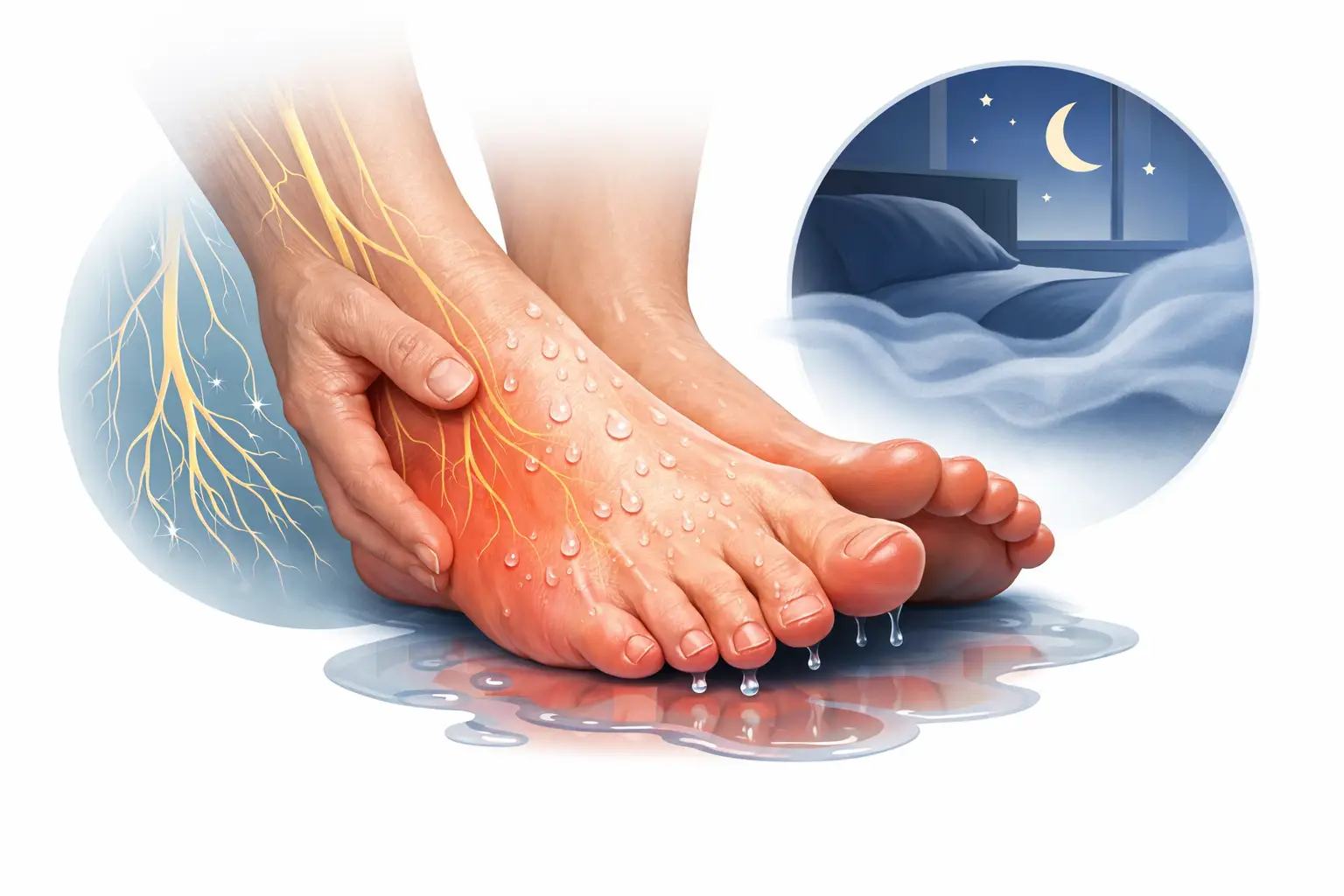
If your feet feel wet when they are dry, the sensation is often caused by abnormal nerve signaling rather than actual moisture. This can happen with temporary nerve pressure, peripheral neuropathy, vitamin B12 deficiency, circulation changes, skin irritation, medication effects, or anxiety. If the feeling keeps returning, spreads, or comes with numbness, burning, weakness, or balance problems, it should be discussed with a healthcare professional.
You take off your shoes, touch your socks, and everything feels dry – yet your feet still seem damp, cold, or as if water is running across the skin. If you have been asking, “why do my feet feel wet when they are dry,” the sensation is often linked to how nerves are sending signals rather than to actual moisture on the skin.
That distinction matters. A false wet feeling can be harmless and temporary, but it can also point to nerve irritation, compression, circulation changes, medication effects, or an underlying deficiency that deserves a closer look. For adults over 45, especially those also noticing tingling, numbness, burning, or balance changes, this is a symptom worth paying attention to.
Why do my feet feel wet when they are dry?
The simplest explanation is sensory misfiring. Your brain does not feel the foot directly – it interprets signals sent by nerves in the feet, legs, and spine. When those nerves become irritated or damaged, the brain can misread the signal as wetness, trickling water, coldness, buzzing, or crawling sensations.
Doctors often group these symptoms under paresthesia, which is a term for abnormal skin sensations. Some people feel pins and needles. Others feel heat, tightness, or the odd impression that their socks are damp when they are not. The exact description varies, but the mechanism is similar: the sensory system is sending inaccurate information.
That does not automatically mean serious nerve disease. It can happen after sitting awkwardly, crossing your legs, wearing tight footwear, or irritating a nerve in the lower back. But if the sensation is frequent, spreading, or paired with numbness or weakness, the cause may need medical evaluation.
Common causes of a dry foot feeling wet
Peripheral neuropathy is one of the more common explanations, especially in midlife and later adulthood. This term refers to damage or dysfunction in the peripheral nerves, often starting in the feet. Diabetes is a well-known cause, but not the only one. Alcohol overuse, thyroid problems, kidney disease, certain infections, chemotherapy, and some medications can all contribute.
Vitamin deficiencies also deserve attention, particularly vitamin B12. Low B12 can affect nerve health and may cause tingling, numbness, burning, balance issues, and unusual sensations such as coldness or wetness. Because B12 deficiency becomes more common with age, reduced stomach acid, digestive conditions, and some common medications, it is a reasonable issue to discuss with a clinician if symptoms are persistent.
Nerve compression can create similar symptoms. A pinched nerve in the lower back, tarsal tunnel syndrome near the ankle, or pressure from footwear may alter how sensory messages travel. In these cases, the wet feeling may come and go with posture, walking, or certain shoes.
Circulation changes can also confuse the picture. Poor blood flow does not usually create a true wet sensation by itself, but cold feet, color changes, cramping with walking, or heaviness can occur alongside altered nerve signaling. Some people describe the combined effect as damp, chilled, or sloshy feet even when the skin is dry.
Skin conditions are a less dramatic but still relevant possibility. Sweating episodes, fungal infections, eczema, or irritation from detergents and sock materials may leave the feet feeling strange before visible skin changes become obvious. Usually, though, skin-related causes are more likely to produce itching, redness, peeling, or actual moisture.
Anxiety and heightened body awareness can amplify sensory experiences as well. That does not mean the symptom is imaginary. It means the nervous system may be more reactive, making mild signals feel stronger, stranger, or harder to ignore.
Possible Causes of Wet-Feeling Feet
| Possible Cause | Why It Can Feel Wet | Clues to Notice |
|---|---|---|
| Temporary nerve pressure | Nerves may misfire after compression. | Happens after sitting, crossing legs, or wearing tight shoes. |
| Peripheral neuropathy | Damaged nerves may send abnormal sensory signals. | Tingling, burning, numbness, or balance changes. |
| Vitamin B12 deficiency | Low B12 may affect nerve function. | Fatigue, numbness, tingling, or balance issues. |
| Circulation changes | Coldness and altered sensation may feel damp. | Cold feet, color changes, or cramping with walking. |
| Skin irritation | Sweat, fungus, eczema, or detergents may irritate skin. | Itching, peeling, redness, or actual moisture. |
| Anxiety or stress | A reactive nervous system may amplify sensations. | Comes and goes, worse during stress or rest. |
This table is educational and does not diagnose the cause of wet-feeling feet. Repeated, worsening, one-sided, painful, or spreading symptoms should be discussed with a healthcare professional.
Wet Feeling vs Cold Feet vs Sweating
A wet feeling in the feet is not always the same as cold feet or sweaty feet. These sensations can overlap, but they often point to different possibilities.
If your feet feel wet but are dry
If your feet feel wet but the skin and socks are dry, the issue may be related to abnormal sensory signaling. In other words, the nerves may be sending confusing messages to the brain, which can be interpreted as dampness, trickling water, coldness, buzzing, or crawling sensations. This type of false wet feeling may happen with temporary nerve pressure, peripheral neuropathy, vitamin B12 deficiency, nerve compression, or other conditions that affect sensory nerves.
If your feet mainly feel cold
Cold feet are different. When the main sensation is coldness, especially with pale or bluish skin, color changes, cramping while walking, or slow warming after being in a cool environment, circulation may be part of the picture. Neuropathy can also make feet feel cold even when blood flow is normal, so cold feet do not always mean poor circulation. The pattern, skin color, pulses, and related symptoms matter.
If your feet are actually sweaty
Sweaty feet usually involve actual moisture. If your socks are damp, the skin feels moist to the touch, or there is odor, itching, peeling, or irritation, the cause may be sweating, footwear, fungal infection, eczema, or skin irritation. This is different from a nerve-related wet sensation, where the foot feels damp even though it is objectively dry.
Simple way to tell the difference
A simple way to separate them is to check what is actually happening on the skin. If the foot feels wet but your socks, skin, and shoes are dry, think more about nerve signaling. If the skin is cold, discolored, or painful with walking, circulation should be considered. If there is real moisture, itching, peeling, or odor, skin and sweating causes move higher on the list.
For adults over 45, the most important clue is whether the sensation keeps coming back or appears with other symptoms. A false wet feeling that comes with tingling, numbness, burning, weakness, balance problems, or symptoms in both feet deserves more attention than an isolated sensation that disappears quickly.
When the symptom points more strongly to nerve issues
If your feet feel wet when they are dry and you also notice tingling, burning, reduced sensation, or a feeling that you are walking on cotton, nerve involvement moves higher on the list. Symptoms that begin in both feet and gradually move upward are especially suggestive of peripheral neuropathy.
Timing matters too. Neuropathic symptoms often become more noticeable at night. Many people say their feet seem colder, wetter, or more electrically active when they are resting in bed. That pattern does not confirm a diagnosis, but it is common enough to mention during a medical visit.
Pay attention to symmetry. A sensation affecting both feet in a similar way may suggest systemic causes such as diabetes, B12 deficiency, or another metabolic issue. If the problem is mostly one-sided, doctors may think more about local nerve compression, injury, or a spinal source.
Could vitamin B12 be involved?
It could, although B12 deficiency is only one possible cause. Vitamin B12 helps support normal nerve function and blood cell formation. Low levels may develop slowly, and early symptoms can be subtle. Some people first notice fatigue or brain fog, while others notice numbness, tingling, balance changes, or unusual sensations in the feet.
Adults over 45 are not automatically deficient, but risk does increase with age. Long-term use of medications that reduce stomach acid, a history of gastrointestinal surgery, certain digestive disorders, and low intake of animal foods can all affect B12 status. Because symptoms can overlap with other conditions, testing is more useful than guessing.
This is where an evidence-based approach matters. Supplements may help if a true deficiency or inadequate intake is present, but they are not a one-size-fits-all answer for every odd foot sensation. A good workup often looks at B12 in context with blood sugar, thyroid function, medication history, alcohol use, and other neuropathy risk factors.
What to check at home before you panic
Start with what is most practical. Look at the skin closely. Check for redness, peeling, cracks, swelling, shiny skin, color changes, or signs of fungal infection. Notice whether the sensation is worse with certain shoes, after sitting, or at night.
It is also useful to ask whether the issue is truly wetness or more of a cold, tingling, trickling, or buzzing feeling. Those details help narrow the cause. A brief symptom log can be surprisingly helpful if you end up seeing a clinician.
Review recent changes too. New medications, tighter footwear, increased walking, back pain, changes in blood sugar control, or dietary changes can all be relevant. If you already know you have diabetes, prediabetes, thyroid disease, or low B12, that context should move to the front of the conversation.
Red Flags: When a Wet Feeling in the Feet Needs Faster Attention
A wet sensation in the feet is not usually an emergency by itself. However, faster medical attention is important if it appears suddenly, worsens quickly, or comes with symptoms that may suggest nerve, circulation, infection, or spinal involvement.
- New weakness in one or both legs
- Loss of balance, falls, or trouble walking
- Severe one-sided symptoms or new back pain
- Foot wounds, swelling, redness, warmth, or signs of infection
- Loss of bladder or bowel control
- Sudden numbness, confusion, facial drooping, or trouble speaking
When to see a doctor
A strange sensation that appears once and disappears may not require urgent attention. But repeated or progressive symptoms deserve a proper assessment, particularly if they last more than a few days or keep returning.
Make an appointment sooner if the wet feeling is paired with numbness, burning pain, weakness, loss of balance, new back pain, or symptoms in both feet. The same is true if you have diabetes or another condition that raises the risk of neuropathy.
Urgent care is more appropriate if symptoms come on suddenly with significant weakness, one-sided leg symptoms, loss of bladder or bowel control, severe swelling, or signs of infection. Those patterns are less typical and should not be brushed off.
How clinicians usually evaluate this symptom
The exam often starts with the basics: skin inspection, pulses, temperature, reflexes, vibration sense, and light touch. A clinician may ask whether you can tell the difference between sharp and dull sensations or whether your balance changes when your eyes are closed.
Blood work is common when symptoms are ongoing. Depending on your history, testing may include glucose markers, vitamin B12, thyroid function, kidney markers, and sometimes additional nutrient or inflammatory tests. If nerve compression or spinal issues are suspected, imaging or nerve studies may be considered.
That process can feel slow, but it is usually the right approach. “Wet feet” is not a diagnosis. It is a clue, and good care depends on finding the reason behind it.
What to Ask Your Doctor About Wet-Feeling Feet
If the sensation keeps returning, it can help to bring specific questions to your appointment. This makes the visit more useful and helps your clinician decide whether the symptom looks more related to nerves, circulation, skin, medication effects, or another cause.
- Could this be related to peripheral neuropathy or nerve compression?
- Should I be tested for blood sugar problems, vitamin B12 deficiency, thyroid issues, or kidney function?
- Could any of my medications contribute to abnormal foot sensations?
- Do my symptoms suggest a circulation problem?
- Would a neurologist, podiatrist, or vascular specialist be appropriate?
What you can do in the meantime
While you are sorting out the cause, focus on foot protection and symptom tracking. Wear well-fitting shoes, avoid prolonged pressure on the feet or ankles, and be cautious with extreme heat if sensation seems reduced. If your skin is actually dry or irritated, gentle moisturizing may help comfort, though it will not fix a nerve-related cause.
If you are considering a B12 supplement, the most useful question is whether your symptoms, diet, medication history, and lab results suggest a real need. The ingredient form, dose, and quality of the product matter, but persistent symptoms should be evaluated before relying on supplements alone.
A foot sensation that feels wet without being wet is unusual, but it is not rare. Often, it is the nervous system asking for attention before the cause is obvious on the surface. Treat it as useful information, not as a reason to panic, and let that symptom push you toward a more informed conversation about nerve health, circulation, and possible nutritional gaps.
Frequently Asked Questions
Why do my feet feel wet but my socks are dry?
This can happen when sensory nerves send abnormal signals to the brain. The skin may be dry, but the brain may interpret nerve irritation as wetness, coldness, trickling water, buzzing, or tingling.
Can neuropathy make your feet feel wet?
Yes, neuropathy can sometimes cause unusual sensations, including wetness, coldness, burning, tingling, or numbness. However, a wet feeling alone does not confirm neuropathy.
Can low B12 cause strange sensations in the feet?
Low vitamin B12 can affect nerve function and may contribute to tingling, numbness, burning, balance problems, or unusual foot sensations in some people.
Should I worry if my feet feel wet but are dry?
A one-time sensation may not be serious. Repeated, spreading, or worsening symptoms should be discussed with a healthcare professional, especially if you also have numbness, weakness, burning pain, diabetes, or balance problems.
What doctor should I see for wet sensations in my feet?
A primary care clinician is often a good first step. Depending on symptoms, they may refer you to a neurologist, podiatrist, endocrinologist, or vascular specialist.
Medical Disclaimer:
This content is for educational purposes only and does not diagnose, treat, cure, or replace professional medical care. Vitamin B12 deficiency, neuropathy symptoms, nerve pain, numbness, tingling, burning feet, balance problems, fatigue, and related health concerns can have many possible causes, including diabetes, vitamin deficiencies, medication effects, alcohol exposure, autoimmune conditions, infections, circulation problems, gastrointestinal or absorption issues, spinal conditions, or nerve compression.
Information about supplements, nutrition, lifestyle, sleep, movement, testing, or symptom support should not be used as a substitute for evaluation by a qualified healthcare professional. Supplements may not be appropriate for everyone and may interact with medications or medical conditions.
New, worsening, spreading, severe, one-sided, or unexplained symptoms — including numbness, weakness, balance problems, falls, wounds, foot ulcers, skin color changes, severe pain, chest pain, shortness of breath, bowel or bladder changes, facial drooping, trouble speaking, confusion, or sudden neurologic symptoms — should be discussed with a qualified healthcare professional or emergency service promptly.

- Can Low B12 Cause Dizziness? - July 9, 2026
- B12 Deficiency and Cracked Corners of the Mouth - July 9, 2026
- Can Low B12 Cause Dry Mouth? - July 8, 2026