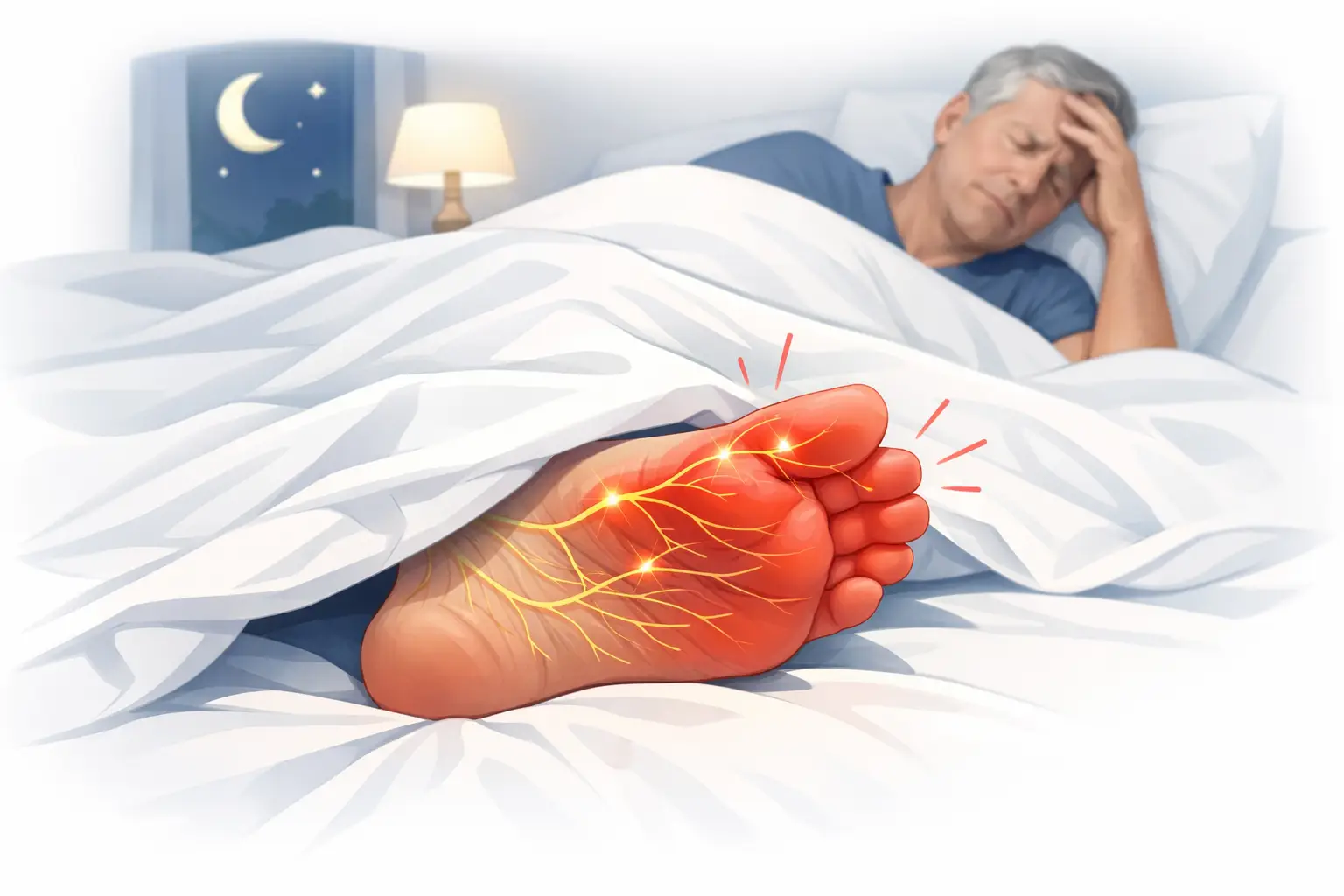
Bedsheets may hurt your feet at night when light touch is being interpreted as pain. This can happen with nerve sensitivity, allodynia, peripheral neuropathy, diabetes, vitamin B12 deficiency, skin irritation, swelling, gout, arthritis, or circulation changes. If the pain keeps returning, worsens, affects one foot, or comes with numbness, burning, weakness, color changes, wounds, or balance problems, it should be discussed with a healthcare professional.
If you have ever pulled a sheet over your feet and felt pain instead of comfort, the sensation can be surprisingly unsettling. Many people search for why do bedsheets hurt my feet at night when the pressure seems so light that it should not bother them at all. When even soft fabric feels irritating, burning, sharp, or unbearable, the issue is usually not the sheet itself. It is often a sign that the nerves, skin, joints, or circulation in your feet have become unusually sensitive.
For adults over 45, this symptom deserves a closer look because it can reflect more than simple bedtime discomfort. Mild pressure that feels painful is sometimes called allodynia, which means a normally non-painful touch starts registering as pain. That can happen for several different reasons, and the details matter.
Why do bedsheets hurt my feet at night? The short answer
The most common reason bedsheets hurt your feet at night is heightened sensitivity in the nerves. People describe it as burning, stinging, tingling, electric pain, or the sense that the feet are raw even when the skin looks normal. This kind of symptom often becomes more noticeable at night because there are fewer distractions, body position changes blood flow, and the pressure of bedding rests on the same area for hours.
Sometimes the cause is irritation of the skin or joints rather than the nerves. If your feet are swollen, inflamed, dry, cracked, or affected by arthritis or gout, even light contact can become uncomfortable. In other cases, poor circulation creates aching or abnormal sensations that seem worse once you lie down.
Possible Causes of Bedsheet Foot Pain at Night
| Possible Cause | Why Bedsheets May Hurt | Clues to Notice |
|---|---|---|
| Nerve sensitivity | Light touch may be interpreted as pain. | Burning, stinging, tingling, electric pain, or raw-feeling skin. |
| Allodynia | A normally non-painful touch, such as fabric, becomes painful. | Pain from sheets, socks, or gentle touch. |
| Peripheral neuropathy | Damaged or irritated nerves may misread pressure from bedding. | Burning feet, numbness, pins and needles, worse at night. |
| Vitamin B12 deficiency | Low B12 may affect nerve function and alter sensation. | Tingling, numbness, fatigue, balance problems, or memory changes. |
| Diabetes or blood sugar problems | Blood sugar-related nerve irritation may increase nighttime sensitivity. | Symptoms starting in the feet, numbness, burning, slow-healing sores. |
| Skin irritation | Dry, cracked, inflamed, or infected skin can react strongly to fabric. | Redness, peeling, itching, cracks, rash, or athlete’s foot signs. |
| Swelling or fluid retention | Swollen tissue can feel tender under even light pressure. | Puffy feet, ankle marks, heaviness, worse after standing or sitting. |
| Gout or arthritis | Inflamed joints may become extremely sensitive to touch. | Toe pain, heat, swelling, stiffness, sudden intense tenderness. |
| Circulation changes | Poor blood flow may cause aching, coldness, or abnormal foot sensations. | Cold feet, color changes, cramping with walking, slow healing. |
This table is educational and does not diagnose the cause of bedsheet-related foot pain. Persistent, worsening, one-sided, painful, or circulation-related symptoms should be discussed with a healthcare professional.
Nerve sensitivity is one of the biggest reasons
When light touch feels painful, nerve involvement moves high on the list. Peripheral neuropathy is one possible explanation. This term refers to damage or dysfunction in the nerves outside the brain and spinal cord, often affecting the feet first.
Neuropathy does not always start with numbness. Some people first notice burning soles, pins and needles, unusual sensitivity to socks or sheets, or a feeling that the feet are too hot even when they are cool to the touch. The pattern often worsens in the evening.
There are many possible contributors to neuropathy, including diabetes, alcohol use, certain medications, thyroid problems, and vitamin deficiencies. Vitamin B12 deficiency is especially relevant because B12 plays an important role in nerve health. A low level does not automatically mean it is the cause of your symptoms, but it is one of the more common and important things to rule out, particularly in older adults, people taking acid-reducing medication, or those with absorption issues.
Bedsheets Hurt vs Socks Hurt vs Wet-Feeling Feet
Bedsheet pain, sock pain, and a wet feeling in the feet can overlap, but they are not the same symptom. Separating them can help you describe the pattern more clearly and avoid assuming every unusual sensation has the same cause.
If bedsheets hurt your feet
Bedsheet pain usually points to light-touch sensitivity that becomes more noticeable at night. The trigger is often soft fabric resting on the feet for hours. This may overlap with nerve sensitivity, allodynia, peripheral neuropathy, skin irritation, swelling, gout, arthritis, or circulation changes.
If socks hurt your feet
Sock-related pain is more likely to involve elastic pressure, toe seams, rough fabric, tight fit, swelling, skin irritation, or nerve sensitivity triggered by fabric during the day. Pain only with certain socks often points more toward fit or material than a medical cause.
If your feet feel wet but are dry
A false wet feeling is usually a sensory perception issue rather than pain from pressure. The skin and socks may be dry, but the nerves may send signals that the brain interprets as wetness, trickling water, coldness, buzzing, or crawling sensations.
The pattern matters
Pain mainly from bedsheets points toward nighttime touch sensitivity. Pain from socks points more toward fit, fabric, pressure, or daytime sensitivity. A wet feeling without actual moisture points more toward abnormal sensory signaling. If several light-touch triggers hurt — socks, sheets, shoes, or even gentle touch — nerve sensitivity or allodynia becomes more important to consider.
Could vitamin B12 deficiency make bedsheets painful?
Yes, it can in some cases. Vitamin B12 deficiency may contribute to tingling, numbness, burning feet, balance problems, and altered sensation. If nerves are affected, normal touch can start to feel unpleasant. That said, B12 deficiency is only one possible cause, not the default explanation for every case of nighttime foot pain.
This is where a cautious approach matters. Many nerve-related symptoms overlap, and bedsheet sensitivity alone does not prove a vitamin B12 deficiency. In some people, symptoms may be related to blood sugar changes, spinal nerve compression, medication effects, circulation problems, skin inflammation, or another condition entirely. Supplements may help when a true deficiency is confirmed or intake is inadequate, but persistent or unexplained nerve symptoms should be evaluated in context rather than self-treated based on one symptom.
Skin and pressure problems can also be part of the answer
Not every painful response to bedsheets points to nerve damage. Sometimes the skin itself is irritated enough that fabric contact feels exaggerated.
Dry skin, cracks in the heels, fungal irritation, eczema, or contact dermatitis can all make your feet more reactive. If the discomfort feels superficial, itchy, or linked to visible redness, scaling, or peeling, a skin issue may be contributing. Sheets can also trap heat, and warmth may intensify itching or burning.
Swelling changes things too. If your feet or ankles are puffy by evening, the sheet may press against already stretched tissues. That pressure is still light, but swollen tissue can feel tender. People with venous insufficiency or fluid retention sometimes notice that nighttime contact becomes more uncomfortable after a long day standing or sitting.
Joint inflammation can make light contact feel worse
Pain from arthritis, gout, or other inflammatory joint issues is not always triggered by movement alone. In a flare, the top of the foot or toes may become so tender that even bedding feels irritating.
Gout is a classic example because it often strikes at night and can make even the lightest touch feel intense. The big toe is a common site, but other joints in the foot can be involved. Arthritis tends to produce more stiffness and soreness, while gout often feels abrupt, hot, and sharply painful. Still, real-life cases do not always read like textbook examples.
Circulation issues can complicate the picture
Poor circulation does not usually cause touch sensitivity in the same way neuropathy does, but it can create aching, cramping, coldness, heaviness, or color changes that become more obvious in bed. Some people notice discomfort when they elevate their legs, while others feel better once pressure is relieved.
If your feet are consistently cold, pale, bluish, or slow to heal, circulation deserves attention. Vascular problems and nerve problems can also exist together, especially in older adults. That is one reason a broad, evidence-based evaluation is more useful than focusing on a single explanation too early.
Why symptoms often feel worse at night
Why do bedsheets hurt my feet at night more than during the day?
Night changes the way symptoms are perceived. During the day, movement and distraction can mask mild pain or tingling. At night, there is less competing sensory input, so abnormal sensations stand out.
Body position matters as well. Lying still places prolonged contact on the same parts of the foot. Warmth from bedding may intensify burning sensations. Fluid can also shift over the course of the day, making swelling and pressure worse by bedtime.
For some people, the nervous system simply becomes more reactive in the evening. This is common with neuropathic symptoms. The result is that a bedsheet feels far heavier than it is.
When should you take this seriously?
If this has happened once or twice after a long day on your feet, it may be temporary. But if the problem keeps returning, especially with burning, numbness, tingling, weakness, balance changes, or visible foot changes, it is worth discussing with a healthcare professional.
More urgent evaluation is sensible if you have new weakness, one foot that suddenly changes color or temperature, significant swelling, an open sore, severe redness, fever, or rapidly worsening pain. Those features raise a different level of concern than mild intermittent sensitivity.
If you have diabetes, a history of B12 deficiency, digestive disorders that affect absorption, or use medications associated with nerve effects, those details are relevant and should be mentioned clearly.
Important: Red Flags to Take Seriously
Bedsheet pain may come from nerve sensitivity, skin irritation, swelling, or joint inflammation, but some symptoms need prompt medical attention.
- Seek prompt care if one foot becomes pale, blue, very cold, suddenly swollen, or much more painful than the other.
- Do not ignore open sores, foot ulcers, blackened skin, spreading redness, fever, or wounds that are not healing.
- Get medical evaluation for new weakness, foot drop, frequent falls, severe balance problems, or rapidly worsening numbness.
- Urgent symptoms such as facial drooping, trouble speaking, chest pain, shortness of breath, confusion, or new bowel or bladder changes should be treated as emergency-level concerns.
- If you have diabetes, known neuropathy, circulation problems, or a history of B12 deficiency, recurring foot sensitivity should be discussed with a healthcare professional.
What can help while you look into the cause?
Small adjustments can reduce irritation at night. Some people do better with a bed cradle or foot tent that lifts the sheet off the feet. Others get relief from looser, lighter bedding or by keeping the room cooler if heat makes symptoms worse.
Check the skin carefully under good lighting. Cracks, redness, fungal changes, or swelling can offer useful clues. Supportive daytime footwear may help if joint stress or swelling is part of the issue. If you suspect dryness or skin irritation, basic skin care can improve comfort, though persistent or unexplained pain still needs evaluation.
It is also reasonable to review the bigger picture. Have you noticed numbness, reduced balance, calf pain when walking, or changes in your energy level? Are you eating well? Have you had recent lab work, including blood sugar or vitamin B12, if appropriate? Those questions often move the conversation from vague discomfort to something your clinician can assess more effectively.
A practical next step if this keeps happening
If bedsheets hurt your feet night after night, keep a simple symptom record for one to two weeks. Note whether the feeling is burning, aching, stabbing, or tingling, whether both feet are involved, whether warmth worsens it, and whether there is numbness or color change. That information can help separate skin irritation from joint pain, circulation concerns, or nerve-related symptoms.
The main point is this: pain from a bedsheet is not always minor just because the trigger seems minor. Your body may be signaling increased nerve sensitivity, inflammation, or another issue that deserves a closer look. Paying attention early is often the most practical step, especially when symptoms start small but become a nightly pattern.
Frequently Asked Questions
Why do bedsheets hurt my feet at night?
Bedsheets may hurt your feet at night when light touch is interpreted as pain. This can happen with nerve sensitivity, allodynia, peripheral neuropathy, diabetes, vitamin B12 deficiency, skin irritation, swelling, gout, arthritis, or circulation changes.
Can neuropathy make bedsheets painful?
Yes. Neuropathy can make normal touch feel painful or uncomfortable in some people. This may feel like burning, stinging, tingling, electric pain, or raw skin even when the skin looks normal.
What is allodynia in the feet?
Allodynia means pain from something that normally should not hurt, such as bedsheets, socks, or gentle touch. It can happen when sensory nerves become irritated or overly sensitive.
Can vitamin B12 deficiency make bedsheets hurt my feet?
Vitamin B12 deficiency may contribute to tingling, numbness, burning feet, balance problems, and altered sensation. If nerves are affected, normal touch may feel unpleasant. Testing is better than assuming B12 is the cause.
Why is foot sensitivity worse at night?
Foot sensitivity may feel worse at night because there are fewer distractions, the feet remain still, bedding rests on the same area for hours, warmth may intensify burning, and nerve-related symptoms often become more noticeable in the evening.
Can gout make bedsheets hurt my feet?
Yes. During a gout flare, the affected toe or foot joint can become so tender that even light contact from a bedsheet feels intense. Gout often causes sudden pain, heat, swelling, redness, and severe tenderness.
How can I stop bedsheets from touching painful feet?
Some people use lighter bedding, looser sheets, a bed cradle, or a foot tent to keep fabric off the feet. These steps may reduce irritation, but recurring or worsening pain should still be evaluated.
When should I see a doctor for bedsheet foot pain?
See a healthcare professional if bedsheet pain keeps returning, worsens, affects one foot, or comes with numbness, burning, weakness, balance problems, swelling, color changes, wounds, fever, or trouble walking.
Medical Disclaimer:
This content is for educational purposes only and does not diagnose, treat, cure, or replace professional medical care. Vitamin B12 deficiency, neuropathy symptoms, nerve pain, numbness, tingling, burning feet, balance problems, fatigue, and related health concerns can have many possible causes, including diabetes, vitamin deficiencies, medication effects, alcohol exposure, autoimmune conditions, infections, circulation problems, gastrointestinal or absorption issues, spinal conditions, or nerve compression.
Information about supplements, nutrition, lifestyle, sleep, movement, testing, or symptom support should not be used as a substitute for evaluation by a qualified healthcare professional. Supplements may not be appropriate for everyone and may interact with medications or medical conditions.
New, worsening, spreading, severe, one-sided, or unexplained symptoms — including numbness, weakness, balance problems, falls, wounds, foot ulcers, skin color changes, severe pain, chest pain, shortness of breath, bowel or bladder changes, facial drooping, trouble speaking, confusion, or sudden neurologic symptoms — should be discussed with a qualified healthcare professional or emergency service promptly.

- Can Low B12 Cause Dizziness? - July 9, 2026
- B12 Deficiency and Cracked Corners of the Mouth - July 9, 2026
- Can Low B12 Cause Dry Mouth? - July 8, 2026