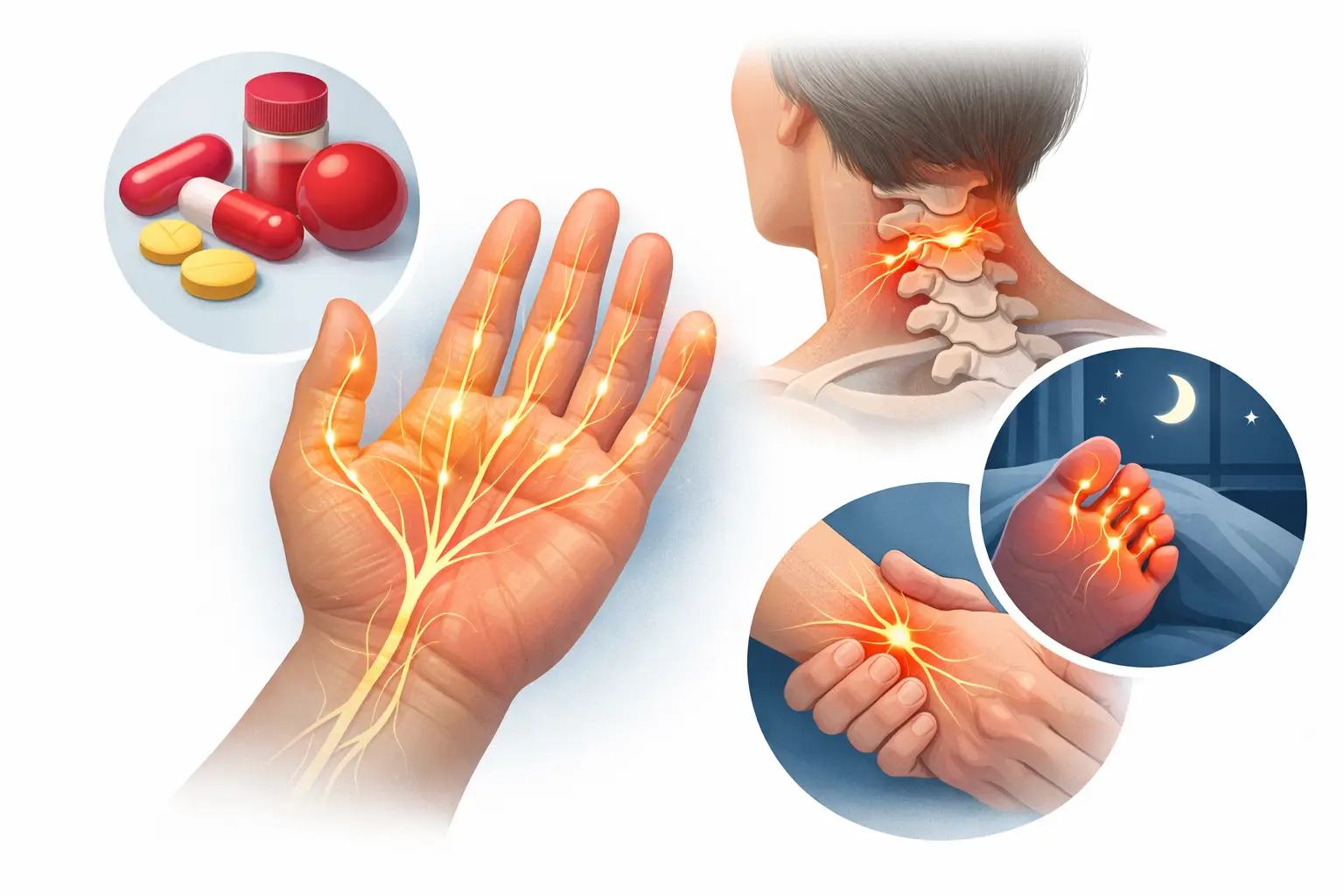
Tingling in fingers can happen because of nerve compression, carpal tunnel syndrome, cervical spine irritation, peripheral neuropathy, diabetes, vitamin B12 deficiency, or temporary pressure on a nerve. Symptoms that are persistent, spreading, one-sided, associated with weakness, or affecting both hands and feet deserve medical evaluation.
A tingling finger can be harmless after sleeping on your hand. Tingling in Fingers: B12 Deficiency, Nerve Compression, or Neuropathy? That question becomes more important when the sensation keeps coming back, spreads, or is paired with numbness, weakness, burning, or clumsiness.
For adults over 45, finger tingling often sits at the intersection of a few very different issues. A compressed nerve in the neck or wrist can cause it. Low vitamin B12 can contribute to nerve-related symptoms. Peripheral neuropathy can also be part of the picture, especially when symptoms affect both sides or extend into the feet. The challenge is that these causes can overlap, and the right next step depends on the pattern.
Key Takeaways
- Tingling in fingers is often linked to nerve irritation, but the underlying cause may vary significantly.
- Carpal tunnel syndrome and nerve compression often create positional or one-sided symptoms.
- Vitamin B12 deficiency and peripheral neuropathy are more likely when symptoms affect both hands and feet or develop gradually.
- Burning, weakness, balance changes, or spreading numbness increase the importance of medical evaluation.
- Adults over 45 may have overlapping causes, including diabetes, medication effects, spinal problems, or nutritional deficiencies.
Why tingling in fingers can mean different things
Tingling, often described as pins and needles, usually points to nerve irritation or impaired nerve signaling. That does not automatically mean permanent nerve damage. Sometimes a nerve is briefly squeezed. Sometimes a vitamin deficiency affects nerve function more gradually. In other cases, long-standing metabolic or neurologic problems may be involved.
The most useful clue is not just the tingling itself, but where it happens, how long it lasts, and what else comes with it. A symptom that starts after using tools, typing, or sleeping with a bent wrist suggests something very different from numbness in both hands and both feet that has been building for months.
Tingling in fingers from nerve compression
Nerve compression is one of the most common explanations, and it often follows a recognizable pattern. The nerve may be pinched at the wrist, elbow, or neck. Carpal tunnel syndrome, for example, affects the median nerve and often causes tingling in the thumb, index finger, middle finger, and part of the ring finger. Symptoms may be worse at night or while driving, reading, or holding a phone.
Compression at the elbow can affect the ulnar nerve, leading to tingling in the ring finger and pinky. A pinched nerve in the neck can send symptoms down the arm and into the hand, sometimes with neck pain, shoulder discomfort, or weakness.
This kind of tingling is often one-sided at first. It may flare with certain positions or repetitive hand use. People sometimes notice temporary relief by shaking the hand, changing posture, or resting the arm. That positional quality matters. It makes nerve compression more likely than a nutritional cause.
Still, nerve compression is not always simple. Arthritis, disc problems, swelling, diabetes, and repetitive strain can all make nerves more vulnerable. Some people have more than one compression site, which can blur the picture.
When vitamin B12 deficiency is a realistic concern
Vitamin B12 deficiency deserves attention because it can affect the nervous system, and adults over 45 may be at higher risk for several reasons. Stomach acid tends to decline with age, and certain medications, including metformin and some acid-reducing drugs, can interfere with B12 absorption. Pernicious anemia, digestive disorders, stomach surgery, and strict vegan diets can also raise the risk.
B12-related nerve symptoms tend to be less positional than compression symptoms.
According to the NIH Office of Dietary Supplements, vitamin B12 plays an important role in neurological function and nervous system health.
Instead of coming and going with wrist or neck movement, they may develop gradually and feel more constant. Numbness and tingling can begin in the feet, hands, or both. Some people also notice balance problems, unusual fatigue, brain fog, memory complaints, or a sore tongue. Others may have anemia, but nerve symptoms can occur even when anemia is mild or absent.
A key point is that B12 deficiency does not cause only finger tingling. If low B12 is involved, the symptom pattern is often broader. You might see numb toes, burning feet, reduced vibration sense, trouble with balance in the dark, or a more general sense that the hands are less coordinated.
Because B12 supplements are widely available, many consumers are tempted to self-diagnose. That is understandable, but it is better to confirm deficiency with a clinician when possible. Blood testing may include serum B12, methylmalonic acid, homocysteine, and a complete blood count, depending on the case. A low-normal B12 level does not always tell the full story, which is one reason symptoms and lab interpretation should be reviewed together.
Could it be peripheral neuropathy?
Peripheral neuropathy is not one disease. It is a broader term for nerve damage or dysfunction outside the brain and spinal cord. Diabetes is a well-known cause, but alcohol use, certain medications, kidney disease, thyroid disorders, autoimmune disease, infections, toxin exposure, and nutritional deficiencies can also contribute.
Neuropathy often starts in the feet before the hands. That stocking-glove pattern is classic, though not universal. If tingling is affecting several fingers on both hands and you also have burning feet, numb toes, altered sensation, or worsening symptoms at night, neuropathy moves higher on the list.
Compared with nerve compression, neuropathy tends to be more symmetrical and less linked to a specific position. Compared with isolated B12 deficiency, neuropathy may have many possible causes, with B12 deficiency being just one of them. That distinction matters because the right response is not simply to take a supplement and hope for the best.
How to tell the difference by symptom pattern
Finger Tingling Patterns and What They May Suggest
The pattern of tingling often provides more useful clues than the symptom alone.
| Pattern | Possible Explanation | Additional Clues |
|---|---|---|
| Thumb, index, and middle finger tingling | Carpal tunnel syndrome | Worse at night or during repetitive hand use |
| Ring finger and pinky tingling | Ulnar nerve compression | Elbow pressure or prolonged bending |
| Tingling from neck into arm and hand | Cervical nerve irritation | Neck pain or shoulder discomfort |
| Both hands and feet affected | Peripheral neuropathy or metabolic issue | Burning, numb toes, nighttime symptoms |
| Tingling with fatigue or balance problems | Possible vitamin B12 deficiency | Brain fog, pale skin, memory complaints |
| Sudden tingling with weakness or facial symptoms | Urgent neurological concern | Emergency evaluation may be needed |
The location and timing of symptoms can offer useful hints. Tingling limited to the thumb, index, and middle fingers, especially at night or during wrist-heavy activities, leans toward carpal tunnel syndrome. Tingling in the ring finger and pinky raises concern for ulnar nerve involvement. Tingling that shoots from the neck into the hand suggests a cervical nerve root problem.
B12 deficiency and neuropathy are more likely when symptoms affect both sides, involve both hands and feet, or develop along with balance problems, fatigue, or sensory changes that are not linked to posture. Burning pain, reduced sensation, and a gradual spread over time are especially relevant.
Even so, symptom patterns are not a diagnosis. Someone can have carpal tunnel and low B12 at the same time. A person with diabetes may also have a compressed nerve. Real-world cases are often mixed, which is why persistent symptoms deserve a proper workup rather than guesswork.
Red flags that should not wait
Some symptoms call for prompt medical evaluation. Sudden weakness in the hand or arm, facial drooping, slurred speech, severe headache, or symptoms affecting one side of the body could signal an emergency rather than a simple nerve problem. Rapidly worsening numbness, loss of bladder or bowel control, major balance trouble, unexplained weight loss, or severe neck pain with arm weakness also deserve urgent attention.
A slower problem can still be serious. If tingling persists for more than a few days, keeps returning, wakes you from sleep, or interferes with grip strength or daily activities, it is reasonable to schedule an evaluation.
What a clinician may look for
A medical visit often starts with pattern recognition. Which fingers are involved? One hand or both? Are the feet affected too? Is there weakness, pain, burning, or clumsiness? Medication use, diet, alcohol intake, diabetes history, thyroid disease, digestive problems, and prior surgeries may all be relevant.
The physical exam may include reflexes, strength testing, sensation checks, and maneuvers that stress certain nerves. Depending on the findings, testing may involve blood work for B12 and other metabolic causes, nerve conduction studies, or imaging of the neck or wrist.
This is where medically cautious supplement content matters. If B12 status is uncertain, testing can help distinguish a true deficiency from a symptom that only appears to fit. That is especially important for adults researching nerve-health products online, since not every case of tingling points to a vitamin gap.
Where supplements fit, and where they do not
If a confirmed or strongly suspected B12 deficiency is present, B12 supplementation may be appropriate under professional guidance. The best approach depends on the cause. Someone with poor dietary intake may respond differently from someone with absorption problems. In some cases, oral supplements are enough. In others, injections may be used.
What supplements should not do is replace evaluation of new or persistent neurologic symptoms. A B12 product may support correction of a deficiency, but it is not a catch-all solution for carpal tunnel syndrome, cervical radiculopathy, diabetic neuropathy, or circulation-related complaints. Evidence-informed consumers should be cautious about any product implying otherwise.
For readers comparing nerve-health supplements, the more useful questions are practical. Does the product contain a meaningful form and dose of B12? Is there a reason to suspect deficiency? Are there medications or health conditions that make testing more important first? Is the goal to address a documented nutritional gap, or to self-treat an undiagnosed symptom?
A practical next step if your fingers keep tingling
If the tingling appears only after sleeping awkwardly or leaning on your elbow, watchful waiting may be reasonable. If it is recurring, symmetrical, spreading, or paired with burning feet, weakness, or balance trouble, self-diagnosis gets less reliable. That is the point where a medical review becomes more valuable than another internet search.
The most helpful mindset is simple: pay attention to the pattern, do not assume all tingling is the same, and treat B12 as one possible piece of the puzzle rather than the whole answer.
Frequently Asked Questions
Can vitamin B12 deficiency cause tingling fingers?
Yes. Low vitamin B12 may contribute to tingling, numbness, balance changes, and other nerve-related symptoms in some adults.
How do I know if finger tingling is from carpal tunnel syndrome?
Carpal tunnel syndrome often affects the thumb, index, and middle fingers and may worsen at night or during repetitive hand activities.
Can neuropathy start in the hands?
Yes, although peripheral neuropathy often starts in the feet first. Symptoms affecting both hands and feet together may increase suspicion for neuropathy.
When should tingling fingers be medically evaluated?
Persistent, worsening, spreading, or painful tingling deserves medical evaluation, especially when weakness or balance changes are also present.
Can sleeping position cause tingling fingers?
Yes. Sleeping with pressure on the wrist, elbow, or arm may temporarily compress nerves and trigger tingling or numbness.
Medical Disclaimer: The information provided in this article is for educational purposes only and is not intended as medical advice. Dietary supplements are not a replacement for professional medical diagnosis or treatment. Always consult with a qualified healthcare professional before starting any new supplement, especially if you have pre-existing medical conditions or are taking prescription medications. Individual results may vary.

- Can Low B12 Cause Dizziness? - July 9, 2026
- B12 Deficiency and Cracked Corners of the Mouth - July 9, 2026
- Can Low B12 Cause Dry Mouth? - July 8, 2026