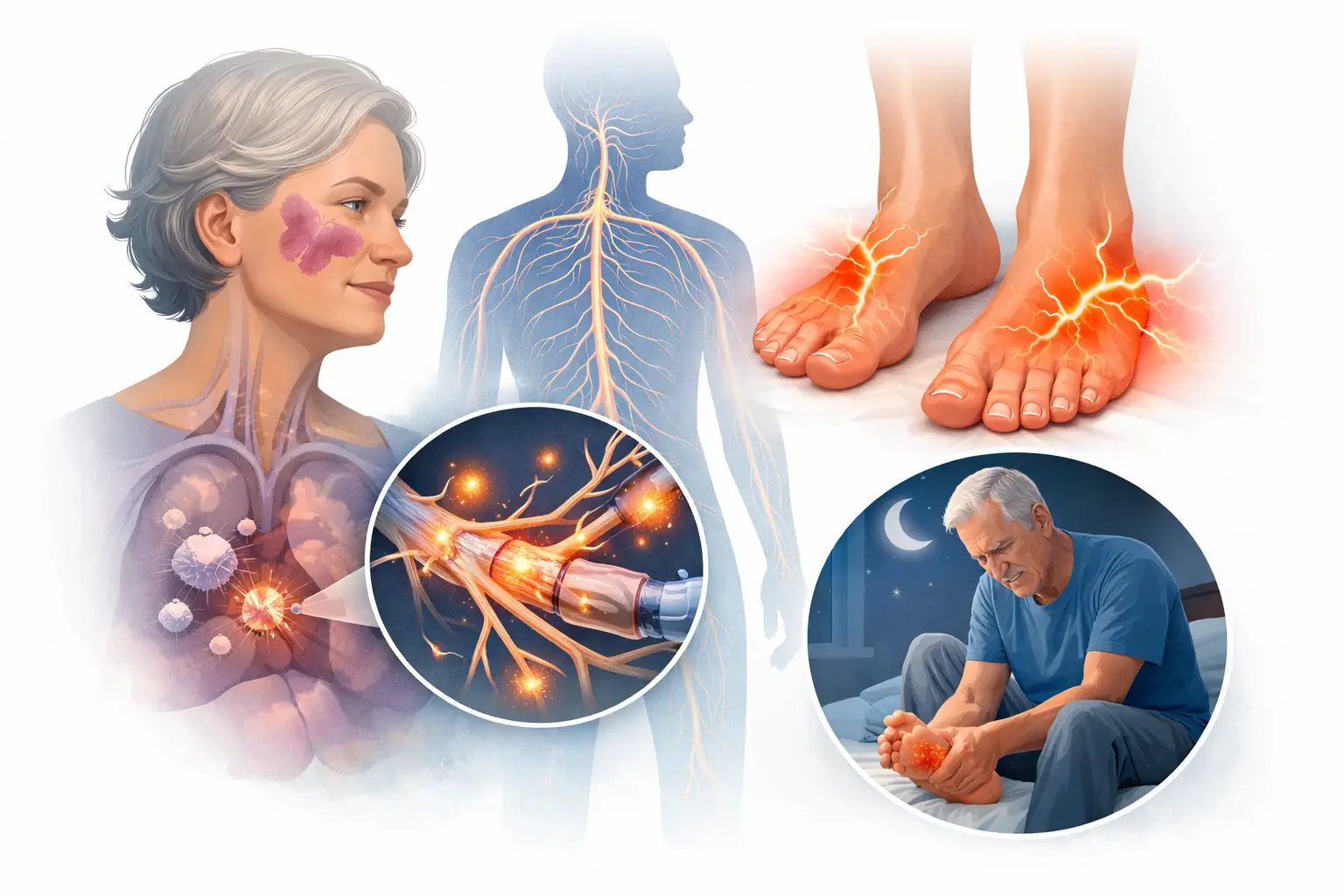
Lupus and peripheral neuropathy can be connected, but nerve symptoms in someone with lupus are not always caused by lupus itself. Burning feet, numb toes, tingling, electric-shock pain, weakness, balance changes, or reduced sensation may come from lupus-related inflammation, vasculitic nerve injury, diabetes, thyroid disease, kidney disease, medication effects, alcohol use, vitamin B12 deficiency, vitamin B6 excess, or nerve compression. Because symptoms overlap, testing and a neurologic exam are often needed before assuming the cause.
Burning feet, numb toes, electric-shock pain, and unexplained weakness can be alarming on their own. When lupus and peripheral neuropathy show up together, the picture gets more complicated because nerve symptoms may come from inflammation, medication effects, vitamin deficiencies, or an unrelated condition happening at the same time.
For adults trying to make sense of new tingling or pain, that distinction matters. Peripheral neuropathy is not one single disease. It is a description of nerve damage or nerve dysfunction outside the brain and spinal cord. In someone with lupus, the next step is figuring out why those nerves are irritated and whether the pattern points to lupus activity, another health issue, or more than one contributor.
How lupus can affect peripheral nerves
Lupus is an autoimmune condition, which means the immune system can mistakenly attack the body’s own tissues. Most people think first about joints, skin, kidneys, or fatigue. But the nervous system can be involved too, including the peripheral nerves that carry sensation and movement signals.
In some cases, lupus-related inflammation may injure nerves directly. In others, inflammation affects blood vessels that supply the nerves, reducing oxygen and nutrient delivery. That can lead to numbness, burning pain, altered sensation, muscle weakness, or reduced reflexes. The symptoms may start gradually, but some people notice a more sudden change.
The challenge is that not every nerve symptom in a person with lupus is caused by lupus itself. Diabetes, thyroid disease, alcohol use, spinal problems, infections, medication side effects, and nutrient deficiencies can all produce similar symptoms. Vitamin B12 deficiency deserves special attention because it can contribute to numbness, tingling, balance problems, and fatigue, and it may be missed if the focus stays only on autoimmune disease.
Types of Neuropathy Seen in Lupus
Lupus can affect peripheral nerves in more than one way. Some neuropathy patterns are gradual and mainly sensory, while others may be more sudden, painful, patchy, or asymmetric. Recognizing the pattern can help explain why a neurologic exam and targeted testing may be needed before assuming lupus is the only cause.
Clinical note: Sudden nerve pain, new weakness, foot drop, one-sided symptoms, facial weakness, double vision, swallowing problems, or rapidly worsening numbness should be evaluated promptly by a healthcare professional.
Vasculitic Neuropathy
Vasculitic neuropathy happens when inflammation affects the small blood vessels that supply the nerves. When nerve blood flow is disrupted, symptoms may appear more suddenly and may include severe pain, weakness, numbness, or loss of function in a specific area.
This pattern deserves prompt medical attention, especially if symptoms are rapidly worsening, one-sided, or associated with foot drop or new weakness.
Mononeuritis Multiplex
Mononeuritis multiplex is a patchy neuropathy pattern that affects two or more separate nerves in different areas of the body. Instead of a smooth, symmetric pattern in both feet, symptoms may appear unevenly.
Examples may include one foot drop, one painful hand, or weakness in a specific nerve distribution. In lupus, this pattern may raise concern for inflammatory or vasculitic nerve involvement.
Small Fiber Neuropathy
Small fiber neuropathy affects the tiny nerve fibers that carry pain and temperature signals. Symptoms may include burning, stinging, electric pain, heat or cold sensitivity, or pain from light touch.
This condition can be frustrating because standard nerve conduction studies may look normal even when symptoms are real, persistent, and disruptive.
Distal Polyneuropathy
Distal polyneuropathy usually begins in the toes or feet and may slowly move upward. People often describe tingling, numbness, burning, pins-and-needles, or reduced sensation in a “stocking” pattern.
This pattern can overlap with diabetic neuropathy, vitamin B12 deficiency neuropathy, thyroid disease, kidney disease, alcohol-related neuropathy, and medication effects.
Cranial Neuropathy
Cranial neuropathy involves nerves that affect the face, eyes, swallowing, hearing, or other head and neck functions. It is less common than foot-focused neuropathy, but it can occur in autoimmune or inflammatory neurologic conditions.
New facial weakness, vision changes, double vision, swallowing problems, or severe new neurologic symptoms should be evaluated promptly.
Why the Neuropathy Pattern Matters
The pattern of symptoms can guide the next step. Gradual tingling in both feet may suggest a different evaluation than sudden one-sided weakness, patchy nerve loss, or cranial nerve symptoms. Because lupus neuropathy can resemble several other conditions, clinicians often consider the full medical history, neurologic exam, blood tests, medication exposure, and nerve testing before deciding what is most likely.
Key Takeaways
- Lupus can affect peripheral nerves, but not every burning, tingling, or numb sensation in a person with lupus is automatically caused by lupus.
- Symptoms may be sensory, motor, or autonomic, including burning feet, numb toes, electric pain, weakness, foot drop, dizziness on standing, or balance changes.
- Patchy, asymmetric, or rapidly worsening symptoms deserve prompt attention, especially if weakness, foot drop, or severe imbalance appears.
- B12 deficiency can mimic or worsen neuropathy symptoms, so B12 testing may be worth discussing when numbness, tingling, fatigue, or balance problems are present.
- The safest next step is evaluation, not guesswork, because lupus activity, diabetes, thyroid disease, kidney disease, medication effects, B12 deficiency, B6 excess, and nerve compression can overlap.
Common symptoms of lupus and peripheral neuropathy
Peripheral neuropathy symptoms vary based on which nerves are affected. Sensory nerve involvement often causes tingling, pins-and-needles, burning, stabbing pain, or reduced ability to feel temperature and touch. Some people describe their socks feeling bunched up when they are not, or say the floor feels strangely textured under bare feet.
Motor nerve involvement can cause weakness, muscle cramping, trouble lifting the front of the foot, or difficulty with fine hand movements such as buttoning clothing. If autonomic nerves are affected, symptoms may include dizziness on standing, bowel changes, sweating changes, or abnormal blood pressure responses.
Lupus-related nerve symptoms do not always follow a neat pattern. Some people have symmetric symptoms in both feet that slowly move upward, which is common in many forms of neuropathy. Others develop a more patchy pattern, with one area of weakness or pain that does not mirror the other side. That uneven pattern can sometimes raise concern for vasculitic nerve injury, which needs prompt medical attention.
Lupus and Peripheral Neuropathy Symptoms
| Nerve Type | Possible Symptoms | What It May Suggest |
|---|---|---|
| Sensory nerves | Tingling, pins-and-needles, burning feet, stabbing pain, numbness, reduced temperature or touch sensation. | Common in many neuropathies, including lupus-related neuropathy, diabetic neuropathy, B12 deficiency, and small fiber neuropathy. |
| Motor nerves | Weakness, cramping, foot drop, trouble climbing stairs, difficulty lifting the front of the foot, or reduced hand coordination. | Weakness deserves careful evaluation, especially if it is new, asymmetric, or rapidly worsening. |
| Autonomic nerves | Dizziness on standing, bowel changes, sweating changes, abnormal blood pressure responses, or temperature regulation issues. | May suggest autonomic involvement and should be discussed with a clinician. |
| Patchy or asymmetric nerve involvement | One-sided weakness, pain in a specific nerve distribution, sudden foot drop, or symptoms that do not mirror both sides. | Can raise concern for vasculitic neuropathy or another focal nerve problem that needs prompt review. |
Why diagnosis is often more complicated than expected
A person with lupus may assume every new symptom belongs to lupus. Clinically, that is risky. Peripheral neuropathy has a broad differential diagnosis, and the most useful evaluation usually looks at the whole picture rather than chasing one explanation too early.
Doctors typically start with timing, symptom pattern, and a neurologic exam. They may ask whether symptoms began during a lupus flare, whether they worsen at night, whether balance is affected, and whether there is accompanying weakness or color change in the limbs. A medication review is also important, especially if symptoms began after a treatment change.
Basic lab work often helps identify common contributors. Depending on the case, testing may include blood sugar markers, thyroid function, kidney function, inflammatory markers, and vitamin levels such as B12. This is one reason cautious supplement guidance matters. A low or borderline B12 level may be relevant in some readers researching neuropathy, but supplement use should match documented need, dosing considerations, and the broader clinical picture rather than guesswork.
Nerve conduction studies and electromyography may be used to confirm large-fiber neuropathy and help define whether the problem is primarily sensory, motor, or mixed. If symptoms suggest small-fiber neuropathy, those tests may be normal, so clinicians sometimes consider skin biopsy or specialized autonomic testing. The exact workup depends on the presentation.
Can Lupus Neuropathy Be Reversed?
Lupus neuropathy may improve in some cases, but recovery depends on the underlying cause, the type of nerve involvement, how long symptoms have been present, how quickly treatment begins, and whether other treatable contributors are also present.
In some people, symptoms may improve when inflammation is controlled or when a correctable factor is identified and addressed. These factors can include vitamin B12 deficiency, diabetes, thyroid disease, kidney disease, medication effects, alcohol exposure, or vitamin B6 excess from supplements.
Recovery is often more favorable when nerve injury is recognized early. For example, if low vitamin B12 is contributing to numbness, tingling, balance problems, or burning sensations, correcting the deficiency may help prevent further nerve damage and may support symptom improvement over time.
When Improvement Is More Likely
Neuropathy symptoms may improve when the trigger is identified and treated before significant nerve damage develops. Mild sensory symptoms, recent symptom onset, and reversible contributors often offer the greatest opportunity for improvement.
- Vitamin B12 deficiency is identified and corrected
- Poor blood sugar control is brought under control
- Medication-related nerve irritation is addressed
- Inflammatory lupus activity is successfully managed
- Nerve involvement is still early-stage
When Recovery May Be Limited
Long-standing nerve damage may not fully reverse. Some people continue to experience persistent numbness, reduced sensation, weakness, balance problems, or burning discomfort even after the underlying cause is treated.
This does not always mean treatment failed. In many cases, preventing progression and protecting function are important goals.
Important: More severe patterns, such as vasculitic neuropathy, mononeuritis multiplex, significant motor weakness, foot drop, or rapidly worsening symptoms, need prompt medical evaluation because delayed treatment may increase the risk of lasting nerve deficits.
Why Early Evaluation Matters
One of the biggest mistakes is assuming every nerve symptom is simply part of lupus. Peripheral neuropathy can have multiple overlapping causes, and some are potentially reversible when identified early.
A comprehensive evaluation may include a neurologic examination, blood work, medication review, vitamin B12 testing, blood sugar testing, kidney and thyroid assessment, and nerve studies when appropriate.
| Recovery Factor | Why It Matters | Possible Goal |
|---|---|---|
| Early symptom recognition | Nerve symptoms may be more responsive before damage becomes long-standing. | Prevent progression and support recovery. |
| Treatable contributors | B12 deficiency, blood sugar problems, thyroid disease, kidney disease, and medication effects may mimic or worsen symptoms. | Identify correctable causes. |
| Type of neuropathy | Sensory, small fiber, vasculitic, multifocal, or motor patterns may require different evaluations. | Match management to the likely pattern. |
| Duration of nerve injury | Long-standing nerve damage may be less likely to fully reverse. | Reduce symptoms and protect function. |
Practical takeaway: Lupus neuropathy may improve when an underlying contributor is identified and treated, but recovery depends on the cause, severity, and duration of nerve injury. Persistent numbness, burning, weakness, balance changes, or one-sided symptoms deserve medical evaluation rather than self-treatment with supplements alone.
Types of Lupus-Related Neuropathy Compared
Lupus-related neuropathy can appear in different patterns. Comparing symptoms, distribution, and clinical significance can help explain why a careful neurologic evaluation may be needed.
| Type | Typical Symptoms | Pattern | Why It Matters |
|---|---|---|---|
| Vasculitic Neuropathy | Severe pain, numbness, weakness, sudden function loss | Often asymmetric or rapidly progressive | May reflect blood vessel inflammation affecting nerve supply and needs prompt evaluation. |
| Mononeuritis Multiplex | Patchy pain, weakness, foot drop, hand weakness, focal numbness | Multiple separate nerves affected in an uneven pattern | Can suggest inflammatory or vasculitic nerve involvement rather than routine symmetric tingling. |
| Small Fiber Neuropathy | Burning, stinging, electric pain, heat or cold sensitivity | Sensory-dominant; standard nerve tests may be normal | Can explain intense burning or skin sensitivity even when routine testing is unrevealing. |
| Distal Polyneuropathy | Tingling, numbness, burning feet, reduced sensation | Usually begins in toes or feet and may move upward | Can overlap with diabetes, vitamin B12 deficiency, thyroid disease, kidney disease, or alcohol-related neuropathy. |
| Cranial Neuropathy | Facial weakness, double vision, eye movement issues, swallowing difficulty | Affects nerves of the face, eyes, or head and neck region | Less common, but new cranial nerve symptoms need timely medical review. |
Important: These categories are not meant for self-diagnosis. They show why lupus-related neuropathy can be complex and why symptom pattern, neurologic examination, blood work, medication review, and sometimes nerve testing may be important.
What Research Shows About Lupus Neuropathy
Research on lupus and peripheral neuropathy generally focuses on how systemic lupus erythematosus may involve the peripheral nervous system. Reported patterns include polyneuropathy, mononeuropathy, cranial neuropathy, autonomic symptoms, small fiber involvement, and vasculitic nerve injury.
Research Snapshot
| Research Theme | Clinical Relevance |
|---|---|
| Lupus can affect peripheral nerves in more than one pattern | Symptoms may be gradual and sensory, painful and asymmetric, patchy, cranial, autonomic, or related to inflammatory nerve injury. |
| Vasculitic and multifocal patterns may require closer attention | Sudden pain, new weakness, foot drop, or uneven nerve involvement may raise concern for inflammatory or vasculitic neuropathy. |
| Symptom overlap is common | Diabetes, thyroid disease, kidney disease, vitamin B12 deficiency, medication effects, alcohol exposure, and excess vitamin B6 may mimic or worsen neuropathy symptoms. |
| Objective findings help clarify the cause | Neurologic examination, reflexes, strength testing, sensory evaluation, blood work, medication review, and nerve studies may help distinguish possible causes. |
Pattern Recognition Matters
One important research theme is that lupus-related neuropathy can appear in different clinical patterns. Some symptoms may be gradual and sensory, while others may be painful, asymmetric, or multifocal.
Overlap Is Common
A person with lupus may also have other neuropathy risk factors, including diabetes, thyroid disease, kidney disease, medication effects, alcohol exposure, B12 deficiency, or excess B6 from supplements.
Testing Adds Context
From an evidence-informed perspective, the most useful approach is to connect symptoms with objective findings from examination, blood work, medication review, and nerve testing when appropriate.
Editorial note: This section summarizes publicly available medical education and research themes. It is not intended to diagnose the cause of neuropathy in any individual person or replace evaluation by a qualified healthcare professional.
Who Is Most at Risk for Lupus-Related Neuropathy?
Not everyone with lupus develops peripheral neuropathy. However, certain factors may increase the likelihood of nerve symptoms or make existing symptoms more severe. In many cases, more than one contributor may be present at the same time.
Understanding these risk factors can help explain why neuropathy symptoms develop and why a broad evaluation is often more useful than assuming lupus is the only cause. Active autoimmune disease may be part of the picture, but metabolic, nutritional, kidney-related, medication-related, and lifestyle factors can also contribute.
Active Lupus Inflammation
Periods of increased lupus activity may raise the risk of nervous system involvement. Inflammatory processes can affect peripheral nerves directly or interfere with the blood vessels that supply them.
Vasculitis
Vasculitis refers to inflammation of blood vessels. When the vessels that nourish nerves become inflamed, nerve tissue may not receive adequate oxygen and nutrients, increasing the risk of painful, asymmetric, or rapidly progressive symptoms.
Older Age
Adults over 45 are more likely to have multiple overlapping neuropathy risk factors. Age-related nerve vulnerability, medication burden, metabolic conditions, and nutritional deficiencies may all contribute to symptoms.
Vitamin B12 Deficiency
Low vitamin B12 levels can contribute to numbness, tingling, burning sensations, balance problems, and other neurologic symptoms. Because B12 deficiency can coexist with lupus, testing may be worth discussing when neuropathy symptoms are present.
Diabetes or Prediabetes
Diabetes is one of the most common causes of peripheral neuropathy. Even mild elevations in blood sugar may contribute to nerve dysfunction over time and can complicate the evaluation of lupus-related symptoms.
Chronic Kidney Disease
Kidney involvement can occur in some people with lupus. Reduced kidney function may contribute to metabolic changes that affect nerve health and can increase the complexity of neuropathy symptoms.
Alcohol Exposure
Long-term alcohol use can contribute to nerve injury directly and may also increase the risk of nutritional deficiencies that affect nerve function.
Medication Burden
People managing lupus often take multiple medications. Reviewing medication history is important because some drugs may contribute to neurologic symptoms, interact with supplements, or complicate the diagnostic picture.
| Risk Factor | Why It Matters |
|---|---|
| Active lupus inflammation | May increase the likelihood of nerve involvement during periods of disease activity. |
| Vasculitis | Can affect blood flow to nerves and increase the risk of painful or asymmetric neuropathy. |
| Older age | Often associated with multiple overlapping neuropathy risk factors. |
| Vitamin B12 deficiency | Can mimic or worsen numbness, tingling, burning, and balance problems. |
| Diabetes or prediabetes | A common contributor to peripheral nerve damage. |
| Chronic kidney disease | May contribute to metabolic changes that affect nerve function. |
| Alcohol exposure | Can contribute to nerve injury and nutritional deficiencies. |
| Multiple medications | May complicate diagnosis or contribute to neurologic symptoms. |
Practical takeaway: Lupus-related neuropathy is often multifactorial. Active autoimmune disease may be part of the picture, but diabetes, vitamin B12 deficiency, kidney disease, alcohol exposure, medication effects, and age-related nerve vulnerability may also contribute. Identifying overlapping risk factors can help guide a more accurate evaluation and treatment plan.
Where vitamin B12 fits into the conversation
For readers of a supplement review site, B12 is worth discussing carefully. Vitamin B12 plays a role in nerve function, red blood cell production, and DNA synthesis. Deficiency can contribute to numbness, tingling, balance changes, cognitive symptoms, and fatigue. Some adults develop low B12 because of reduced stomach acid, certain medications, digestive disorders, or low dietary intake.
That does not mean B12 is the answer for every case of neuropathy in lupus. If B12 levels are normal, taking more may not address the underlying cause. If levels are low or borderline, correcting that deficiency can be a sensible part of the plan under medical guidance. The key is matching the supplement to the evidence rather than assuming all nerve symptoms are caused by a vitamin gap.
Quality also matters. When evaluating B12 products, consumers should focus on dose, form, third-party testing, and whether the product makes realistic claims. When evaluating B12 products, focus on the actual dose, form, ingredient label, third-party testing, and realistic claims rather than marketing language, especially when nerve symptoms are affecting daily comfort.
Important: New nerve symptoms in someone with lupus should not be dismissed as “just neuropathy.”
Seek prompt medical attention if numbness, burning pain, or weakness is rapidly worsening, one-sided, associated with foot drop, severe imbalance, bladder or bowel changes, fever, chest pain, shortness of breath, a cold pale limb, or symptoms during a major lupus flare. These patterns may point to vasculitic nerve injury, spinal cord involvement, circulation problems, infection, or another urgent condition.
Lupus Neuropathy vs B12 Deficiency Neuropathy
Lupus-related neuropathy and B12 deficiency neuropathy can feel similar because both may cause tingling, numbness, burning pain, balance changes, or weakness. The difference is the likely cause, the testing approach, and what treatment may need to target.
| Factor | Lupus-Related Neuropathy | B12 Deficiency Neuropathy | Why Testing Matters |
|---|---|---|---|
| Possible contributors | Autoimmune inflammation, vasculitic nerve injury, lupus flare activity, kidney involvement, or medication-related factors. | Low intake, malabsorption, pernicious anemia, digestive disorders, older age, metformin use, or acid-reducing medications. | Symptoms alone cannot reliably tell which contributor is present. |
| Common symptoms | Burning, tingling, numbness, stabbing pain, weakness, patchy symptoms, or reduced reflexes. | Tingling, numbness, burning, reduced vibration sense, balance changes, fatigue, sore tongue, or anemia clues. | Both can produce sensory symptoms and walking difficulty. |
| Useful tests | Neurologic exam, lupus activity markers, inflammatory markers, kidney function, nerve conduction studies, EMG, and sometimes small-fiber testing. | Serum B12, methylmalonic acid, homocysteine, complete blood count, folate, and sometimes intrinsic factor antibodies. | Testing helps avoid treating the wrong problem or missing a correctable deficiency. |
| Can they overlap? | Yes. A person with lupus can also have B12 deficiency, diabetes, thyroid disease, or medication-related neuropathy. | Yes. Low B12 can coexist with lupus and may worsen or confuse the symptom picture. | More than one contributor may need treatment. |
Practical takeaway: B12 deficiency is not the only explanation for neuropathy in lupus, but it is important because it may be correctable if identified. Testing is what separates a useful supplement decision from guesswork.
When symptoms need prompt medical attention
Not every tingling sensation is an emergency, but some patterns should move quickly up the priority list. Sudden foot drop, rapidly worsening weakness, severe new asymmetry, loss of bladder or bowel control, marked balance decline, or symptoms that appear during a major lupus flare deserve prompt evaluation.
The same is true if neuropathy symptoms are paired with fever, shortness of breath, chest pain, severe swelling, or signs of poor blood flow such as a cold pale limb. Those features suggest the possibility of a more serious process than routine nerve irritation.
Practical questions to ask your doctor
A productive appointment often starts with better questions. Instead of asking only, “Is this lupus?” it may help to ask whether the symptom pattern fits peripheral neuropathy, what other causes should be ruled out, whether B12 or blood sugar testing makes sense, and whether nerve studies are needed.
It is also reasonable to ask how medications, kidney function, and autoimmune activity may be contributing. If you are considering a nerve-health supplement, bring the label. This helps your clinician assess whether the ingredients, dose, and timing make sense for your situation, especially if you take multiple prescriptions.
What realistic next steps look like
The most helpful approach is usually not chasing a miracle product or assuming a single explanation. It is building a clean differential diagnosis, confirming whether true neuropathy is present, and correcting identifiable contributors such as vitamin deficiency or poor glucose control while lupus care continues.
For some people, that process confirms lupus-related neuropathy. For others, it uncovers a different cause that is more treatable than expected. Either way, the goal is the same: less guesswork, better symptom tracking, and decisions based on evidence rather than hope alone.
If you have lupus and new numbness, burning, or weakness, treat those symptoms as meaningful data. They may reflect autoimmune nerve involvement, but they may also point to a separate issue such as B12 deficiency that should not be overlooked.
If you’re trying to understand what may be behind numbness, tingling, burning feet, or nerve pain, see our guide to peripheral neuropathy causes, warning signs, and evidence-informed next steps.
Frequently Asked Questions
Can lupus cause peripheral neuropathy?
Yes. Lupus can affect peripheral nerves in some people, including through inflammation or blood vessel involvement. However, not every nerve symptom in a person with lupus is caused by lupus itself, so other causes should also be considered.
What does lupus neuropathy feel like?
Lupus-related neuropathy may feel like tingling, burning, pins-and-needles, stabbing pain, numbness, weakness, foot drop, reduced reflexes, or altered sensitivity to touch and temperature. Some people have symmetric symptoms, while others develop patchy or one-sided symptoms.
Can B12 deficiency mimic lupus neuropathy?
Yes. B12 deficiency can cause tingling, numbness, burning sensations, balance changes, fatigue, and neurologic symptoms that may overlap with lupus-related neuropathy. Testing can help determine whether B12 is part of the problem.
How do doctors test neuropathy in people with lupus?
Evaluation may include symptom history, neurologic exam, medication review, blood sugar testing, thyroid testing, kidney function, inflammatory markers, B12 testing, nerve conduction studies, EMG, and sometimes small-fiber or autonomic testing.
Is lupus neuropathy reversible?
It depends on the cause, severity, and how long symptoms have been present. Symptoms may improve when an underlying contributor is identified and treated, but long-standing nerve damage may recover slowly or incompletely.
When is neuropathy in lupus urgent?
Seek prompt care if symptoms are rapidly worsening, one-sided, associated with foot drop, severe weakness, major balance decline, bladder or bowel changes, fever, chest pain, shortness of breath, or signs of poor blood flow such as a cold pale limb.
Should people with lupus take B12 for neuropathy?
B12 supplementation may be appropriate if deficiency or borderline status is identified, but it should not be assumed to treat every case of neuropathy. If B12 levels are normal, more B12 is not guaranteed to improve nerve symptoms.
Medical Disclaimer: The information provided in this article is for educational purposes only and is not intended as medical advice. Dietary supplements are not a replacement for professional medical diagnosis or treatment. Always consult with a qualified healthcare professional before starting any new supplement, especially if you have pre-existing medical conditions or are taking prescription medications. Individual results may vary.

- Can Low B12 Cause Dizziness? - July 9, 2026
- B12 Deficiency and Cracked Corners of the Mouth - July 9, 2026
- Can Low B12 Cause Dry Mouth? - July 8, 2026