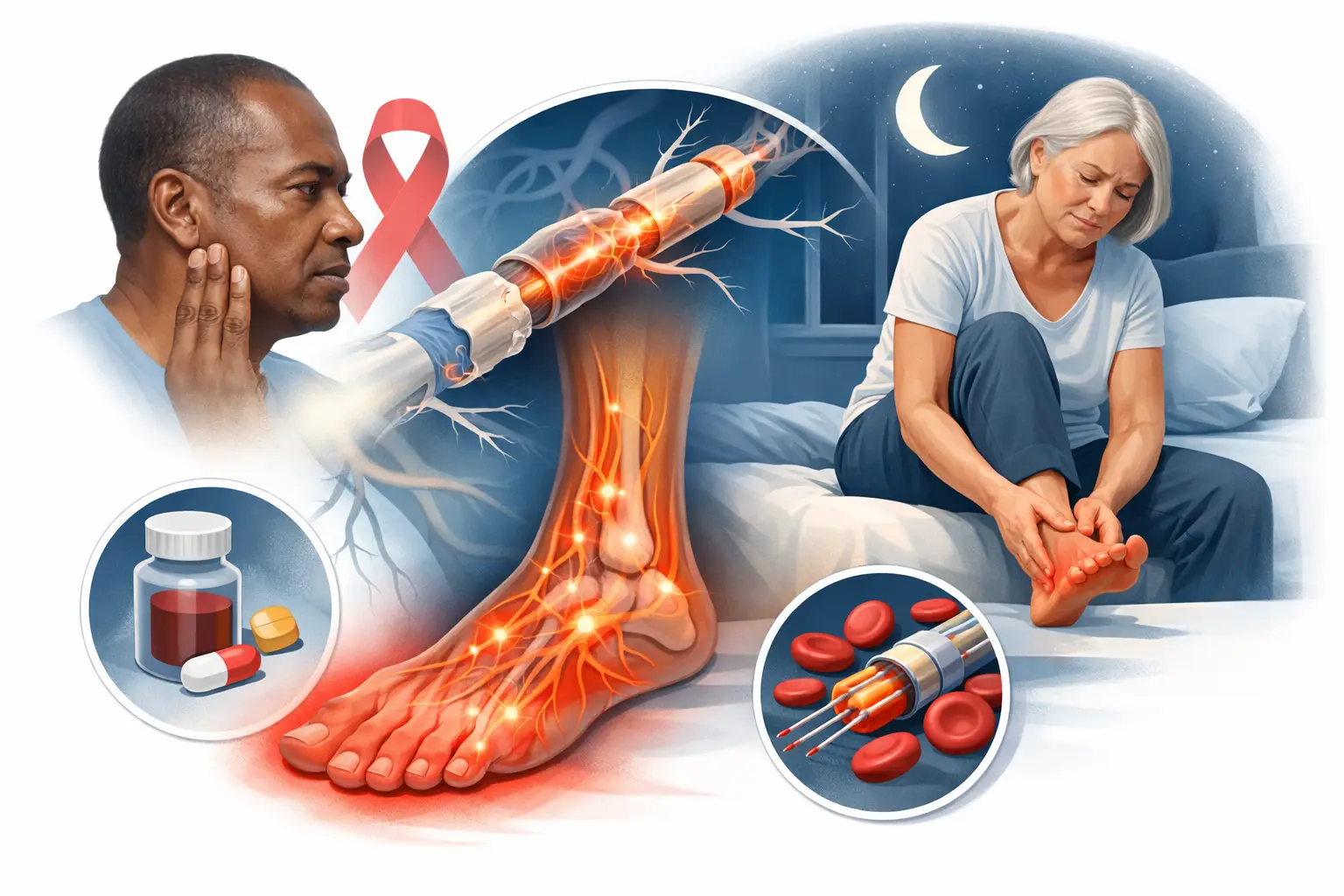
HIV-related neuropathy usually refers to peripheral nerve symptoms linked to HIV itself, past or current medication effects, or overlapping health issues such as diabetes, vitamin B12 deficiency, thyroid disease, kidney disease, alcohol use, or hepatitis coinfection. Common symptoms include burning feet, tingling, numbness, shooting pain, sensitivity to touch, reduced sensation, and balance problems. Because several causes can overlap, evaluation should include symptom pattern, HIV treatment history, medications, foot exam, and relevant blood work rather than relying on supplements alone.
Burning feet that worsen at night, pins-and-needles in the toes, or a numb patch that seems to spread upward can be easy to dismiss at first. But HIV-related neuropathy deserves careful attention, especially in adults already managing HIV, medication changes, or nutritional concerns. For many people, the question is not just what the symptoms mean. It is also what may be contributing to them, what should be checked, and where realistic symptom support may fit.
What HIV-related neuropathy is
HIV-related neuropathy is nerve damage or nerve dysfunction associated either with HIV itself, with certain medication effects, or with overlapping health issues that can affect the nerves. In practice, it often shows up as peripheral neuropathy, meaning symptoms begin in the feet or lower legs and may later affect the hands.
The classic pattern is sensory. People describe burning, tingling, stabbing pain, electric sensations, numbness, or a feeling that socks are bunched up under the toes when they are not. Some notice reduced balance, greater sensitivity to touch, or discomfort from sheets brushing the feet at night. Others have more numbness than pain.
Symptoms can be mild and intermittent, or they can interfere with walking, sleep, and daily comfort. That variation matters because the cause is not always one thing. HIV may be part of the picture without being the whole explanation.
Key Takeaways
- HIV-related neuropathy often affects the feet first, causing burning, tingling, numbness, shooting pain, sensitivity to touch, or reduced sensation.
- The cause is not always HIV alone, because diabetes, B12 deficiency, thyroid disease, kidney disease, alcohol use, hepatitis coinfection, and medication history can contribute.
- Medication history matters, especially past exposure to older antiretroviral drugs associated with toxic neuropathy.
- B12 status is worth discussing, because low B12 can cause similar tingling, numbness, balance changes, and nerve-related symptoms.
- Supplements should be reviewed with a clinician, especially because some formulas may interact with medications or contain high-dose B6, which can worsen neuropathy risk.
Why HIV-related neuropathy happens
There are several possible mechanisms. HIV can contribute to nerve injury through chronic inflammation and immune system effects. Even when HIV is well managed, ongoing inflammation may still play a role in some patients.
Medication history also matters. Some older antiretroviral drugs were more strongly linked with painful peripheral neuropathy. Those drugs are used far less often now, but past exposure can still be relevant when symptoms are reviewed over a longer timeline.
Then there are the factors that commonly overlap with HIV care but are not unique to it. Diabetes, alcohol use, kidney disease, thyroid problems, hepatitis coinfection, poor nutritional intake, and deficiencies in nutrients such as vitamin B12 can all contribute to neuropathy symptoms. In adults over 45, these mixed-cause cases are especially common. That is why a careful evaluation is more useful than assuming every tingling sensation is caused by HIV alone.
Types of HIV-Related Neuropathy
HIV-related neuropathy is not always one single condition. In medical literature, several nerve-related patterns may be discussed in people living with HIV. Understanding these patterns can help explain why symptoms vary, why testing matters, and why treatment depends on the likely cause.
Distal Symmetric Polyneuropathy
Distal symmetric polyneuropathy, often shortened to DSP, is one of the most commonly discussed neuropathy patterns associated with HIV.
“Distal” means symptoms usually begin farthest from the center of the body, often in the toes or feet. “Symmetric” means both sides are usually affected in a similar way.
People with DSP may describe burning feet, tingling, numbness, stabbing pain, electric sensations, or reduced sensation that slowly moves upward. This pattern can look similar to diabetic neuropathy or B12 deficiency neuropathy, which is why blood work, medication history, and a neurologic exam are important.
HIV Sensory Neuropathy
HIV sensory neuropathy mainly affects sensation rather than muscle strength. Symptoms may include burning, pins-and-needles, electric shocks, numbness, pain from light touch, or the feeling that socks are bunched under the toes when they are not.
For many people, the frustrating part is that the feet can feel painful and numb at the same time. Someone may feel burning at night but still have trouble sensing the ground clearly while walking. This is why foot protection, balance safety, and evaluation of sensation matter even when pain is the main complaint.
Antiretroviral Toxic Neuropathy
Some older antiretroviral medications were linked with toxic neuropathy. This means the medication itself may have contributed to nerve irritation or injury.
Historically, older antiretroviral drugs such as stavudine, also called d4T, didanosine, also called ddI, and zalcitabine, also called ddC, were more strongly associated with toxic neuropathy. These medications are used far less often today, but past exposure can still matter when reviewing symptoms over time.
Antiretroviral toxic neuropathy can be difficult to separate from HIV-related distal sensory neuropathy because both may cause burning, tingling, numbness, and pain in the feet.
Small Fiber Neuropathy
Small fiber neuropathy affects the tiny nerve fibers that help carry pain and temperature signals. When these fibers are irritated or damaged, symptoms may feel intense even when standard nerve conduction tests look normal.
People may describe burning, stinging, heat, cold sensitivity, electric pain, or skin sensitivity from socks, shoes, or bedsheets. This can be especially disruptive at night and may overlap with HIV-related neuropathy, diabetes, B12 problems, autoimmune issues, or medication-related nerve injury.
Common Symptom Pattern
Across these different patterns, many people describe a similar “stocking” pattern: symptoms start in the toes or soles, affect both feet, and may slowly move upward. Burning, tingling, numbness, stabbing pain, electric sensations, reduced sensation, or sensitivity from socks, shoes, or bedsheets may all appear.
Because the symptom pattern can overlap with diabetic neuropathy, B12 deficiency neuropathy, medication-related neuropathy, and small fiber neuropathy, symptoms alone usually cannot identify the exact cause.
Types of HIV-Related Neuropathy Compared
| Type | Main Symptoms | Typical Pattern | Why It Matters |
|---|---|---|---|
| Distal Symmetric Polyneuropathy | Burning, tingling, numbness, stabbing pain, reduced sensation. | Usually starts in the toes or feet and may move upward. | Often overlaps with diabetes, B12 deficiency, medication effects, and other neuropathy causes. |
| HIV Sensory Neuropathy | Burning, pins-and-needles, electric pain, touch sensitivity. | Mainly affects sensation rather than strength. | Can affect sleep, walking comfort, balance, and foot safety. |
| Antiretroviral Toxic Neuropathy | Burning feet, tingling, numbness, nerve pain. | May be linked to past exposure to older HIV medications such as d4T, ddI, or ddC. | Medication history matters, even if the person is no longer taking the older drug. |
| Small Fiber Neuropathy | Burning, stinging, heat or cold sensitivity, skin pain. | May occur even when standard nerve tests look normal. | Can explain intense pain or sensitivity when routine testing does not show clear damage. |
Important: These categories are not meant for self-diagnosis. They simply show why HIV-related neuropathy can be more complex than “nerve pain from HIV.” In real life, more than one factor may be present at the same time, including HIV history, medication exposure, blood sugar, vitamin B12 status, alcohol use, kidney function, and age-related nerve vulnerability.
Can HIV Neuropathy Be Reversed?
Whether HIV neuropathy can improve depends on what is causing the nerve symptoms, how long they have been present, and whether there are treatable contributors such as vitamin B12 deficiency, diabetes, thyroid disease, alcohol use, medication toxicity, or kidney disease.
In some cases, symptoms may improve when an underlying issue is identified and treated. For example, if low B12 is contributing to numbness, tingling, or balance problems, correcting the deficiency may help protect the nerves and prevent further damage. If medication toxicity is suspected, an HIV specialist may review whether the treatment plan needs adjustment.
However, neuropathy does not always fully reverse. Nerves can heal slowly, and long-standing nerve damage may leave persistent burning, numbness, or reduced sensation. This is why early evaluation matters.
For many people, the realistic goal is not a dramatic overnight cure. It is a layered plan: identify treatable causes, reduce nerve stress, manage pain, protect the feet, improve balance safety, and avoid supplements or medications that could make neuropathy worse.
Practical takeaway: HIV neuropathy may improve when a treatable contributor is found, but it should not be assumed to be reversible without evaluation. Persistent burning, tingling, numbness, or balance changes should be discussed with a healthcare professional, especially in adults over 45 or anyone with medication changes, diabetes risk, or possible B12 deficiency.
What Research Shows About HIV Neuropathy
Research on HIV-related neuropathy often focuses on distal sensory polyneuropathy, antiretroviral toxic neuropathy, pain severity, and overlapping risk factors. Even in the modern antiretroviral therapy era, nerve symptoms can still occur in some people living with HIV, especially when additional contributors are present.
Several factors may influence risk and symptom severity, including age, HIV history, immune status, past exposure to older antiretroviral drugs, diabetes or prediabetes, alcohol use, kidney disease, hepatitis coinfection, and nutritional deficiencies such as vitamin B12 deficiency.
One reason HIV-related neuropathy can be difficult to manage is that symptoms do not always point to one cause. Burning feet, tingling, numbness, and balance changes may reflect HIV-associated nerve injury, medication-related effects, metabolic disease, low B12, or more than one factor at the same time.
This is why the most useful approach is usually not guessing from symptoms alone. A stronger evaluation looks at the full pattern: symptom location, timing, medication history, HIV treatment history, blood sugar, vitamin B12 markers, thyroid function, kidney and liver function, supplement use, and foot sensation.
Editorial note: This article summarizes publicly available medical education and research themes. It is not meant to diagnose the cause of neuropathy in any individual person.
Possible causes and contributors to HIV-related neuropathy
| Possible Contributor | How It May Contribute | What to Review |
|---|---|---|
| HIV itself | May contribute through immune activation, inflammation, or direct and indirect nerve effects. | HIV history, viral control, immune status, and symptom timeline. |
| Past or current antiretroviral exposure | Some older antiretroviral drugs were more strongly linked with peripheral neuropathy. | Current regimen, past medication history, and whether symptoms followed medication changes. |
| Vitamin B12 deficiency | Can cause tingling, numbness, balance changes, fatigue, and neurologic symptoms that mimic other neuropathies. | Serum B12, methylmalonic acid, homocysteine, diet, absorption risk, metformin, and acid reducers. |
| Diabetes or prediabetes | Can cause distal symmetric neuropathy with burning, numbness, and reduced protective sensation. | A1C, fasting glucose, metabolic history, foot exam, and kidney markers. |
| Alcohol use, kidney disease, thyroid disease, or hepatitis coinfection | May add independent nerve stress or complicate symptom recovery. | Alcohol history, kidney and liver function, thyroid labs, and broader medical review. |
| Supplement stacking | High-dose B6 from nerve formulas, multivitamins, or energy products can contribute to neuropathy symptoms. | Every Supplement Facts label, total B6 intake, and possible interactions with HIV medications. |
Symptoms that should not be ignored
HIV-related neuropathy usually develops gradually, but not always. Common symptoms include burning pain in the feet, tingling or pins-and-needles, numbness that starts in the toes, sharp or shooting pain, increased sensitivity to touch, and trouble feeling temperature changes.
Some people also report weakness, though weakness can suggest a different or broader neurologic issue and may need more urgent review. If symptoms move quickly, affect one side more than the other, involve bowel or bladder changes, or come with marked weakness, that is not a wait-and-see situation. Those patterns can point to causes beyond typical peripheral neuropathy.
Pain is only part of the story. Numbness can be just as disruptive because it raises the risk of falls, unnoticed foot injuries, and difficulty judging the ground underfoot. For older adults, that practical impact matters as much as the symptom label.
HIV-related neuropathy symptoms
| Symptom | How It May Feel | Why It Matters |
|---|---|---|
| Burning feet | Heat, stinging, painful soles, or burning discomfort that may worsen at night. | A common sensory pattern, but not specific to HIV alone. |
| Tingling or pins-and-needles | Prickling, buzzing, crawling, or electric sensations in the toes, feet, or hands. | Often appears in a stocking-glove pattern, but B12 deficiency and diabetes can feel similar. |
| Numbness | Reduced feeling in the toes, soles, feet, or fingers. | Raises the risk of unnoticed foot injuries, pressure spots, and falls. |
| Touch sensitivity | Bedsheets, socks, shoes, or light touch may feel painful or irritating. | Can disrupt sleep and daily comfort even when numbness is mild. |
| Balance problems | Feeling less steady, stumbling, or difficulty judging the ground underfoot. | May reflect sensory loss and can increase fall risk, especially in older adults. |
| Weakness | Leg heaviness, trouble climbing stairs, foot drop, or difficulty walking. | Weakness may suggest a broader neurologic issue and should be evaluated promptly. |
How doctors evaluate HIV-related neuropathy
A medical review usually starts with the pattern of symptoms, HIV treatment history, and a medication list. Timing matters. Did symptoms appear after a medication change? Have they slowly progressed over years? Are they worse at night? Is there back pain that might suggest a spinal cause instead?
The physical exam often checks reflexes, vibration sense, light touch, temperature sensation, and strength. That helps distinguish peripheral neuropathy from circulation problems, arthritis, or conditions affecting the brain or spinal cord.
Lab work may be used to look for contributing causes. Depending on the case, this can include blood sugar markers, vitamin B12 status, thyroid testing, kidney and liver function, and other relevant nutritional or metabolic checks. This is one reason broad assumptions are risky. A person with HIV can also have low B12, prediabetes, or another common problem that deserves separate attention.
In selected cases, nerve conduction studies or electromyography may be considered. These tests are not needed for everyone, but they can be useful when the diagnosis is unclear, weakness is present, or the symptom pattern does not fit a typical sensory neuropathy.
Research Snapshot
| Research Finding | Clinical Relevance |
|---|---|
| Distal sensory polyneuropathy can occur in people with HIV and may cause tingling, numbness, or burning pain that usually begins in the legs and feet. | This supports evaluating burning feet and pins-and-needles in people living with HIV rather than dismissing symptoms as routine discomfort. |
| Peripheral neuropathy symptoms can overlap across causes, including diabetes, B12 deficiency, medication effects, alcohol use, toxins, and excess B6. | This reinforces why broad evaluation and medication/supplement review are important. |
| Older antiretroviral drugs such as stavudine, didanosine, and zalcitabine have been associated with toxic neuropathy that can be clinically hard to distinguish from HIV-related neuropathy. | This supports asking about past antiretroviral exposure, not only current medications. |
| Vitamin B12 deficiency can cause neurologic changes, fatigue, megaloblastic anemia, and glossitis. | This supports including B12 status in the conversation when neuropathy symptoms are unexplained or mixed with fatigue and nutritional risk. |
HIV-related neuropathy and vitamin B12
Because this site focuses on evidence-based supplement education, vitamin B12 deserves a careful mention. B12 deficiency can cause numbness, tingling, balance changes, and nerve-related symptoms that may look similar to other neuropathies. In some people, low B12 may coexist with HIV-related neuropathy, making symptoms worse or muddying the picture.
That does not mean everyone with HIV and foot pain should start high-dose B12 on their own. It means B12 status is worth discussing with a clinician, especially if there are risk factors such as poor appetite, digestive disorders, long-term acid-reducing medication use, metformin use, older age, or a restrictive diet.
If a deficiency is identified, correcting it is medically important. If levels are normal, more B12 is not guaranteed to improve nerve symptoms. This is where realistic expectations matter. Nutritional support can be useful when there is a true gap, but supplements are not a substitute for diagnosing the actual cause of neuropathy.
HIV-Related Neuropathy vs B12 Deficiency Neuropathy
HIV-related neuropathy and B12 deficiency neuropathy can feel very similar because both may affect peripheral nerves and cause burning, tingling, numbness, or balance changes. The difference is the likely contributor, the testing approach, and what treatment may need to focus on.
Practical takeaway: HIV-related neuropathy and B12 deficiency neuropathy can overlap. Testing matters because low B12, diabetes, medication effects, thyroid disease, kidney disease, alcohol use, and supplement-related issues may all contribute to burning feet, tingling, numbness, or balance changes.
Treatment and symptom support: what helps, what depends
Management depends on cause, severity, and the person’s broader health picture. If medication toxicity is suspected, the HIV specialist may review whether the treatment plan should be adjusted. If diabetes, thyroid disease, or B12 deficiency is contributing, those issues need attention too.
For symptom control, clinicians may use prescription options for neuropathic pain in selected patients. These can help some people, but side effects such as dizziness, drowsiness, dry mouth, or balance concerns can limit usefulness, particularly in older adults. The best choice often depends on sleep quality, kidney function, fall risk, and what other medicines a person already takes.
Non-drug measures matter more than many people expect. Foot protection, well-fitted shoes, inspection for blisters or pressure spots, and steps to reduce fall risk are practical and often overlooked. Gentle activity may help some people maintain function, though painful flares can make exercise harder. It is rarely one-size-fits-all.
When supplements enter the conversation, caution is appropriate. Consumers often search for nerve support products containing B vitamins, alpha-lipoic acid, acetyl-L-carnitine, or mixed antioxidant formulas. Some ingredients have been studied more than others, but evidence is uneven, and results are not predictable. Product quality, dose, interactions, and the reason for use all matter. For adults with HIV, any supplement should be reviewed for compatibility with current medications and overall health status.
Practical questions to ask before trying a supplement
Before adding a nerve-health product, it helps to ask a few grounded questions. Has the cause of the neuropathy actually been evaluated? Is there evidence of a deficiency, or is the supplement being used as a guess? Could the formula duplicate nutrients already being taken in a multivitamin? And is the dose sensible for long-term use?
This is especially relevant with vitamin B6, which appears in many nerve formulas. Too much B6 can itself contribute to neuropathy symptoms. That is a detail many consumers miss when they stack multiple products.
A better standard is evidence-informed restraint. Choose products for a reason, not because the label promises “nerve repair” or dramatic results. Those claims are often stronger than the data.
Important: New or worsening neuropathy symptoms in someone living with HIV should not be self-managed with supplements alone.
Seek prompt medical care if burning, tingling, numbness, or foot pain is rapidly worsening, one-sided, associated with weakness, causing falls, affecting walking, linked with fever or foot wounds, or accompanied by bladder or bowel changes. These patterns may point to causes beyond typical sensory neuropathy and need medical evaluation.
When to seek medical care promptly
Any new neuropathy symptoms in someone living with HIV should be discussed with a healthcare professional, but some situations deserve faster attention. These include rapid worsening, significant weakness, trouble walking, severe imbalance, foot wounds that are not healing, or symptoms that suddenly spread beyond the usual feet-and-hands pattern.
It also makes sense to seek care if numbness is mild but persistent. Early evaluation can catch reversible contributors before they are written off as something to simply live with.
Living with symptoms while sorting out the cause
Neuropathy can be frustrating because it often changes slowly, responds unevenly to treatment, and affects sleep and mobility at the same time. Many people want a simple fix. In reality, progress usually comes from a more layered approach – reviewing medications, checking for deficiencies or metabolic contributors, improving foot care, and using symptom relief tools that fit the person rather than the label.
For adults researching burning feet or tingling, the key point is this: HIV-related neuropathy is real, but it is not always a single-cause problem and it should not be self-diagnosed from symptoms alone. A careful workup creates better odds of finding something actionable, whether that means adjusting treatment, identifying a nutrient deficiency, or avoiding supplements that are unlikely to help. A steady, informed conversation with your clinician is often the most useful next step.
If you’re trying to understand what may be behind numbness, tingling, burning feet, or nerve pain, see our guide to peripheral neuropathy causes, warning signs, and evidence-informed next steps.
Frequently Asked Questions
What does HIV-related neuropathy feel like?
HIV-related neuropathy often feels like burning feet, tingling, pins-and-needles, numbness, stabbing pain, electric sensations, or increased sensitivity to touch. Symptoms often begin in the toes, feet, or lower legs and may affect sleep, walking, or balance.
Can HIV cause peripheral neuropathy?
Yes. Peripheral neuropathy can occur in people living with HIV. It may be related to HIV itself, past or current medication effects, immune and inflammatory factors, or overlapping causes such as diabetes, B12 deficiency, thyroid disease, kidney disease, alcohol use, or hepatitis coinfection.
Can HIV medications cause neuropathy?
Some older antiretroviral medications were more strongly associated with painful peripheral neuropathy. These drugs are used much less often now, but past medication exposure can still be relevant when reviewing symptoms with an HIV specialist.
How is HIV-related neuropathy evaluated?
Evaluation usually includes symptom pattern, HIV treatment history, medication and supplement review, physical exam, reflexes, strength, vibration sense, light touch, temperature sensation, and labs for contributors such as B12 deficiency, diabetes, thyroid disease, kidney disease, or liver problems.
Can B12 deficiency look like HIV-related neuropathy?
Yes. B12 deficiency can cause tingling, numbness, burning sensations, balance changes, fatigue, and neurologic symptoms that may overlap with HIV-related neuropathy. Testing can help determine whether B12 is part of the problem.
Are supplements helpful for HIV-related neuropathy?
Supplements may be useful when there is a confirmed deficiency or a clear reason to use them, but they should not replace medical evaluation. People living with HIV should review supplements with a clinician because of interaction concerns, duplicate nutrients, and the risk of high-dose B6 in some nerve formulas.
When should HIV-related neuropathy symptoms be checked urgently?
Seek prompt medical care if symptoms are rapidly worsening, one-sided, associated with weakness, causing falls, affecting walking, linked with foot wounds, or accompanied by bladder or bowel changes. These signs should not be managed with supplements alone.
Medical Disclaimer: The information provided in this article is for educational purposes only and is not intended as medical advice. Dietary supplements are not a replacement for professional medical diagnosis or treatment. Always consult with a qualified healthcare professional before starting any new supplement, especially if you have pre-existing medical conditions or are taking prescription medications. Individual results may vary.

- Can Low B12 Cause Dizziness? - July 9, 2026
- B12 Deficiency and Cracked Corners of the Mouth - July 9, 2026
- Can Low B12 Cause Dry Mouth? - July 8, 2026