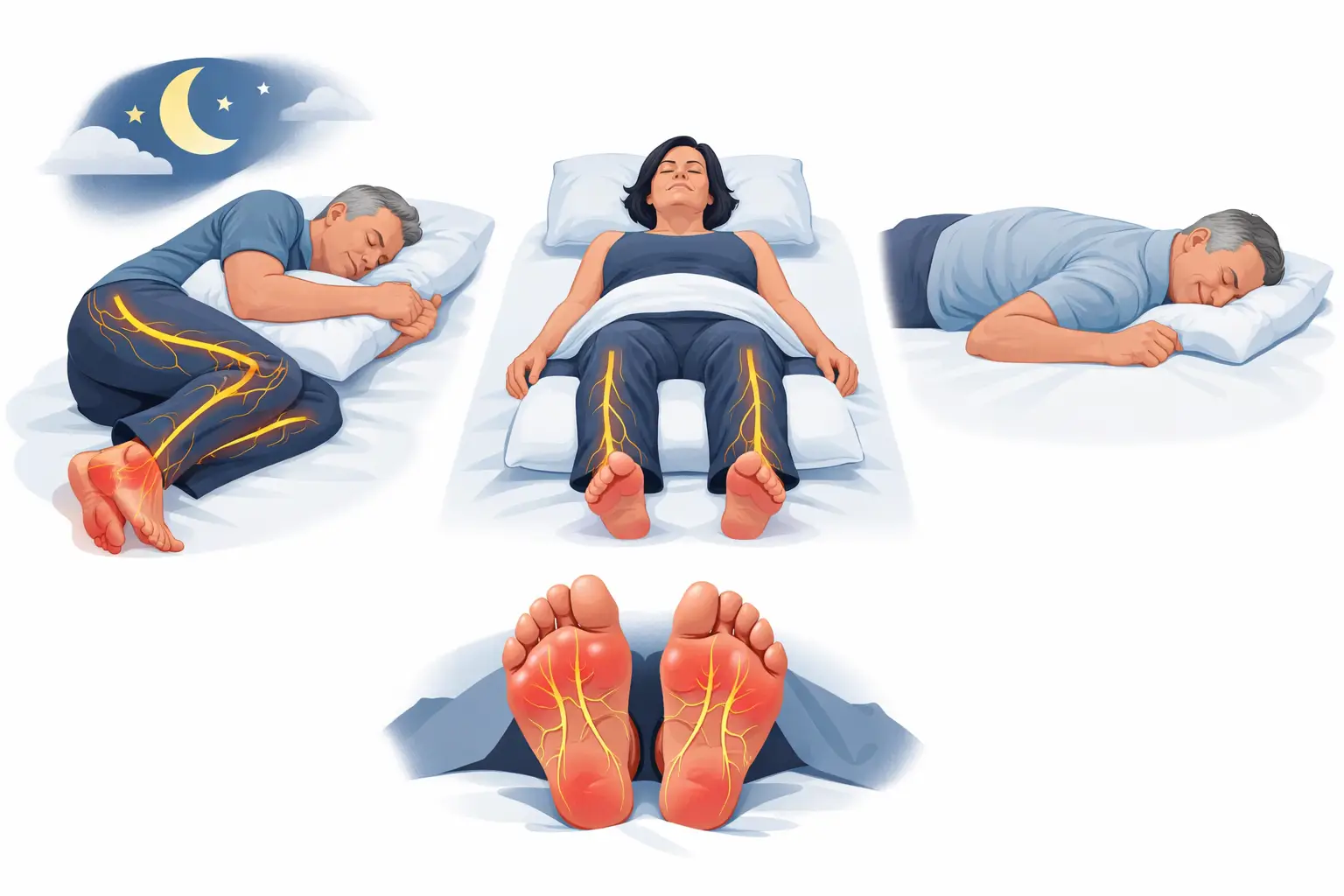
Night can be the hardest part of living with nerve discomfort. If burning feet, tingling hands, or electric-shock sensations seem to flare the moment you lie down, finding the best sleep positions for neuropathy can make a meaningful difference in comfort, even if it does not solve the underlying cause.
For many adults over 45, neuropathy symptoms are not just painful – they are disruptive. Sleep becomes lighter, position changes feel constant, and a bad night often leads to a worse next day. The goal is not to find one perfect posture for everyone. It is to reduce pressure on sensitive nerves, support the spine and joints, and keep irritated areas from getting compressed for hours at a time.
Why sleep position matters with neuropathy
Neuropathy is a broad term. Symptoms can come from peripheral nerve irritation, diabetes-related nerve damage, vitamin B12 deficiency, spinal problems, circulation issues, medication effects, or other medical conditions. That is why the “best” position depends partly on where symptoms show up and what may be contributing to them.
At night, several things can make symptoms more noticeable. You are still for longer periods, bedding can press on the feet or hands, and joint angles may narrow spaces where nerves already feel irritated. Some people also become more aware of tingling or burning when the room is quiet and there are fewer distractions.
A better sleep position will not cure neuropathy. What it can do is lower mechanical stress. In practical terms, that may mean less pressure on the toes, a straighter wrist, less twisting through the lower back, or better support under the knees.
Best sleep positions for neuropathy by symptom pattern
The most useful place to start is with your symptom location.
Back sleeping with leg support
For many people with foot neuropathy, burning soles, or tingling in the lower legs, back sleeping is often one of the better options. It allows the body to stay fairly symmetrical and makes it easier to avoid direct pressure on the feet.
The key is support. A pillow under the knees can reduce tension through the low back and hamstrings. If bedcovers pressing on the toes make symptoms worse, creating a light “tent” over the feet with blankets can help reduce contact. Some people also feel more comfortable with a small pillow or rolled towel under the calves so the heels carry less pressure, but that depends on whether heel pressure is part of the problem.
This position tends to work best for people who do not snore heavily and do not have untreated sleep apnea. If lying flat worsens breathing or reflux, comfort in the nerves may come at the expense of poorer overall sleep.
Side sleeping with a pillow between the knees
Side sleeping is often the most realistic option because many adults already prefer it. It can be one of the best sleep positions for neuropathy when done carefully. A pillow between the knees helps keep the hips and low back more neutral, which may reduce strain if leg symptoms are partly related to lumbar spine issues.
If one side is much more symptomatic than the other, it often makes sense to sleep on the less painful side so you are not placing body weight directly onto an already irritated shoulder, hip, arm, or leg. For hand numbness or tingling, avoid curling the wrists inward or tucking the hands under the pillow. That position can increase compression around the wrist and elbow.
A common problem with side sleeping is that people fold forward into a semi-stomach position. That twist through the lower spine and pelvis can aggravate some nerve-related leg symptoms. Keeping the shoulders and hips stacked more cleanly usually works better.
Reclined or elevated back sleeping
Some readers notice that neuropathy discomfort intensifies when the legs are completely flat. In that case, a slightly elevated upper body or gentle leg elevation may feel better. This is less about a dramatic angle and more about subtle support.
An adjustable bed can help, but it is not essential. Wedge pillows or a combination of regular pillows can create a mild incline. If swelling, circulation concerns, or back discomfort are also in the picture, elevation may improve overall comfort. Still, too much bend at the hips or knees can create new pressure points, so small adjustments usually work better than aggressive ones.
Positions that often make symptoms worse
Not every uncomfortable position is harmful, but some patterns repeatedly cause trouble.
Stomach sleeping
Stomach sleeping is usually the least forgiving choice for neuropathy. It tends to rotate the neck, arch the low back, and place awkward pressure on the shoulders and arms. If you already wake with numb hands, forearm tingling, or neck-related symptoms, this position can be a poor match.
It can also force the feet into a pointed position at the edge of the mattress, which may increase cramping or nerve irritation in some people. If stomach sleeping is your long-standing habit, it may take time to change, but even shifting toward a side-lying posture can help.
Curled wrists and bent elbows
This is not a whole-body sleep position, but it matters. Many people sleep with the wrists flexed or elbows tightly bent. That can worsen nighttime hand tingling, especially if median or ulnar nerve compression is part of the picture. Sleeping with arms relaxed at the sides or supported in a more neutral position is usually better.
Pressure directly on painful areas
If one foot burns, one hip is hypersensitive, or one arm goes numb, lying directly on that area for hours is rarely helpful. This sounds obvious, but it is easy to miss when you are half asleep and trying to get comfortable fast. Pillows are often less about softness and more about offloading pressure.
How to set up the bed for better nerve comfort
The position matters, but so does the setup around it. A few simple changes can make a good position easier to maintain through the night.
A medium-support mattress often works better than one that is extremely soft or very firm. If the surface is too soft, the body can sink and twist. If it is too firm, pressure points may increase at the hips, shoulders, and heels. Pillow height matters too. The goal is to keep the neck aligned with the rest of the spine rather than tilted sharply up or down.
For foot symptoms, lightweight bedding can be surprisingly helpful. Some people with neuropathy are very sensitive to even minor fabric pressure over the toes. Socks are more variable. Warm socks may soothe some people, while others feel worse with any compression or trapped heat.
If you wake with hand numbness, a neutral wrist position may matter more than a softer mattress. In some cases, clinicians recommend nighttime wrist splints for people with suspected nerve compression around the wrist, but that is a conversation worth having with a healthcare professional rather than guessing.
When the best sleep position is not enough
Sometimes sleep position is only a small piece of the problem. If symptoms are progressing, affecting balance, causing weakness, or spreading quickly, it is worth getting evaluated rather than trying more pillows.
The same applies if nighttime symptoms come with new back pain, one-sided leg weakness, falls, changes in bowel or bladder control, or severe numbness. Those patterns can point to issues that need prompt medical attention.
For adults researching neuropathy, it is also reasonable to ask whether common contributors have been reviewed, including blood sugar issues, medication side effects, alcohol use, thyroid problems, and nutrient status such as vitamin B12. That distinction matters: nutritional support may be relevant for some people, but it should be viewed as part of a broader evidence-informed discussion, not a shortcut around proper diagnosis.
A practical way to find your best sleep position for neuropathy
Instead of changing everything at once, test one adjustment for several nights. Try back sleeping with a pillow under the knees, or side sleeping with support between the knees and ankles. If hand symptoms are the issue, focus first on arm and wrist posture rather than leg elevation.
It helps to judge results by patterns, not one night. A position that feels awkward at first may still reduce 3 a.m. flare-ups after a few days. On the other hand, if a setup causes more numbness, more back strain, or poorer sleep overall, it is probably not the right fit for your body.
The most useful sleep position is usually the one that lowers pressure, supports alignment, and is realistic enough that you can actually maintain it. Comfort is not trivial here. When nerves are already sensitive, small mechanical changes can matter more than people expect.
If you have been waking up tired, frustrated, and sore, start with the simplest fix: make the bed work with your symptoms instead of against them. Better nights often begin with less pressure, better support, and a willingness to adjust until your body settles.
Frequently Asked Questions
What is the best sleeping position for neuropathy in the feet?
Back sleeping with a pillow under the knees is often a helpful starting point for foot neuropathy because it may reduce pressure on the feet and keep the lower body more supported. Some people also benefit from keeping heavy bedding off the toes.
Is side sleeping good for neuropathy?
Side sleeping can be comfortable for neuropathy when the hips, knees, shoulders, and wrists are supported. A pillow between the knees may help reduce twisting through the lower back and hips.
Can sleeping position make neuropathy worse?
Yes, some positions may worsen symptoms by compressing sensitive nerves or placing pressure on painful areas. Stomach sleeping, curled wrists, tightly bent elbows, or lying directly on a painful hip, shoulder, foot, or arm may aggravate symptoms in some people.
Why does neuropathy feel worse at night?
Neuropathy may feel more noticeable at night because the body is still, there are fewer distractions, and bedding or joint positions may place pressure on irritated nerves. Nighttime worsening does not identify the cause, so persistent symptoms should be discussed with a clinician.
Should I elevate my legs if I have neuropathy?
Gentle leg elevation may help some people feel more comfortable, especially if swelling or lower-back discomfort is also present. However, extreme bending at the hips or knees can create new pressure points, so small adjustments are usually better.
What sleep position should I avoid with neuropathy?
Stomach sleeping is often the least helpful position because it can rotate the neck, arch the lower back, and place pressure on shoulders, arms, and feet. People with hand tingling should also avoid sleeping with wrists curled or elbows tightly bent.
Can a pillow cure neuropathy symptoms?
No. Pillows and sleep position changes may improve comfort by reducing pressure, but they do not cure neuropathy or treat its underlying cause. Medical evaluation is important when symptoms are persistent, worsening, or associated with weakness or balance problems.
When should I see a doctor for nighttime neuropathy symptoms?
You should seek medical advice if symptoms are new, worsening, spreading, affecting balance, causing weakness, or interfering with sleep and daily function. Sudden severe symptoms, falls, or bladder and bowel changes require prompt medical attention.
Medical Disclaimer:
This content is for educational purposes only and does not diagnose, treat, cure, or replace professional medical care. Vitamin B12 deficiency, neuropathy symptoms, nerve pain, numbness, tingling, burning feet, balance problems, fatigue, and related health concerns can have many possible causes, including diabetes, vitamin deficiencies, medication effects, alcohol exposure, autoimmune conditions, infections, circulation problems, gastrointestinal or absorption issues, spinal conditions, or nerve compression.
Information about supplements, nutrition, lifestyle, sleep, movement, testing, or symptom support should not be used as a substitute for evaluation by a qualified healthcare professional. Supplements may not be appropriate for everyone and may interact with medications or medical conditions.
New, worsening, spreading, severe, one-sided, or unexplained symptoms — including numbness, weakness, balance problems, falls, wounds, foot ulcers, skin color changes, severe pain, chest pain, shortness of breath, bowel or bladder changes, facial drooping, trouble speaking, confusion, or sudden neurologic symptoms — should be discussed with a qualified healthcare professional or emergency service promptly.

- Can Low B12 Cause Dizziness? - July 9, 2026
- B12 Deficiency and Cracked Corners of the Mouth - July 9, 2026
- Can Low B12 Cause Dry Mouth? - July 8, 2026