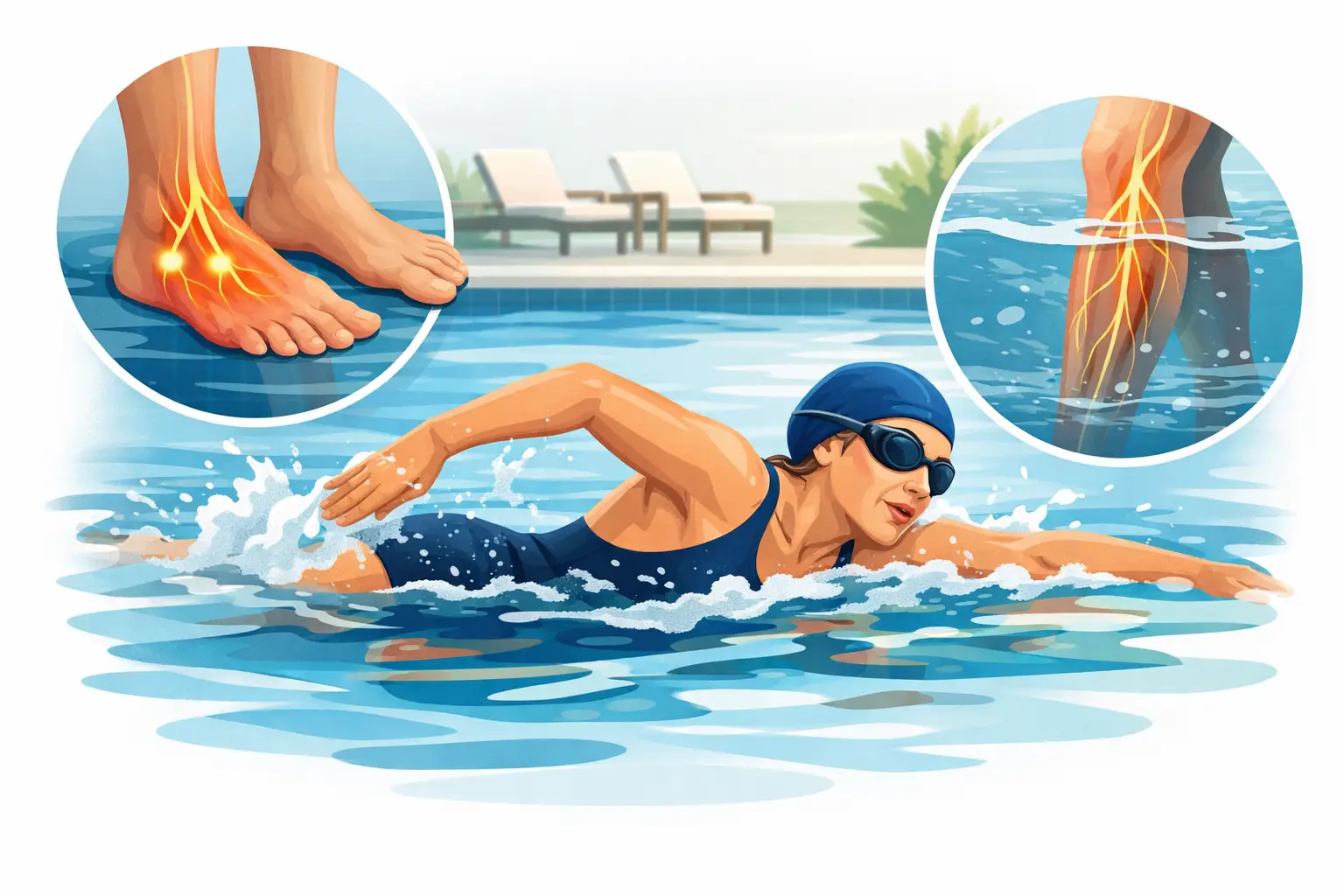
For many adults with tingling, burning feet, numbness, or leg discomfort, exercise feels like a bad bargain – move more and symptoms may flare, move less and strength declines. That is why swimming for neuropathy gets so much attention. Water can reduce pressure on sore feet and joints, but that does not automatically make it safe or effective for every type of nerve symptom.
A more useful question is this: when does swimming help, when can it backfire, and how should you approach it if you already have balance problems, reduced sensation, or weakness?
Why swimming may help neuropathy symptoms
Neuropathy is a broad term. Some people mainly notice numb toes. Others deal with burning pain, muscle weakness, poor balance, or a pins-and-needles sensation that worsens at night. Because symptoms vary so much, exercise recommendations need to be practical rather than one-size-fits-all.
Swimming and other water-based exercise can make sense for neuropathy because water changes the mechanics of movement. Buoyancy reduces body-weight load on the feet, ankles, knees, and lower back. That matters if walking on hard surfaces increases discomfort or if foot pain makes land exercise hard to tolerate.
Warm water may also help some people feel looser and less stiff. If neuropathy has led to guarded movement, poor confidence, or deconditioning, a pool can offer a gentler way to rebuild activity. There is also the cardiovascular benefit. Moderate aerobic exercise supports circulation, metabolic health, and overall physical function, which can be relevant in people whose nerve symptoms coexist with diabetes, low fitness, or vascular concerns.
That said, swimming is not a direct treatment for nerve damage. It is better viewed as a potentially lower-impact form of exercise that may help symptom management, mobility, and conditioning in the right person.
What the evidence really suggests
The research on exercise and peripheral neuropathy is more encouraging than definitive. Studies broadly support physical activity for improving function, balance, fitness, and sometimes pain, especially when exercise is consistent and appropriately supervised. Water exercise is often included as a joint-friendly option, but it has not been proven to work equally well for all neuropathy causes.
That distinction matters. Neuropathy related to diabetes, vitamin deficiencies, medication effects, alcohol use, spinal issues, or autoimmune conditions can behave differently. A person with mild sensory symptoms may tolerate pool exercise well, while someone with marked weakness or severe balance impairment may need close supervision.
For adults researching neuropathy, the practical takeaway is simple: swimming may help with movement tolerance, conditioning, and comfort, but expectations should stay realistic. It may reduce the burden of symptoms for some people. It is unlikely to be a stand-alone answer.
When swimming for neuropathy makes the most sense
Swimming is often most useful when foot impact is the main barrier to staying active. If walking aggravates burning soles, sore arches, or lower-extremity fatigue, being in water may allow longer movement with less discomfort. It can also be helpful if excess body weight, arthritis, or back pain make traditional exercise difficult.
Another good fit is the person who feels unsteady on land but more confident in chest-deep water. Pool walking, gentle kicking, and supported movement can sometimes offer a bridge back into regular activity.
It may be less suitable if you have open sores, active foot ulcers, a high fall risk around slippery pool decks, severe temperature sensitivity, uncontrolled blood sugar swings, or major muscle weakness that affects safe entry and exit from the pool. In those cases, the issue is not whether swimming is healthy in theory. The issue is whether it is safe for you, specifically.
Benefits to expect – and benefits not to expect
The most realistic benefits are improved endurance, easier movement, less joint strain, and in some cases better mood and sleep. Some people also report less stiffness and a temporary drop in pain intensity after a session. If neuropathy has made you avoid activity, that alone can be meaningful.
What swimming should not be expected to do is restore normal nerve sensation, correct a nutrient deficiency, or address the underlying cause of symptoms. If your neuropathy is related to low vitamin B12, blood sugar issues, medication effects, or another medical problem, those factors still need attention. Exercise can support function, but it does not replace diagnostic workup or cause-specific care.
For a site focused on evidence-informed nerve health, this is where context matters. A pool routine may fit alongside broader medical evaluation, foot care, and nutrition review, rather than replacing them.
Risks adults 45+ should think about first
The main risk with neuropathy is reduced sensation. If your feet do not register pain normally, you may miss warning signs such as blisters, skin breakdown, or strain. Pool decks also increase slip risk, especially if you already have poor balance.
Water temperature deserves attention too. Some people with neuropathy are unusually sensitive to heat or cold. Very hot water can leave you lightheaded or worsen swelling, while cold water may increase discomfort or cramping. A comfortably warm pool is usually better tolerated than extreme temperatures.
There is also the fatigue issue. Neuropathy can overlap with weakness, poor sleep, or low exercise tolerance. Doing too much too soon may trigger soreness that makes you stop altogether. Starting below your perceived limit is usually smarter than testing it.
If you have diabetes, inspect your feet before and after swimming. If you have a history of ulcers, fungal infections, or skin fragility, ask your clinician whether regular pool use is advisable.
How to start safely
If you want to try swimming for neuropathy, begin with the least demanding version of it. That may mean water walking, gentle lap swimming, or supported exercise near the wall instead of a full workout. Your goal is to see how your body responds over 24 hours, not to prove fitness on day one.
A practical starting point is 10 to 20 minutes, two or three times per week. Keep intensity moderate. You should feel like you are exercising, but still able to speak in short sentences. If symptoms clearly worsen later that day or the next morning, scale back time, pace, or kick intensity.
Pay attention to entry and exit. For many adults with neuropathy, the hardest part is not the swimming itself but the stairs, ladder, or wet surface around the pool. Water shoes, handrails, and a facility with easy-access steps can make a major difference.
If traditional lap swimming feels awkward, consider alternatives. Water aerobics, pool walking, or using a kickboard with light supervision may be more practical. The best exercise is the one you can repeat safely.
Should you choose swimming over walking?
Not necessarily. This is an either-or question only if one option clearly aggravates your symptoms. Walking remains useful for many adults because it is accessible, weight-bearing, and easy to maintain. But for people whose foot pain or joint discomfort makes walking unpleasant, swimming may be more sustainable.
In some cases, the best plan is a mix. Pool exercise can build confidence and fitness while shorter walks preserve land-based balance and bone-loading. That blended approach often makes more sense than committing to a single mode of exercise.
When to talk to a clinician before getting in the pool
If your neuropathy is new, rapidly worsening, one-sided, or accompanied by major weakness, falls, or bowel or bladder changes, you should seek medical evaluation before starting an exercise program. The same applies if you have known heart disease, uncontrolled diabetes, open foot wounds, or severe dizziness.
You should also ask for guidance if you suspect a nutritional issue such as vitamin B12 deficiency, especially if numbness and gait changes are progressing. Identifying the reason for nerve symptoms matters. Exercise can support quality of life, but it works best when the underlying picture is not being ignored.
A realistic way to think about it
Swimming can be a useful tool for neuropathy, especially when pain, stiffness, or fear of impact have made regular exercise harder to maintain. Its biggest strength is not that it fixes nerve damage. Its strength is that it may allow some adults to stay active with less strain than land exercise.
That is often enough to make it worth trying – carefully, gradually, and with attention to safety. If the pool helps you move more consistently without aggravating symptoms, it may earn a place in your routine. If it does not, that is useful information too, and a sign to explore other low-impact options with a clinician who understands your full symptom picture.
Frequently Asked Questions
Is swimming good for neuropathy?
Swimming may be helpful for some people with neuropathy because water reduces impact on the feet and joints while allowing gentle movement. It is not a cure for neuropathy and should be approached carefully if sensation, balance, or strength are reduced.
Can swimming make neuropathy worse?
Swimming can worsen symptoms if the workout is too intense, the water temperature is poorly tolerated, or pool access increases the risk of slips and falls. People with open wounds, severe weakness, or major balance problems should ask a clinician before swimming.
Is swimming better than walking for neuropathy?
Not always. Walking is useful for many adults because it is accessible and weight-bearing. Swimming may be better when walking aggravates burning feet, joint pain, or lower-leg discomfort. Some people do best with a combination of pool exercise and shorter walks.
What is the safest way to start swimming with neuropathy?
Start with gentle water walking, supported movement near the wall, or easy lap swimming for about 10 to 20 minutes. Keep the intensity moderate and check how symptoms feel later that day and the next morning before increasing time or effort.
Should people with diabetic neuropathy swim?
Some people with diabetic neuropathy may tolerate swimming well, but foot safety is important. Inspect the feet before and after swimming, avoid pool use with open sores or ulcers, wear protective footwear on wet surfaces, and ask a clinician for guidance if blood sugar control or wound healing is a concern.
Is warm water better for neuropathy symptoms?
Comfortably warm water may feel better for stiffness or guarded movement, but very hot water can be risky if sensation is reduced or if heat causes dizziness or swelling. Avoid extreme temperatures and test water carefully.
Can swimming reverse nerve damage?
Swimming is not known to reverse nerve damage. It may help some people maintain fitness, reduce impact stress, and move more comfortably, but the cause of neuropathy still needs appropriate medical evaluation and treatment.
When should I avoid swimming with neuropathy?
Avoid swimming until medically cleared if you have open foot wounds, active ulcers, skin infection, severe dizziness, major weakness, frequent falls, rapidly worsening symptoms, or new bowel or bladder changes.
Medical Disclaimer:
This content is for educational purposes only and does not diagnose, treat, cure, or replace professional medical care. Vitamin B12 deficiency, neuropathy symptoms, nerve pain, numbness, tingling, burning feet, balance problems, fatigue, and related health concerns can have many possible causes, including diabetes, vitamin deficiencies, medication effects, alcohol exposure, autoimmune conditions, infections, circulation problems, gastrointestinal or absorption issues, spinal conditions, or nerve compression.
Information about supplements, nutrition, lifestyle, sleep, movement, testing, or symptom support should not be used as a substitute for evaluation by a qualified healthcare professional. Supplements may not be appropriate for everyone and may interact with medications or medical conditions.
New, worsening, spreading, severe, one-sided, or unexplained symptoms — including numbness, weakness, balance problems, falls, wounds, foot ulcers, skin color changes, severe pain, chest pain, shortness of breath, bowel or bladder changes, facial drooping, trouble speaking, confusion, or sudden neurologic symptoms — should be discussed with a qualified healthcare professional or emergency service promptly.

- Can Low B12 Cause Dizziness? - July 9, 2026
- B12 Deficiency and Cracked Corners of the Mouth - July 9, 2026
- Can Low B12 Cause Dry Mouth? - July 8, 2026