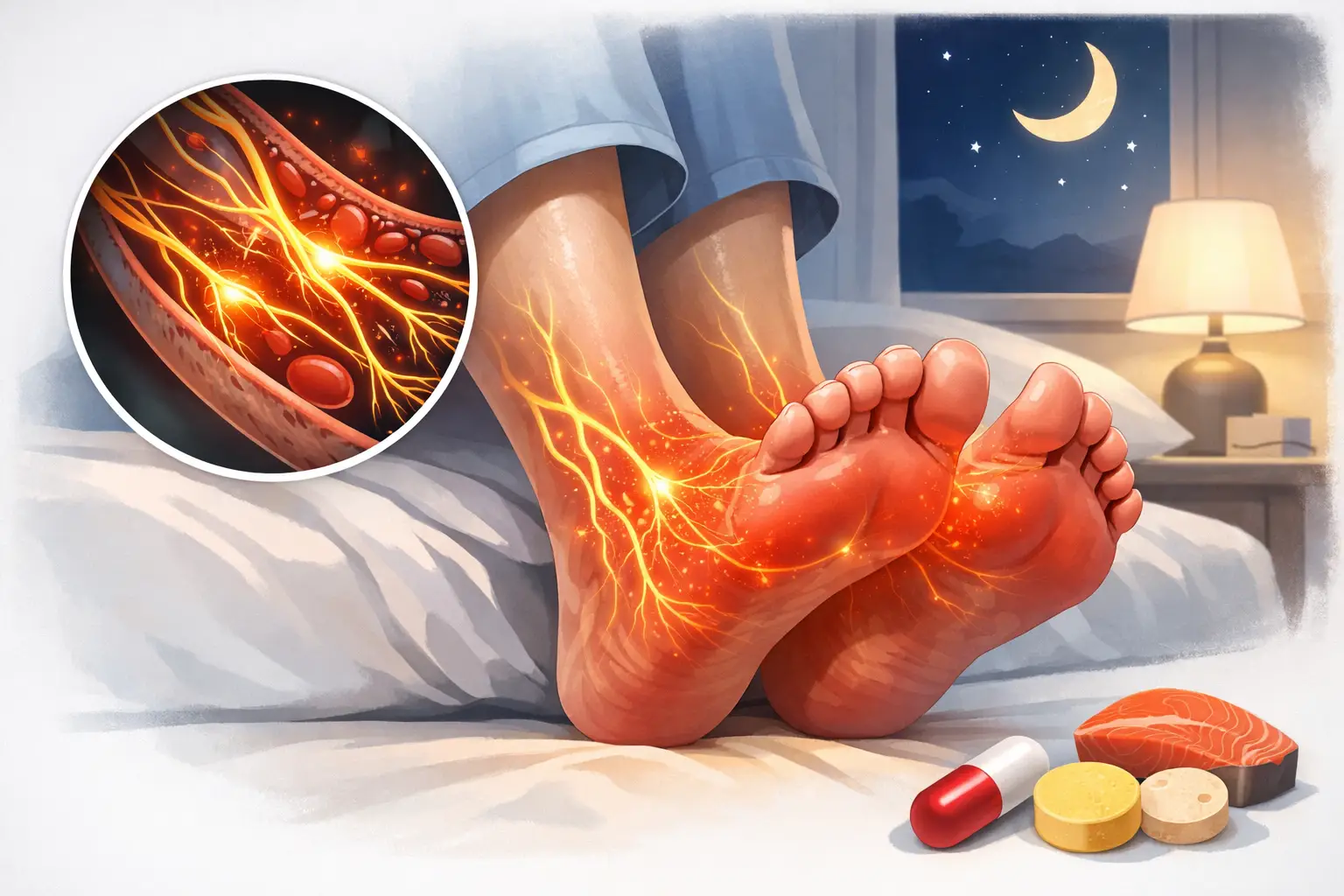
Feet often burn more at night in neuropathy because nerve signals become more noticeable in quiet environments, body temperature rises under blankets, and damaged nerves may react more strongly to pressure, warmth, and reduced nighttime distraction. Conditions such as peripheral neuropathy, diabetes, and vitamin B12 deficiency can all contribute to this pattern.
If you are searching for why feet burn more at night in neuropathic conditions, you are not imagining the pattern. Many people with peripheral nerve symptoms notice that burning, tingling, or hot-feet sensations become more intense after dinner or once they get into bed. That timing is common, and it usually reflects a mix of nerve dysfunction, lower nighttime distraction, body temperature shifts, and pressure from lying down rather than a sudden worsening of the underlying condition.
For adults over 45, this symptom often raises two immediate questions: why does it happen when the day is over, and does it point to something serious? The answer depends on the cause of the neuropathy, the symptom pattern, and whether other issues such as diabetes, vitamin B12 deficiency, alcohol use, medication effects, or circulation problems may be contributing.
Why Feet Burn More at Night
Neuropathy means the nerves are not sending signals normally. When sensory nerves in the feet are irritated or damaged, they may send pain or heat signals even when there is no injury to the skin. During the day, your brain is busy processing movement, conversation, light, sound, and routine activity. At night, those competing signals drop away. The burning does not always become dramatically stronger, but it often feels stronger because there is less to distract you from it.
Body temperature can also play a role. As the evening progresses, people often get under blankets, wear socks, or spend time in a warm room. Heat can make nerve-related burning feel more noticeable. Some people describe their feet as feeling hot even when the skin is not especially warm to the touch. That disconnect is a hallmark of nerve-related symptoms. The nerves are misfiring, so the sensation may not match the actual skin temperature.
There is also a mechanical issue. Once you lie down, the pressure of sheets, mattress contact, or even mild swelling around the feet and ankles can irritate already sensitive nerves. In people with small fiber neuropathy or diabetic neuropathy, very light touch can feel unpleasant or painful. This is one reason some patients say the bedcovers seem unbearable by the end of the day.
Why Burning Feet Symptoms Often Feel Worse at Night
The nervous system is quieter, but symptoms feel louder
One of the most overlooked explanations is sensory contrast. At night, the environment becomes still. If you are sitting quietly or trying to sleep, minor nerve sensations that would have been background noise at noon can feel front and center at 10 p.m.
This does not mean the symptom is purely psychological. The burning is real. What changes is your awareness of it. The same principle helps explain why tinnitus can seem louder in a quiet room. A nerve symptom can become more intrusive when there is nothing competing with it.
Sleep-related stress can amplify this further. Once people start anticipating burning feet every night, they may become more alert to the sensation before it even begins. Poor sleep can then increase pain sensitivity the next day, creating a frustrating cycle.
Common causes behind nighttime burning feet
Burning feet at night can have different causes. This quick overview highlights common symptom patterns and situations where medical evaluation may be helpful.
Peripheral neuropathy is not one condition. It is a symptom pattern with many possible triggers. Diabetes is one of the best-known causes, especially when burning starts in both feet and gradually moves upward in a stocking-like pattern. Blood sugar changes over time can injure the small nerves responsible for pain and temperature sensation.
Vitamin B12 deficiency is another important consideration, particularly in adults over 45, in people taking metformin or acid-reducing medications, and in those with digestive conditions that affect absorption. Low B12 can contribute to numbness, tingling, burning, balance changes, and fatigue. It is not the only vitamin-related cause, but it is one of the most clinically relevant because deficiency can be missed for months.
Alcohol use, thyroid disease, kidney disease, some chemotherapy drugs, and certain autoimmune conditions can also injure peripheral nerves. In other cases, the cause remains unclear even after evaluation.
Not every case of hot or burning feet is neuropathy. Circulation problems, fungal infections, footwear irritation, contact dermatitis, and erythromelalgia can also cause heat or burning sensations. That is why pattern matters. Neuropathy is more likely when burning comes with tingling, numbness, electric-shock sensations, reduced balance, or reduced ability to feel temperature.
How to tell if burning feet may be neuropathic
Neuropathic burning often has a recognizable pattern. It tends to affect both feet rather than one isolated spot, although early symptoms can be uneven. It may worsen at rest, especially in the evening. People commonly describe burning, pins-and-needles, buzzing, crawling sensations, or an odd mix of numbness and pain.
Another clue is that the skin may look fairly normal. With nerve-related burning, the feet can feel intensely hot even when there is no redness, rash, or injury. In contrast, circulation-related or inflammatory conditions are more likely to produce visible color changes, swelling, or skin warmth that another person can confirm by touch.
Still, there is overlap. A person can have neuropathy and poor circulation at the same time. That is one reason self-diagnosis is limited. A clinician may consider blood work, medication review, foot exam, and sometimes nerve testing depending on the broader picture.
Does worse burning at night mean neuropathy is progressing?
Not necessarily. Nighttime worsening is common even in relatively stable neuropathy. It often reflects the normal day-night pattern of sensory awareness, warmth, inactivity, and pressure on sensitive feet. Even when neuropathy itself is relatively stable, many people notice that symptoms often feel more intense after dark because the nervous system becomes more aware of sensory discomfort at rest.
What is more concerning is a broader change in the symptom pattern. If the burning is spreading quickly, accompanied by new weakness, causing falls, or associated with skin color changes, ulcers, or severe one-sided pain, it deserves more prompt medical attention. Neuropathy usually develops gradually, so sudden or rapidly escalating symptoms should not be ignored.
Practical ways to reduce nighttime burning
Relief starts with matching the strategy to the symptom. If heat is a trigger, keeping the bedroom cooler may help. Some people do better with lightweight bedding or a foot tent that lifts sheets off the feet. Others prefer moisture-wicking socks if bare feet against fabric feel irritating. There is no single correct setup because nerve sensitivity varies.
Footwear choices during the day matter more than many people realize. Tight shoes, prolonged standing, or pressure across the forefoot can leave nerves more irritated by nighttime. Supportive, well-fitted shoes and avoiding prolonged compression can reduce the evening flare.
Simple cooling can help, but caution matters. Very cold packs or ice directly on the skin are not ideal, especially if sensation is reduced. A fan, breathable bedding, or a brief cool washcloth is safer for many people. If numbness is present, always check the skin carefully afterward.
Blood sugar management, when relevant, matters over the long term. So does identifying reversible contributors such as low vitamin B12, medication-related deficiency, or alcohol excess. In an evidence-informed supplement discussion, B12 is most relevant when deficiency or low status is suspected or confirmed. It is not a blanket solution for every case of neuropathy, and realistic expectations are important.
When vitamin B12 enters the conversation
Because this site focuses on evidence-based supplement education, B12 deserves a careful mention. Vitamin B12 supports nerve function, and inadequate levels can contribute to neuropathic symptoms. In older adults, deficiency risk rises because stomach acid changes, certain medications, and absorption problems become more common with age.
That said, not every person with burning feet needs a B12 supplement, and higher doses are not automatically better. The practical question is whether B12 status has been assessed and whether deficiency, borderline levels, or a known absorption issue exists. If so, correcting that deficiency under medical guidance may be part of a broader plan. If not, it is better to avoid assuming that any single supplement explains or fixes a complex symptom.
When to speak with a healthcare professional
Burning feet at night are worth discussing with a clinician if symptoms are frequent, disrupt sleep, affect walking, or are paired with numbness, weakness, balance trouble, or changes in bladder or bowel function. You should also seek evaluation if the feet are visibly red, swollen, pale, cold, wounded, or if one side is much worse than the other.
For many readers, the most useful next step is a focused review: when the burning began, whether it affects both feet, which medications you take, whether diabetes or prediabetes is present, and whether B12, thyroid, kidney, or metabolic issues have been checked recently. That kind of review often does more to clarify the cause than guessing based on the symptom alone.
Nighttime burning feet can feel alarming, but the pattern itself is common in neuropathy. Often, the nerves are more noticeable at night because the world is quieter, the bed is warmer, and sensitive feet have fewer distractions. The helpful question is not just why it happens after dark, but what may be driving the nerves to misfire in the first place.
Frequently Asked Questions
Why do feet burn more at night?
Feet often burn more at night because neuropathy symptoms become more noticeable when the body is at rest and there are fewer distractions competing for attention. Warm bedding, pressure from lying down, circulation changes, and increased nerve sensitivity can all make burning sensations feel stronger in the evening.
Can vitamin B12 deficiency cause burning feet?
Yes, vitamin B12 deficiency can contribute to burning feet in some people. Low B12 levels may affect nerve function and lead to symptoms such as tingling, numbness, pins-and-needles sensations, or burning discomfort in the feet and legs.
Is burning feet syndrome dangerous?
Burning feet are not always dangerous, but persistent or worsening symptoms should not be ignored. In some cases, burning sensations may be linked to peripheral neuropathy, diabetes, vitamin deficiencies, circulation problems, or nerve damage.
Can neuropathy make feet feel hot?
Yes. Peripheral neuropathy can create sensations of heat or burning even when the skin temperature feels normal to the touch. Damaged sensory nerves may send abnormal pain or temperature signals to the brain.
Why does neuropathy flare up at bedtime?
Neuropathy symptoms often feel worse at bedtime because the nervous system becomes more aware of pain signals in quiet environments. Reduced movement, warmth from blankets, and pressure against sensitive nerves can all contribute to nighttime flare-ups.
Should I worry about burning feet at night?
Occasional mild burning may not always signal a serious condition, but frequent nighttime burning should be evaluated if it is persistent, worsening, associated with numbness or weakness, or affecting sleep and mobility.
Medical Disclaimer: The information provided in this article is for educational purposes only and is not intended as medical advice. Dietary supplements are not a replacement for professional medical diagnosis or treatment. Always consult with a qualified healthcare professional before starting any new supplement, especially if you have pre-existing medical conditions or are taking prescription medications. Individual results may vary.
Related Articles
- Why Neuropathy Gets Worse at Night
- Can Low B12 Cause Burning Feet?
- Can Vitamin B12 Deficiency Cause Tingling?
- Early Signs of Nerve Damage From Vitamin Deficiency
- Peripheral Neuropathy Causes and Relief
Sources
- National Institute of Neurological Disorders and Stroke (NINDS)
- Mayo Clinic — Peripheral Neuropathy
- NIH Office of Dietary Supplements — Vitamin B12
- Cleveland Clinic — Burning Feet Syndrome

- Can Low B12 Cause Dizziness? - July 9, 2026
- B12 Deficiency and Cracked Corners of the Mouth - July 9, 2026
- Can Low B12 Cause Dry Mouth? - July 8, 2026