Tingling in your hands, numb feet, burning sensations, or muscle weakness can send you down a long list of possible causes. One of the most overlooked is vitamin B12 deficiency. If you are asking how does B12 help nerves, the short answer is that B12 supports the protective covering around nerves and helps them send signals the way they should.
That simple answer matters because nerve problems do not always start with dramatic symptoms. In many people, they begin quietly – a little pins-and-needles feeling, reduced balance, fatigue, brain fog, or a strange sensitivity in the legs. When B12 runs low for long enough, those issues can become harder to reverse.
How does B12 help nerves in the body?
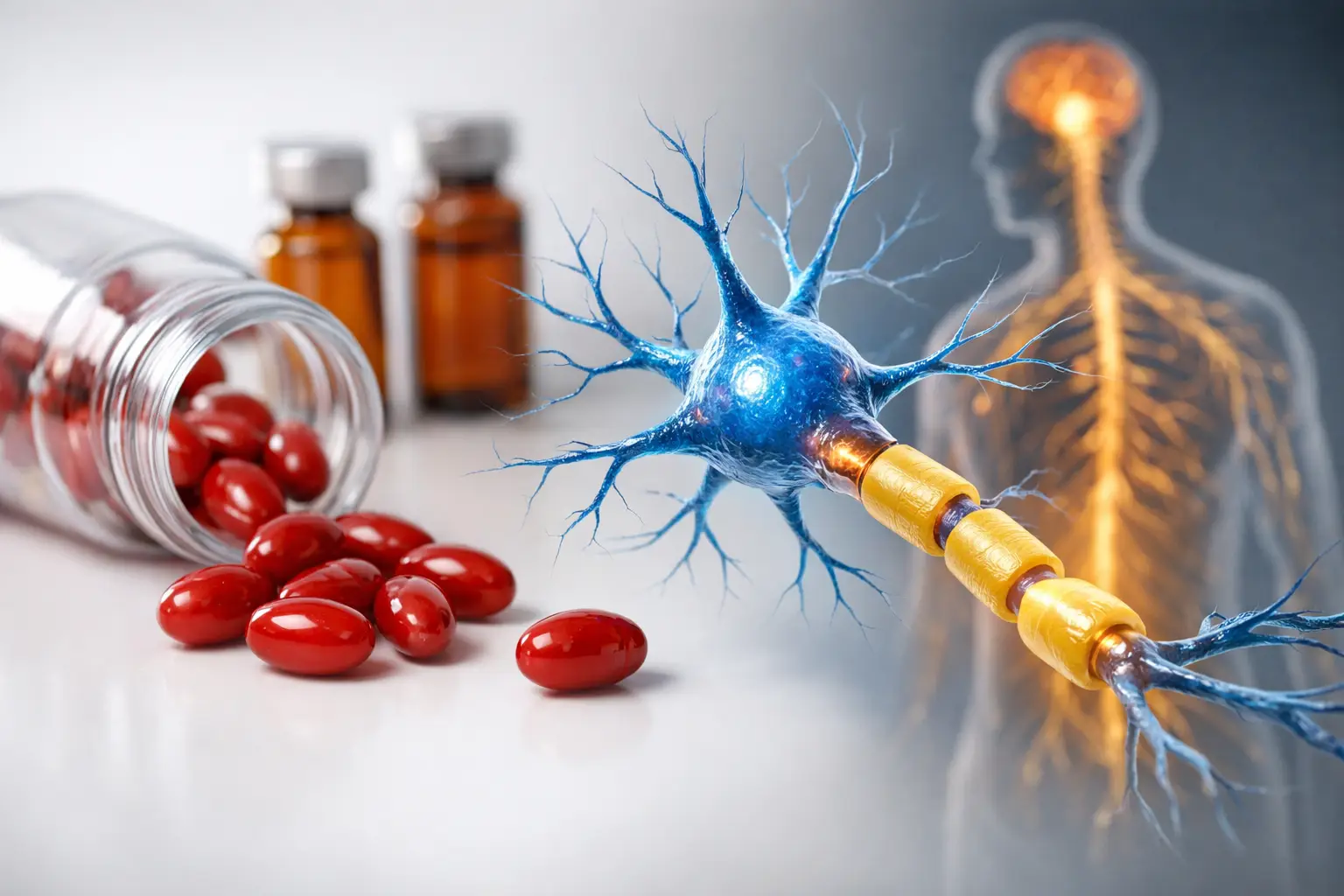
Vitamin B12 plays a direct role in maintaining the nervous system. One of its main jobs is helping your body produce and maintain myelin, the fatty sheath that wraps around nerves. You can think of myelin as insulation around an electrical wire. When that insulation is healthy, signals travel efficiently. When it is damaged, signals can slow down, misfire, or get blocked.
B12 is also involved in making red blood cells and supporting DNA synthesis, but for nerve health, myelin is the key issue. Without enough B12, the nervous system can start to break down in ways that show up as numbness, tingling, weakness, balance problems, and cognitive changes.
This is why B12 deficiency is not just about low energy. It can affect the brain, spinal cord, and peripheral nerves. In practical terms, that means symptoms may show up in your hands, feet, legs, memory, mood, or coordination.
The myelin connection
Nerves need protection to transmit messages properly. Myelin helps preserve speed and accuracy in communication between the brain and the rest of the body. B12 supports biochemical processes that keep myelin intact and help repair it when damage occurs.
When B12 is too low, myelin can degenerate. That does not mean every case of tingling is caused by B12, but it does explain why low B12 can create neurological symptoms even before anemia becomes obvious.
Nerve signaling and repair
B12 also helps with methylation, a process your body uses in many reactions related to nerve function and cell maintenance. If methylation is impaired, nerve cells may not function as efficiently. Over time, that can contribute to poor signal transmission and slower recovery.
This is one reason some people notice not just numbness, but also fatigue, mental slowness, or mood changes when B12 is low. The nervous system is broad, and B12 affects more than one part of it.
What happens when B12 is too low?
A B12 deficiency can produce a wide range of symptoms, and that is part of the problem. The signs are easy to dismiss or blame on stress, aging, poor sleep, or circulation issues. In reality, low B12 can gradually interfere with nerve function.
Common nerve-related symptoms include tingling in the hands or feet, numbness, burning feet, reduced vibration sense, muscle weakness, poor balance, and trouble walking. Some people also report brain fog, memory issues, irritability, or depression. In more serious cases, deficiency can cause lasting neurological damage.
The timeline matters. A short-term dip in B12 is different from a long-standing deficiency. The longer nerves go without enough support, the less predictable recovery becomes. Early treatment offers the best chance of improvement.
Why deficiency can be missed
Many people assume a standard blood test will always catch low B12, but that is not always true. Serum B12 can be borderline while symptoms are already present. Some clinicians also look at methylmalonic acid and homocysteine, which can give a clearer picture when the diagnosis is uncertain.
It also matters why B12 is low. If the root problem is poor absorption, simply eating more B12-rich foods may not solve it.
Who is most likely to have low B12?
This is where a practical approach helps. B12 deficiency is more common in certain groups, and if you fall into one of them, nerve symptoms deserve more attention.
Adults over 50 are at higher risk because stomach acid often declines with age, and stomach acid is needed to separate B12 from food. People who follow vegan or strict vegetarian diets can also become deficient because B12 is found naturally mostly in animal products. Those taking metformin or long-term acid-reducing medications may absorb less B12 over time.
Digestive conditions matter too. Pernicious anemia, celiac disease, Crohn’s disease, gastric bypass surgery, and other gut-related issues can reduce B12 absorption significantly. Heavy alcohol use may also contribute.
If any of these apply and you have tingling, numbness, or unexplained fatigue, B12 should be part of the conversation.
Can B12 reverse nerve damage?
Sometimes yes, sometimes only partly. That depends on how long the deficiency has been present, how severe it is, and whether the cause has been corrected.
If low B12 is caught early, supplementation can improve symptoms and help prevent further damage. People often see energy improve first. Nerve symptoms can take longer. Tingling and numbness may improve over weeks or months, not days. In more advanced cases, recovery may be incomplete.
That is the trade-off most supplement shoppers need to understand. B12 can be highly effective when deficiency is the driver, but it is not a universal fix for every nerve issue. Neuropathy can also be caused by diabetes, alcohol use, autoimmune disease, infections, medication side effects, or physical nerve compression.
So if symptoms are severe, one-sided, rapidly worsening, or affecting walking, medical evaluation comes first.
Best forms of B12 for nerve support
From a consumer standpoint, the biggest question is usually whether the form matters. The two most common forms in supplements are cyanocobalamin and methylcobalamin.
Cyanocobalamin is stable, widely used, and effective for many people. Methylcobalamin is often marketed more aggressively for nerve health because it is one of the active forms used by the body. Some people prefer it for that reason, especially in products positioned for neurological support.
In practice, the best form depends on the person. Many do well with either. What matters more is whether the dose is appropriate and whether the person can absorb it. Someone with mild dietary insufficiency may respond well to an oral supplement. Someone with pernicious anemia or major absorption problems may need higher doses or injections under medical supervision.
Sublingual B12 is another popular option. It can be useful, but it is not automatically better than a standard oral supplement in every case. Marketing often exaggerates the difference.
How much B12 do you need?
The recommended daily amount for most adults is relatively low, but supplements often contain much higher doses. That is not unusual because B12 absorption is limited, especially in oral form. A product with 500 mcg or 1000 mcg may still be appropriate depending on the reason for use.
Still, more is not always more effective. If you are choosing a supplement for nerve support, the smarter move is to look at the full context: your diet, symptoms, medications, age, and whether deficiency has been confirmed.
This is also where shoppers get misled. A flashy label promising nerve repair means very little if the formula is underdosed, uses poor manufacturing standards, or ignores the reason you became deficient in the first place.
When a B12 supplement makes sense
A supplement makes sense when intake is low, deficiency is confirmed or strongly suspected, or a known absorption risk exists. It can also make sense for people who want a well-formulated product as part of a broader plan for energy and neurological support.
But there is a line between smart supplementation and blind buying. If your symptoms are significant, the goal should not just be to take B12. The goal should be to know whether B12 is actually part of the problem.
For that reason, the most useful product is not always the one with the loudest claims. It is the one with a clear dose, transparent labeling, quality manufacturing, and a form you are likely to use consistently.
What to look for before buying
If you are evaluating a B12 supplement specifically for nerve support, focus on evidence-based details. Check the form of B12, dose per serving, serving size, third-party testing or manufacturing quality signals, and whether the formula includes extras that make sense rather than filler ingredients added for marketing.
Also be realistic about timelines. If low B12 is behind your symptoms, improvement may be gradual. If there is no deficiency, a supplement may not change much at all. That does not mean the product is bad. It means the diagnosis matters.
[Visit the Official Website]
A good B12 product can be worth buying when it fits a real need. A bad one is just another bottle in the cabinet.
If your nerves have been sending warning signs, do not wait for them to get louder before taking the issue seriously.
FAQ
Is it possible to have ‘normal’ B12 levels and still have nerve pain?
- Yes. Standard blood tests often have a wide ‘normal’ range. Many people experience neurological symptoms at ‘low-normal’ levels. In clinical practice, we focus on optimal levels rather than just avoiding a clinical deficiency.
Do I need other vitamins alongside B12 for my nerves?
- While B12 is the primary builder, it works best with B6 and B1 (Benfotiamine) to support the entire nervous system’s metabolism and reduce inflammation. This is why specialized formulas are often more effective than single-ingredient vitamins.
What is the first sign that B12 is starting to help my nerves?
- Often, the first sign is a reduction in the intensity of ‘electric shocks’ or a slight improvement in balance. Because nerve tissue heals slowly, these subtle changes are a great indicator that the B12 is successfully supporting your myelin sheath.
Medical Disclaimer: The information provided in this Review is for educational purposes only and is not intended as medical advice. Dietary supplements are not a replacement for professional medical diagnosis or treatment. Always consult with a qualified healthcare professional before starting any new supplement, especially if you have pre-existing medical conditions or are taking prescription medications. Individual results may vary.

- Can Low B12 Cause Dizziness? - July 9, 2026
- B12 Deficiency and Cracked Corners of the Mouth - July 9, 2026
- Can Low B12 Cause Dry Mouth? - July 8, 2026