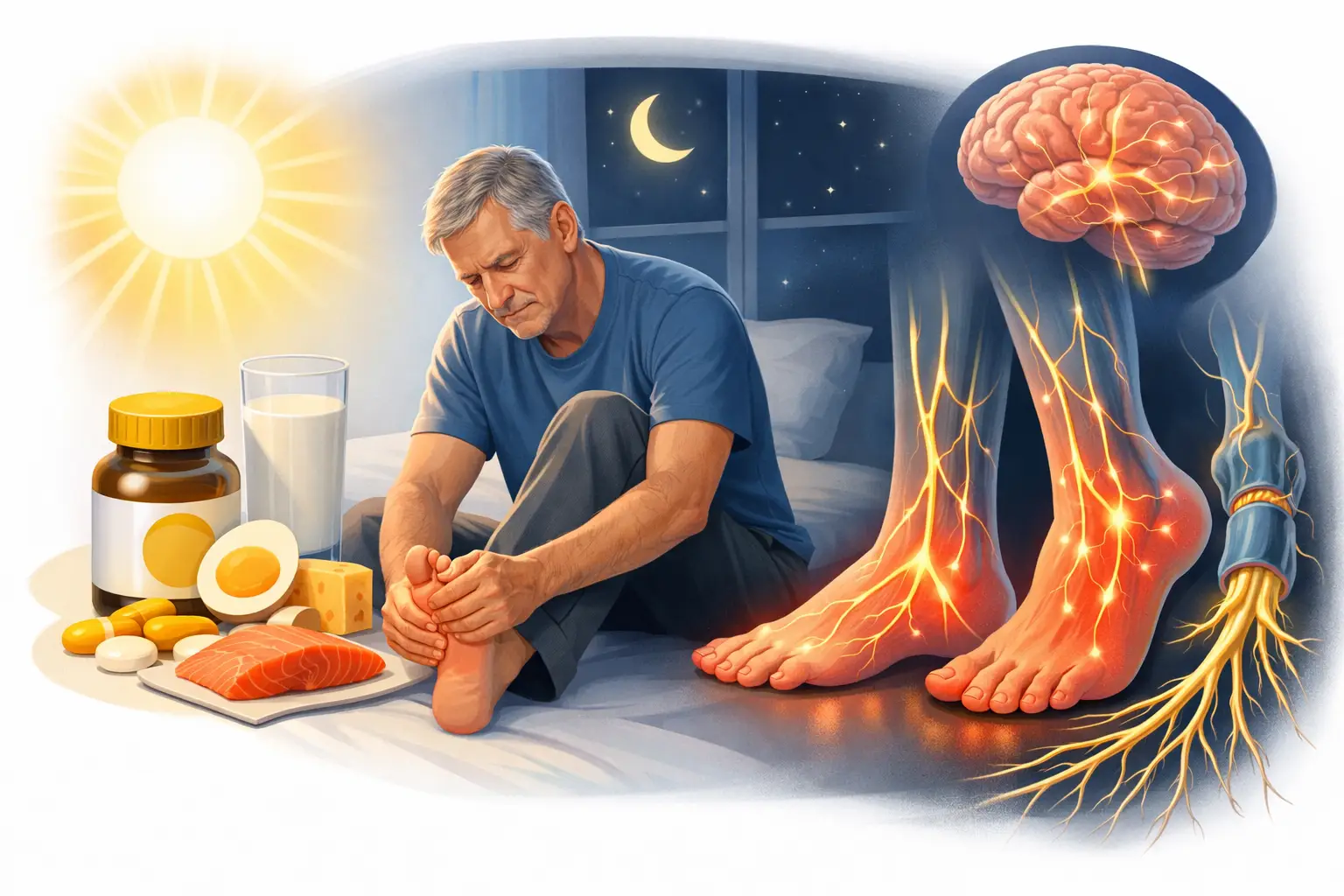
Burning feet, tingling toes, and numb patches in the legs often send people searching for one answer. In some cases, vitamin D deficiency and neuropathy may be related, but the connection is not as simple as low vitamin D automatically causing nerve damage. For adults 45 and older, that distinction matters because neuropathy symptoms can overlap with several nutrient deficiencies, medication effects, blood sugar problems, and circulation issues.
Vitamin D is best known for bone health, but it also plays a role in immune function, inflammation, muscle performance, and nervous system signaling. Researchers have looked at whether low vitamin D status is more common in people with neuropathic pain and whether correcting a deficiency may improve certain symptoms. The results are interesting, but they do not support treating vitamin D as a one-size-fits-all answer for numbness or burning feet.
What vitamin D deficiency and neuropathy have in common
Neuropathy is a broad term. It refers to nerve dysfunction, often in the hands or feet, that can cause burning, stabbing pain, tingling, pins-and-needles sensations, numbness, sensitivity to touch, or weakness. Some people describe it as feeling like socks are bunched under the toes or like their feet are alternately hot and ice cold.
Vitamin D deficiency can also show up in ways that are easy to misread. While classic symptoms often involve bone pain, muscle weakness, fatigue, or low mood, some people with low vitamin D report diffuse aches, hypersensitivity, or pain that seems difficult to explain. That overlap is one reason the topic gets attention.
The more cautious view is this: low vitamin D may contribute to pain perception or worsen overall nerve discomfort in some people, but it is usually not the only question worth asking. If neuropathy symptoms are present, a fuller workup is often more useful than focusing on vitamin D alone.
Can low vitamin D cause neuropathy?
The short answer is that low vitamin D may be associated with neuropathic symptoms, but association is not the same as proof of direct causation.
Some observational studies have found that people with neuropathy, especially those with diabetes or chronic pain conditions, are more likely to have low vitamin D levels. There are also studies suggesting that people with lower vitamin D status may report worse nerve pain. Proposed explanations include vitamin D’s role in inflammatory pathways, nerve growth support, and pain signaling.
Even so, the evidence has limits. Many people with neuropathy also have diabetes, obesity, low outdoor activity, kidney issues, or medication use that can lower vitamin D levels. In those cases, vitamin D deficiency may travel alongside neuropathy rather than fully explain it.
That is why medically cautious sources do not frame vitamin D as a stand-alone cause of neuropathy in every patient. A deficiency may be one contributing factor, one aggravating factor, or an unrelated finding that still deserves correction for general health.
Why this topic matters more after age 45
Adults over 45 often have several overlapping risk factors at the same time. Vitamin D levels may fall with age because the skin becomes less efficient at producing it from sunlight. Time spent indoors, carrying excess body weight, digestive disorders, and certain medications can also reduce vitamin D status.
At the same time, neuropathy risk rises because blood sugar issues, prediabetes, diabetes, alcohol exposure, thyroid disorders, spinal problems, and vitamin B12 deficiency all become more common with age. That means a person can have low vitamin D and neuropathy symptoms together, but the real driver may be elsewhere.
This is especially relevant for readers comparing supplements. A burning-feet symptom pattern may lead someone to try a vitamin D product first, when the more urgent need is testing for B12 deficiency, blood glucose abnormalities, or another neurologic issue.
Symptoms that deserve a closer look
A simple ache in the legs is different from a nerve-related symptom pattern. Neuropathy becomes more likely when discomfort includes tingling, electric-shock sensations, numbness, altered temperature sensation, burning soles, or pain that gets worse at night.
Low vitamin D is more likely to be part of the picture when those symptoms appear alongside muscle weakness, frequent falls, bone discomfort, low sun exposure, or known risk factors for deficiency. But symptoms alone cannot confirm the cause.
A healthcare professional may consider testing if you have:
- persistent burning, tingling, or numbness in the feet or hands
- worsening balance problems or leg weakness
- diabetes, prediabetes, or metabolic syndrome
- long-term acid-reducing medication use or metformin use
- a history of low B12, digestive disease, or bariatric surgery
- very limited sun exposure or known osteopenia or osteoporosis
That broader context matters because vitamin D is only one piece of a larger nerve-health puzzle.
Vitamin D deficiency vs B12 deficiency in nerve symptoms
For this audience, one of the most important distinctions is between vitamin D deficiency and vitamin B12 deficiency. Both can coexist, but B12 deficiency has a more established relationship with nerve damage and sensory changes.
Low B12 is classically linked to numbness, tingling, balance problems, reduced vibration sense, and cognitive changes. Vitamin D deficiency is more consistently tied to bone and muscle symptoms, although it may influence pain severity and overall nerve comfort in some cases.
In practical terms, if someone has true neuropathy symptoms, B12 status often deserves equal or greater attention than vitamin D status. This is one reason sites like VitB12Supplement.com focus heavily on ingredient quality, dosing logic, and evidence-informed comparisons rather than oversimplifying nerve symptoms into a single-nutrient problem.
That does not make vitamin D irrelevant. It means readers should be wary of any product or article implying that one capsule can explain every case of burning feet.
How vitamin D deficiency and neuropathy are evaluated
Most clinicians will start with history, symptom pattern, and lab testing. They may ask when symptoms started, whether both feet are involved, whether pain is constant or intermittent, and whether you also have weakness, back pain, gait changes, or blood sugar problems.
Testing often includes vitamin D levels, but a reasonable neuropathy workup may also include vitamin B12, blood sugar markers, thyroid testing, kidney function, and sometimes additional neurologic evaluation. If one foot is affected more than the other, or if symptoms are sudden, severe, or accompanied by weakness, the differential diagnosis changes.
This is why self-diagnosing neuropathy from one nutrient symptom list can be misleading. A low lab value may still be meaningful, but it may not be the whole explanation.
If vitamin D is low, can supplementation help?
If testing confirms deficiency, correcting it is generally appropriate for overall health. The more complicated question is whether that will improve neuropathy symptoms.
Some people report less pain or better comfort after restoring low vitamin D levels, especially if deficiency was significant. A few studies suggest supplementation may help neuropathic pain scores in certain populations, including some people with diabetes. But outcomes are mixed, and improvement is not guaranteed.
That means expectations should stay realistic. Supplementation may support correction of a deficiency, and that may be worthwhile even beyond nerve symptoms. Still, it should not be framed as a cure for neuropathy, and it should not replace proper evaluation when numbness, weakness, or burning pain persists.
Dose also matters. More is not always better. Very high intakes can create safety issues, especially over time, and the right amount depends on current blood levels, diet, health status, and whether a clinician has identified a true deficiency.
What to look for in a vitamin D supplement
For readers comparing products, quality matters more than flashy claims. A basic vitamin D3 supplement is often the standard option discussed for raising vitamin D levels, though individual needs vary. Consumers should pay attention to dose clarity, third-party testing practices, ingredient transparency, and whether the product includes unnecessary extras.
A cautious shopper should also consider whether vitamin D is being sold as part of a broader nerve-support formula. That can be reasonable, but it is worth checking whether the formula also includes meaningful forms and amounts of nutrients commonly discussed in nerve health, such as B12. The key is to evaluate products based on evidence and labeling quality, not marketing language suggesting rapid reversal of nerve symptoms.
When symptoms should not wait
Not every tingling foot is an emergency, but some signs deserve prompt medical attention. Sudden weakness, loss of bladder or bowel control, rapidly worsening numbness, severe one-sided symptoms, new difficulty walking, or pain following injury should not be handled as a routine supplement question.
Even slower-moving symptoms deserve attention if they keep returning or interfere with sleep, balance, or daily activity. The goal is not to create alarm. It is to avoid missing a treatable cause while assuming it is only a vitamin issue.
For many adults 45+, the best next step is not guessing between circulation problems, B12 deficiency, and low vitamin D. It is getting the right evaluation, correcting confirmed deficiencies, and using supplements as support rather than as a substitute for answers. That approach is less dramatic than marketing promises, but it is usually the more useful one.
Frequently Asked Questions
Can vitamin D deficiency cause neuropathy?
Vitamin D deficiency may be associated with neuropathic symptoms in some people, but it is not proven to be the direct cause of every case of neuropathy. Burning, tingling, numbness, or nerve pain can also come from diabetes, vitamin B12 deficiency, thyroid problems, medications, alcohol use, spinal issues, or circulation problems.
Can low vitamin D make nerve pain worse?
It may in some cases. Low vitamin D may influence inflammation, muscle function, pain signaling, and overall comfort. Some people with neuropathic pain also have low vitamin D levels, but correcting vitamin D does not guarantee that nerve symptoms will improve.
What does vitamin D deficiency feel like?
Vitamin D deficiency may cause fatigue, muscle weakness, bone discomfort, low mood, aches, or increased fall risk in some people. These symptoms can overlap with other conditions, so blood testing is needed to confirm whether vitamin D is actually low.
Is vitamin D deficiency the same as vitamin B12 deficiency?
No. Vitamin D is more strongly linked with bone health, muscle function, immune function, and inflammation. Vitamin B12 has a more established role in nerve function and is more classically associated with numbness, tingling, balance problems, burning feet, and other neurological symptoms.
Should I test vitamin B12 if I have low vitamin D and neuropathy symptoms?
It is reasonable to ask a healthcare professional about vitamin B12 testing if you have burning, tingling, numbness, balance problems, or reduced sensation. Low vitamin D and low B12 can coexist, and B12 deficiency is an important cause of nerve-related symptoms that should not be missed.
Can vitamin D supplements help neuropathy?
Vitamin D supplements may help correct a confirmed deficiency and may support overall health. Some people may notice improved comfort when low vitamin D is corrected, but supplements should not be presented as a cure for neuropathy. The underlying cause of nerve symptoms still needs to be evaluated.
Can too much vitamin D be harmful?
Yes. Very high vitamin D intake over time can be unsafe and may lead to elevated calcium levels and related health problems. The right dose depends on blood levels, diet, health status, medications, and clinician guidance.
When should I see a doctor for neuropathy symptoms?
See a healthcare professional if burning, tingling, numbness, weakness, balance problems, or foot pain keeps returning, worsens, spreads, interrupts sleep, or affects walking. Seek prompt care for sudden weakness, loss of bladder or bowel control, severe one-sided symptoms, rapidly worsening numbness, wounds, color changes, or new trouble walking.
Medical Disclaimer:
This content is for educational purposes only and does not diagnose, treat, cure, or replace professional medical care. Vitamin B12 deficiency, neuropathy symptoms, nerve pain, numbness, tingling, burning feet, balance problems, fatigue, and related health concerns can have many possible causes, including diabetes, vitamin deficiencies, medication effects, alcohol exposure, autoimmune conditions, infections, circulation problems, gastrointestinal or absorption issues, spinal conditions, or nerve compression.
Information about supplements, nutrition, lifestyle, sleep, movement, testing, or symptom support should not be used as a substitute for evaluation by a qualified healthcare professional. Supplements may not be appropriate for everyone and may interact with medications or medical conditions.
New, worsening, spreading, severe, one-sided, or unexplained symptoms — including numbness, weakness, balance problems, falls, wounds, foot ulcers, skin color changes, severe pain, chest pain, shortness of breath, bowel or bladder changes, facial drooping, trouble speaking, confusion, or sudden neurologic symptoms — should be discussed with a qualified healthcare professional or emergency service promptly.

- Can Low B12 Cause Dizziness? - July 9, 2026
- B12 Deficiency and Cracked Corners of the Mouth - July 9, 2026
- Can Low B12 Cause Dry Mouth? - July 8, 2026