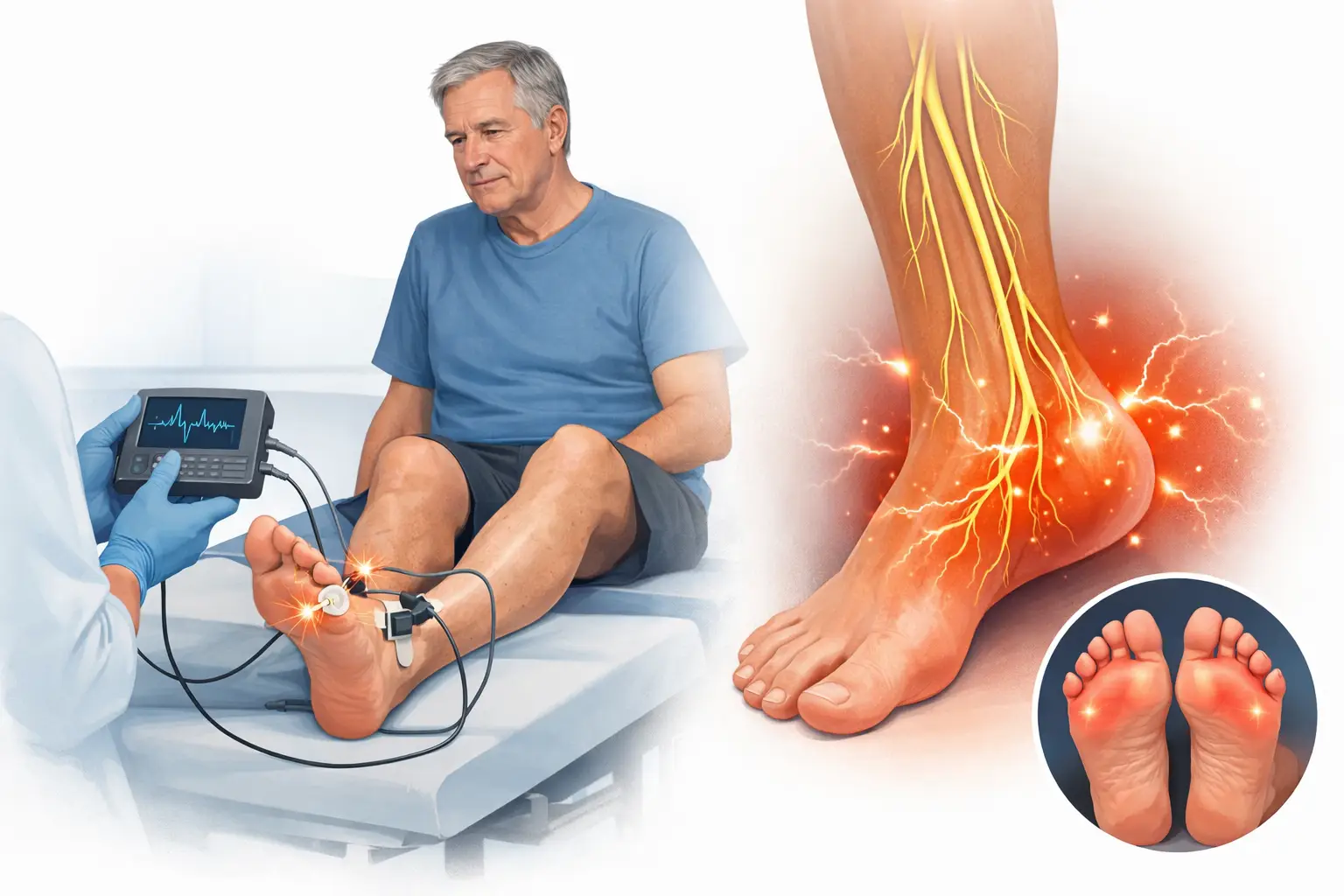
Can a nerve conduction study detect neuropathy? Yes, it can detect many forms of peripheral neuropathy, especially when large nerve fibers are affected. However, it may miss small-fiber neuropathy and very early nerve damage. A normal nerve conduction study does not automatically rule out neuropathy. The result should be interpreted together with symptoms, physical examination, blood tests, and sometimes additional testing.
If your feet burn at night, your hands tingle, or numbness seems to be creeping upward, one question comes up fast: can a nerve conduction study detect neuropathy? The short answer is yes, sometimes. But it depends on which nerves are affected, how advanced the problem is, and whether the symptoms involve large nerve fibers, small nerve fibers, or something else entirely.
That distinction matters more than many people realize. A normal test does not always mean your symptoms are imagined, minor, or unrelated to nerve health. It may simply mean the study is better at detecting certain kinds of nerve damage than others.
Research Snapshot
Topic: Can a Nerve Conduction Study Detect Neuropathy?
- Nerve conduction studies (NCS) are widely used to evaluate peripheral nerve disorders and measure how efficiently electrical signals travel through nerves.
- NCS is generally most sensitive for detecting abnormalities involving large nerve fibers, including slowing of nerve conduction and reduced signal strength.
- Small-fiber neuropathy may produce symptoms such as burning feet, tingling, and altered temperature sensation even when standard nerve conduction studies appear normal.
- NCS is commonly performed alongside electromyography (EMG) to help distinguish neuropathy from muscle disorders, nerve root problems, and focal nerve compression syndromes.
- A normal NCS does not automatically rule out neuropathy and should be interpreted alongside symptom history, neurological examination, and laboratory findings.
- Potentially reversible contributors to neuropathy, including vitamin B12 deficiency, diabetes, thyroid dysfunction, alcohol-related nerve injury, and certain medications, may require additional evaluation.
Sources reviewed include guidance from major neurological organizations and clinical references regarding peripheral neuropathy, electrodiagnostic testing, and nerve conduction studies.
Can a Nerve Conduction Study Detect Neuropathy in All Cases?
A nerve conduction study, often called NCS, measures how well electrical signals travel through peripheral nerves. In people with neuropathy, those signals may move more slowly, arrive weakly, or fail to travel normally at all. When that happens, the test can provide useful evidence that the nerves are not functioning as they should.
Still, this is not a catch-all test. NCS is generally best at identifying problems in larger nerve fibers. These are the fibers involved in vibration, touch, position sense, and muscle control. If your neuropathy mainly affects small fibers, which are more closely tied to burning pain, temperature changes, and altered skin sensations, the nerve conduction study may be normal even when symptoms are very real.
This is one of the biggest sources of confusion for patients. They may have classic neuropathy complaints yet hear that the test was “normal.” That result does not rule out every form of neuropathy.
What the Test Actually Measures
During a nerve conduction study, small electrodes are placed on the skin. A mild electrical stimulus is delivered to one point on a nerve, and the response is recorded farther along its path. From that, the clinician can measure speed and strength of signal transmission.
In practical terms, the test helps answer a few important questions. Is the nerve signal slowed down? Is the response weak? Is the pattern suggestive of damage to the nerve covering, called myelin, or to the nerve fibers themselves, called axons?
Those details help specialists narrow down the type of neuropathy and where the problem may be located. For example, a generalized length-dependent neuropathy affecting both feet differs from a single compressed nerve at the wrist or elbow. Symptoms can overlap, but the testing pattern may look quite different.
NCS versus EMG
Quick Comparison
| Feature | Nerve Conduction Study | EMG |
|---|---|---|
| Main purpose | Measures how electrical signals travel through nerves | Measures electrical activity inside muscles |
| Best for | Large-fiber neuropathy and nerve compression | Muscle problems, nerve root issues, and weakness patterns |
| Needle involved? | Usually no | Yes, a thin needle electrode may be used |
| Can it detect small-fiber neuropathy? | Usually no | Usually no |
| Often done together? | Yes | Yes |
Nerve conduction studies are often performed alongside electromyography, or EMG. Although people lump them together, they are not the same test. NCS looks at nerve signal transmission. EMG evaluates the electrical activity in muscles, often with a thin needle electrode.
When used together, they can improve the overall picture. A clinician may use both to tell whether weakness, numbness, pain, or balance problems are more likely coming from peripheral nerves, muscles, nerve roots, or another source.
When a Nerve Conduction Study Is Most Helpful
NCS tends to be most informative when symptoms suggest large-fiber peripheral neuropathy. That often includes numbness, reduced reflexes, balance trouble, muscle weakness, or loss of vibration sense. It can also help when the question is whether symptoms come from focal nerve compression, such as carpal tunnel syndrome, rather than a more widespread neuropathy.
The test may also be useful when a clinician wants objective evidence of nerve dysfunction before moving forward with a broader workup. In adults over 45, that workup may include looking at blood sugar patterns, vitamin B12 status, thyroid function, alcohol use, medication effects, kidney function, or other medical causes linked to nerve symptoms.
This matters because neuropathy is not a diagnosis by itself. It is a description of nerve dysfunction. The bigger question is why it is happening.
What a Nerve Conduction Study Can Miss
| Condition or Pattern | Can NCS Detect It? | Important Note |
|---|---|---|
| Large-fiber peripheral neuropathy | Often yes | This is where NCS is most useful. |
| Carpal tunnel syndrome | Often yes | NCS can help identify focal nerve compression. |
| Advanced diabetic neuropathy | Often yes | Findings depend on severity and nerve fibers involved. |
| Small-fiber neuropathy | Often no | Burning pain can occur despite a normal NCS. |
| Very early neuropathy | Sometimes no | Symptoms may appear before measurable abnormalities. |
| Vitamin B12 deficiency itself | No | B12 status requires blood testing. |
The most important limitation is small-fiber neuropathy. People with this pattern often describe burning feet, pins-and-needles, electric shock sensations, skin sensitivity, or temperature-related discomfort. Because small fibers are not measured well by standard nerve conduction testing, the study can come back normal.
Early neuropathy can also be missed if nerve damage is mild or patchy. In some cases, symptoms begin before measurable abnormalities become obvious on testing. That is frustrating, but it is not unusual.
There are also situations where the test may not fully explain the symptom pattern. Tingling and numbness can come from spinal issues, poor circulation, medication side effects, autoimmune conditions, or nutrient deficiencies. A test that focuses on peripheral nerve conduction cannot answer every diagnostic question on its own.
Does a normal test mean no neuropathy?
Not necessarily. A normal NCS means the study did not detect abnormalities in the larger nerve fibers it tested. It does not automatically exclude small-fiber neuropathy, intermittent symptoms, or symptoms arising from another source.
That is why the best clinicians do not interpret the test in isolation. They compare it with your symptom history, physical exam, lab results, and sometimes additional testing.
Symptoms That May Still Need Follow-Up
If your nerve conduction study is normal but you continue to have persistent symptoms, follow-up still makes sense. This is especially true if the symptoms are symmetrical in both feet, worsen at night, affect balance, or are paired with fatigue, memory changes, or anemia-related concerns that could suggest nutrient issues such as vitamin B12 deficiency.
Vitamin B12 is especially relevant in older adults because low levels may contribute to numbness, tingling, gait instability, and other neurologic symptoms. That does not mean every case of neuropathy is caused by low B12, and it does not mean supplements are the answer without testing. It means reversible contributors should be considered carefully rather than guessed at.
For readers who spend time comparing nerve-health products, this is a useful reality check. Supplements may play a supportive role when there is a documented nutritional gap or a clinician recommends them, but they should not replace proper evaluation of persistent neuropathy symptoms.
Key Takeaways
- A nerve conduction study can detect many cases of peripheral neuropathy.
- The test is most useful for large-fiber nerve damage.
- Small-fiber neuropathy can cause burning pain even when NCS results are normal.
- NCS and EMG are different tests, but they are often performed together.
- A normal test does not always mean symptoms are unrelated to nerve dysfunction.
- Vitamin B12 deficiency, diabetes, thyroid problems, and medication effects may still need evaluation.
Other Tests a Doctor May Consider
When symptoms strongly suggest neuropathy but NCS is unrevealing, clinicians may look further. Depending on the case, they may order blood work, skin biopsy for small-fiber nerve density, quantitative sensory testing, or autonomic testing. If back pain, asymmetrical weakness, or shooting leg pain is present, spinal imaging may also enter the discussion.
The right next step depends on the pattern. Burning feet after years of borderline blood sugar raises different questions than sudden one-sided weakness or rapidly progressive numbness.
How to Prepare for the Test and What to Expect
The procedure is usually outpatient and fairly brief, though length varies based on how many nerves are tested. The electrical pulses can feel uncomfortable, but they are generally tolerable. If EMG is added, the needle portion may cause temporary soreness.
On the day of testing, it helps to avoid lotions or oils on the skin because they can interfere with electrode contact. Warm skin also matters because cold hands or feet can slow nerve conduction and affect results. That is one reason the technician may check limb temperature.
If you take medications, have a pacemaker, use blood thinners, or have a bleeding disorder, mention it before the test. These details may not prevent testing, but they can influence how the exam is performed.
How to Think About the Results
A useful test result is not always the same as a clear-cut answer. Sometimes the study confirms neuropathy. Sometimes it points away from neuropathy and toward a pinched nerve or spinal cause. Sometimes it comes back normal and tells the clinician that a different type of nerve problem, including small-fiber neuropathy, deserves more attention.
That is why the most practical question is not only can a nerve conduction study detect neuropathy, but also what kind of neuropathy is being considered and what happens if the test is negative.
If you are dealing with ongoing tingling, numbness, burning, or unexplained weakness, the smartest next move is not to chase a single test result. It is to make sure the result is interpreted in context, with an eye on common medical causes, nutrient status, and the specific pattern of your symptoms.
Clinical takeaway: A normal nerve conduction study does not always mean “nothing is wrong.” It may mean the test did not detect the specific type of nerve problem causing the symptoms.
A comprehensive follow-up may include:
Looking at when symptoms started, how they progressed, and whether they are constant or intermittent.
Checking whether symptoms affect both feet or hands evenly, or point toward a localized nerve issue.
Screening for diabetes, prediabetes, or blood sugar patterns linked to nerve symptoms.
Testing B12 and related markers when symptoms suggest possible nutrient-related nerve involvement.
Looking for medical or medication-related factors that can contribute to neuropathy-like symptoms.
Considering this possibility when burning pain persists even after a normal nerve conduction study.
Discussing whether EMG, skin biopsy, imaging, or other tests may be appropriate.
Authority note: For additional medical context, the National Institute of Neurological Disorders and Stroke provides an overview of peripheral neuropathy, symptoms, causes, and diagnostic considerations.
If you’re trying to understand what may be behind numbness, tingling, burning feet, or nerve pain, our guide to peripheral neuropathy causes and relief explains the most common causes and what may help support nerve health.
Final Thoughts
A nerve conduction study is one of the most useful tools for evaluating suspected peripheral neuropathy, but it is not perfect. It works best when larger nerve fibers are involved and may not detect small-fiber neuropathy or very early nerve damage.
If your test is abnormal, it may help confirm the presence and pattern of nerve dysfunction. If your test is normal, that does not automatically mean your symptoms should be dismissed. Burning feet, tingling, numbness, balance changes, or unexplained weakness still deserve proper follow-up, especially when symptoms persist or progress.
The most important step is to interpret the result in context. That means looking at your symptoms, exam findings, medical history, blood sugar status, vitamin B12 levels, thyroid function, medications, and other possible causes. Neuropathy is not just about detecting nerve damage. It is about understanding why the nerves may be affected in the first place.
Frequently Asked Questions
Can a nerve conduction study confirm neuropathy?
Yes, a nerve conduction study can confirm many cases of neuropathy, especially when large nerve fibers are affected. However, it cannot detect every type of nerve damage.
Can neuropathy exist with a normal nerve conduction study?
Yes. Small-fiber neuropathy and some early forms of neuropathy may produce normal nerve conduction study results even when symptoms are real and persistent.
What type of neuropathy can NCS miss?
NCS can miss small-fiber neuropathy because standard nerve conduction testing mainly evaluates larger nerve fibers. Small-fiber neuropathy may cause burning pain, temperature sensitivity, and skin discomfort.
Is a nerve conduction study painful?
Most people describe the electrical pulses as uncomfortable rather than truly painful. If EMG is also performed, the needle portion may cause temporary soreness.
How long does a nerve conduction study take?
Most nerve conduction studies take between 30 and 90 minutes, depending on how many nerves are tested and whether EMG is performed at the same visit.
Can vitamin B12 deficiency affect nerve conduction study results?
Yes. Significant or prolonged vitamin B12 deficiency can contribute to peripheral nerve damage and may eventually lead to abnormal nerve conduction findings.
Medical Disclaimer: The information provided in this article is for educational purposes only and is not intended as medical advice. Dietary supplements are not a replacement for professional medical diagnosis or treatment. Always consult with a qualified healthcare professional before starting any new supplement, especially if you have pre-existing medical conditions or are taking prescription medications. Individual results may vary.

- Can Low B12 Cause Dizziness? - July 9, 2026
- B12 Deficiency and Cracked Corners of the Mouth - July 9, 2026
- Can Low B12 Cause Dry Mouth? - July 8, 2026