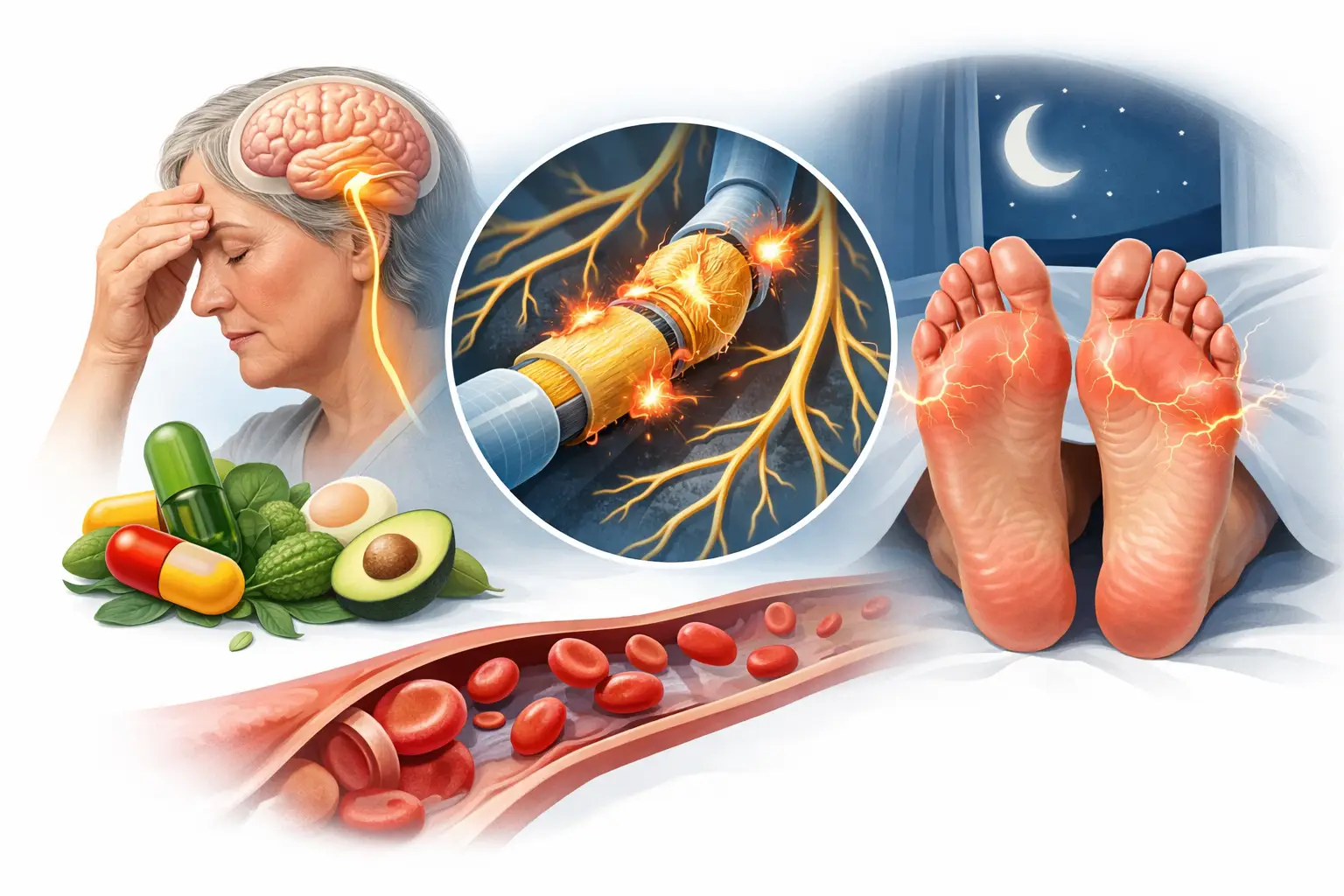
Burning feet, tingling toes, and numb fingertips often send people looking for one answer. In real life, folate deficiency and neuropathy are more complicated than a simple cause-and-effect story. Low folate can contribute to nerve-related symptoms in some people, but it is also easy to confuse with vitamin B12 deficiency, diabetes, medication effects, alcohol use, or circulation problems.
That distinction matters, especially for adults over 45. If someone assumes folate is the problem and starts self-treating without proper testing, they may miss a more serious nutrient issue or another medical cause that needs attention.
Can folate deficiency cause neuropathy?
Yes, it can, but the relationship is not as strong or as straightforward as many people think. Folate, also called vitamin B9, plays a central role in DNA synthesis, cell division, and methylation. It also works closely with vitamin B12 in red blood cell production and homocysteine metabolism.
When folate is low, the body can develop megaloblastic anemia and a range of symptoms linked to poor cell function. Some people with low folate also report neurological complaints such as tingling, pins-and-needles sensations, weakness, or sensory changes. That said, neuropathy is classically more associated with vitamin B12 deficiency than with isolated folate deficiency.
This is where caution is essential. A person may have low folate and nerve symptoms at the same time, but that does not automatically mean folate is the main driver. In many cases, the more clinically urgent question is whether vitamin B12 is also low, because untreated B12 deficiency can lead to lasting nerve injury.
Why folate deficiency and neuropathy can be confused with B12 deficiency
Folate and vitamin B12 are metabolically linked, and their deficiencies can look similar at first glance. Both can cause fatigue, pallor, weakness, and macrocytic anemia. Both can raise homocysteine levels. But B12 deficiency is far more likely to produce clear neurological symptoms such as numbness, balance problems, gait changes, memory complaints, and burning or painful nerve sensations.
There is also a diagnostic trap. Folate supplementation may improve anemia caused by B12 deficiency while doing nothing to correct the underlying neurological risk. In practical terms, someone may feel slightly better or see lab values improve, while nerve damage continues in the background.
For that reason, many clinicians consider it unwise to treat suspected folate deficiency in isolation when neuropathy symptoms are present. Folate status should be evaluated, but vitamin B12 needs careful attention too.
Symptoms that may point to low folate
Low folate does not produce a symptom pattern that is unique enough to diagnose by feel alone. Still, there are some common signs worth recognizing. People may notice fatigue, shortness of breath with exertion, weakness, mouth soreness, irritability, poor appetite, or difficulty concentrating. Some also report a sore tongue or general decline in stamina.
If neuropathy-like symptoms appear, they may include tingling, altered sensation, or mild numbness. But burning feet, electric shock sensations, or progressive balance trouble should raise concern for other causes as well, especially B12 deficiency, diabetes, thyroid problems, alcohol-related nerve injury, or medication side effects.
The pattern matters. A gradual stocking-glove distribution, where symptoms begin in the feet and later affect the hands, is common in peripheral neuropathy but not specific to folate deficiency.
Who is more likely to develop folate deficiency?
Diet is one factor, but it is rarely the whole story. Folate deficiency may develop in people who eat very few leafy greens, legumes, citrus, or fortified grains. It can also happen with poor appetite, restrictive diets, or chronic undernutrition.
Absorption and metabolism issues are often more relevant in older adults. Conditions affecting the small intestine, heavy alcohol use, and some medications can lower folate status. Methotrexate, certain antiseizure drugs, and sulfasalazine are well-known examples. Increased needs can also play a role in select situations, though in adults 45 and older, the bigger concern is often a mix of diet, medications, alcohol intake, and coexisting nutrient deficiencies.
Because multiple factors may overlap, low folate should be viewed as one piece of the puzzle rather than the only explanation for nerve symptoms.
How folate deficiency and neuropathy are evaluated
Testing should be guided by symptoms, health history, diet, medications, and other risk factors. A complete blood count may show macrocytic anemia, although not everyone with low folate has obvious blood count changes. Folate can be measured directly, and vitamin B12 testing is usually part of the same workup when numbness or tingling is present.
Depending on the situation, a clinician may also look at methylmalonic acid and homocysteine. These markers can help clarify whether B12 deficiency, folate deficiency, or both may be involved. Homocysteine can rise in either deficiency, while methylmalonic acid is generally more specific to B12 deficiency.
Other common tests may include blood sugar or A1C, thyroid labs, kidney function, and sometimes iron studies. If symptoms are significant, progressive, one-sided, or associated with weakness, additional neurological evaluation may be needed.
This is one reason broad self-diagnosis tends to fall short. Neuropathy is a symptom category, not a diagnosis.
What treatment usually looks like
If testing confirms folate deficiency, treatment usually starts with correcting the cause and replenishing folate stores. That may involve dietary changes, folic acid supplementation, changes in alcohol intake, or review of medications that interfere with folate metabolism. The right dose depends on the reason for deficiency and the person’s full clinical picture.
Food sources still matter, even when supplements are used. Folate is naturally found in spinach, romaine, asparagus, beans, lentils, avocado, and citrus. Many grain products in the US are also fortified with folic acid. For some people, improving food intake is enough. For others, especially if absorption or medication issues are involved, supplements are more practical.
The crucial point is that folate should not be treated as a stand-alone nerve health shortcut when neuropathy is suspected. Vitamin B12 status should be confirmed, not guessed. That is especially true for older adults, people taking acid-suppressing drugs or metformin, and anyone with balance changes or worsening numbness.
Will nerve symptoms improve after folate is corrected?
It depends on what is actually causing the symptoms, how long they have been present, and whether more than one deficiency exists. If low folate is genuinely contributing, some people may notice improvement over time as folate levels normalize and anemia resolves. Energy may improve before nerve-related symptoms do.
But expectations need to stay realistic. Neuropathy often has several contributors, and symptoms do not always reverse quickly. If B12 deficiency, diabetes, alcohol use, spinal issues, or medication effects are also involved, correcting folate alone may have limited benefit.
This is where evidence-informed supplement shopping matters. A product labeled for nerve support may contain folate, B12, B6, alpha-lipoic acid, or other ingredients, but the formula is only as useful as the diagnosis is accurate. More ingredients do not automatically mean better results, and taking high-dose nutrients without understanding the cause can muddy the picture.
When to be more concerned
Some symptoms deserve faster medical attention. Progressive numbness, difficulty walking, falls, muscle weakness, bowel or bladder changes, sudden one-sided symptoms, or severe pain should not be written off as a vitamin issue without evaluation.
Even milder symptoms should be taken seriously if they persist. Tingling that comes and goes after sitting too long is not the same as nightly burning feet that gradually worsen over months. Duration, pattern, and progression matter.
For readers comparing nutrient-related explanations, the safest mindset is practical rather than speculative. Folate deficiency is real, and it can contribute to neurological complaints in some cases. But with neuropathy symptoms, especially in adults over 45, the bigger job is identifying whether folate is the main problem, part of a mixed deficiency picture, or simply a distraction from a different cause.
A careful workup may feel slower than buying a supplement and hoping for the best, but it usually leads to better decisions. When nerve symptoms are involved, clarity is worth more than guesswork.
Frequently Asked Questions
Can folate deficiency cause neuropathy?
Folate deficiency may contribute to nerve-related symptoms in some people, including tingling, pins and needles, weakness, or altered sensation. However, neuropathy is more classically associated with vitamin B12 deficiency, diabetes, alcohol use, thyroid problems, medications, or other medical causes.
Is folate deficiency the same as vitamin B12 deficiency?
No. Folate and vitamin B12 work closely together, and both deficiencies can cause fatigue, weakness, pallor, and macrocytic anemia. But vitamin B12 deficiency is more strongly linked to neurological symptoms such as numbness, burning, balance problems, gait changes, and nerve pain.
Can folic acid hide a B12 deficiency?
Yes. Folic acid may improve anemia related to vitamin B12 deficiency without correcting the underlying B12-related nerve risk. This is why people with tingling, numbness, burning feet, or balance problems should not treat suspected folate deficiency without also checking vitamin B12 status.
What are the symptoms of low folate?
Low folate may cause fatigue, weakness, shortness of breath with exertion, pallor, mouth soreness, poor appetite, irritability, difficulty concentrating, or a sore tongue. Some people may also report tingling or altered sensation, but these symptoms are not specific to folate deficiency.
Can low folate cause burning feet?
Low folate may be one possible contributor to abnormal nerve sensations, but burning feet should not be assumed to come from folate deficiency alone. Burning feet can also be linked to vitamin B12 deficiency, diabetes, thyroid disease, alcohol use, medication effects, spinal issues, or peripheral neuropathy.
Who is at risk for folate deficiency?
Folate deficiency may be more likely in people with low intake of leafy greens, legumes, citrus, or fortified grains, as well as those with chronic undernutrition, heavy alcohol use, intestinal absorption problems, or medications that interfere with folate metabolism, such as methotrexate, some antiseizure drugs, or sulfasalazine.
What tests help separate folate deficiency from B12 deficiency?
A clinician may check a complete blood count, folate, vitamin B12, methylmalonic acid, and homocysteine. Homocysteine can rise with either folate or B12 deficiency, while methylmalonic acid is generally more specific to vitamin B12 deficiency.
When should I see a doctor for tingling or numbness with low folate?
See a healthcare professional if tingling, numbness, burning, weakness, balance problems, falls, walking difficulty, bowel or bladder changes, one-sided symptoms, or severe pain are present. These symptoms should not be assumed to be from folate deficiency without proper evaluation.
Medical Disclaimer:
This content is for educational purposes only and does not diagnose, treat, cure, or replace professional medical care. Vitamin B12 deficiency, neuropathy symptoms, nerve pain, numbness, tingling, burning feet, balance problems, fatigue, and related health concerns can have many possible causes, including diabetes, vitamin deficiencies, medication effects, alcohol exposure, autoimmune conditions, infections, circulation problems, gastrointestinal or absorption issues, spinal conditions, or nerve compression.
Information about supplements, nutrition, lifestyle, sleep, movement, testing, or symptom support should not be used as a substitute for evaluation by a qualified healthcare professional. Supplements may not be appropriate for everyone and may interact with medications or medical conditions.
New, worsening, spreading, severe, one-sided, or unexplained symptoms — including numbness, weakness, balance problems, falls, wounds, foot ulcers, skin color changes, severe pain, chest pain, shortness of breath, bowel or bladder changes, facial drooping, trouble speaking, confusion, or sudden neurologic symptoms — should be discussed with a qualified healthcare professional or emergency service promptly.

- Can Low B12 Cause Dizziness? - July 9, 2026
- B12 Deficiency and Cracked Corners of the Mouth - July 9, 2026
- Can Low B12 Cause Dry Mouth? - July 8, 2026