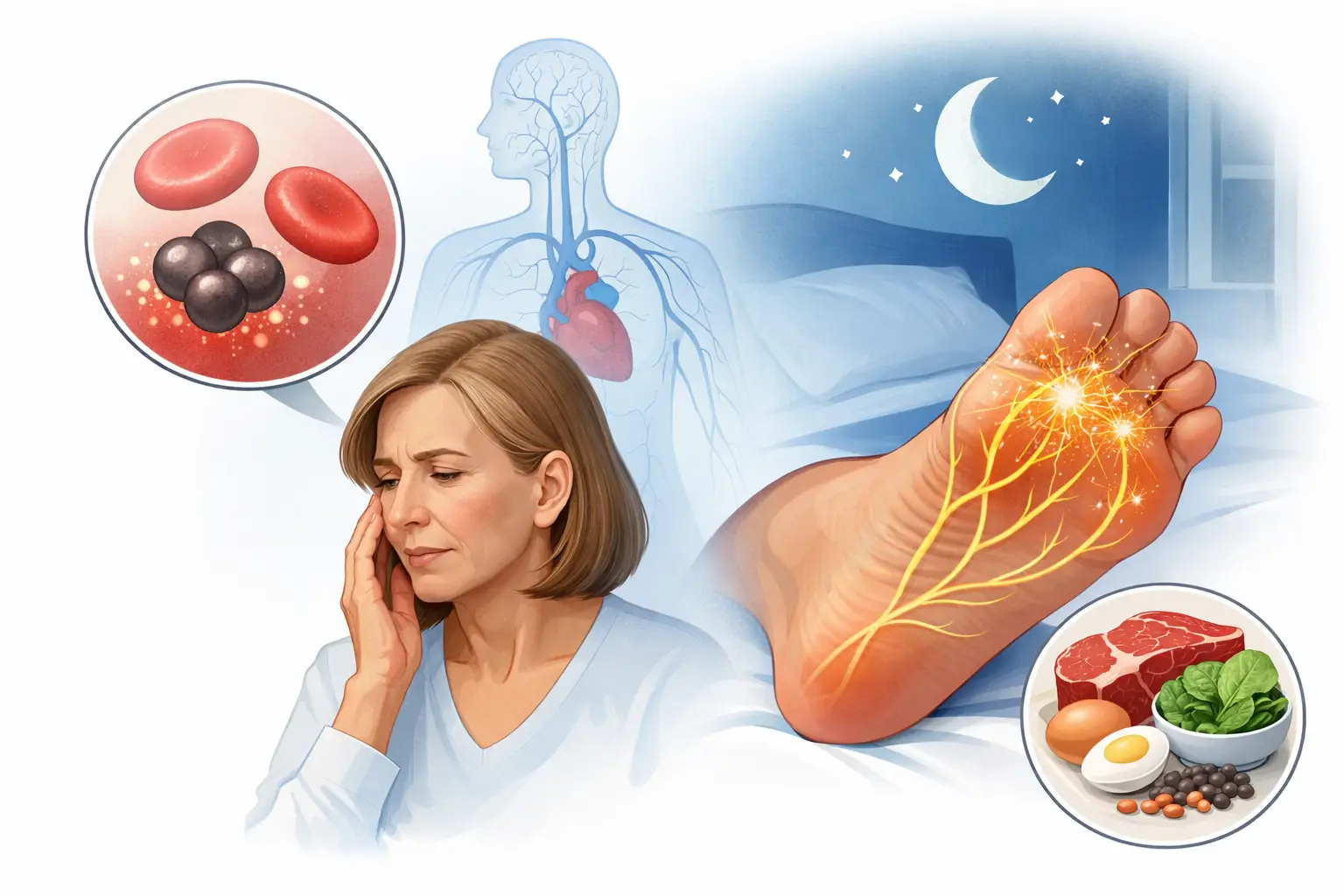
Tingling in the feet or hands often sends people in one of two directions. They either assume it is a nerve problem, or they start looking at vitamin and mineral deficiencies. When people search for iron deficiency and tingling, they are usually trying to answer a practical question: can low iron really cause these sensations, or is something else more likely?
The short answer is that iron deficiency may contribute in some cases, but it is not one of the most classic explanations for tingling and numbness. That distinction matters. If you focus only on iron, you can miss other common causes such as vitamin B12 deficiency, diabetes, medication effects, thyroid problems, or circulation issues.
How iron deficiency affects the body
Iron helps the body make hemoglobin, the protein in red blood cells that carries oxygen. When iron levels fall low enough, tissues may not get the oxygen delivery they need. That is why iron deficiency is more often associated with fatigue, weakness, shortness of breath, dizziness, pale skin, headaches, brittle nails, or feeling unusually cold.
Some people also notice restless legs, reduced exercise tolerance, or brain fog. These symptoms fit the usual pattern better than tingling does. Tingling can happen alongside iron deficiency, but it is usually not the main feature doctors look for first.
That said, the body does not run systems in isolation. If oxygen delivery is reduced, if sleep worsens because of restless legs, or if iron deficiency exists alongside another nutrient issue, nerve-related symptoms may become more noticeable. This is one reason the question is not always straightforward.
Iron deficiency and tingling: what the evidence suggests
The phrase iron deficiency and tingling reflects a real experience many people report, but the medical explanation can vary. Iron deficiency by itself is not considered a leading cause of peripheral neuropathy. In plain terms, if someone has persistent pins and needles, burning, numbness, or altered sensation, clinicians usually look beyond iron first.
Still, there are a few reasons iron deficiency and tingling may appear together.
One is overlap with anemia-related symptoms. When anemia becomes significant, some people describe odd sensations in the limbs, general weakness, lightheadedness, or a sense that their hands and feet do not feel normal. Another is coexistence. A person may have low iron and also have low vitamin B12, low folate, poor diet quality, digestive malabsorption, or a chronic health issue affecting nerves.
This is especially relevant for adults over 45. Absorption can change with age, medication use becomes more common, and several conditions that affect nerve sensation start showing up more often in midlife and beyond. So while iron deficiency may be part of the picture, it is not always the whole picture.
Why tingling often points to something else
When tingling is frequent, symmetrical, or gradually worsening, a nerve-related cause often deserves closer attention. Vitamin B12 deficiency is one of the better-known nutritional causes because it can affect nerve health more directly. People may notice numbness, pins and needles, balance changes, burning feet, memory complaints, or unusual fatigue.
Diabetes and prediabetes are also common considerations. High blood sugar over time can irritate or damage peripheral nerves, especially in the feet. Thyroid disorders, alcohol overuse, kidney disease, compressed nerves, and some medications can also contribute.
Circulation problems can complicate the picture further. Poor blood flow may cause cold feet, cramping with walking, color changes, or discomfort that feels different from true nerve tingling. Many people use the word tingling for several sensations, so the exact description matters.
When low iron might be more relevant
Iron deficiency becomes a stronger suspect when tingling appears together with classic low-iron symptoms. These can include unusual fatigue, reduced stamina, shortness of breath climbing stairs, paleness, headaches, brittle nails, hair shedding, or cravings for ice. In some cases, restless legs at night can be a clue that iron status deserves a look.
It also matters whether there is a likely reason for iron loss or poor intake. Heavy menstrual bleeding, a history of stomach surgery, long-term acid-reducing medication use, digestive disorders, low intake of iron-rich foods, or hidden gastrointestinal bleeding can all play a role. In adults over 45, unexplained iron deficiency should not be brushed off as a minor nutrition issue without proper evaluation.
If a person improves after medically appropriate iron replacement and tingling fades, that may suggest iron deficiency was contributing. But it still does not prove iron was the only driver. Symptom improvement can be messy, especially if multiple deficiencies are corrected at the same time.
Testing matters more than guessing
One of the biggest mistakes in the supplement space is treating symptoms based on assumption alone. Tingling sounds like a deficiency problem, but different deficiencies can look similar from a distance.
A proper workup may include a complete blood count, ferritin, iron studies, vitamin B12, folate, blood sugar markers, thyroid testing, and sometimes additional evaluation depending on symptoms and medical history. Ferritin is particularly useful because it reflects stored iron, although interpreting it is not always simple in the setting of inflammation or chronic illness.
This is why self-diagnosing from a symptom checklist can be misleading. Low energy plus tingling does not automatically mean iron deficiency. It could be B12 deficiency with anemia. It could be diabetes. It could be more than one issue at once.
Should you take an iron supplement for tingling?
Not automatically. Iron supplements can be appropriate when testing shows deficiency or when a clinician has strong reason to suspect it. But iron is not a general nerve-health supplement, and taking it without confirmation is not always harmless.
Too much iron can cause constipation, stomach upset, nausea, and in some cases more serious problems. It can also mask the fact that another issue needs attention. If tingling is actually related to vitamin B12 deficiency, focusing only on iron may delay the right conversation.
For readers comparing supplement options, this is where caution matters more than marketing. A quality product may help correct a documented deficiency, but the product cannot answer whether iron is the correct ingredient for your symptoms. The testing comes first.
Red flags that deserve prompt medical attention
Tingling should be evaluated sooner rather than later if it is new, rapidly worsening, one-sided, linked to weakness, associated with trouble walking, or paired with bowel or bladder changes. The same goes for chest pain, severe shortness of breath, fainting, black stools, or visible blood loss.
Even without emergency symptoms, persistent tingling that lasts more than a few days or keeps returning is worth discussing with a healthcare professional. The goal is not alarm. It is accuracy.
Practical next steps if you suspect iron deficiency and tingling
Start by paying attention to the full pattern, not just one symptom. Ask yourself whether the tingling is in both feet or both hands, whether it comes and goes, whether there is numbness or burning, and whether you also have fatigue, paleness, restless legs, or shortness of breath.
Next, review the basics that can shape risk. Diet changes, blood donation, stomach issues, acid-blocking medications, metformin use, alcohol intake, and family history can all matter. If you are shopping for supplements before getting tested, pause there. A better step is to request an evaluation that looks at iron and other common causes of nerve-related symptoms.
If testing confirms low iron, treatment may involve diet changes, oral iron, or a broader search for why iron fell low in the first place. If iron is normal, that result is useful too. It narrows the field and makes it easier to assess other likely causes such as B12 status, blood sugar, or circulation.
The safest principle is simple: supplements should match the confirmed problem, not the guess.
The helpful mindset here is simple. Iron deficiency and tingling can overlap, but tingling is a signal that deserves a wider lens. If you treat it as a clue instead of a conclusion, you are much more likely to find the right next step.
Frequently Asked Questions
Can iron deficiency cause tingling?
Iron deficiency may contribute to unusual sensations in some people, especially when anemia is significant, but it is not one of the most classic causes of tingling or numbness. Persistent tingling should also be evaluated for vitamin B12 deficiency, diabetes, thyroid problems, medications, alcohol use, nerve compression, or circulation issues.
Is tingling a common symptom of low iron?
Tingling is not usually the main symptom doctors look for with low iron. Iron deficiency more often causes fatigue, weakness, shortness of breath with exertion, dizziness, pale skin, headaches, brittle nails, feeling cold, reduced stamina, or restless legs.
Can iron deficiency cause pins and needles in the hands or feet?
Pins and needles can happen alongside iron deficiency, but they should not automatically be blamed on iron. A nerve-related cause, vitamin B12 deficiency, blood sugar problems, thyroid disease, medication effects, spinal nerve compression, or circulation changes may be more likely, depending on the pattern.
How do I know if tingling is from iron deficiency or B12 deficiency?
Symptoms alone usually cannot separate them. Iron deficiency is more often linked with fatigue, pale skin, shortness of breath, headaches, brittle nails, and restless legs. Vitamin B12 deficiency is more strongly linked with numbness, tingling, burning feet, balance problems, reduced vibration sense, memory changes, and nerve-related symptoms. Testing is the safest way to tell the difference.
What tests check for iron deficiency and tingling causes?
A clinician may consider a complete blood count, ferritin, iron studies, vitamin B12, folate, blood sugar markers such as fasting glucose or A1C, thyroid testing, kidney function, and other tests based on symptoms and medical history.
Should I take iron supplements for tingling?
Not automatically. Iron supplements are usually appropriate when testing confirms deficiency or when a healthcare professional has a clear reason to recommend them. Iron is not a general nerve-health supplement, and taking it without confirmation may cause side effects or delay evaluation of the real cause.
Can low iron and low B12 happen together?
Yes. Low iron and low vitamin B12 can coexist, especially when diet, absorption problems, digestive conditions, medication use, or chronic health issues are involved. This is one reason a broader lab evaluation may be more useful than focusing on one nutrient alone.
When should tingling be checked by a doctor?
Tingling should be discussed with a healthcare professional if it is persistent, recurring, worsening, one-sided, spreading, or paired with numbness, burning, weakness, balance problems, trouble walking, bowel or bladder changes, severe pain, chest pain, shortness of breath, fainting, black stools, or visible blood loss.
Medical Disclaimer:
This content is for educational purposes only and does not diagnose, treat, cure, or replace professional medical care. Vitamin B12 deficiency, neuropathy symptoms, nerve pain, numbness, tingling, burning feet, balance problems, fatigue, and related health concerns can have many possible causes, including diabetes, vitamin deficiencies, medication effects, alcohol exposure, autoimmune conditions, infections, circulation problems, gastrointestinal or absorption issues, spinal conditions, or nerve compression.
Information about supplements, nutrition, lifestyle, sleep, movement, testing, or symptom support should not be used as a substitute for evaluation by a qualified healthcare professional. Supplements may not be appropriate for everyone and may interact with medications or medical conditions.
New, worsening, spreading, severe, one-sided, or unexplained symptoms — including numbness, weakness, balance problems, falls, wounds, foot ulcers, skin color changes, severe pain, chest pain, shortness of breath, bowel or bladder changes, facial drooping, trouble speaking, confusion, or sudden neurologic symptoms — should be discussed with a qualified healthcare professional or emergency service promptly.

- Can Low B12 Cause Dizziness? - July 9, 2026
- B12 Deficiency and Cracked Corners of the Mouth - July 9, 2026
- Can Low B12 Cause Dry Mouth? - July 8, 2026