Quick Answer:
Yes, poor circulation can sometimes feel similar to neuropathy because both conditions may cause tingling, numbness, discomfort, and unusual sensations in the feet and legs. However, poor circulation is primarily a blood-flow problem, while neuropathy involves nerve dysfunction or damage. The distinction matters because the causes, evaluation, and treatment approaches are different.
Tingling, numbness, burning feet, and that odd pins-and-needles sensation can be unsettling, especially when you are trying to figure out whether the problem is nerve-related or blood-flow related. So, can poor circulation feel like neuropathy? Yes, it can. The two can overlap enough that many adults assume one is the other, but they are not the same problem, and the differences matter.
For adults over 45, this question comes up often because both circulation issues and nerve problems become more common with age. Diabetes, smoking history, low activity levels, vitamin deficiencies, medication effects, and vascular changes can all play a role. The challenge is that the body does not always give neat, separate signals. Cold feet may point toward reduced blood flow. Burning, numbness, or electrical sensations may point toward nerve involvement. But some people have both at the same time.
Can poor circulation feel like neuropathy in the feet?
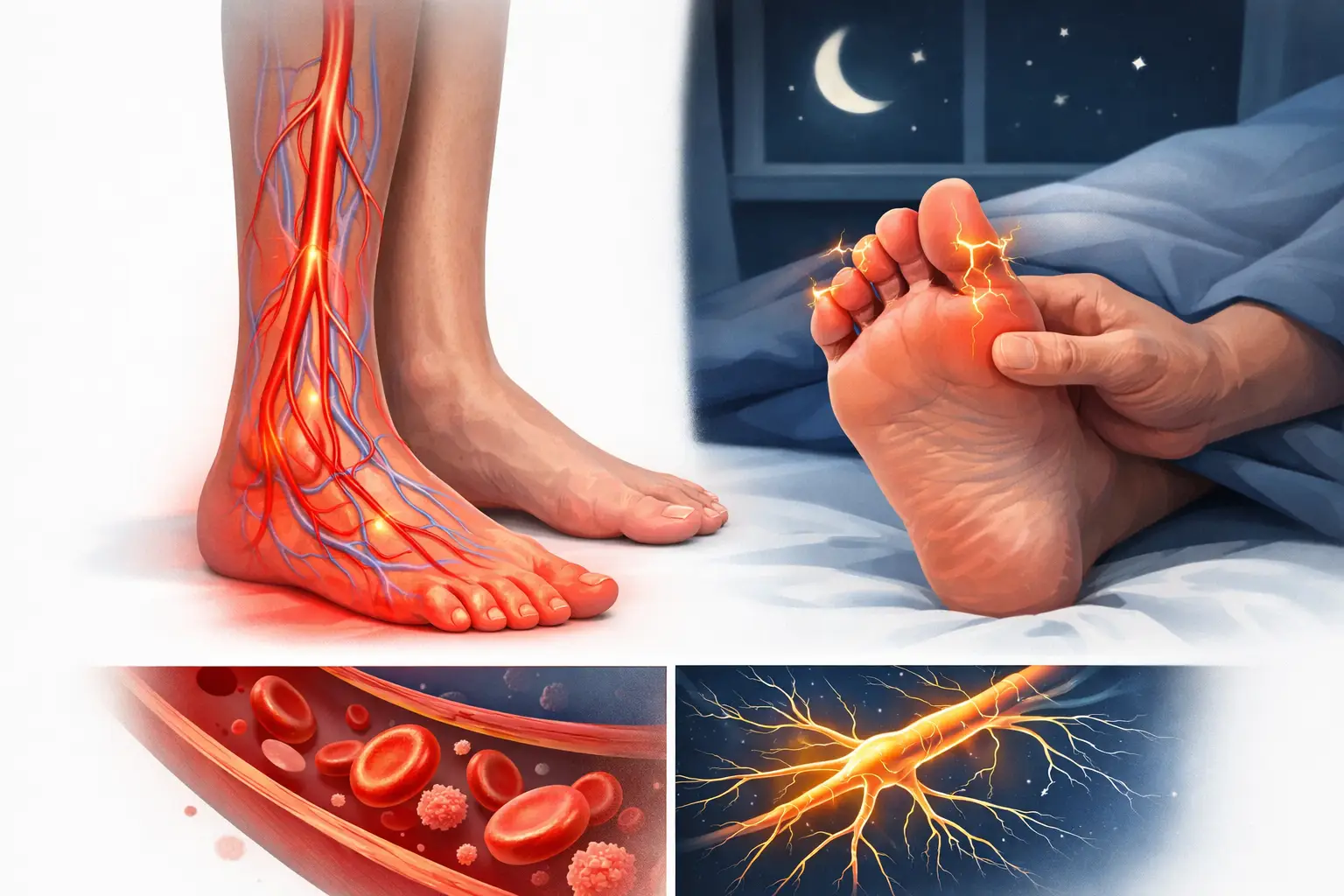
It can, particularly in the feet and lower legs. Poor circulation may cause numbness, tingling, heaviness, cramping, and a sense that the feet do not feel normal. Those symptoms can sound very similar to peripheral neuropathy, which often causes burning, stabbing pain, pins and needles, or reduced sensation.
The reason for the overlap is simple. Nerves depend on a healthy blood supply. When circulation is reduced, tissues and nerves may not function normally. Even before there is severe vascular disease, reduced blood flow can contribute to discomfort, temperature changes, and abnormal sensation. That does not automatically mean true neuropathy is present, but it can feel close enough that self-diagnosis becomes unreliable.
Neuropathy, on the other hand, usually means the nerves themselves are damaged, irritated, or not signaling properly. Common causes include diabetes, alcohol overuse, certain medications, kidney disease, thyroid disorders, and vitamin deficiencies, especially low vitamin B12. In that setting, symptoms may continue even when blood flow is normal.
Key Takeaways
- Poor circulation and neuropathy can both cause tingling and numbness.
- Cold feet, color changes, and exertional leg pain are more suggestive of circulation problems.
- Burning sensations, electric-shock feelings, and nighttime symptoms are more suggestive of neuropathy.
- Diabetes can contribute to both vascular disease and neuropathy.
- Vitamin B12 deficiency is a common and often overlooked cause of nerve symptoms.
- Persistent symptoms deserve proper evaluation rather than self-diagnosis.
What symptoms overlap and what symptoms differ?
Poor Circulation vs Neuropathy: Common Differences
| Feature | Poor Circulation | Neuropathy |
|---|---|---|
| Cold Feet | Common | Less Common |
| Burning Pain | Possible | Common |
| Color Changes | Common | Uncommon |
| Nighttime Symptoms | Less Common | Common |
| Walking-Related Pain | Often Worse With Activity | Variable |
The overlap is where confusion starts. Both poor circulation and neuropathy can cause tingling, numbness, weakness, discomfort when walking, and changes in how the feet feel at rest. Some people describe both conditions the same way: “My feet feel dead,” “My toes are prickly,” or “It feels like I am walking on cotton.”
Still, there are patterns that help separate them.
Poor circulation often comes with cold feet, pale or bluish skin, leg cramping with walking, delayed wound healing, and symptoms that get worse with activity because the muscles are not getting enough oxygen-rich blood. You may also notice diminished hair growth on the legs or changes in skin texture.
Neuropathy is more likely to produce burning pain, buzzing, electric-shock sensations, hypersensitivity to touch, or numbness that follows a gradual “sock-like” pattern in both feet. Symptoms are often worse at night. A person may also lose vibration sense or balance because the nerves that help with position awareness are affected.
That said, the real world is messier than textbook descriptions. Someone with diabetes may have peripheral artery disease and diabetic neuropathy together. Someone with low B12 may also have poor leg circulation from smoking or long-standing vascular disease. When symptoms mix, the distinction becomes harder without medical evaluation.
Why circulation problems and nerve symptoms can show up together
Blood vessels and nerves are closely connected. Nerves need oxygen and nutrients, and blood vessels help deliver both. If circulation is compromised, nerves can become irritated or function less effectively. If nerves are damaged, muscle use and gait may change, which can further affect lower-limb health.
This overlap is one reason persistent foot symptoms should not be brushed off as “just getting older.” Adults who have burning or numb feet sometimes focus only on nerve support supplements, while others focus only on circulation support. But without understanding the root cause, it is easy to miss something important.
For example, vitamin B12 deficiency does not cause poor circulation in the classic vascular sense, but it can contribute to neuropathy-like symptoms, fatigue, balance problems, and weakness. At the same time, a person with peripheral artery disease may assume their leg discomfort is only poor circulation when there is also a nutritional or metabolic factor contributing to nerve irritation.
Clues that suggest poor circulation more than neuropathy
When symptoms are tied to movement and relieved by rest, circulation moves higher on the list of possibilities. Classic circulation-related leg pain often appears during walking, especially in the calves, and eases after stopping. Feet may look pale when elevated or become redder when lowered. They may also feel noticeably cold compared with the rest of the body.
Skin changes can be a major clue. Shiny skin, slow-healing cuts, weak pulses in the feet, and color changes deserve attention. These signs suggest the issue may involve blood flow rather than nerves alone.
Swelling can complicate the picture. Mild swelling is not a classic neuropathy feature, but fluid buildup from venous problems may make legs feel tight, heavy, or uncomfortable. That is another reminder that “circulation” can mean different things. Arterial circulation problems reduce blood going out to tissues. Venous circulation problems affect blood returning back up the legs. Both can create symptoms, but they do so differently.
Clues that suggest neuropathy more than poor circulation
Neuropathy becomes more likely when symptoms include burning, stabbing, zapping, or crawling sensations without obvious color or temperature changes in the skin. If your feet feel numb but still painful at the same time, that combination often points toward nerve involvement.
Symmetry matters too. Peripheral neuropathy often starts in both feet and slowly moves upward. If both soles burn at night, socks feel strange, or light touch feels irritating, nerves are a stronger suspect.
Risk factors also help guide the picture. Diabetes, prediabetes, heavy alcohol use, chemotherapy exposure, low vitamin B12, and certain chronic illnesses all raise concern for neuropathy. In a site focused on evidence-informed supplement education, this is where caution matters: a supplement may support nutritional status, but it cannot substitute for finding out why symptoms started.
When testing is needed instead of guessing
Because poor circulation can feel like neuropathy, and neuropathy can coexist with vascular disease, persistent symptoms deserve proper evaluation. A clinician may check pulses, skin temperature, reflexes, vibration sense, strength, walking pattern, and blood pressure in the limbs. Depending on the pattern, follow-up may include blood work, vascular testing, or nerve studies.
Blood tests are often especially useful when neuropathy is suspected. Low vitamin B12, elevated blood sugar, thyroid problems, kidney dysfunction, and other metabolic issues can contribute to nerve symptoms. This matters because some causes are more manageable when identified early.
It is also worth mentioning that sudden symptoms are different from gradual ones. If one leg suddenly becomes cold, pale, painful, or weak, that is not a wait-and-see situation. Severe or rapid-onset circulation changes need urgent medical attention.
⚠ Important
A foot or leg that suddenly becomes cold, pale, painful, weak, or noticeably different from the other side should not be ignored. Sudden circulation changes may require urgent medical evaluation rather than routine follow-up.
What you can do now if you are noticing these symptoms
Start by paying attention to the pattern rather than the label. Are symptoms worse at night or with walking? Are your feet cold, discolored, or slow to heal? Is the discomfort burning and electric, or cramping and exertional? These details help a clinician narrow things down much faster.
Review your risk factors honestly. Diabetes, smoking, high blood pressure, high cholesterol, low B12 intake or absorption issues, and long-term medication use all matter. If you are considering a supplement for nerve health, check whether it contains meaningful forms and doses of nutrients such as vitamin B12 rather than assuming any product marketed for “circulation” or “neuropathy” is evidence-based.
Gentle movement, smoking cessation, blood sugar management, and discussing medication side effects with a healthcare professional are practical next steps that support overall vascular and nerve health. But if numbness, burning, or leg pain is new, persistent, or worsening, self-treatment should not be the whole plan.
The bottom line on poor circulation vs neuropathy
Poor circulation can absolutely feel like neuropathy, especially in the feet. The overlap is real, but the causes, risks, and next steps are not identical. Circulation problems tend to involve coldness, color changes, exertional pain, and skin changes. Neuropathy more often brings burning, tingling, altered sensation, and nighttime discomfort. Some people have both.
If your symptoms are lingering, changing, or interfering with walking or sleep, the most useful step is not guessing harder. It is getting the right evaluation so you know whether the issue is blood flow, nerve function, a nutrient deficiency such as low B12, or a combination that needs a broader plan.
Frequently Asked Questions
Can poor circulation cause tingling in the feet?
Yes. Reduced blood flow may contribute to tingling, numbness, heaviness, and unusual sensations in the feet and lower legs.
How can I tell if my symptoms are circulation-related or neuropathy?
Cold feet, color changes, and exertional leg pain are more suggestive of circulation issues, while burning, electric-shock sensations, and nighttime symptoms are more suggestive of neuropathy.
Can diabetes cause both poor circulation and neuropathy?
Yes. Diabetes may contribute to vascular disease and nerve damage, which is why some people experience symptoms of both conditions.
Can vitamin B12 deficiency mimic circulation problems?
Vitamin B12 deficiency may cause numbness, tingling, burning sensations, balance difficulties, and weakness that some people mistakenly attribute to poor circulation.
When should I seek medical attention?
Medical evaluation is recommended when symptoms are persistent, worsening, affecting sleep or walking, or accompanied by color changes, weakness, or sudden onset.
Medical Disclaimer: The information provided in this article is for educational purposes only and is not intended as medical advice. Dietary supplements are not a replacement for professional medical diagnosis or treatment. Always consult with a qualified healthcare professional before starting any new supplement, especially if you have pre-existing medical conditions or are taking prescription medications. Individual results may vary.

- Can Low B12 Cause Dizziness? - July 9, 2026
- B12 Deficiency and Cracked Corners of the Mouth - July 9, 2026
- Can Low B12 Cause Dry Mouth? - July 8, 2026