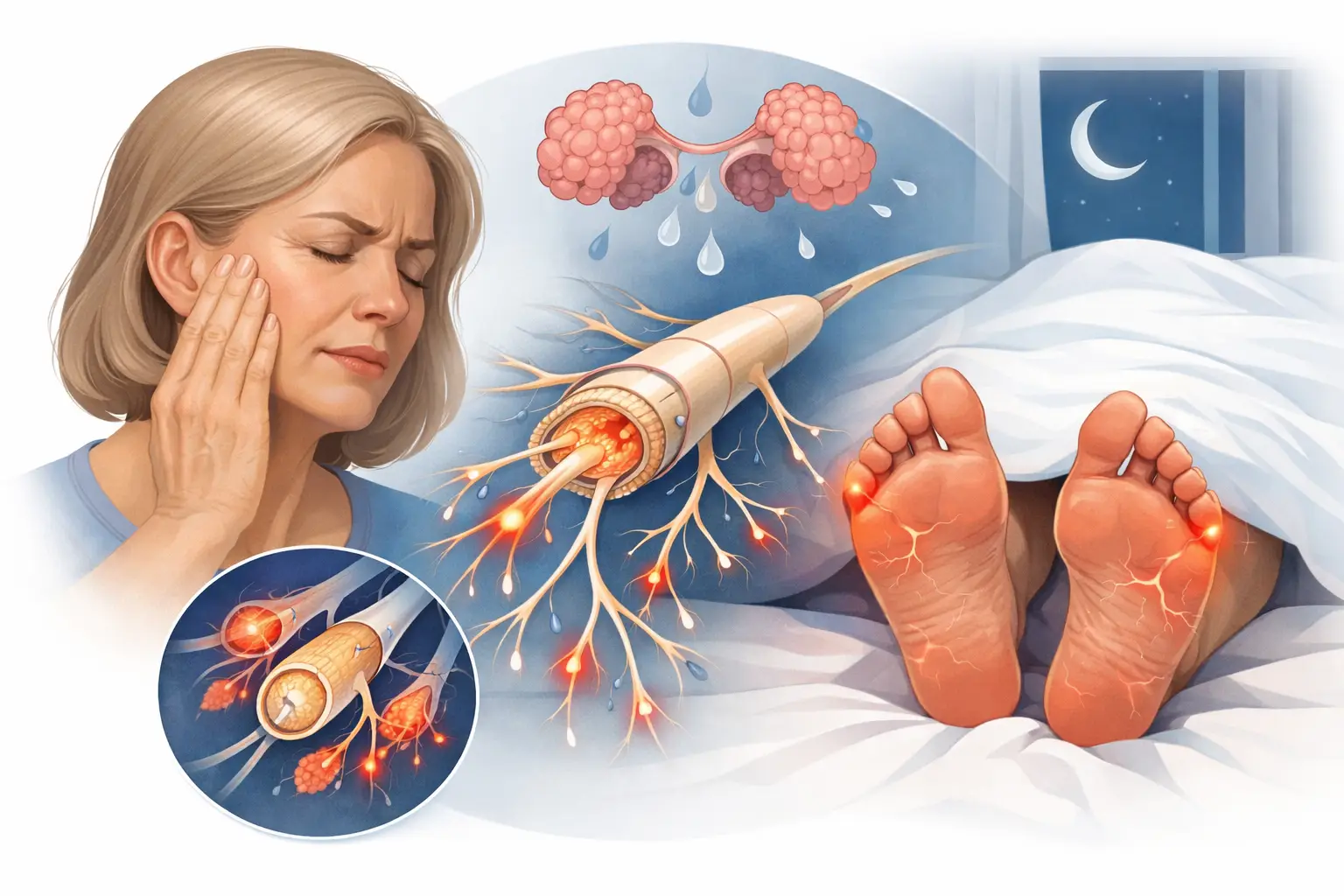
Burning feet, electric-shock sensations, and skin pain that seems out of proportion to what anyone can see are common reasons people start asking about sjogren’s syndrome small fiber neuropathy. The frustrating part is that standard nerve tests can look normal even when symptoms are very real. For adults trying to sort out whether dry eyes, dry mouth, fatigue, and nerve pain might be connected, this overlap deserves a careful look.
Sjogren’s syndrome is an autoimmune condition best known for affecting moisture-producing glands, but it can also involve the nervous system. Small fiber neuropathy affects the thin nerve fibers responsible for pain, temperature, and some automatic body functions such as sweating, heart rate, and digestion. When these fibers are irritated or damaged, symptoms can be uncomfortable, confusing, and easy to mislabel.
What sjogren’s syndrome small fiber neuropathy means
In plain terms, this refers to small nerve fiber damage or dysfunction occurring in someone with Sjogren’s syndrome. The pattern is not always identical from one person to the next. Some people feel burning and tingling mainly in the feet and hands, while others notice patchy symptoms in the face, torso, or arms. That patchy distribution can make it different from the classic “stocking-glove” neuropathy people often associate with diabetes.
Small fiber nerves do two major jobs. First, they carry pain and temperature signals. Second, they help regulate involuntary functions. That means symptoms may include more than pain alone. A person may also notice dizziness when standing, abnormal sweating, bowel changes, bladder symptoms, or episodes of rapid heartbeat. In practice, these mixed symptoms are one reason the condition can take time to recognize.
Why Sjogren’s can affect small nerve fibers
Sjogren’s is driven by immune system dysfunction. In some patients, immune activity appears to target peripheral nerves or the blood vessels that support them. Researchers have also looked at inflammatory cytokines, autoantibodies, and immune cell activity as possible contributors. The exact mechanism is still being studied, and that uncertainty matters because not every patient follows the same pattern.
This is also why a simple one-cause explanation usually falls short. A person with Sjogren’s may have neuropathy from autoimmune inflammation, but they could also have another contributor at the same time, such as diabetes, prediabetes, low vitamin B12, thyroid disease, alcohol use, certain medications, or another autoimmune disorder. For readers over 45, that overlap is especially important because multiple risk factors can coexist.
Common symptoms people notice first
The best-known symptom is burning pain in the feet, often worse at night. Some people describe hot feet, pins and needles, stabbing pain, buzzing, or a sunburn-like sensitivity when clothing or bedsheets touch the skin. Others feel numbness mixed with pain, which can seem contradictory but is actually common in neuropathy.
Not everyone has severe pain. In some cases, the earliest clue is reduced temperature sensation, odd skin sensitivity, or episodes of crawling or prickling sensations. If autonomic fibers are involved, symptoms may expand beyond the skin. Dryness from Sjogren’s itself can overlap with autonomic symptoms, which adds another layer of complexity. A person might report dry eyes and mouth along with constipation, dizziness on standing, or sweating changes, without realizing these issues may share a neurologic component.
Fatigue also complicates the picture. Many patients with autoimmune disease feel generally unwell, and nerve symptoms can intensify that burden. Pain that interferes with sleep can further amplify daytime exhaustion, mood changes, and concentration problems.
Why routine nerve tests may miss it
One of the biggest points of confusion is that nerve conduction studies and electromyography are often normal in isolated small fiber neuropathy. Those tests are useful for large nerve fibers, not the tiny fibers involved here. So a normal result does not automatically rule out a neuropathic problem.
When symptoms strongly suggest small fiber involvement, clinicians may consider more targeted testing. A skin biopsy can measure intraepidermal nerve fiber density and is commonly used to help confirm the diagnosis. Autonomic testing may also be considered when symptoms suggest blood pressure regulation, sweating, or heart rate abnormalities. The exact testing plan depends on the symptom pattern and the clinician’s assessment.
This is one reason self-diagnosis can be risky. Burning feet can result from neuropathy, but also from circulation problems, mechanical foot issues, medication side effects, spinal conditions, or nutritional deficiencies. Similar symptoms do not always point to the same cause.
How doctors evaluate the cause
A careful workup usually starts with the full clinical picture, not just one test. If Sjogren’s is already diagnosed, the question becomes whether the neuropathy is related, coincidental, or partly driven by another problem. If Sjogren’s has not been diagnosed, symptoms such as dry eyes, dry mouth, dental issues, swollen glands, joint pain, fatigue, or other autoimmune features may prompt further evaluation.
Blood work may be used to look for common neuropathy contributors, including glucose abnormalities, vitamin deficiencies, thyroid disorders, kidney issues, and markers that support autoimmune disease. For supplement-focused readers, vitamin B12 deserves special attention because low B12 can cause numbness, tingling, balance changes, and nerve discomfort. At the same time, not every neuropathy improves simply by taking B12. The right approach depends on whether a deficiency is actually present and whether there are absorption problems, medication interactions, or other competing causes.
This is where evidence-informed caution matters. Supplements may support general nutritional status when a true gap exists, but they are not a substitute for proper diagnosis. Anyone with new neuropathy symptoms, progressive weakness, balance problems, or autonomic symptoms should treat that as a medical evaluation issue first.
Where supplements fit, and where they do not
People searching neuropathy topics often want to know whether nutrients can help. That is a reasonable question, especially because deficiencies in B12, folate, vitamin B6, copper, and vitamin E can affect nerve health. Still, the role of supplementation in Sjogren’s-related small fiber neuropathy is supportive at best unless a documented deficiency or medication-related depletion is present.
Vitamin B12 is the most discussed nutrient in this category for good reason. Deficiency is common enough to check for, especially in older adults, people taking metformin or acid-suppressing medications, and those with gastrointestinal absorption issues. If lab work shows low or borderline B12 with symptoms that fit, clinicians may recommend oral or injectable replacement depending on the situation. What B12 should not be presented as is a cure for autoimmune neuropathy. That claim would go beyond the evidence.
The same caution applies to alpha-lipoic acid, acetyl-L-carnitine, and other nerve-support supplements marketed to consumers. Some have limited evidence in certain neuropathy settings, but results are mixed, formulations vary, and tolerability matters. Readers shopping for encapsulated products should focus on third-party testing, transparent dosing, and realistic labeling rather than broad promises.
Symptom management is often multi-layered
Treatment decisions depend on severity, suspected cause, and whether symptoms are mostly sensory, autonomic, or both. Some patients are managed with pain-modulating medications, autoimmune-directed treatment, or both. Others need symptom-specific strategies for dizziness, sleep disruption, foot discomfort, or digestive complaints.
Practical habits can help reduce day-to-day aggravation even though they do not address the underlying disease process. Heat can worsen burning symptoms for some people, while others are more sensitive to cold. Loose socks, gentle footwear, careful skin inspection, hydration, and pacing activity can all matter, especially when pain and fatigue flare together.
If supplement use is being considered, it makes sense to review the product list with a clinician or pharmacist. Adults over 45 are more likely to be taking multiple medications, and ingredient overlap is common. For example, some “nerve health” blends contain very high vitamin B6, which in excess can itself contribute to neuropathy symptoms.
When to seek prompt medical attention
Small fiber neuropathy can be chronic and slow-moving, but not every nerve symptom should be watched casually. Rapid progression, falling, muscle weakness, major balance changes, fainting, chest symptoms, bowel or bladder retention, or unexplained weight loss deserve timely medical review. Those features can point to a broader neurologic or systemic issue that needs faster workup.
Even in less urgent cases, persistence matters. If burning, tingling, or numbness continues despite normal routine testing, that does not mean the symptoms are imaginary or insignificant. It may mean the wrong type of test was done for the kind of nerve problem suspected.
For many people, the most useful next step is not chasing a single supplement or assuming the symptoms are just aging. It is getting a careful evaluation that looks at autoimmune disease, nutrient status, medication effects, glucose metabolism, and the pattern of nerve involvement as a whole. That kind of methodical approach gives you the best chance of understanding what is driving the symptoms and what may actually help.
Frequently Asked Questions
Can Sjogren’s syndrome cause small fiber neuropathy?
Yes. Sjogren’s syndrome can involve the nervous system in some people, including the small nerve fibers that carry pain, temperature, and autonomic signals. This may cause burning, tingling, electric-shock sensations, skin sensitivity, or abnormal temperature feelings.
What does small fiber neuropathy feel like in Sjogren’s?
Small fiber neuropathy may feel like burning feet, stabbing pain, pins and needles, buzzing, crawling sensations, sunburn-like skin pain, or sensitivity to clothing, socks, or bedsheets. Some people also notice dizziness when standing, sweating changes, bowel changes, bladder symptoms, or rapid heartbeat episodes.
Can Sjogren’s small fiber neuropathy cause burning feet?
Yes. Burning feet can happen when small sensory nerve fibers are irritated or damaged. In Sjogren’s, burning may appear with tingling, numbness, altered temperature sensation, or pain that feels worse at night or when fabric touches the skin.
Can nerve tests be normal with small fiber neuropathy?
Yes. Routine nerve conduction studies and EMG tests can be normal in isolated small fiber neuropathy because they mainly evaluate larger nerve fibers. When small fiber neuropathy is suspected, clinicians may consider skin biopsy, autonomic testing, or other targeted evaluation.
How is Sjogren’s small fiber neuropathy diagnosed?
Diagnosis usually depends on the full symptom pattern, medical history, physical exam, autoimmune evaluation, and testing for other possible causes. A skin biopsy may be used to measure small nerve fiber density, and autonomic testing may be considered when symptoms involve dizziness, sweating, heart rate, digestion, or bladder function.
Can vitamin B12 deficiency mimic Sjogren’s neuropathy?
Yes. Vitamin B12 deficiency can cause numbness, tingling, burning, balance problems, and nerve discomfort that may overlap with Sjogren’s-related neuropathy symptoms. This is why B12 status is often worth checking instead of assuming all nerve symptoms are autoimmune.
Do supplements help Sjogren’s small fiber neuropathy?
Supplements may help when a true deficiency is present, such as low vitamin B12, folate, copper, or vitamin E. However, supplements should not be presented as a cure for autoimmune small fiber neuropathy. Testing, diagnosis, medication review, and clinician-guided treatment are more important than guessing from symptoms alone.
When should I seek medical care for Sjogren’s neuropathy symptoms?
Seek medical evaluation if burning, tingling, numbness, skin pain, dizziness, sweating changes, balance problems, or autonomic symptoms persist or worsen. Get prompt care for rapid progression, falls, muscle weakness, fainting, chest symptoms, bowel or bladder retention, unexplained weight loss, or major changes in walking.
Medical Disclaimer:
This content is for educational purposes only and does not diagnose, treat, cure, or replace professional medical care. Vitamin B12 deficiency, neuropathy symptoms, nerve pain, numbness, tingling, burning feet, balance problems, fatigue, and related health concerns can have many possible causes, including diabetes, vitamin deficiencies, medication effects, alcohol exposure, autoimmune conditions, infections, circulation problems, gastrointestinal or absorption issues, spinal conditions, or nerve compression.
Information about supplements, nutrition, lifestyle, sleep, movement, testing, or symptom support should not be used as a substitute for evaluation by a qualified healthcare professional. Supplements may not be appropriate for everyone and may interact with medications or medical conditions.
New, worsening, spreading, severe, one-sided, or unexplained symptoms — including numbness, weakness, balance problems, falls, wounds, foot ulcers, skin color changes, severe pain, chest pain, shortness of breath, bowel or bladder changes, facial drooping, trouble speaking, confusion, or sudden neurologic symptoms — should be discussed with a qualified healthcare professional or emergency service promptly.

- Can Low B12 Cause Dizziness? - July 9, 2026
- B12 Deficiency and Cracked Corners of the Mouth - July 9, 2026
- Can Low B12 Cause Dry Mouth? - July 8, 2026