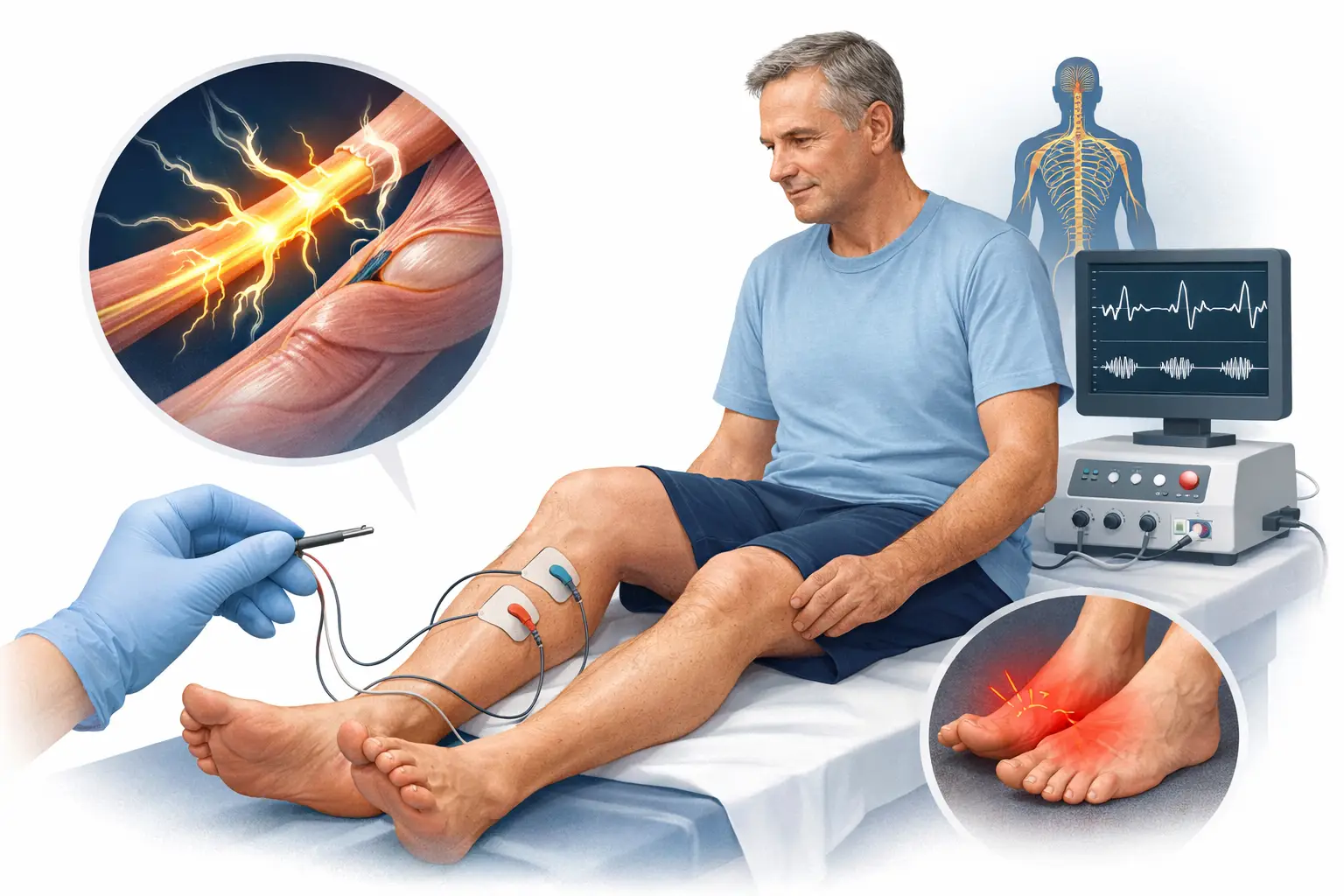
What does an EMG test show for neuropathy? An EMG test can help identify nerve and muscle abnormalities associated with peripheral neuropathy, nerve compression, radiculopathy, and certain muscle disorders. However, it may not detect small-fiber neuropathy, and a normal EMG does not automatically rule out nerve-related symptoms.
If you have burning feet, tingling, numbness, or leg weakness, an emg test for neuropathy may come up quickly in the diagnostic process. For many adults over 45, the test sounds intimidating at first. In reality, it is a common tool doctors use to find out whether symptoms are coming from nerve damage, muscle problems, or pressure on a nerve root in the spine.
The most useful thing to know upfront is this: an EMG is not a yes-or-no test for every kind of neuropathy. It can provide valuable evidence, but it also has limits. That matters because people often expect one test to explain every strange sensation in their feet or hands. Neuropathy workups rarely work that neatly.
What an EMG test for neuropathy actually measures
EMG vs Nerve Conduction Study (NCS)
EMG stands for electromyography. It is usually performed alongside another test called nerve conduction studies, or NCS. Many people use “EMG” to describe the whole appointment, but the two parts look at different pieces of the puzzle.
Nerve conduction studies measure how fast and how strongly electrical signals travel through certain nerves. Small electrodes are placed on the skin, and the nerve is stimulated with mild electrical pulses. This helps show whether a nerve is conducting signals normally.
The needle EMG portion evaluates how muscles respond at rest and during contraction. A thin needle electrode is inserted into selected muscles to record electrical activity. This can show whether the muscle is receiving normal nerve input or whether there may be damage somewhere along the motor nerve pathway.
Together, these tests help doctors distinguish between several possibilities. Symptoms may be caused by peripheral neuropathy, a pinched nerve in the back or neck, a single compressed nerve such as carpal tunnel syndrome, or a primary muscle disorder. That distinction is often the real value of the test.
When doctors order EMG for neuropathy symptoms
Doctors usually order EMG and nerve conduction testing when the symptom pattern raises questions that cannot be answered by history and a basic exam alone. Common reasons include persistent numbness, burning pain, foot drop, hand weakness, balance changes, or reduced reflexes.
The test is especially useful when symptoms suggest large-fiber nerve involvement. Large nerve fibers help control strength, vibration sense, reflexes, and position sense. If those systems are affected, EMG and nerve conduction studies are often informative.
It may also be ordered when a clinician wants to separate neuropathy from circulation problems, arthritis-related discomfort, or spinal nerve compression. For example, leg tingling can come from peripheral nerve disease, but it can also come from lumbar radiculopathy. Those are very different problems, even if they feel similar to the patient.
Key Takeaways
- EMG evaluates muscle activity and nerve function.
- EMG is often performed together with nerve conduction studies.
- The test helps distinguish neuropathy from pinched nerves and muscle disorders.
- Small-fiber neuropathy may not appear on EMG testing.
- A normal EMG does not automatically rule out neuropathy.
- Blood tests are often needed to identify the underlying cause.
What EMG Can and Cannot Detect
Key point: EMG is most effective for detecting large-fiber nerve abnormalities, nerve root compression, and muscle disorders. Small-fiber neuropathy may still be present even when EMG results are normal.
A normal EMG does not automatically rule out neuropathy. The test is designed primarily to evaluate large nerve fibers and muscle activity, which means certain nerve disorders may require additional testing.
An EMG-based study can support the diagnosis of peripheral neuropathy, but it usually does more than that. It can suggest whether the problem is affecting one nerve, several nerves, or many nerves in a length-dependent pattern that starts in the feet.
It may also help show whether the damage mainly affects the myelin, which is the insulating covering around nerves, or the axon, which is the nerve fiber itself. That difference can matter because it points clinicians toward different causes and next steps.
In some cases, the pattern can raise suspicion for metabolic or nutritional causes, including diabetes, alcohol-related nerve injury, or vitamin deficiencies such as low B12. Still, the EMG does not identify the cause by itself. It shows the pattern of nerve or muscle dysfunction. The cause usually requires blood work, medical history, medication review, and sometimes imaging or additional testing.
Bottom line: EMG is one of the most useful tools for evaluating suspected neuropathy, but results must always be interpreted alongside symptoms, examination findings, and appropriate laboratory testing.
What the test cannot rule out
This is where expectations need to stay realistic. A normal EMG does not automatically mean your symptoms are “nothing” or that neuropathy has been excluded.
Small fiber neuropathy is the clearest example. This condition affects the small nerve fibers responsible for pain and temperature sensation. People may have burning, stinging, electric-shock sensations, or severe foot discomfort while routine EMG and nerve conduction studies remain normal. That is because these tests are much better at detecting large-fiber problems than small-fiber abnormalities.
Very early neuropathy can also be missed. If nerve damage is mild or patchy, findings may not yet show up clearly. Test quality, which nerves are sampled, and the underlying cause all influence sensitivity.
That is why an experienced clinician interprets the results in context. Good medicine is not about treating a printout. It is about matching test findings to the person sitting in front of you.
Important: A normal EMG does not always mean symptoms are unrelated to nerve dysfunction. Small-fiber neuropathy, early-stage neuropathy, and certain sensory disorders may produce normal EMG results despite ongoing burning, tingling, or numbness.
How the EMG test feels
Most people want a straightforward answer about discomfort. The nerve conduction part feels like quick electrical taps or zaps. It can be unpleasant, but it is usually brief and tolerable.
The needle EMG tends to worry people more. The needle is small, but you may feel a pinch on insertion and soreness when certain muscles are tested. Some muscles are more uncomfortable than others. The exam usually lasts between 30 and 60 minutes, though that varies depending on how many nerves and muscles need evaluation.
Afterward, you may have mild muscle tenderness for a day or two. Serious complications are uncommon. If you take blood thinners, have a pacemaker, or have a bleeding disorder, your clinician should know before the exam.
How to prepare for the appointment
Preparation is fairly simple. Avoid lotions or creams on the skin the day of the test because they can interfere with the electrodes. Wear loose, comfortable clothing that allows access to the arms or legs.
Bring a medication list and be ready to describe your symptoms clearly: where they started, whether they are symmetrical, whether they are worse at night, and whether weakness is present. Those details can shape which nerves and muscles are tested.
If you have a history of diabetes, back problems, chemotherapy, alcohol overuse, thyroid disease, or low vitamin B12, mention it. Those factors can strongly affect interpretation.
Understanding EMG results without overreading them
EMG reports often include technical terms that sound alarming. Words like “axonal,” “demyelinating,” “chronic denervation,” or “radiculopathy” are meaningful, but they need clinical interpretation.
An abnormal result does not always mean progressive nerve disease. Some findings reflect old injury. Others show mild changes that explain symptoms but do not signal a dangerous condition. On the other hand, a report that says “mild” may still line up with symptoms that feel very disruptive in daily life.
This is one reason self-interpreting a test report can be misleading. The same wording can mean very different things depending on age, symptom pattern, physical exam findings, and medical history.
EMG, neuropathy, and vitamin B12 questions
For readers of a health editorial site focused on supplement evidence, vitamin B12 often enters the conversation for good reason. Low B12 can contribute to nerve-related symptoms, including numbness, tingling, balance problems, and sometimes weakness. If B12 deficiency is suspected, lab testing matters more than guesswork.
An EMG may show a neuropathic pattern in someone with low B12, but it cannot confirm B12 deficiency as the cause. That requires proper evaluation, and treatment decisions should be based on documented deficiency or a clinician’s assessment of risk factors and symptoms.
This is also a good place for caution. Supplements may support nutritional status when a deficiency or insufficiency is present, but they are not a substitute for a diagnostic workup when symptoms are new, worsening, or accompanied by weakness. A person with burning feet may have neuropathy, but they may also have spinal compression, medication side effects, or another condition that needs direct medical attention.
When EMG is most helpful and when it is not
EMG is especially helpful when symptoms include weakness, reflex changes, muscle wasting, or a question of pinched nerve versus peripheral neuropathy. It is also useful when symptoms are asymmetrical, rapidly changing, or affecting function in a way that needs clarification.
It is less helpful when the leading suspicion is isolated small fiber neuropathy with normal strength and reflexes. In that setting, other tests may be considered, such as skin biopsy or autonomic testing, depending on the case and the specialist involved.
The practical takeaway is simple: EMG is a strong tool, but not a complete answer. It performs best when the right question is being asked.
Could Vitamin B12 Deficiency Cause Abnormal EMG Findings?
Yes. Long-standing vitamin B12 deficiency can damage peripheral nerves and may eventually produce abnormalities on EMG and nerve conduction testing. The findings are not specific to B12 deficiency, but they may reveal a neuropathic pattern consistent with nerve injury.
However, EMG cannot determine whether low vitamin B12 is the actual cause. Blood tests remain necessary to evaluate vitamin status and identify whether deficiency may be contributing to symptoms.
This distinction matters because many conditions can produce similar EMG findings, including diabetes, alcohol-related nerve injury, thyroid disorders, medication effects, and certain autoimmune diseases.
Questions worth asking your doctor
What Different EMG Results May Mean
If your clinician recommends an EMG, it helps to ask what they are trying to rule in or rule out. You can also ask whether the test is looking for peripheral neuropathy, a pinched nerve, muscle disease, or another cause of symptoms.
If results come back normal but symptoms continue, ask what happens next. That may involve blood tests, imaging, a review of medications, or evaluation for small fiber neuropathy. Persistent symptoms deserve follow-up, even when the first test is unrevealing.
For cautious health consumers, that is probably the most balanced way to view this exam. An EMG can add important evidence, narrow the field, and sometimes confirm nerve damage – but it is one part of the larger diagnostic picture, not the whole picture by itself.
Final Thoughts
An EMG test is one of the most valuable tools available for evaluating suspected neuropathy, nerve compression, and neuromuscular disorders. When combined with nerve conduction studies, it can provide important information about how nerves and muscles are functioning.
At the same time, no test is perfect. EMG may miss small-fiber neuropathy and very early nerve damage. That is why results should always be interpreted alongside symptoms, physical examination findings, and appropriate laboratory testing.
For people experiencing persistent tingling, burning feet, numbness, weakness, or balance problems, the goal is not simply obtaining a test result. The goal is identifying the underlying cause and developing the most appropriate plan for evaluation and treatment.
If you’re trying to understand what may be behind numbness, tingling, burning feet, or nerve pain, our guide to peripheral neuropathy causes and relief explains the most common causes and what may help support nerve health.
Frequently Asked Questions
Medical Disclaimer: The information provided in this article is for educational purposes only and is not intended as medical advice. Dietary supplements are not a replacement for professional medical diagnosis or treatment. Always consult with a qualified healthcare professional before starting any new supplement, especially if you have pre-existing medical conditions or are taking prescription medications. Individual results may vary.

- Can Low B12 Cause Dizziness? - July 9, 2026
- B12 Deficiency and Cracked Corners of the Mouth - July 9, 2026
- Can Low B12 Cause Dry Mouth? - July 8, 2026