✓ Quick Answer
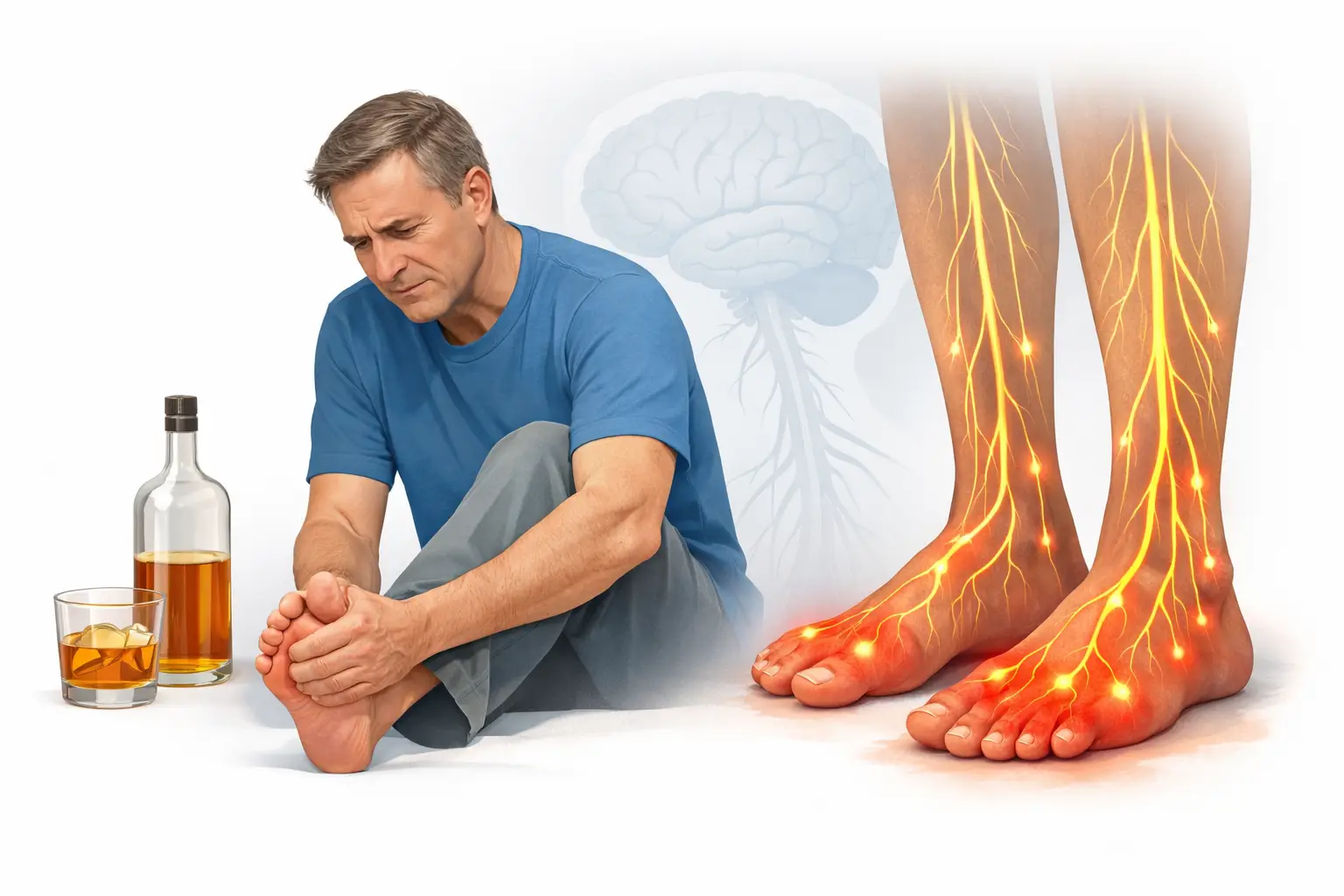
Alcohol-related neuropathy is nerve damage associated with long-term alcohol use, often combined with nutritional deficiencies such as low thiamine or vitamin B12. Common symptoms include burning feet, tingling, numbness, balance problems, weakness, and nerve pain that may gradually worsen over time. Early evaluation and addressing underlying causes may help slow progression and improve quality of life.
A person may first notice alcohol-related neuropathy: causes, symptoms, and what to expect when their feet start burning at night, their toes feel strangely numb, or their balance seems less reliable than it used to be. Those symptoms are easy to blame on aging, circulation, or diabetes, but long-term alcohol use can also injure peripheral nerves and create a pattern of symptoms that tends to build gradually rather than all at once.
Alcohol-related neuropathy is nerve damage linked to chronic alcohol exposure, often combined with poor nutrition. It usually affects the nerves farthest from the brain and spinal cord first, which is why symptoms often begin in the feet and lower legs before moving upward. For many adults, the most useful question is not whether alcohol is the only possible cause, but whether it could be one piece of the picture.
What causes alcohol-related neuropathy?
The short answer is that it can develop through two overlapping problems. First, alcohol itself may have a toxic effect on nerves over time. Second, heavy or long-term drinking often goes along with nutritional deficiencies that make nerve health worse.
This is where the condition becomes more complicated than many people expect. Nerves depend on a steady supply of nutrients to maintain their protective coverings, support signaling, and repair damage. People who drink heavily may eat less, absorb nutrients poorly, or develop gastrointestinal and liver problems that interfere with normal metabolism. Deficiencies in B vitamins, especially thiamine and sometimes vitamin B12, can contribute to numbness, tingling, weakness, and coordination problems.
According to the NIH Office of Dietary Supplements, vitamin B12 plays an essential role in neurological function, and deficiency may contribute to numbness, tingling, balance problems, and peripheral nerve symptoms.
That does not mean every person with neuropathy and a history of drinking has the same deficiency pattern. It also does not mean a vitamin issue fully explains the symptoms. In some cases, alcohol toxicity appears to be a major driver. In others, diabetes, low B12, medication effects, spinal problems, or thyroid disease may be involved at the same time. That is one reason self-diagnosis often misses the mark.
Important
Alcohol-related neuropathy is often influenced by both direct nerve toxicity and nutritional deficiencies. Identifying and correcting underlying vitamin deficiencies may be an important part of the evaluation process.
Key Takeaways
- Long-term alcohol use may contribute to peripheral nerve damage.
- Burning feet, tingling, numbness, and balance problems are common symptoms.
- Nutritional deficiencies often play a role alongside alcohol exposure.
- Vitamin B12 and thiamine deficiencies deserve evaluation.
- Symptoms usually develop gradually rather than suddenly.
- Early intervention may help slow progression and improve function.
Symptoms of alcohol-related neuropathy
The most common symptoms are sensory at first. Many people describe burning feet, pins-and-needles, tingling, electric-shock sensations, numb patches, or unusual sensitivity to touch. Symptoms often worsen at night, when there are fewer distractions and the discomfort becomes harder to ignore.
As alcohol-related neuropathy progresses, the pattern may spread from the toes into the feet and lower legs. Some people start feeling as if they are walking on padding or pebbles. Others notice they cannot sense temperature as clearly or that minor injuries go unnoticed until later.
Motor symptoms can also appear. Weakness in the ankles or lower legs may make stairs harder, reduce walking endurance, or create a slapping gait. Fine motor tasks can become more frustrating if the hands are involved, though the feet are often affected first.
Balance problems are another common complaint, especially in dim lighting. That happens because healthy nerves help the brain track body position. When that signal is impaired, a person may feel unsteady even if muscle strength seems mostly intact.
Some people also develop autonomic symptoms, which involve the nerves that help control automatic body functions. These can include dizziness when standing, sweating changes, digestive upset, bowel irregularity, bladder symptoms, or sexual dysfunction. These signs are less discussed but can significantly affect day-to-day life.
Why the symptoms can be confusing
Neuropathy is not a single disease with a single feel. Two people with similar drinking histories can have different symptoms, different deficiency patterns, and different rates of progression. One person may mainly have pain and burning. Another may have more numbness and weakness than pain.
There is also substantial overlap with other common conditions in adults over 45. Diabetes and prediabetes are major causes of peripheral neuropathy. Vitamin B12 deficiency can look similar. So can lumbar spinal stenosis, circulation problems, certain medications, and some autoimmune disorders. If symptoms are blamed on alcohol too quickly, an important and treatable contributor may be missed.
How doctors evaluate alcohol-related neuropathy
A medical evaluation usually starts with a symptom history, a review of alcohol use, and a neurologic exam. A clinician may test vibration sense, pinprick sensation, reflexes, strength, and gait. That bedside evaluation often gives useful clues about whether the pattern fits peripheral neuropathy.
Lab work is often part of the next step because alcohol-related neuropathy can overlap with nutritional and metabolic problems. Depending on the situation, testing may include vitamin B12, thiamine status, blood sugar markers, thyroid function, liver function, and other labs guided by the persons history.
In some cases, nerve conduction studies or electromyography are used to better define the type and severity of nerve involvement. These tests are not needed for everyone, but they can help when the diagnosis is uncertain, symptoms are progressing quickly, or another nerve disorder is being considered.
The practical point is this: neuropathy symptoms deserve a real workup, especially when they are new, worsening, or affecting balance. Waiting too long can mean more falls, more discomfort, and fewer options to slow progression.
What to expect if alcohol is a contributing factor
If alcohol is continuing to damage the nerves, symptoms may gradually worsen over time. The rate is not the same for everyone. Some people decline slowly over years. Others notice a clearer acceleration once numbness and balance changes begin.
If alcohol use stops and nutritional issues are addressed, some people improve, but improvement is often partial and slow. Pain may lessen before numbness does. Strength may recover somewhat while fine sensory changes linger. In long-standing cases, some nerve damage may not fully reverse.
That can be frustrating, but realistic expectations matter. Recovery from neuropathy is rarely immediate. Nerves heal slowly, and sometimes the goal is stabilization rather than complete symptom resolution. In practical terms, that may still be meaningful if it means less pain, fewer falls, better sleep, and improved day-to-day function.
Treatment and support: what actually helps
The foundation of care is addressing the cause. When alcohol-related neuropathy is suspected, reducing or stopping alcohol use is central. For some readers, that is the hardest part of the plan, and it may require medical support, especially if dependence is present. Sudden alcohol withdrawal can be dangerous, so this should not be handled casually.
Nutrition also matters. If testing or clinical suspicion points to deficiencies, a clinician may recommend targeted supplementation and dietary changes. That is where a cautious, evidence-informed approach is useful. Supplements may help correct a deficiency, but they are not a shortcut around continued alcohol injury, and they should not be treated like a cure for neuropathy.
For symptom control, treatment may include prescription options for nerve pain, physical therapy, balance work, and foot care strategies. Supportive shoes, safer home lighting, and attention to skin injuries can make a real difference, especially when numbness is present.
Adults comparing nerve-health products should keep one principle in mind: the most credible options are those built around identified needs, such as documented B12 deficiency, not broad promises to regenerate nerves or erase neuropathy. On a site like, that distinction matters. Evidence is strongest when a product choice matches a real deficiency or a clearly defined nutritional gap.
When symptoms should be checked sooner rather than later
Some symptoms warrant prompt medical attention. Rapidly worsening weakness, repeated falls, severe gait instability, loss of bladder control, major unexplained weight loss, or neuropathy symptoms in someone with diabetes or known B12 deficiency should not be brushed off. The same goes for one-sided symptoms or symptoms accompanied by back pain and leg weakness, because that may suggest a different problem.
Even less dramatic symptoms deserve attention if they have persisted for weeks or months. Burning feet every night, new numbness in the toes, or a growing sense of imbalance are not just annoyances. They are signals worth sorting out.
Alcohol-related neuropathy: causes, symptoms, and what to expect in real life
In real life, this condition often unfolds as a mix of uncertainty, discomfort, and delayed recognition. People may minimize symptoms, underestimate their alcohol intake, or assume the issue is poor circulation. By the time they seek help, the problem may already be affecting sleep, mobility, and confidence.
Still, the outlook is not all-or-nothing. The earlier the cause is identified and addressed, the better the chance of slowing further nerve injury and improving function. For many adults, the next right step is not guessing between alcohol, circulation, or vitamins on their own. It is getting a proper evaluation, asking direct questions, and building a plan around what the body is actually showing.
Frequently Asked Questions
Can alcohol cause neuropathy?
Yes. Long-term alcohol use may damage peripheral nerves directly and may also contribute to nutritional deficiencies that affect nerve health.
What are the first signs of alcohol-related neuropathy?
Early symptoms often include tingling, burning feet, numbness, balance problems, and unusual sensitivity in the lower legs and feet.
Can alcohol-related neuropathy be reversed?
Some improvement may occur when alcohol use stops and nutritional deficiencies are corrected, although recovery is often gradual and may be incomplete.
Can vitamin B12 deficiency worsen alcohol-related neuropathy?
Yes. Vitamin B12 deficiency may contribute to nerve symptoms and can overlap with alcohol-related nerve damage.
When should neuropathy symptoms be medically evaluated?
Persistent burning feet, worsening numbness, weakness, balance problems, or repeated falls should be discussed with a healthcare professional.
Medical Disclaimer: The information provided in this article is for educational purposes only and is not intended as medical advice. Dietary supplements are not a replacement for professional medical diagnosis or treatment. Always consult with a qualified healthcare professional before starting any new supplement, especially if you have pre-existing medical conditions or are taking prescription medications. Individual results may vary.

- Can Low B12 Cause Dizziness? - July 9, 2026
- B12 Deficiency and Cracked Corners of the Mouth - July 9, 2026
- Can Low B12 Cause Dry Mouth? - July 8, 2026