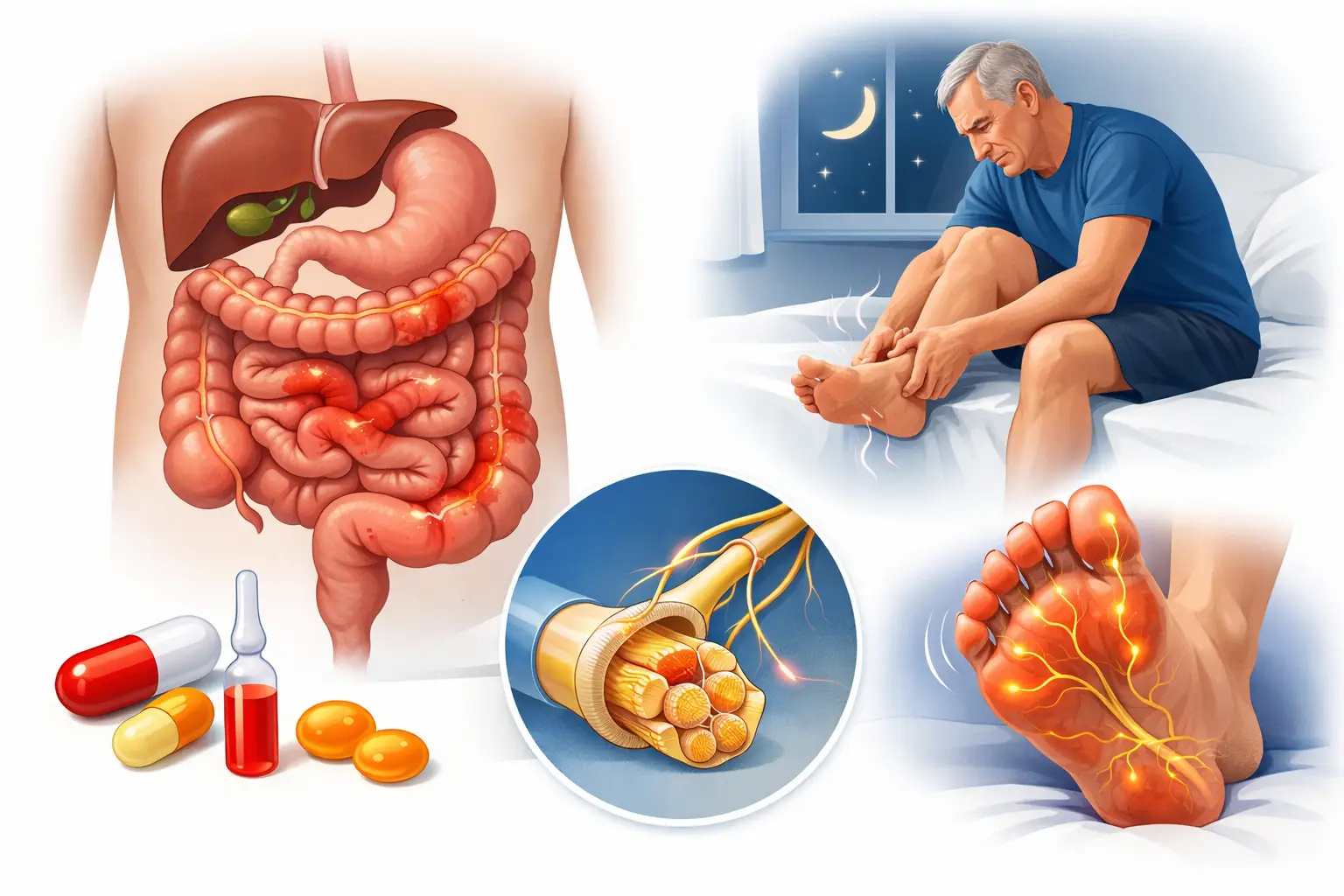
Crohn’s disease can increase the risk of vitamin B12 deficiency because B12 is absorbed in the terminal ileum, an area commonly affected by Crohn’s inflammation and surgery. Low B12 levels may contribute to peripheral neuropathy symptoms such as burning feet, tingling, numbness, weakness, and balance problems.
Burning feet, tingling toes, and numb hands often send people looking for answers in the wrong direction first. When crohn’s disease, b12 malabsorption and peripheral neuropathy show up together, the connection can be easy to miss, especially if digestive symptoms have been present for years and nerve symptoms appear later.
For adults over 45, this matters because neuropathy is often blamed on aging, circulation, diabetes, or back problems. Those can be valid causes, but Crohn’s disease adds another layer. Chronic intestinal inflammation, prior bowel surgery, reduced nutrient absorption, and certain medications can all increase the risk of vitamin B12 deficiency, and low B12 is one of the more recognized nutritional causes of nerve-related symptoms.
How Crohn’s disease affects B12 absorption
Vitamin B12 is absorbed mainly in the terminal ileum, the last part of the small intestine. That detail matters because the terminal ileum is also one of the most common areas affected by Crohn’s disease. If inflammation is active there, or if part of that section has been surgically removed, B12 absorption may fall even when diet looks adequate.
This is one reason food intake alone does not tell the whole story. A person can eat meat, fish, eggs, and dairy regularly and still become deficient if the gut cannot absorb B12 properly. In long-standing Crohn’s disease, that is a practical concern rather than a theoretical one.
B12 deficiency does not happen overnight. The body stores a fair amount in the liver, so symptoms may take months or even years to appear. That delay can make the cause-and-effect relationship less obvious. Someone may think their Crohn’s disease is stable while fatigue, poor balance, numbness, or memory changes slowly build in the background.
Clinical Perspective: Although these conditions increase the risk of vitamin B12 deficiency through different mechanisms, they all share one important consequence: prolonged deficiency may impair normal nerve function. Early laboratory evaluation and appropriate treatment may reduce the risk of long-term neurological complications.
Crohn’s disease, B12 malabsorption and peripheral neuropathy
Peripheral neuropathy refers to damage or dysfunction in nerves outside the brain and spinal cord. People describe it in different ways – pins and needles, buzzing, burning, electric shocks, reduced sensation, clumsiness, or a feeling that socks are bunched under the feet when they are not.
In the setting of Crohn’s disease, neuropathy does not automatically mean B12 deficiency is the only cause. That is where a careful review matters. Crohn’s itself can be associated with extraintestinal complications, and some patients may also have medication effects, folate deficiency, copper deficiency, diabetes, alcohol-related nerve injury, thyroid disease, spinal issues, or vascular problems. Still, B12 deserves special attention because it is both plausible and testable.
Low B12 can affect the myelin sheath that helps nerves conduct signals efficiently. When that process is disrupted, symptoms may start subtly and then progress. Some people notice numbness first. Others notice gait changes, poor vibration sense, hand weakness, or burning discomfort in the feet, especially at night. In more advanced cases, balance and cognition may also be affected.
The key point is that peripheral neuropathy linked to B12 deficiency may not look dramatic early on. Mild tingling can be dismissed. Reduced feeling in the feet may be blamed on age. That is why persistent nerve symptoms in someone with Crohn’s disease should not be brushed aside.
Symptoms that make the connection more likely
| Risk Factor | Why It Matters |
|---|---|
| Terminal Ileum Disease | This area is responsible for most vitamin B12 absorption. |
| Ileal Resection | Surgery may permanently reduce absorption capacity. |
| Chronic Diarrhea | Can contribute to nutrient deficiencies over time. |
| Long-Term Crohn’s Disease | Inflammation may impair nutrient uptake. |
A pattern can raise suspicion, although no symptom cluster is perfect. If a person with Crohn’s has fatigue, pale skin, brain fog, soreness of the tongue, weakness, tingling, numbness, or worsening balance, B12 status is worth discussing with a clinician. If there has been terminal ileum disease, bowel resection, chronic diarrhea, or unexplained weight loss, concern rises further.
Some people with B12 deficiency have anemia, but not all do. That is a common misunderstanding. Normal hemoglobin does not always rule out tissue-level deficiency, especially if testing stops too early. In practice, clinicians may look beyond a basic complete blood count when symptoms and Crohn’s history point toward malabsorption.
| Symptom | Description |
|---|---|
| Burning Feet | Hot, burning, or electric-like sensations. |
| Tingling | Pins and needles in the feet, legs, or hands. |
| Numbness | Reduced ability to feel touch or vibration. |
| Balance Problems | Difficulty walking steadily or feeling stable. |
| Weakness | Reduced muscle strength and endurance. |
Testing is useful, but interpretation can be tricky
Serum B12 is often the first lab ordered, and it can be helpful, but it has limitations. A clearly low result supports deficiency. Borderline results can be harder to interpret, particularly when symptoms are present. In those cases, clinicians may consider methylmalonic acid or homocysteine, which can help identify functional deficiency.
This is where an evidence-informed approach matters more than guessing. Nerve symptoms have many causes, and supplementing blindly can create a false sense of certainty. At the same time, waiting too long to evaluate a likely deficiency is not ideal either because neurological symptoms can become harder to reverse the longer they persist.
If you are reviewing a supplement for possible B12 support, the quality questions are straightforward. What form of B12 does it provide, how much per serving, how reliable is the manufacturer, and is the delivery format realistic for someone with possible malabsorption? Those are better questions than chasing marketing phrases.
Important:
Vitamin B12 deficiency may cause neurological symptoms even before obvious anemia develops. Persistent burning, tingling, numbness, or balance problems should not be ignored simply because routine blood counts appear normal.
Can oral B12 work if malabsorption is the issue?
Sometimes yes, sometimes no. This depends on the severity and cause of the malabsorption, the dose used, and the clinical plan. High-dose oral or sublingual B12 may help some people because a small amount can still be absorbed passively even when normal absorption is impaired. For others, especially after significant ileal disease or resection, injections may be preferred.
That is why product selection should follow diagnosis, not replace it. A standard over-the-counter dose may be adequate for general nutritional support but insufficient for someone with clinically significant deficiency related to Crohn’s disease. Delivery method matters, but so does medical follow-up.
| Question | Short Answer |
|---|---|
| Can Crohn’s disease cause B12 deficiency? | Yes. Especially when the terminal ileum is affected. |
| Can low B12 cause neuropathy? | Yes. It may contribute to tingling, burning, numbness, and weakness. |
| Can symptoms improve? | Early treatment generally offers the best chance of recovery. |
What to ask before buying a B12 supplement
For readers comparing options, practical caution is more useful than hype. First, confirm whether B12 is actually the likely issue. Second, check whether your clinician has recommended oral, sublingual, or injectable B12 based on your Crohn’s history. Third, look for clear labeling and avoid products that promise to cure neuropathy, restore nerves overnight, or replace medical care.
Methylcobalamin and cyanocobalamin are both commonly used forms. One is not automatically superior for every person. Some consumers strongly prefer methylcobalamin, while many clinical protocols still use cyanocobalamin effectively. The better choice often depends on cost, tolerance, dose, and the recommendation from the treating clinician rather than internet mythology.
For an audience shopping carefully, this is where sites such as VitB12Supplement.com can add value by comparing ingredient transparency and realistic use cases rather than pushing miracle narratives. The goal should be informed selection, not inflated expectations.
When neuropathy symptoms need prompt medical attention
Not every tingling sensation is an emergency, but some patterns deserve quick evaluation. Rapidly worsening weakness, sudden walking difficulty, severe balance problems, loss of bowel or bladder control, or numbness that is spreading quickly should not be managed with supplements alone.
Even slower symptoms deserve follow-up if they persist. The longer true B12-related neurological injury goes unrecognized, the less predictable recovery can be. Some people improve substantially after correction of deficiency. Others improve only partially, particularly when symptoms have been present for a long time. That uncertainty is exactly why early assessment matters.
The realistic outlook
The encouraging part is that B12 deficiency is one of the more addressable contributors to neuropathy when it is identified. The less comfortable truth is that neuropathy in Crohn’s disease is not always simple. Some people have more than one contributing factor at the same time. A person may have mild diabetes, an old lumbar spine problem, and B12 malabsorption together. In those cases, improvement may be gradual and incomplete even when one issue is corrected.
That is not a reason to give up on evaluation. It is a reason to stay practical. If you have Crohn’s disease and nerve symptoms, B12 status is not the only question, but it is one of the most sensible places to start. A careful conversation with your gastroenterologist or primary care clinician can often clarify whether testing, monitoring, or a more targeted supplementation plan makes sense.
If your feet are burning and your gut history is long, do not assume those are separate stories.
If you’re trying to understand what may be behind numbness, tingling, burning feet, or nerve pain, our guide to peripheral neuropathy causes and relief explains the most common causes and what may help support nerve health.
Frequently Asked Questions
Can Crohn’s disease cause vitamin B12 deficiency?
Yes. Crohn’s disease can interfere with vitamin B12 absorption when inflammation affects the terminal ileum or when part of the ileum has been surgically removed. This can increase the risk of vitamin B12 deficiency over time.
Can low B12 cause burning feet and tingling sensations?
Yes. Vitamin B12 deficiency may contribute to nerve-related symptoms such as burning feet, tingling, numbness, electric-like sensations, weakness, and balance problems.
Can you have B12 deficiency without anemia?
Yes. Some people develop neurological symptoms before obvious anemia appears. This is one reason healthcare professionals may order additional testing when symptoms suggest vitamin B12 deficiency.
Can neuropathy caused by B12 deficiency improve?
Many people experience improvement after vitamin B12 deficiency is corrected, especially when treatment begins early. Recovery varies depending on the severity and duration of nerve damage.
Should people with Crohn’s disease take B12 supplements?
Supplement needs vary from person to person. Factors such as laboratory results, symptoms, disease location, and previous bowel surgery may influence whether oral supplements or injections are recommended.
Medical Disclaimer: The information provided in this article is for educational purposes only and is not intended as medical advice. Dietary supplements are not a replacement for professional medical diagnosis or treatment. Always consult with a qualified healthcare professional before starting any new supplement, especially if you have pre-existing medical conditions or are taking prescription medications. Individual results may vary.

- Can Low B12 Cause Dizziness? - July 9, 2026
- B12 Deficiency and Cracked Corners of the Mouth - July 9, 2026
- Can Low B12 Cause Dry Mouth? - July 8, 2026