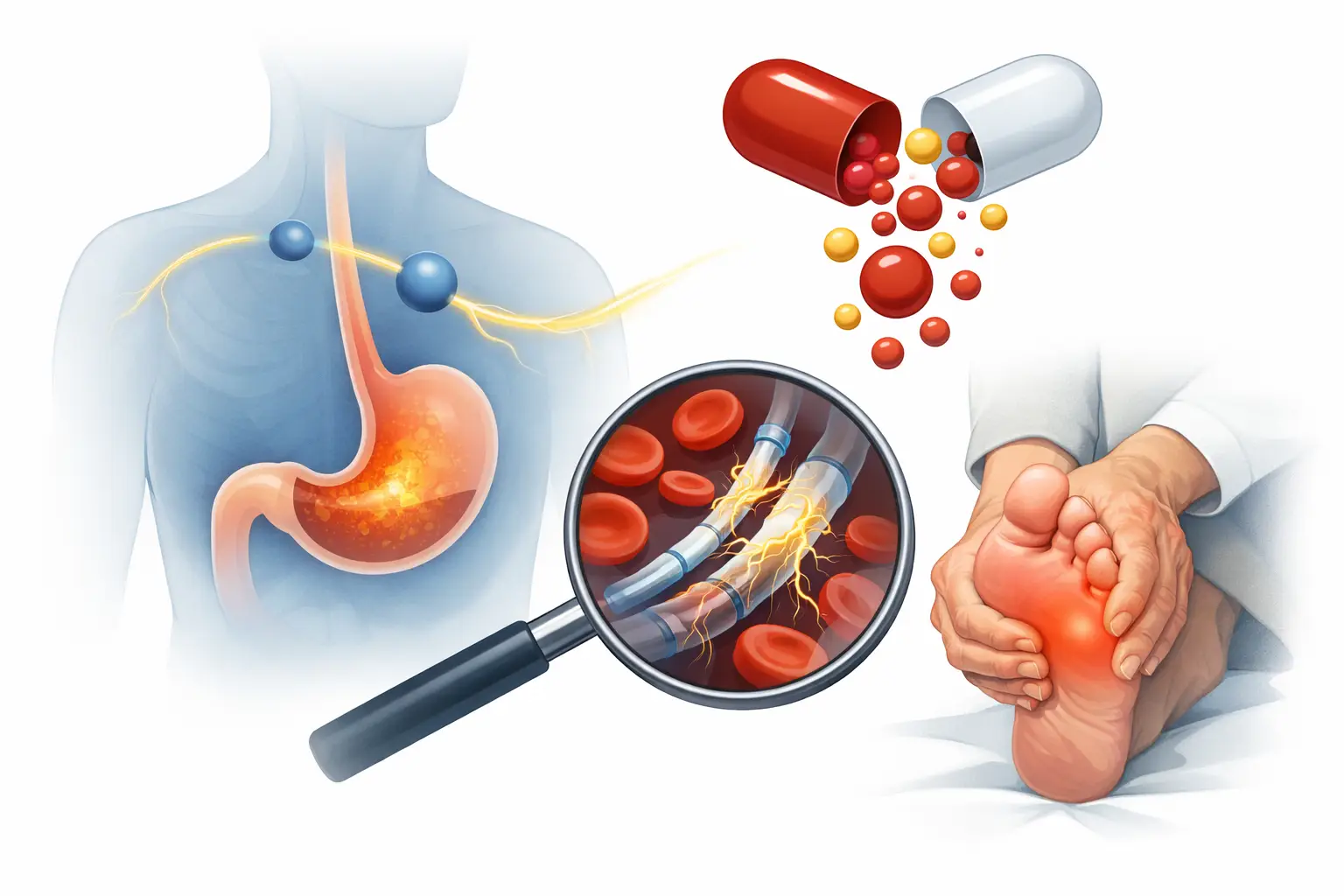
Yes. Low stomach acid can contribute to vitamin B12 deficiency because stomach acid helps release B12 from food proteins before absorption can occur. This becomes more relevant with age, long-term acid-reducing medication use, chronic gastritis, or other digestive conditions that affect stomach function.
Tingling feet, numb hands, fatigue, brain fog, and a sore tongue can send people searching for one nutrient in particular: vitamin B12. A common question behind that search is, Can Low Stomach Acid Cause B12 Deficiency? In many cases, yes – low stomach acid can interfere with one of the earliest steps needed to absorb B12 from food, especially in adults over 45.
That does not mean every person with reflux, bloating, or indigestion has a B12 problem. It also does not mean low acid is the only cause. But it is a plausible and often overlooked contributor, particularly in older adults and in people who use acid-suppressing medications for long periods.
How stomach acid helps you absorb vitamin B12
Vitamin B12 absorption is more complicated than many people realize. B12 in animal foods such as meat, fish, eggs, and dairy is usually bound to protein. Before your body can absorb it, stomach acid and digestive enzymes need to help release that B12 from the food.
Once released, B12 first binds to proteins in saliva and stomach fluid. Farther down the digestive tract, it separates again and attaches to intrinsic factor, a protein made by the stomach. That B12-intrinsic factor complex then travels to the small intestine, where absorption can take place.
If stomach acid is too low, the first part of that process may not work well. In simple terms, your body may struggle to free B12 from food, even if your diet contains reasonable amounts. That is one reason a person can eat animal products regularly and still end up with borderline or low B12 levels.
Can low stomach acid cause B12 deficiency on its own?
It can, but the full answer is more nuanced. Low stomach acid, also called hypochlorhydria, is a recognized risk factor for B12 deficiency because it reduces the release of food-bound B12. Over time, that can contribute to low intake at the tissue level, even when intake on paper looks adequate.
Still, B12 deficiency is often multifactorial. Low stomach acid may be one piece of the picture rather than the only explanation. Other causes include pernicious anemia, gastrointestinal surgery, certain bowel disorders, long-term metformin use, heavy alcohol intake, and strict vegan diets without adequate supplementation.
This is why symptom-based guessing can be misleading. Two people can have similar fatigue and tingling, but one may have low B12 from poor absorption, while the other has a different nutritional or neurological issue.
Why this matters more after age 45
Research Snapshot
Several studies estimate that 10% to 30% of older adults may have hypochlorhydria (low stomach acid), increasing the risk of food-bound vitamin B12 malabsorption. Because stomach acid helps release vitamin B12 from proteins in food, reduced acid production can make deficiency more likely even when dietary intake appears adequate.
As people age, stomach acid production often declines. This does not happen to everyone, but it becomes more common with advancing age. That matters because adults over 45 are already more likely to notice symptoms that overlap with B12 deficiency, including memory complaints, low energy, balance changes, and numbness or burning sensations in the feet.
Long-term use of acid-reducing drugs can add another layer. Proton pump inhibitors and H2 blockers may be helpful for reflux or ulcer-related symptoms, but they can also reduce the acidity needed to separate B12 from food proteins. The risk tends to rise with longer duration and higher dose use, not just occasional use.
For older adults, this creates a practical issue: symptoms may be dismissed as normal aging when a nutrient problem is playing at least some role. That does not mean B12 explains every case of neuropathy-like symptoms, but it is one reason testing deserves consideration.
Acid Helps Release B12
Stomach acid separates vitamin B12 from food proteins before absorption.
Risk Increases With Age
Natural declines in stomach acid production become more common after age 45.
Medications Matter
Long-term proton pump inhibitor and H2 blocker use may affect B12 absorption.
Testing Beats Guessing
Symptoms alone cannot confirm whether low B12 is actually present.
Important:
Low stomach acid may contribute to vitamin B12 deficiency even when dietary intake appears adequate. People can consume meat, fish, eggs, and dairy regularly yet still struggle to absorb enough B12 from food.
Signs that low B12 may be affecting you
| Symptom | Possible Description |
|---|---|
| Fatigue | Persistent low energy or reduced stamina. |
| Tingling | Pins-and-needles sensations in hands or feet. |
| Burning Feet | Hot, burning, or electric-like sensations. |
| Brain Fog | Difficulty concentrating or remembering information. |
| Balance Problems | Feeling less stable while walking. |
B12 deficiency can show up gradually. In the early stages, the signs may be subtle or easy to blame on stress, poor sleep, or getting older. As deficiency progresses, symptoms may become more noticeable.
Common symptoms include fatigue, weakness, lightheadedness, shortness of breath with exertion, pale skin, and reduced stamina. Neurological symptoms can include tingling, numbness, burning sensations, poor balance, pins-and-needles feelings, and trouble with memory or concentration. Some people also develop mood changes, mouth soreness, or a smooth, inflamed tongue.
These symptoms are not specific to B12 deficiency. Iron deficiency, diabetes, thyroid problems, circulation issues, medication side effects, and other conditions can overlap. That is why a symptom list is useful as a prompt for evaluation, not as proof of the cause.
Who is more likely to have low stomach acid-related B12 problems?
| Risk Factor | Why It Matters |
|---|---|
| Age over 45 | Stomach acid production may decline with age. |
| Long-term PPI use | Can reduce stomach acidity needed for food-bound B12 release. |
| Chronic gastritis | May affect both acid production and intrinsic factor production. |
| Stomach surgery | Can interfere with normal digestion and absorption processes. |
The risk is higher in adults with a few recognizable patterns. Age is one. Chronic use of acid-suppressing medication is another. A history of gastritis, especially autoimmune gastritis, can also matter because the stomach lining is involved in both acid production and intrinsic factor production.
People who eat very little animal protein may have lower overall B12 intake to begin with, so even mild absorption problems can have a larger impact. Those with prior stomach surgery or digestive disorders may be at higher risk as well. In some cases, Helicobacter pylori infection has also been associated with changes in stomach function that may affect B12 status.
If several of these factors apply to you at the same time, the chance of a clinically meaningful issue rises.
Testing is more useful than guessing
If you suspect B12 deficiency, the most practical next step is not to self-diagnose based on internet symptom lists. It is to discuss testing with a healthcare professional, especially if you have numbness, burning feet, balance problems, or unexplained fatigue.
Serum B12 is commonly ordered, but it is not perfect on its own. Some people with low-normal B12 still have functional deficiency. Depending on the situation, clinicians may also consider methylmalonic acid, homocysteine, a complete blood count, folate, iron studies, and other tests based on the symptom pattern.
This matters because proper interpretation can prevent two common mistakes: missing a genuine deficiency, or assuming B12 is the answer when another problem needs attention.
Food sources, supplements, and an important absorption detail
| Question | Short Answer |
|---|---|
| Can low stomach acid cause B12 deficiency? | Yes. It can reduce the release of B12 from food proteins. |
| Do supplements require stomach acid? | Many supplemental forms are less dependent on stomach acid than food-bound B12. |
| Should symptoms be tested? | Yes. Symptoms alone cannot confirm B12 deficiency. |
One useful detail often gets missed: low stomach acid mainly interferes with B12 from food protein. It does not affect all supplemental B12 to the same degree. Crystalline B12 found in fortified foods and many supplements is not bound to protein in the same way, so it may be easier to absorb for some people with low stomach acid.
That helps explain why supplementation may still improve B12 status even when food-based absorption is impaired. It does not guarantee success in every case, especially if intrinsic factor is severely impaired, but it is an important distinction.
For consumers comparing products, this is where a cautious, evidence-informed approach matters. Dose, form, and overall need should be guided by the reason for deficiency and the lab picture, not just by marketing language. High-dose products may be appropriate for some people, but more is not automatically better.
When low stomach acid is not the whole story
There are limits to the low-acid explanation. If someone has pernicious anemia, the major issue is intrinsic factor loss, not just reduced stomach acid. If a person has Crohn’s disease affecting the terminal ileum, the problem may be poor absorption farther down the gut. If intake is extremely low, deficiency can develop even with normal digestion.
That is why broad claims such as “fix stomach acid and your B12 will normalize” are too simplistic. Digestion, medications, diet, stomach health, and intestinal absorption all play roles. Any article or product pitch that pretends otherwise is leaving out important context.
Practical questions to ask your doctor
If you are over 45 and wondering whether low stomach acid is contributing to symptoms, it helps to walk into the appointment with clear questions. Ask whether your symptoms fit a pattern that warrants B12 testing, whether your medication history could affect absorption, and whether additional markers beyond standard serum B12 would be useful.
It is also reasonable to ask whether your diet provides enough B12, whether a supplement makes sense while evaluation is underway, and whether another condition could better explain the symptoms. That kind of conversation is often more productive than focusing on one suspected cause too early.
A realistic takeaway for cautious supplement shoppers
Yes, low stomach acid can contribute to B12 deficiency, especially in older adults and in people taking acid-lowering medications long term. The connection is biologically plausible and well recognized. At the same time, it is only one of several possible reasons B12 levels may fall.
For readers researching tingling, burning feet, numbness, or unexplained fatigue, the safest approach is to treat low stomach acid as a clue, not a verdict. If the symptoms are new, persistent, or getting worse, getting properly evaluated is more useful than chasing a single theory. Once the cause is clearer, decisions about diet, testing, and B12 supplements become much easier to make with confidence.
If you’re trying to understand what may be behind numbness, tingling, burning feet, or nerve pain, our guide to peripheral neuropathy causes and relief explains the most common causes and what may help support nerve health.
Frequently Asked Questions
Can low stomach acid cause vitamin B12 deficiency?
Yes. Low stomach acid can reduce the release of vitamin B12 from food proteins, making absorption less efficient over time.
Can acid reflux medication lower vitamin B12 levels?
Long-term use of PPIs and H2 blockers may reduce stomach acid and increase the risk of B12 deficiency.
What are common symptoms of vitamin B12 deficiency?
Symptoms may include fatigue, tingling, numbness, burning feet, poor balance, and brain fog.
Can B12 supplements work if stomach acid is low?
Often yes. Many supplemental forms of B12 are less dependent on stomach acid than food-bound B12.
Should adults over 45 have their B12 levels checked?
Testing may be worth discussing if symptoms, digestive issues, or long-term acid-reducing medication use are present.
Medical Disclaimer: The information provided in this article is for educational purposes only and is not intended as medical advice. Dietary supplements are not a replacement for professional medical diagnosis or treatment. Always consult with a qualified healthcare professional before starting any new supplement, especially if you have pre-existing medical conditions or are taking prescription medications. Individual results may vary.

- Can Low B12 Cause Dizziness? - July 9, 2026
- B12 Deficiency and Cracked Corners of the Mouth - July 9, 2026
- Can Low B12 Cause Dry Mouth? - July 8, 2026