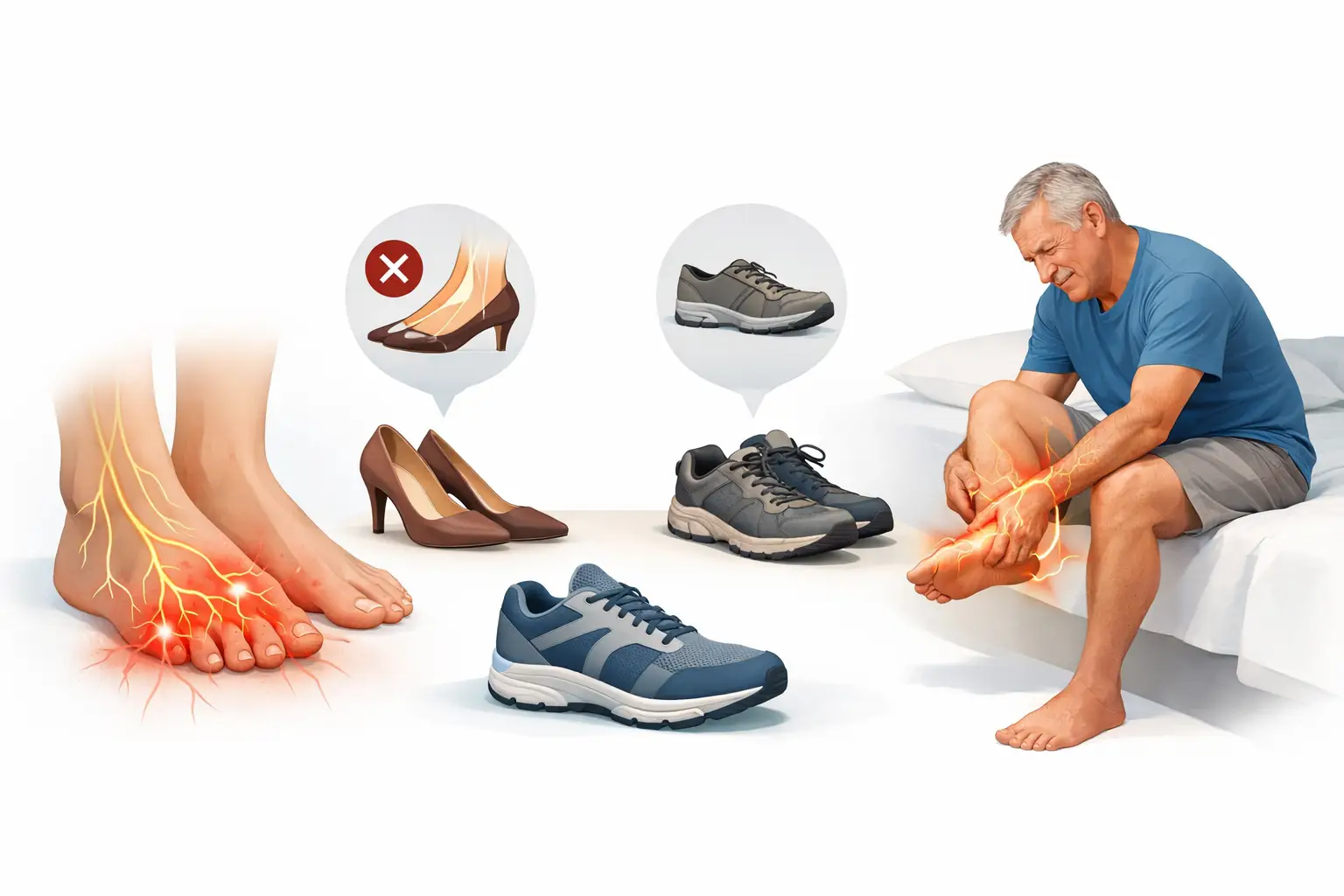
Quick Answer:
The best footwear for peripheral neuropathy is usually stable, well-fitted, supportive, and designed to reduce friction and pressure points. Shoes that are too narrow, unstable, backless, poorly cushioned, or prone to rubbing may increase discomfort, balance problems, skin irritation, and fall risk in people with reduced foot sensation.
A shoe that feels fine for ten minutes can become a problem by lunchtime if you have burning, tingling, or numb feet. That is why footwear for peripheral neuropathy: what to look for and what to avoid is not a minor comfort issue. It is a practical safety decision that can affect balance, skin irritation, pressure spots, and how confident you feel walking through a normal day.
Peripheral neuropathy changes the way feet sense pressure, heat, friction, and position. Some people notice pain from even light contact. Others feel less pain than they should, which can be just as risky because a tight seam, pebble, or rubbing heel may go unnoticed until there is a blister or skin breakdown. Good footwear cannot fix nerve damage, but it can reduce avoidable irritation and lower the chances of daily setbacks.
Why shoe choice matters more with neuropathy
When sensation is reduced or distorted, the foot loses part of its early warning system. A person without neuropathy usually shifts position quickly if a shoe pinches the toes or rubs the heel. With neuropathy, that feedback may be delayed, muted, or replaced by burning and tingling that make it harder to tell what the shoe is actually doing.
This becomes more important with age, when balance, circulation, arthritis, and swelling may also be part of the picture. A shoe that is too loose can increase instability. A shoe that is too firm or too narrow can create pressure points. The best option is usually not the softest shoe on the shelf. It is the one that protects the foot, fits consistently, and reduces friction without making walking less stable.
Key Takeaways
- A wide toe box can reduce pressure on sensitive toes and joints.
- Shoes should provide stability without excessive softness.
- Loose slip-ons and backless footwear may increase fall risk.
- Smooth interiors help reduce friction and skin irritation.
- Proper footwear can improve comfort, balance, and walking confidence.
- People with diabetes, foot deformities, or previous ulcers may benefit from professional footwear guidance.
Footwear for peripheral neuropathy: what to look for
Footwear Features: Helpful vs Problematic
| Feature | Generally Helpful | Often Problematic |
|---|---|---|
| Toe Box | Wide and roomy | Narrow or pointed |
| Heel Support | Firm heel counter | Loose backless design |
| Interior | Smooth lining with minimal seams | Rough stitching and pressure points |
| Cushioning | Moderate cushioning | Overly soft unstable soles |
| Traction | Reliable non-slip outsole | Worn or slippery sole |
Start with shape, not marketing. The front of the shoe should be wide and deep enough that toes can rest naturally without rubbing the top or sides. A narrow toe box is one of the most common problems because it concentrates pressure where many people already have discomfort, numbness, bunions, or hammertoes.
Inside the shoe, look for a smooth lining with as few internal seams as possible. This matters because seams can create repetitive friction in the same spot every time you walk. If your sensation is reduced, you may not notice irritation until later. Even a well-made shoe can be a poor choice if the interior has ridges, hard stitching, or rough edges.
Cushioning helps, but more is not always better. Moderate cushioning can absorb shock and make walking more comfortable on hard floors. Very plush soles, however, can sometimes reduce stability or make it harder to feel where the foot is landing. For someone with neuropathy and balance concerns, that trade-off matters. A stable midsole with controlled cushioning is often more useful than an overly soft one.
Support through the midfoot and heel is also important. A firm heel counter, meaning the back part of the shoe that cups the heel, can limit excess motion and improve stability. Shoes that twist very easily in the middle may feel flexible in the store but can leave the foot working harder with each step. Many adults do better in footwear that bends at the ball of the foot but remains relatively stable through the arch and heel.
Closures deserve more attention than many shoppers give them. Laces, adjustable straps, or secure hook-and-loop closures are often better than slip-ons because they let you fine-tune fit across the day. That matters if your feet swell by afternoon or if one foot differs slightly from the other. A secure closure also helps prevent sliding inside the shoe, which can increase friction.
The outsole should provide reliable traction without being sticky or awkward. Slippery soles raise fall risk, especially when numbness affects how quickly you react to uneven ground. At the same time, an outsole that grabs too aggressively can occasionally cause tripping on carpet transitions. The goal is steady grip and predictable movement.
For some people, removable insoles are a useful feature. They allow room for custom orthotics or a different insert if recommended by a podiatrist or other clinician. This can be especially helpful when foot structure, pressure distribution, or deformities make standard shoes less comfortable.
What to avoid in footwear for peripheral neuropathy
The first category to avoid is shoes that prioritize style over foot protection. High heels shift pressure to the forefoot and reduce stability. Narrow dress shoes squeeze the toes. Pointed toe designs may look polished but often create pressure where neuropathic symptoms already feel worst.
Thin, flat soles can also be a poor choice. Minimal shoes and unsupportive flats may work for some healthy feet, but with neuropathy they often leave too little protection from pavement, hard floors, and small surface irregularities. If reduced sensation is part of the problem, more underfoot protection usually makes sense.
Be cautious with backless shoes, loose slip-ons, and flimsy sandals. They can feel convenient, especially at home, but they often require the toes to grip in order to keep the shoe on. That can change walking mechanics and increase instability. Open designs also expose the foot to minor trauma that might go unnoticed.
Avoid anything that creates obvious pressure marks, even if the discomfort seems minor. Redness after wear, indentations from straps, rubbing at the heel, or aching across the top of the foot are all signs the fit is wrong. For people with neuropathy, small fit problems should be taken seriously early rather than tolerated.
Another common mistake is buying shoes that need to be broken in. With neuropathy, the safer assumption is that a shoe should feel acceptable from the start. Materials may soften a little over time, but relying on a painful adjustment period is rarely wise when skin irritation and pressure injuries are concerns.
How to judge fit when your feet do not give clear feedback
Fit can be harder to judge when numbness or altered sensation is part of the picture. Try shoes on later in the day, when feet are more likely to reflect normal swelling. Wear the type of socks you plan to use most often. Stand and walk on a firm surface, not just carpet, because carpet can disguise pressure points and instability.
There should be about a thumb’s width of space in front of the longest toe, but length alone is not enough. Pay attention to width through the forefoot and depth over the toes. If the upper presses down on the toenails or joints, the shoe may be too shallow even if the length seems right.
After trying a pair, inspect your feet. Look for red spots, indentations, or areas that appear irritated. If vision or mobility makes this difficult, using a hand mirror or asking for help can be worthwhile. Objective checks matter because sensory cues may be unreliable.
⚠ Important
Reduced foot sensation can make shoe problems harder to detect. If a shoe leaves red marks, causes pressure spots, creates friction, or changes the way you walk, those signs should be taken seriously even if discomfort feels minimal.
Socks matter more than most people think
Even the right shoe can perform poorly with the wrong sock. Thick seams across the toes, rough fabric, or socks that bunch up inside the shoe can create friction and pressure. Many people with neuropathy prefer soft, moisture-wicking socks with minimal seams and a nonbinding cuff.
Sock thickness should match the shoe. Thick socks in a shoe fitted for thin socks can create tightness. Very thin socks in a loose shoe can allow excess movement. The best combination is the one that keeps the foot dry, reduces rubbing, and maintains a stable fit.
When to ask a professional for help
If you have foot deformities, recurrent calluses, previous ulcers, diabetes, marked swelling, or frequent balance issues, self-selection may not be enough. A podiatrist, orthotist, or other qualified clinician can help identify pressure risks and recommend features that suit your specific foot shape and walking pattern.
This is especially relevant if one foot is changing shape, you are tripping more often, or shoes that used to work no longer do. Neuropathy does not look the same in every person. Some need extra depth, some need more structured support, and some benefit from custom inserts or prescription footwear. Evidence-informed decisions are usually better than guessing, particularly when symptoms are progressing.
A practical rule is simple: choose shoes that protect, stabilize, and reduce friction, then reject anything that pinches, slides, or leaves marks. If a pair makes your feet feel less irritated and your walking feel more secure, that is a meaningful win. The right footwear may not solve neuropathy, but it can make everyday movement feel less punishing and more manageable.
Frequently Asked Questions
What type of shoe is best for peripheral neuropathy?
Most people benefit from shoes that provide stability, a wide toe box, moderate cushioning, good traction, and a secure fit.
Are slip-on shoes bad for neuropathy?
Not always, but loose slip-ons and backless shoes may increase instability and make tripping more likely in some individuals.
Can footwear help reduce neuropathy discomfort?
Proper footwear cannot cure neuropathy, but it may reduce pressure, friction, irritation, and walking-related discomfort.
Should people with neuropathy walk barefoot?
Walking barefoot is often discouraged when sensation is reduced because injuries, pressure points, and skin damage may go unnoticed.
When should I seek professional footwear advice?
Professional guidance may be helpful if you have diabetes, foot deformities, recurrent calluses, previous ulcers, balance problems, or ongoing difficulty finding comfortable shoes.
Medical Disclaimer: The information provided in this article is for educational purposes only and is not intended as medical advice. Dietary supplements are not a replacement for professional medical diagnosis or treatment. Always consult with a qualified healthcare professional before starting any new supplement, especially if you have pre-existing medical conditions or are taking prescription medications. Individual results may vary.

- Can Low B12 Cause Dizziness? - July 9, 2026
- B12 Deficiency and Cracked Corners of the Mouth - July 9, 2026
- Can Low B12 Cause Dry Mouth? - July 8, 2026