Quick Answer:
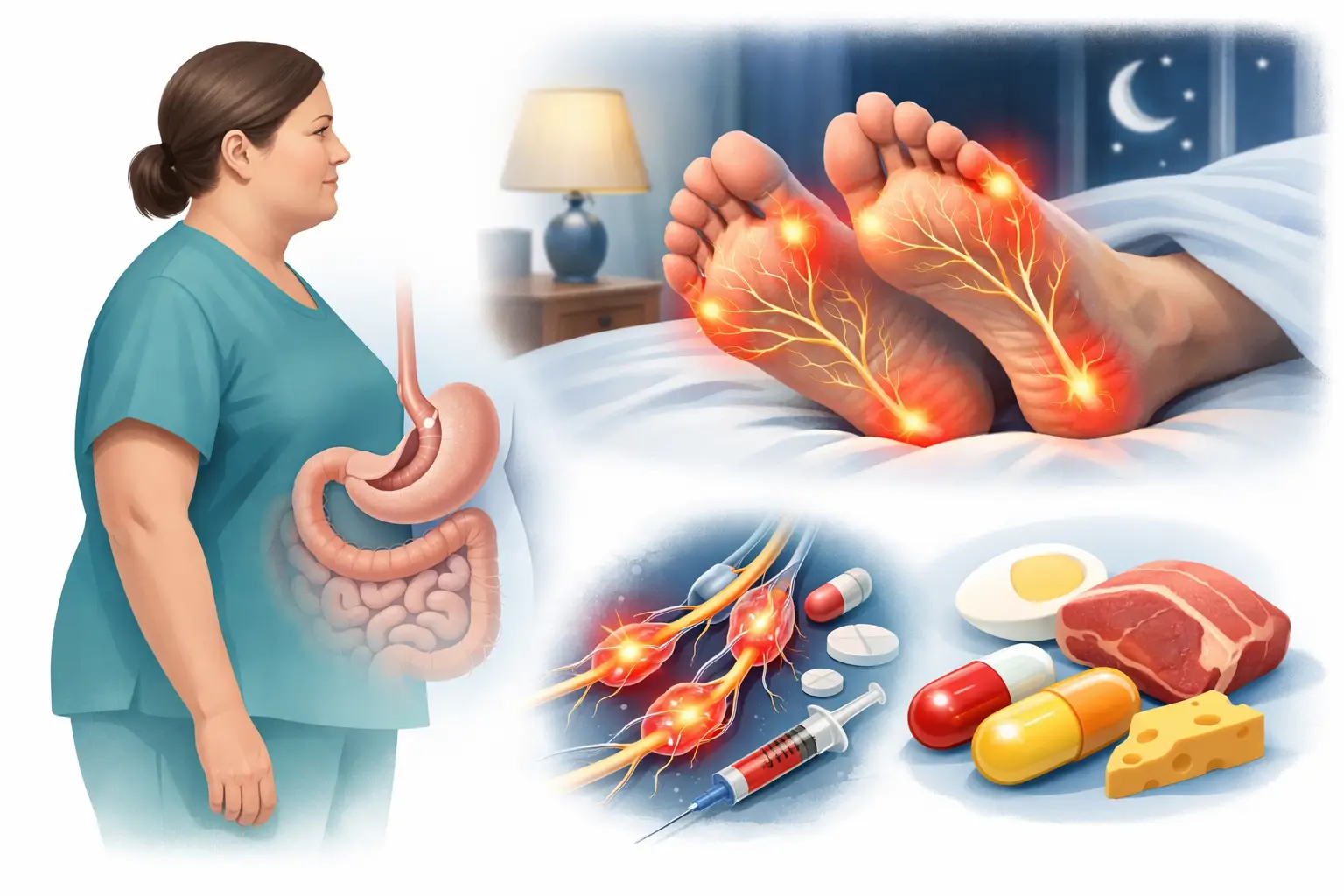
Neuropathy after bariatric surgery is often linked to nutrient deficiencies such as vitamin B12, thiamine, copper, folate, or vitamin E, but deficiency is not the only possible cause. Symptoms such as numbness, tingling, burning feet, weakness, balance problems, or foot pain should be medically evaluated, especially if they appear after rapid weight loss, vomiting, poor nutrition, or inconsistent supplement use.
A tingling foot or numb toes after weight-loss surgery can be easy to dismiss at first. But neuropathy after bariatric surgery deserves attention, especially when symptoms begin weeks or months after the procedure and gradually spread. For many adults, the concern is not just discomfort – it is whether the symptoms point to a vitamin deficiency, a surgical complication, or a nerve problem that needs prompt medical evaluation.
Bariatric surgery can improve blood sugar control, mobility, and overall health. It can also change how the body absorbs and uses key nutrients that nerves depend on. That is where the issue becomes medically important. In some people, nerve symptoms reflect deficiencies in vitamin B12, thiamine, copper, folate, or vitamin E. In others, rapid weight loss, prolonged vomiting, poor intake, or preexisting diabetes may play a role.
Why neuropathy can happen after weight-loss surgery
Peripheral neuropathy means damage or dysfunction affecting the nerves outside the brain and spinal cord. After bariatric procedures, this can happen for more than one reason, and the exact cause is not always obvious from symptoms alone.
One major issue is nutrient deficiency. Bariatric surgery changes stomach size, digestive flow, or both, depending on the procedure. Surgeries such as gastric bypass are more likely to reduce absorption of certain vitamins and minerals. Even restrictive procedures can still lead to deficiency if food intake drops sharply, nausea persists, or supplements are inconsistent.
Vitamin B12 is often part of the conversation because it supports myelin formation and nerve function. Low B12 may contribute to numbness, tingling, balance changes, weakness, or cognitive symptoms. Thiamine deficiency can be more urgent. It may appear relatively quickly, especially in people with persistent vomiting or very low oral intake. Copper deficiency is another overlooked cause of neurologic symptoms after bariatric surgery, sometimes producing numbness, gait problems, and weakness that can resemble B12 deficiency.
According to the NIH Office of Dietary Supplements, vitamin B12 is essential for neurological function and helps maintain healthy nerve signaling throughout the nervous system.
Rapid metabolic changes may add to the problem. Significant weight loss can improve some obesity-related nerve issues, but the transition period can still stress the body. People who already had diabetes, prediabetes, alcohol use, spinal problems, or borderline nutrient status before surgery may have less physiologic reserve.
Key Takeaways
- Vitamin B12 deficiency is one possible cause of neuropathy after bariatric surgery.
- Thiamine deficiency may develop quickly and sometimes requires urgent attention.
- Copper deficiency can mimic vitamin B12 deficiency symptoms.
- Burning feet, numbness, tingling, weakness, and balance problems deserve evaluation.
- Not all neuropathy after bariatric surgery is caused by vitamin deficiency.
- Early diagnosis improves the chance of recovery and prevents long-term nerve damage.
Common symptoms of neuropathy after bariatric surgery
Symptoms vary by which nerves are involved and how severe the deficiency or injury is. Some people notice burning feet at night. Others describe pins and needles, crawling sensations, electric-shock feelings, reduced sensation, or unusual sensitivity to touch.
In mild cases, symptoms may stay in the toes or fingertips. More significant neuropathy often follows a stocking-glove pattern, beginning in the feet and moving upward. Weakness, cramping, poor coordination, and trouble with balance can occur as well. If the autonomic nerves are involved, a person may also experience dizziness on standing, digestive irregularity, sweating changes, or bladder symptoms.
Timing matters. Symptoms that appear soon after surgery, especially in the setting of vomiting, dehydration, or poor nutrition, can raise concern for more acute deficiencies such as thiamine. Symptoms that develop gradually over months may be linked to B12, copper, or other longer-building deficiencies. That said, there is overlap, and self-diagnosis is risky.
Nutrient deficiencies most often linked to nerve symptoms
Nutrient Deficiencies Commonly Associated With Neuropathy After Bariatric Surgery
| Nutrient | Possible Symptoms | Why It Matters |
|---|---|---|
| Vitamin B12 | Numbness, tingling, balance problems | Supports myelin and nerve function |
| Thiamine (B1) | Burning feet, weakness, gait changes | Can decline rapidly after vomiting or poor intake |
| Copper | Weakness, sensory loss, balance problems | Can mimic B12 deficiency |
| Folate | Fatigue, neurologic symptoms | Supports nervous system health |
| Vitamin E | Balance issues, nerve dysfunction | Important antioxidant for nerve tissues |
The best-known deficiency in this setting is vitamin B12, but it is not the only one worth checking. Adults searching for nerve-health support often focus narrowly on B12, and sometimes that is appropriate. Still, a broader view is usually more medically sound after bariatric surgery.
Vitamin B12 deficiency may develop because reduced stomach acid and altered intrinsic factor activity make absorption harder. Over time, low B12 can affect sensory nerves and sometimes the spinal cord. A person may notice numbness, tingling, fatigue, brain fog, or unsteady walking.
Thiamine deficiency can develop faster, sometimes within weeks, particularly after frequent vomiting or poor intake. It is a medical concern because neurologic effects may progress quickly. Tingling and burning can occur, but so can weakness, difficulty walking, confusion, or eye movement changes.
Copper deficiency is less familiar to many patients but important. It has been reported after bariatric surgery and can contribute to sensory loss, weakness, and balance problems. Folate and vitamin E deficiencies are less common but can also affect neurologic function. In some cases, multiple deficiencies coexist, which makes testing and interpretation more complex.
Not every case is caused by a vitamin deficiency
This is where nuance matters. Numbness after surgery does not automatically mean a supplement will solve the problem. Compression neuropathies can occur from positioning during surgery or from later weight loss that changes pressure points around nerves. Carpal tunnel syndrome, peroneal nerve compression near the knee, and meralgia paresthetica are examples.
Diabetic neuropathy can also become more noticeable after surgery, even if blood sugar is improving overall. Some people had nerve damage before the procedure but paid less attention to it amid other health issues. Others may have circulation problems, spinal stenosis, medication effects, thyroid disease, or unrelated neurologic conditions.
That is why a symptom such as burning feet should be treated as a starting point for evaluation, not a diagnosis by itself.
When symptoms need prompt medical attention
Some nerve symptoms can wait a few days for a routine call. Others should be addressed quickly. Progressive weakness, new difficulty walking, repeated falls, severe vomiting, confusion, vision changes, or rapid worsening numbness are stronger warning signs. Loss of bowel or bladder control, facial drooping, chest pain, or one-sided weakness need urgent medical care because they can reflect problems beyond peripheral neuropathy.
For bariatric patients, the combination of neurologic symptoms and poor oral intake is especially important. A person who cannot keep food or fluids down is at higher risk for acute deficiency and dehydration. Waiting too long can make recovery slower and sometimes incomplete.
⚠ Important
Progressive weakness, difficulty walking, severe vomiting, confusion, vision changes, rapid worsening numbness, or repeated falls should never be ignored after bariatric surgery. These symptoms may indicate a significant nutrient deficiency or another neurologic problem that requires prompt medical evaluation.
How doctors typically evaluate neuropathy after bariatric surgery
A useful evaluation starts with history. The clinician will usually ask which bariatric procedure was performed, when symptoms began, whether vomiting or diarrhea occurred, how much weight was lost, and whether prescribed supplements have been taken consistently.
Lab work often includes vitamin B12, methylmalonic acid, folate, thiamine, copper, blood counts, blood sugar testing, and sometimes thyroid or vitamin E assessment, depending on the picture. Because one deficiency can mask another, interpretation may require some care. A normal serum B12 result does not always end the discussion if symptoms strongly suggest deficiency.
If weakness, asymmetry, severe pain, or unclear findings are present, nerve conduction studies or referral to neurology may be appropriate. The point is not to overtest every tingling sensation, but to identify reversible causes early.
Practical steps patients can take now
The most important step is to contact the bariatric team or primary care clinician rather than guessing. Neuropathy is one of those problems where delay can matter. Bring a full list of supplements, prescription drugs, and symptom timing to the visit.
It also helps to review whether the recommended post-surgery supplement plan has been followed exactly. Many adults take a standard over-the-counter multivitamin and assume it is enough. After bariatric surgery, the required regimen is often more specific. Product form, dose, and adherence all matter. This is one reason evidence-based supplement review sites such as VitB12Supplement.com can be useful for understanding ingredient quality and formulation differences, although product selection should still fit the clinician’s recommendations.
If B12 is part of the plan, the key issue is not simply buying the most popular bottle. It is choosing an appropriate form and dose for the person’s surgical history, lab status, and ability to absorb nutrients. The same principle applies to thiamine and other nutrients. More is not always better, and self-treating without testing can delay the real diagnosis.
Diet still matters, even when supplements are necessary. Protein intake, hydration, and consistent meals support recovery and help reduce the risk of ongoing deficiency. For people with nausea, food intolerance, or vomiting, those problems need active management rather than waiting them out.
What recovery can look like
Recovery depends on cause, severity, and how long the nerve problem has been present. Some people improve noticeably after the deficiency is corrected and nutrition stabilizes. Others recover more slowly over months, especially if symptoms were advanced before treatment began.
This is where realistic expectations matter. Nerves heal gradually. Burning, numbness, or balance changes may not disappear overnight, even when the underlying deficiency is addressed. Supportive care such as physical therapy, fall prevention, glucose control in diabetes, and symptom-focused medical treatment may be part of the plan.
The most useful mindset is to treat new nerve symptoms after bariatric surgery as medically meaningful, not as a minor annoyance. Early recognition improves the chances of finding a reversible cause and protecting long-term nerve function.
If you have numbness, tingling, burning feet, or unexplained weakness after bariatric surgery, the next right step is a proper workup – especially if symptoms are progressing or your nutrition has been poor.
Frequently Asked Questions
Can bariatric surgery cause neuropathy?
Neuropathy can occur after bariatric surgery, often due to nutrient deficiencies, rapid weight loss, poor intake, vomiting, or preexisting nerve problems.
What vitamin deficiency is most commonly linked to neuropathy after bariatric surgery?
Vitamin B12 is one of the most recognized deficiencies, although thiamine and copper deficiencies can also contribute to nerve symptoms.
How soon can neuropathy develop after bariatric surgery?
Some deficiencies, especially thiamine deficiency, may develop within weeks. Others, such as vitamin B12 deficiency, may develop gradually over months.
Can neuropathy improve after nutrient deficiencies are corrected?
Many people experience improvement, although recovery may take months and depends on the severity and duration of nerve damage.
Should I ignore tingling after bariatric surgery?
No. New numbness, tingling, burning feet, weakness, or balance changes should be discussed with a healthcare professional.
Medical Disclaimer: The information provided in this article is for educational purposes only and is not intended as medical advice. Dietary supplements are not a replacement for professional medical diagnosis or treatment. Always consult with a qualified healthcare professional before starting any new supplement, especially if you have pre-existing medical conditions or are taking prescription medications. Individual results may vary.

- Can Low B12 Cause Dizziness? - July 9, 2026
- B12 Deficiency and Cracked Corners of the Mouth - July 9, 2026
- Can Low B12 Cause Dry Mouth? - July 8, 2026