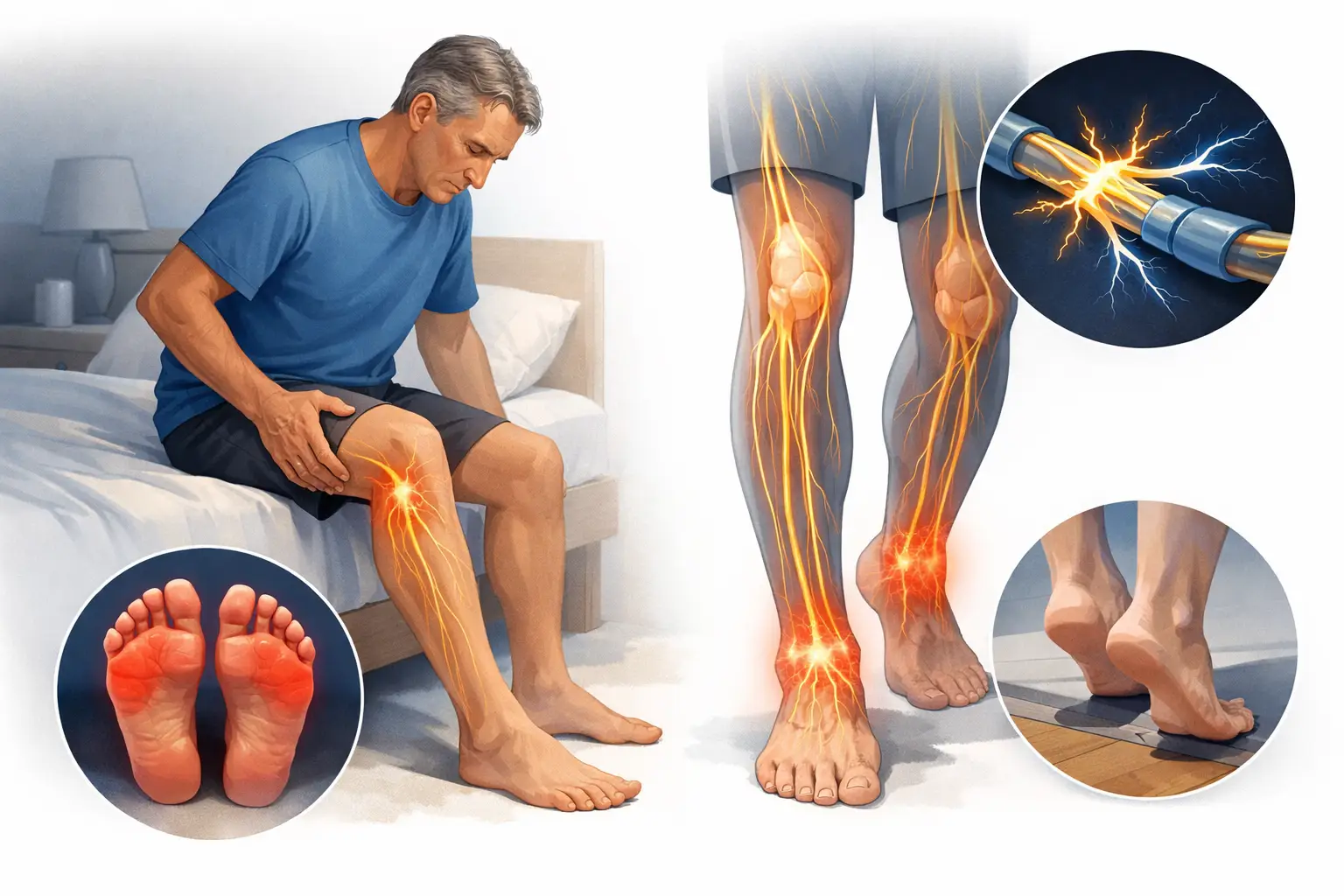
Yes, peripheral neuropathy can contribute to leg weakness when nerve damage affects motor signaling, muscle activation, coordination, or sensory feedback. Some people describe this as heavy legs, trouble climbing stairs, reduced endurance, or difficulty feeling stable while walking.
Leg weakness is one of those symptoms people often struggle to describe. Some mean their legs feel heavy. Others mean they wobble, give out, or tire faster than usual. If you are asking, Can Neuropathy Cause Leg Weakness?, the short answer is yes – but not every weak or unsteady leg problem is caused by neuropathy, and the pattern matters.
Neuropathy refers to nerve damage, usually involving the peripheral nerves outside the brain and spinal cord. Those nerves help carry signals for sensation, movement, and automatic body functions. When the affected nerves include motor nerves, weakness can develop. When sensory nerves are mainly involved, a person may not be truly weak, but numbness, burning, pain, or poor position sense can still make the legs feel unreliable.
Key Takeaways
- Peripheral neuropathy can cause true muscle weakness, especially when motor nerves become involved.
- Some people experience heavy, shaky, or unreliable legs even when muscle strength is partly preserved.
- Foot drop, balance problems, and difficulty climbing stairs may develop as nerve damage progresses.
- Vitamin B12 deficiency and diabetes are important possible contributors to neuropathy-related leg symptoms.
- Rapid weakness, falls, bowel changes, or one-sided symptoms deserve prompt medical evaluation.
Can Neuropathy Cause Leg Weakness or Just a Heavy Feeling?
Both are possible, and the difference is worth understanding.
True leg weakness means the muscles are not generating normal force. You may notice trouble climbing stairs, rising from a chair, lifting the front of the foot, or keeping pace while walking. In more pronounced cases, the foot may slap the ground or catch on a rug, which can raise fall risk.
A heavy, tired, or shaky feeling can happen even when muscle strength is mostly intact. This often occurs when sensory nerves are affected. If your feet are numb, you may lose some awareness of where they are in space. That can make walking feel awkward and unstable, especially in dim lighting or on uneven ground. Pain can also make a person move less normally, which may be mistaken for weakness.
This is one reason neuropathy symptoms are not always straightforward. The same person may have numbness, burning, balance problems, and mild weakness all at once.
How Neuropathy Leads to Weakness
Peripheral nerves are often grouped into sensory, motor, and autonomic types. Sensory nerves carry information about touch, temperature, vibration, and pain. Motor nerves tell muscles when to contract. Autonomic nerves regulate functions such as sweating, blood pressure, and digestion.
Leg weakness becomes more likely when motor nerves are involved. If those nerve signals are reduced or interrupted, muscles do not receive clear instructions and may gradually become weaker. Over time, unused muscles can also shrink.
Even when motor involvement is limited, neuropathy can still interfere with normal movement. A person with numb feet may walk more cautiously, shorten their stride, and feel less confident on stairs. That is not always muscle weakness in the strict medical sense, but it can feel very similar in day-to-day life.
Another factor is the underlying cause. Some forms of neuropathy are mainly sensory, while others affect both sensation and strength. The location matters too. Nerve damage in the feet and lower legs often causes symptoms that start distally – meaning farthest from the center of the body – and may slowly move upward.
Common Neuropathy Patterns That Affect the Legs
Common Leg Symptoms Seen in Peripheral Neuropathy
Leg weakness and walking problems can appear in different ways depending on which nerves are affected.
| Symptom Pattern | What It May Reflect | Common Clues |
|---|---|---|
| Heavy or tired legs | Sensory nerve dysfunction or altered gait | Walking feels less automatic |
| Foot drop | Motor nerve involvement | Toe dragging or tripping |
| Burning feet with instability | Sensory neuropathy | Worse at night or on uneven surfaces |
| Weakness climbing stairs | Reduced motor signaling | Leg fatigue or reduced endurance |
| Numb feet with balance problems | Poor proprioception | Feeling unstable in darkness |
| One-sided weakness | Possible focal nerve or spine issue | Needs careful medical review |
The classic pattern in peripheral neuropathy is a stocking-like distribution. Symptoms often begin in the toes and feet, then extend upward into the ankles and lower legs. Early on, people may notice tingling, burning, reduced sensation, or a feeling that they are walking on padding.
As the process advances, weakness can appear, particularly in the feet and ankles. One example is difficulty lifting the front of the foot, sometimes called foot drop. That can lead to tripping or a need to lift the knee higher while walking.
Not all neuropathy is symmetrical. Some nerve problems affect one side more than the other, or involve a single nerve. For example, compression or injury to a specific nerve can create more localized weakness. That is why one weak leg, or weakness limited to a particular motion, deserves a careful medical review rather than a quick assumption.
Causes to Consider
Many readers researching neuropathy are also looking into nutrient deficiencies, circulation concerns, or age-related changes. Those issues can overlap, but they are not interchangeable.
Vitamin B12 deficiency is one important cause to keep on the radar, especially in adults over 45. Low B12 can contribute to nerve symptoms such as numbness, tingling, balance problems, and sometimes weakness. Risk may be higher in people with low dietary intake, certain digestive disorders, long-term use of some medications, or reduced absorption with age. Because B12 plays a key role in nerve health, deficiency should be identified and corrected under medical guidance rather than guessed at through symptoms alone.
According to the NIH Office of Dietary Supplements, vitamin B12 plays an important role in neurological function and nervous system health.
Diabetes is another major cause of peripheral neuropathy and can affect both sensation and strength over time. Alcohol misuse, thyroid disease, kidney disease, autoimmune conditions, infections, medication effects, and nerve compression can also play a role. In some cases, a cause is never fully identified.
Circulation problems may also cause leg symptoms, but the pattern is different. Poor blood flow often causes cramping, fatigue, or pain with walking that improves with rest. Neuropathy is more likely to cause burning, tingling, numbness, altered sensation, or symptoms that worsen at night. Still, some people have both circulation issues and neuropathy, which can blur the picture.
Signs the Weakness May Be More Than Mild Neuropathy
A gradual change in sensation is common in peripheral neuropathy. Rapid weakness is more concerning.
Medical attention is especially important if leg weakness comes on suddenly, worsens quickly, affects one side much more than the other, or appears along with severe back pain, bowel or bladder changes, facial drooping, slurred speech, or loss of coordination. Those signs can point to conditions that need urgent evaluation.
Even without emergency symptoms, new weakness should not be ignored. People sometimes adapt slowly to nerve-related changes and do not realize how much strength or balance they have lost until they fall or stop doing normal activities.
How Doctors Evaluate Neuropathy-Related Weakness
The evaluation usually starts with a symptom history and physical exam. A clinician may ask when symptoms started, whether both legs are affected, whether numbness or pain came first, and whether there are triggers such as standing, walking, or certain medications.
The physical exam often checks reflexes, sensation, foot structure, gait, and muscle strength in the hips, knees, ankles, and toes. That helps distinguish true weakness from discomfort, joint limitation, or poor balance.
Depending on the pattern, testing may include blood work to look for contributors such as vitamin B12 deficiency, blood sugar abnormalities, thyroid problems, or other metabolic issues. In some cases, nerve conduction studies and electromyography are used to assess how well nerves and muscles are functioning. If the symptoms suggest a spinal or central nervous system cause rather than peripheral neuropathy, imaging may also be needed.
What Helps if Neuropathy Is Affecting Strength
The best approach depends on the cause. If there is an identifiable driver such as low vitamin B12, poor glucose control, alcohol exposure, or a medication-related issue, addressing that factor is central. Expectations should stay realistic. Nerves often recover slowly, and in some cases symptoms improve only partially.
Supportive care matters too. Physical therapy can help maintain mobility, improve gait mechanics, and reduce fall risk. Strengthening exercises may be useful when true motor weakness is present, while balance training can help people who feel unsteady from sensory loss. Proper footwear can also make a meaningful difference in stability and comfort.
For readers exploring supplements, caution is appropriate. Nutritional support may be useful when a documented deficiency or gap exists, but supplements are not a blanket solution for unexplained leg weakness. More is not always better, and taking the wrong product can distract from finding the real cause. On an evidence-focused site such as VitB12Supplement.com, the more useful question is not which product sounds promising, but whether the ingredient matches a plausible need.
When to Talk to a Healthcare Professional
If your legs feel weak, numb, or unsteady for more than a short period, it is worth discussing with a healthcare professional, especially if symptoms are progressing. This matters even more if you have diabetes, digestive conditions that affect nutrient absorption, a history of low B12, or repeated falls.
A careful evaluation can help sort out whether the problem is likely neuropathy, circulation-related, spine-related, medication-related, or due to something else entirely. That distinction is what guides sensible next steps.
Can neuropathy cause leg weakness? Yes, it can. But the more helpful question is what type of weakness you are feeling, what other symptoms are traveling with it, and whether the pattern fits nerve damage or points somewhere else. Getting that answer early can make everyday movement safer and future decisions a lot clearer.
Frequently Asked Questions
Can neuropathy make the legs feel heavy?
Yes. Sensory nerve dysfunction may create a heavy, tired, shaky, or unstable feeling even when muscle strength is partly preserved.
What is foot drop in neuropathy?
Foot drop happens when weakness affects the muscles that lift the front of the foot, increasing the risk of tripping.
Can vitamin B12 deficiency cause leg weakness?
Yes. Low vitamin B12 may contribute to numbness, weakness, gait instability, and other nerve-related symptoms in some adults.
Why do neuropathy symptoms feel worse at night?
Many people notice worsening numbness, tingling, burning, or balance problems at night because sensory feedback and visual compensation become less effective.
When should leg weakness be medically evaluated?
Sudden weakness, falls, rapidly worsening symptoms, bowel changes, severe back pain, or one-sided symptoms deserve prompt medical evaluation.
Medical Disclaimer: The information provided in this article is for educational purposes only and is not intended as medical advice. Dietary supplements are not a replacement for professional medical diagnosis or treatment. Always consult with a qualified healthcare professional before starting any new supplement, especially if you have pre-existing medical conditions or are taking prescription medications. Individual results may vary.

- Can Low B12 Cause Dizziness? - July 9, 2026
- B12 Deficiency and Cracked Corners of the Mouth - July 9, 2026
- Can Low B12 Cause Dry Mouth? - July 8, 2026