Quick Answer
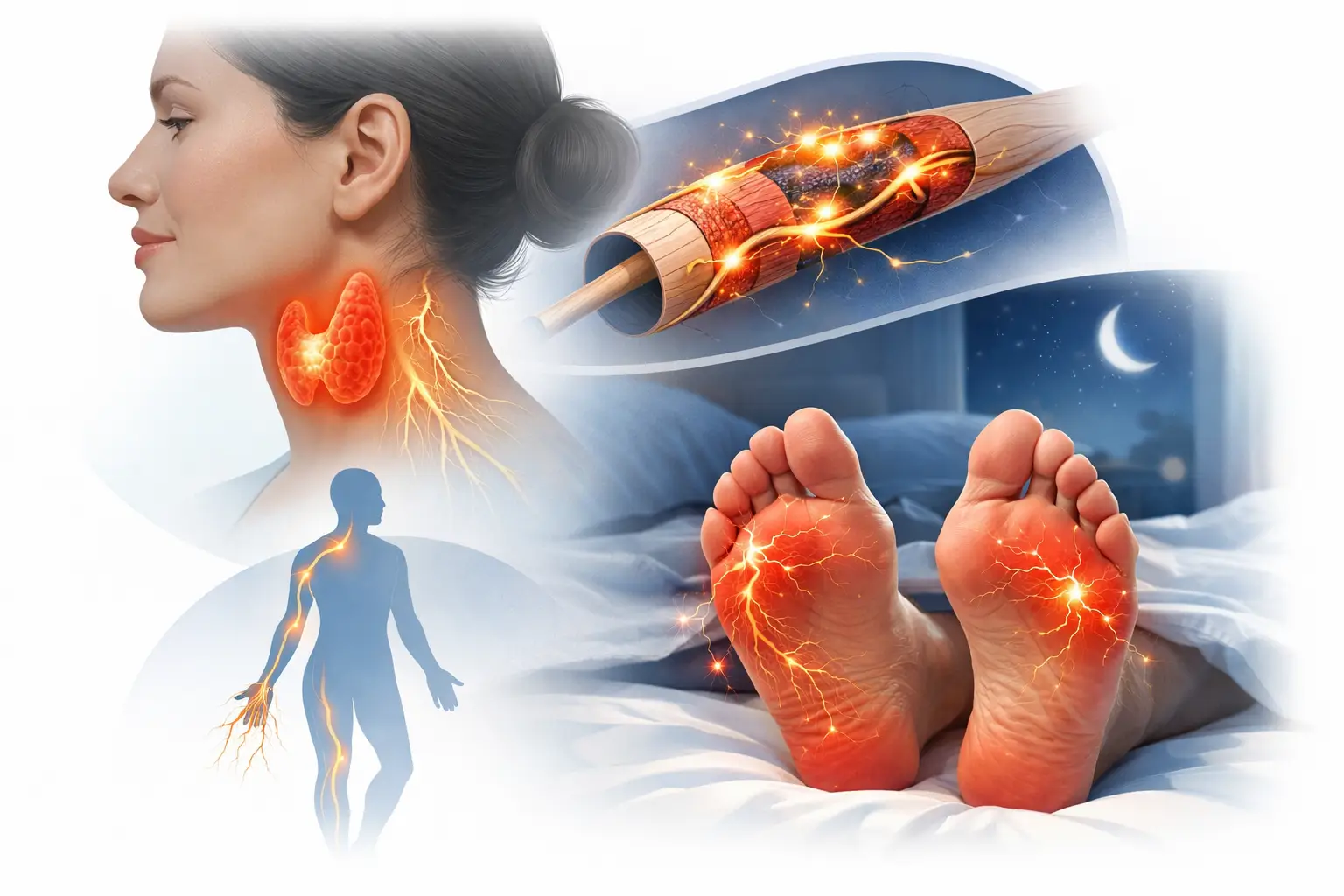
Hypothyroidism may contribute to peripheral neuropathy by slowing nerve conduction, increasing tissue swelling around nerves, and affecting metabolic processes important for nerve health. Symptoms can include tingling, numbness, burning sensations, weakness, and balance changes.
Burning feet, tingling toes, and unexplained numbness are often blamed on diabetes first. But How Hypothyroidism Is Linked to Peripheral Neuropathy is a question many adults do not think to ask until symptoms have been present for months.
That gap matters. An underactive thyroid can affect far more than energy, weight, and body temperature. In some people, it may also contribute to nerve-related symptoms such as pins and needles, altered sensation, muscle weakness, cramping, or pain in the hands and feet. The link is not always straightforward, and hypothyroidism is not the most common cause of neuropathy, but it is a medically relevant one.
Editorially reviewed against guidance and educational materials from:
- PubMed-indexed research
- NIH (National Institutes of Health)
- NINDS (National Institute of Neurological Disorders and Stroke)
- Mayo Clinic
- Cleveland Clinic
This article was created for educational purposes and reflects an evidence-informed editorial review process focused on neuropathy symptoms, vitamin deficiencies, and nerve health support.
Why thyroid problems can affect the nerves
Hypothyroidism slows many processes throughout the body, including those that support normal nerve function. Thyroid hormones help regulate metabolism, tissue repair, circulation, and the health of muscles and connective tissue around nerves. When thyroid hormone levels stay low for long enough, nerves may be affected directly or indirectly.
One possible mechanism is fluid retention and tissue swelling. In hypothyroidism, mucopolysaccharides and fluid can accumulate in tissues, which may increase pressure around peripheral nerves. This is one reason some people with low thyroid function develop compression neuropathies, especially carpal tunnel syndrome. In that setting, the nerve is not failing in isolation. It is being crowded by the tissues around it.
There may also be metabolic effects on the nerves themselves. Peripheral nerves depend on steady energy production, healthy blood flow, and proper maintenance of the myelin sheath that helps electrical signals travel efficiently. When thyroid hormone is low, nerve conduction can slow, and symptoms may appear gradually. In more prolonged or severe cases, people can develop a sensory neuropathy, a sensorimotor neuropathy, or symptoms that overlap with muscle disease.
Key Takeaways
- Hypothyroidism can contribute to nerve-related symptoms in some individuals.
- Peripheral neuropathy symptoms may include tingling, numbness, burning, weakness, and poor coordination.
- Thyroid-related swelling may increase pressure on peripheral nerves.
- Vitamin B12 deficiency and hypothyroidism can overlap and produce similar symptoms.
- Proper testing is important because many conditions can mimic neuropathy.
- Treating hypothyroidism may improve symptoms over time, but recovery can be gradual.
How Hypothyroidism Is Linked to Peripheral Neuropathy in real life
The connection usually appears as a pattern rather than a single dramatic event. A person may first notice fatigue, dry skin, constipation, weight gain, cold intolerance, or hair thinning. Later, they develop numb toes, burning soles, reduced balance, nighttime hand tingling, or a vague sense that their feet do not feel right.
Sometimes the order is reversed. The nerve symptoms are what bring someone to medical attention, and thyroid testing later reveals an underactive thyroid. That is one reason thyroid screening is often part of the workup for peripheral neuropathy, particularly when no obvious cause has been identified.
Still, this is where caution matters. Not every person with hypothyroidism develops neuropathy, and not every person with neuropathy has a thyroid disorder. Diabetes, alcohol use, B12 deficiency, certain medications, kidney disease, autoimmune conditions, spinal problems, and nerve compression are also common possibilities. In adults over 45, more than one factor may be present at the same time.
What the symptoms can feel like
| Possible Symptom | How It May Feel |
|---|---|
| Tingling | Pins and needles sensation in hands or feet |
| Burning pain | Hot or burning discomfort, especially at night |
| Numbness | Reduced sensation or difficulty feeling the floor |
| Weakness | Difficulty gripping objects or walking steadily |
| Balance issues | Feeling unstable or less coordinated |
| Nighttime discomfort | Symptoms becoming more noticeable during rest |
Peripheral neuropathy related to hypothyroidism can feel similar to neuropathy from other causes. That overlap is one reason self-diagnosis is unreliable. Symptoms can include tingling, numbness, burning pain, stabbing sensations, reduced sensitivity to touch, muscle weakness, or poor coordination.
Many people notice symptoms first in the feet. The feet are farthest from the spinal cord, and long nerves are often affected early. A person may describe socks feeling bunched up when they are not, discomfort walking on carpet, or trouble sensing the floor clearly. Others notice hand symptoms such as nighttime numbness, dropping objects, or finger tingling, especially if compression neuropathy is involved.
The severity varies. Mild hypothyroidism may cause vague or intermittent nerve complaints, while longer-standing or untreated thyroid dysfunction may be associated with more persistent symptoms. If swelling around nerves contributes to the problem, symptoms may fluctuate with activity, sleep position, or overall fluid balance.
The role of vitamin B12 and other look-alikes
For readers researching nerve health, this is an important distinction: hypothyroidism can coexist with nutrient deficiencies that also affect nerves. Vitamin B12 deficiency is a leading example. Both conditions can contribute to numbness, tingling, weakness, gait changes, fatigue, and cognitive complaints.
According to the NIH Office of Dietary Supplements, vitamin B12 is essential for neurological function, and deficiency may contribute to numbness, tingling, balance problems, and nerve-related symptoms.
That overlap is especially relevant in older adults because B12 absorption can decline with age, digestive conditions, and certain medications. Autoimmune thyroid disease can also occur alongside autoimmune conditions that affect B12 status, such as pernicious anemia. So if someone has hypothyroidism and neuropathy symptoms, checking B12 is often clinically reasonable rather than assuming the thyroid is the only explanation.
Other conditions can mimic or compound the picture. Low folate, diabetes or prediabetes, low vitamin B6 or excess B6 from supplements, circulation problems, lumbar spine disease, and medication side effects can all produce similar sensations. This is why a broad evaluation usually matters more than chasing a single theory.
How doctors evaluate the link
When clinicians assess possible thyroid-related neuropathy, they usually start with the basics: history, symptom pattern, neurological exam, and laboratory testing. Thyroid-stimulating hormone, often called TSH, and free T4 are central tests for thyroid status. Depending on the case, thyroid antibodies may also be considered.
If neuropathy is suspected, the evaluation may include blood sugar markers, vitamin B12, folate, kidney function, and sometimes additional tests based on age, medications, and medical history. If symptoms are significant, persistent, or unusual, nerve conduction studies and electromyography may be used to look more closely at nerve and muscle function.
This step matters because thyroid-related neuropathy does not have one signature test result that automatically proves cause and effect. A person may have hypothyroidism and neuropathy at the same time, but that does not necessarily mean one fully explains the other. The best evaluations look for the total pattern.
Can treatment of hypothyroidism help neuropathy symptoms?
For some people, correcting hypothyroidism helps improve nerve-related symptoms over time. If low thyroid hormone is contributing to nerve dysfunction or tissue swelling around nerves, appropriate thyroid treatment may reduce the underlying stress on the nervous system. That said, improvement is not always immediate.
Nerves heal slowly. If symptoms have been present for a long time, recovery may be partial rather than complete. Some people feel better within weeks or months of reaching a stable thyroid level, while others continue to have residual numbness, discomfort, or weakness. Compression problems such as carpal tunnel syndrome may improve with better thyroid control, but some cases still need separate management.
This is also where realistic expectations matter with supplements. Nutrients may support general nerve health when a deficiency or dietary shortfall is present, but they are not substitutes for diagnosing the cause of neuropathy. For example, vitamin B12 may be appropriate if levels are low or borderline and symptoms fit, but it should not be treated as a blanket answer for every case of tingling feet.
Important
Not every person with hypothyroidism develops peripheral neuropathy, and not every neuropathy case is caused by thyroid disease. Proper medical evaluation is important because multiple conditions can produce similar nerve-related symptoms.
When symptoms deserve prompt attention
Mild tingling that comes and goes can still justify a medical discussion, especially if thyroid disease is already known. Prompt assessment becomes more important when symptoms are progressing, affecting walking or grip strength, waking you at night, or involving balance problems.
Urgent evaluation is reasonable if numbness spreads quickly, weakness appears suddenly, bowel or bladder control changes, or one-sided symptoms suggest a stroke or spine emergency rather than peripheral neuropathy. Severe pain, foot wounds you cannot feel properly, or repeated falls also should not be brushed off as just getting older.
Practical questions to bring to your appointment
If you suspect a thyroid and nerve connection, it helps to be specific. Describe where the symptoms are, when they started, whether they are symmetrical, and what they feel like. Mention any known thyroid diagnosis, recent lab results, diabetes history, alcohol use, medications, digestive conditions, or previous B12 issues.
A useful conversation may include whether your thyroid levels are adequately controlled, whether another cause could be contributing, and whether additional testing makes sense. If you use nerve-health supplements, bring the labels. Some products contain very high vitamin B6 doses, which can actually worsen nerve symptoms in excess.
For a site like VitB12 Supplement, that evidence-first approach matters. Good consumer decisions usually start with the right question, not the fastest product choice.
The bottom line on thyroid disease and nerve symptoms
Hypothyroidism can be linked to peripheral neuropathy through metabolic effects, slowed nerve conduction, tissue swelling, and compression of vulnerable nerves. The connection is medically plausible and clinically recognized, but it is not the only explanation for tingling, burning, numbness, or weakness.
If you are over 45 and dealing with persistent nerve symptoms, the smartest next step is usually a proper workup rather than guesswork. Thyroid status, vitamin B12, blood sugar, medications, and other common causes all deserve a careful look. When the cause is identified clearly, the path forward is usually more realistic, more targeted, and a lot less frustrating.
Frequently Asked Questions
Can hypothyroidism cause peripheral neuropathy?
Yes. Hypothyroidism may contribute to nerve-related symptoms through slowed nerve conduction, tissue swelling, and metabolic effects on the nervous system.
What does thyroid-related neuropathy feel like?
Symptoms may include tingling, numbness, burning sensations, weakness, poor balance, and reduced sensitivity in the hands or feet.
Can treating hypothyroidism improve neuropathy symptoms?
Some people experience gradual improvement after thyroid hormone levels are corrected, although nerve recovery may take time.
Should vitamin B12 be checked with neuropathy symptoms?
Vitamin B12 deficiency can produce symptoms similar to neuropathy and may coexist with thyroid disorders, making testing clinically important in some cases.
When should neuropathy symptoms be medically evaluated?
Seek medical evaluation for worsening numbness, weakness, balance problems, severe pain, falls, or symptoms interfering with daily life.
Medical Disclaimer: The information provided in this article is for educational purposes only and is not intended as medical advice. Dietary supplements are not a replacement for professional medical diagnosis or treatment. Always consult with a qualified healthcare professional before starting any new supplement, especially if you have pre-existing medical conditions or are taking prescription medications. Individual results may vary.

- Small Fiber Neuropathy Explained Clearly - May 29, 2026
- How Metformin Depletes Vitamin B12 for Nerves - May 29, 2026
- Chronic Kidney Disease and Peripheral Neuropathy - May 28, 2026