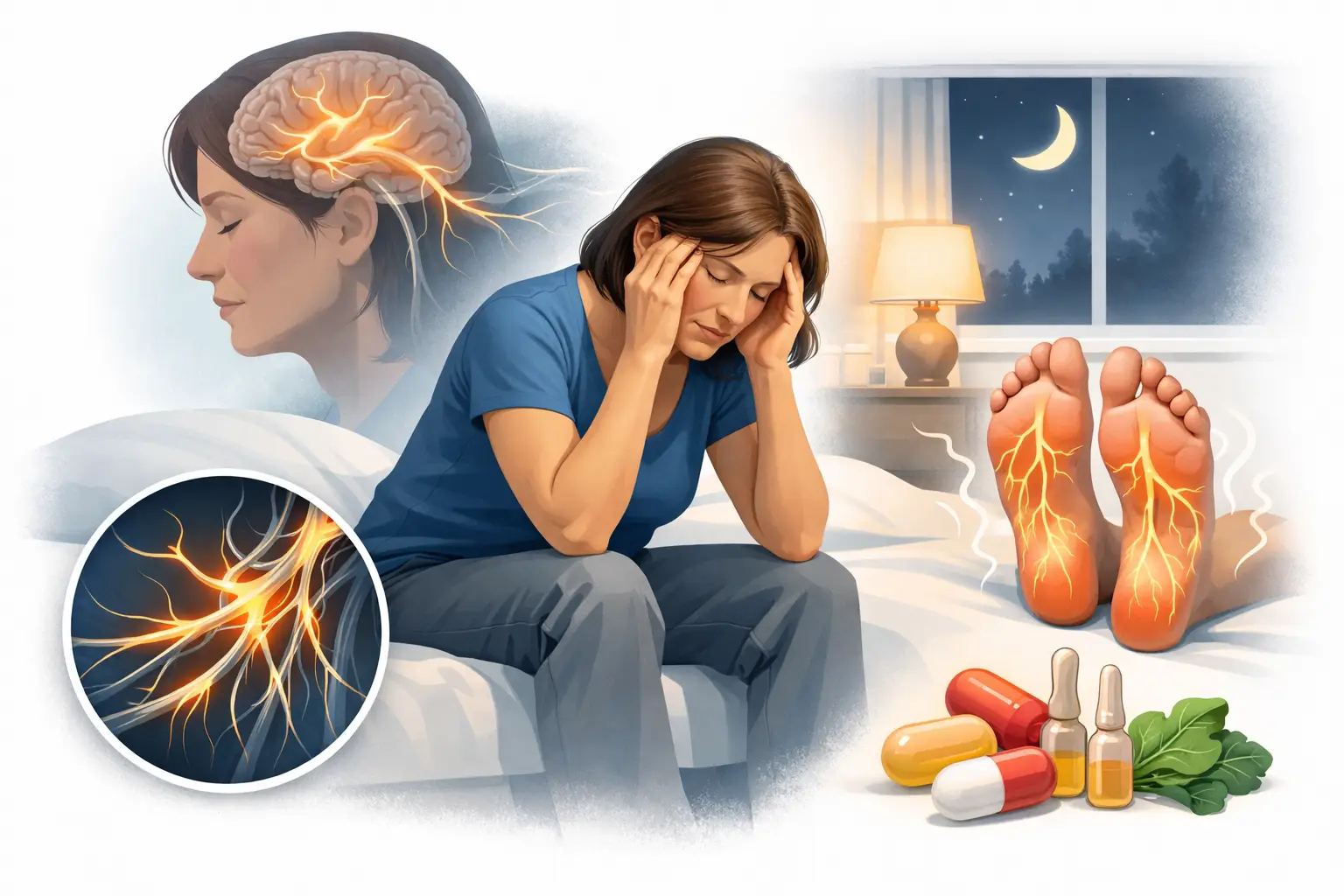
Neuropathy can contribute to fatigue because chronic nerve symptoms may disrupt sleep, increase pain burden, reduce activity levels, and force the body to work harder during everyday movement. Fatigue may also overlap with vitamin B12 deficiency, diabetes, medication effects, or poor sleep quality, which is why persistent exhaustion deserves medical evaluation.
If your feet burn at night, your legs feel oddly heavy, or tingling keeps waking you up, the next day can feel like you never slept at all. Neuropathy Fatigue: Why Nerve Symptoms Can Leave You Exhausted is a common question, especially among adults who are trying to make sense of numbness, pain, weakness, and low energy that seem to travel together.
Fatigue in this setting is not just “feeling tired.” Many people describe it as a drained, worn-down sensation that is hard to fix with rest alone. That happens because nerve-related symptoms can affect sleep, movement, stress levels, and the amount of energy your body spends just getting through the day.
Key Takeaways
- Neuropathy fatigue is often multifactorial, involving pain, poor sleep, stress, weakness, and reduced physical efficiency.
- Burning, tingling, and nighttime nerve symptoms can repeatedly interrupt sleep and worsen daytime exhaustion.
- Balance problems, numbness, and weakness may force the body to use more energy during routine movement.
- Vitamin B12 deficiency and diabetes are important possible contributors when fatigue overlaps with nerve symptoms.
- Persistent exhaustion deserves medical evaluation, especially when paired with weakness, falls, weight loss, or worsening neuropathy symptoms.
Why neuropathy and fatigue often show up together
Neuropathy refers to nerve damage or nerve dysfunction. Depending on which nerves are affected, symptoms may include burning, stabbing pain, pins and needles, numbness, muscle weakness, balance problems, or sensitivity to touch. Any one of those symptoms can wear a person down. Several at once can be exhausting.
One major reason is constant sensory strain. When nerves misfire, the brain keeps receiving abnormal signals. Even if the pain is not severe, ongoing tingling, buzzing, itching, or burning can keep your nervous system on alert. That low-grade stress can chip away at your energy over time.
Sleep disruption is another major factor. Neuropathy symptoms often feel worse at night when the room is quiet and there are fewer distractions. Burning feet, restless discomfort, or sudden electric-shock sensations can make it hard to fall asleep and easy to wake up repeatedly. Poor sleep alone can leave you fatigued the next day, but when it happens night after night, the exhaustion tends to build.
There is also the physical effort involved. If your legs feel weak, your feet are numb, or your balance is off, ordinary tasks may require more concentration and more muscle work. Walking across a parking lot, climbing stairs, or standing in the kitchen can take more out of you than they used to. Many people do not notice this gradual increase in effort until fatigue becomes impossible to ignore.
How nerve symptoms can drain energy
Pain changes the way the body uses energy
Chronic pain is tiring. The body responds to ongoing pain with stress hormones, muscle tension, mental vigilance, and interrupted rest. Over time, this can create a cycle where pain worsens fatigue and fatigue lowers your tolerance for pain.
This is one reason two people with similar nerve test results may feel very different in daily life. Symptom burden matters. A person with mild numbness may not feel very tired, while someone with burning pain and poor sleep may feel depleted most of the day.
Numbness and weakness make movement less efficient
When nerves do not send signals properly, muscles may not respond as smoothly or strongly. That can make your gait less efficient and force the body to compensate. You may move more slowly, tense other muscles to stay steady, or avoid activity because it feels awkward or unsafe. Ironically, doing less can worsen fatigue too, because physical deconditioning tends to reduce stamina.
Autonomic nerve involvement can add a different kind of fatigue
Some people have autonomic symptoms along with sensory neuropathy. These nerves help regulate blood pressure, heart rate, sweating, and digestion. If they are affected, you might feel lightheaded when standing, wiped out after meals, overheated easily, or generally run down. This kind of fatigue may feel different from sleepiness. People often describe it as sudden energy collapse or poor endurance.
Conditions that may connect neuropathy and fatigue
Why Neuropathy Symptoms Can Feel So Exhausting
Several overlapping factors may contribute to fatigue when nerve symptoms become persistent.
| Contributing Factor | How It May Affect Energy | Common Clues |
|---|---|---|
| Nighttime burning or tingling | Disrupted sleep quality | Frequent waking or poor sleep |
| Chronic nerve pain | Higher stress burden and fatigue | Feeling drained even after resting |
| Weakness or balance problems | Movement requires more effort | Walking feels tiring or unstable |
| Reduced physical activity | Lower conditioning and stamina | Fatigue worsens over time |
| Autonomic nerve involvement | Poor blood pressure or heat regulation | Lightheadedness or energy crashes |
| Vitamin B12 deficiency or diabetes | Metabolic and nerve-related fatigue | Numbness, weakness, brain fog |
Neuropathy is not one single condition, and fatigue does not point to one single cause. The combination can show up in several settings.
Vitamin B12 deficiency is one of the more relevant examples for this audience because it can contribute to both nerve-related symptoms and low energy.
The NIH Office of Dietary Supplements explains that vitamin B12 supports neurological function and red blood cell formation, both of which may influence energy levels and nerve health.
Tingling, numbness, balance changes, memory issues, and fatigue may occur together. Not every case of fatigue with neuropathy means B12 is the issue, but it is one reason clinicians often look at nutritional status when symptoms overlap.
Diabetes and prediabetes are also common considerations. High blood sugar over time can damage nerves, and glucose dysregulation can contribute to fatigue on its own. Thyroid disorders, certain medications, alcohol overuse, kidney disease, autoimmune conditions, infections, and other vitamin deficiencies may also play a role.
That is why broad assumptions are risky. A supplement that makes sense for one person may be irrelevant for another if the underlying reason for symptoms is different.
Neuropathy fatigue: why symptoms feel worse on some days
Fatigue linked with nerve symptoms is rarely perfectly consistent. Some days are manageable. Other days, even small tasks feel bigger than they should. Several things can amplify the problem.
Poor sleep is the most obvious trigger, but it is not the only one. Higher pain levels, more time on your feet, illness, dehydration, blood sugar swings, emotional stress, and certain medications can all make exhaustion more noticeable. If autonomic symptoms are present, heat and prolonged standing may also make fatigue worse.
There can also be a pacing problem. On a better day, it is natural to try to catch up on chores, errands, or exercise. Then symptoms flare later and the next day becomes a crash day. This pattern is common in people managing chronic discomfort.
When to think about vitamin and supplement questions
Because this site focuses on evidence-informed supplement reviews, it is worth addressing a common consumer question: can nutritional support help when neuropathy and fatigue overlap?
Sometimes, but the answer depends on the cause. If a person has confirmed vitamin B12 deficiency, correcting that deficiency matters. If intake is low, absorption is impaired, or certain medications are interfering with B12 status, addressing the deficiency may support nerve function and energy levels over time. The key phrase is over time. Nerve-related symptoms often improve slowly, and some symptoms may not fully resolve, especially if they have been present for a long period.
For people without a deficiency, the picture is less straightforward. More is not always better. High-dose supplements can be unnecessary, and some ingredients marketed for nerve support have much stronger advertising than evidence. Alpha-lipoic acid, B vitamins, acetyl-L-carnitine, and other products are often discussed, but results vary, study quality is mixed, and safety considerations matter, especially for adults taking multiple medications.
A cautious approach makes sense. Look for clear labeling, sensible dosing, and a reason the ingredient fits your situation. If fatigue is significant, do not assume a supplement will solve it without a medical workup.
Practical steps that may reduce the exhaustion
The most useful strategy is to reduce the things that are feeding the fatigue. That usually means improving symptom control, sleep quality, and energy management at the same time.
If nighttime symptoms are a major issue, that deserves attention first. Better sleep can improve pain tolerance, mood, and daytime stamina. Some people benefit from reviewing sleep position, foot temperature, bedding pressure, evening caffeine, and medication timing with a clinician.
Daily pacing matters too. Shorter periods of activity with breaks are often more realistic than pushing through until symptoms spike. Gentle movement can help maintain conditioning, but it should be matched to your actual tolerance level. If walking is difficult, a physical therapist may help identify safer, less fatiguing ways to stay active.
It is also worth tracking patterns. Write down when fatigue is worst, what your nerve symptoms are doing, how you slept, what medications or supplements you took, and whether meals or standing seem to affect you. These details can help a clinician see whether the main driver is pain, poor sleep, blood sugar fluctuation, autonomic symptoms, medication side effects, or something else.
When fatigue with neuropathy needs medical attention
Fatigue should not be brushed off as a minor side effect of getting older. When it appears alongside nerve symptoms, it can be a useful clue.
A medical evaluation is especially important if the fatigue is new, severe, or getting worse, or if you also have rapid weakness, trouble walking, falls, weight loss, shortness of breath, chest symptoms, bowel or bladder changes, or confusion. Even without those red flags, persistent numbness, burning, and exhaustion deserve a proper review.
Testing may include blood work for vitamin B12 and related markers, glucose status, thyroid function, iron status, kidney function, and other possible contributors depending on your history. In some cases, nerve studies or referral to a specialist may be appropriate.
What realistic expectations look like
People often want one clean explanation for why they feel exhausted. With neuropathy, the answer is often layered. Pain may be disrupting sleep. Weakness may be making activity harder. A vitamin deficiency, metabolic issue, or medication effect may be part of the picture too.
That complexity can be frustrating, but it is also useful. It means there may be several places to make progress. Improving sleep, reviewing underlying causes, correcting confirmed deficiencies, adjusting medications when appropriate, and using evidence-informed supportive strategies can each lighten the burden a little.
If nerve symptoms are leaving you wiped out, the fatigue is real, and it is worth taking seriously. The best next step is usually not guessing harder. It is identifying what is driving the exhaustion in your case so your plan matches the problem.
Frequently Asked Questions
Can neuropathy make you feel exhausted?
Yes. Chronic nerve symptoms may interfere with sleep, increase pain burden, reduce activity levels, and force the body to use more energy during movement.
Why does neuropathy fatigue feel worse at night?
Many neuropathy symptoms become more noticeable at night, which may repeatedly interrupt sleep and worsen exhaustion the following day.
Can vitamin B12 deficiency cause fatigue and neuropathy together?
Yes. Low vitamin B12 may contribute to numbness, tingling, balance changes, weakness, brain fog, and persistent fatigue in some adults.
Can neuropathy affect endurance and stamina?
Yes. Weakness, balance problems, pain, and altered gait mechanics may increase physical effort and reduce stamina over time.
When should neuropathy fatigue be medically evaluated?
New, severe, or worsening fatigue deserves medical evaluation, especially when paired with weakness, falls, weight loss, confusion, or worsening nerve symptoms.
Medical Disclaimer: The information provided in this article is for educational purposes only and is not intended as medical advice. Dietary supplements are not a replacement for professional medical diagnosis or treatment. Always consult with a qualified healthcare professional before starting any new supplement, especially if you have pre-existing medical conditions or are taking prescription medications. Individual results may vary.

- Can Low B12 Cause Dizziness? - July 9, 2026
- B12 Deficiency and Cracked Corners of the Mouth - July 9, 2026
- Can Low B12 Cause Dry Mouth? - July 8, 2026