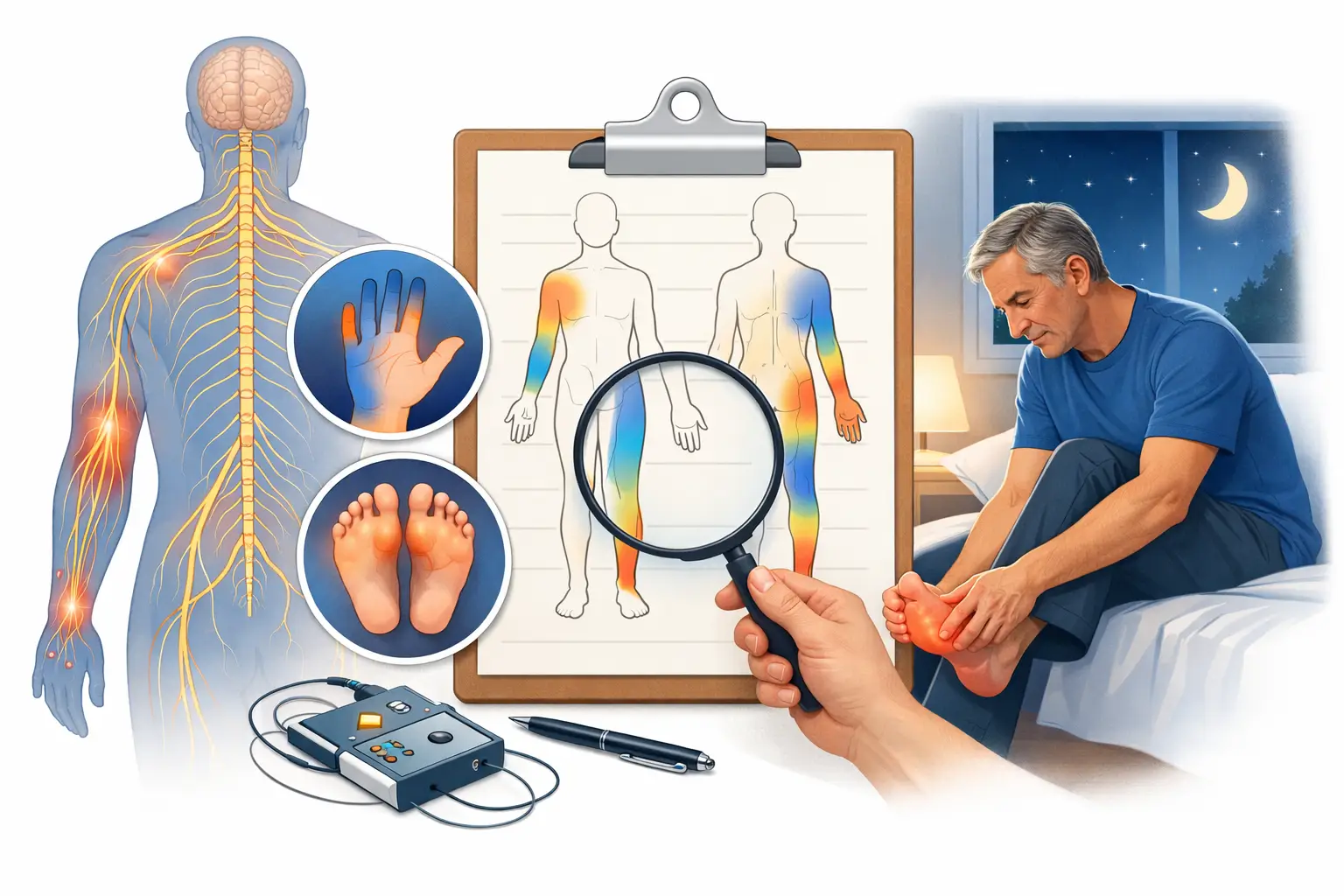
To track numbness patterns, write down where the numbness occurs, whether it affects one side or both, when it starts, how long it lasts, what triggers or relieves it, and whether it comes with tingling, burning, weakness, balance problems, or color changes.
A vague symptom is hard to describe in a doctor’s visit. A pattern is easier to evaluate. That is why learning how to track numbness patterns can be genuinely useful, especially if symptoms come and go, affect more than one area, or seem tied to sleep, posture, walking, blood sugar, or nutrition.
For adults over 45, numbness often raises practical questions rather than abstract ones. Is this happening in both feet or just one hand? Does it start after sitting, after exercise, or at night? Is it numbness alone, or is there also tingling, burning, weakness, cramping, or balance trouble? Small details like these can help separate a temporary compression issue from a broader nerve, circulation, metabolic, or vitamin-related concern. Tracking does not diagnose the cause, but it can make the next step far more productive.
Key Takeaways
- Numbness patterns often matter more than a single episode, especially when symptoms repeat, spread, or affect both sides of the body.
- Tracking location, timing, triggers, and related symptoms can help make medical evaluations more focused and productive.
- Tingling, burning, weakness, balance problems, or color changes may provide important clues about the pattern behind numbness.
- A simple symptom log is usually enough — consistency matters more than complexity.
- Sudden numbness, weakness, facial drooping, or speech changes may require urgent medical attention rather than routine symptom tracking.
Why tracking numbness patterns matters
Numbness is a symptom, not a diagnosis. It can show up with nerve compression, peripheral neuropathy, blood sugar problems, medication effects, circulation issues, vitamin deficiencies, spine-related problems, and other conditions. Sometimes the pattern is the clue.
For example, symptoms that affect both feet in a similar way may suggest a different process than numbness isolated to one thumb and first two fingers. Numbness that appears only after crossing your legs has a different feel from numbness that slowly spreads over months. A clinician will usually ask about timing, location, symmetry, progression, and associated symptoms. If you have already tracked those features, the conversation becomes much clearer.
There is another reason to keep records. Memory is unreliable with intermittent symptoms. Many people remember the worst episode, not the full pattern. A simple log can show whether symptoms are actually worsening, staying stable, or appearing only under certain conditions.
How to track numbness patterns in a useful way
What to Track When Numbness Happens
A symptom log does not diagnose the cause of numbness, but it can help identify patterns that may be useful during a medical evaluation.
| What to Track | Why It Matters | Example |
|---|---|---|
| Body Location | Different patterns may point toward different causes. | “Toes and balls of both feet” |
| One Side or Both | Symmetry may help identify broader nerve or circulation patterns. | “Only left hand” |
| Timing | Symptoms may relate to posture, sleep, walking, or activity. | “Started after sitting for 2 hours” |
| Duration | Short episodes may feel different from persistent numbness. | “Lasted 30 minutes” |
| Triggers or Relief | Can reveal posture, pressure, or activity-related patterns. | “Improved after walking” |
| Related Symptoms | Additional symptoms may help clarify the pattern. | “Tingling, burning, weakness, balance problems” |
The best symptom log is the one you will actually use. It does not need to be complicated. A notebook, phone note, or printed table is enough. What matters is consistency.
Start with location. Be specific. Instead of writing “my foot felt numb,” note whether it was the toes, ball of the foot, heel, outer edge, or whole foot. If it affects the hand, record which fingers. If the symptom is patchy, describe the shape or area as closely as you can.
Then record whether it is on the right side, left side, or both. Symmetry matters. Numbness in both feet at the same time can point in a different direction than numbness in one leg only.
Next, write down timing. Note when it started, how long it lasted, and whether it happened at rest, during activity, or after a certain position. If it comes at night, say so. If it improves after standing up, stretching, or changing shoes, include that too.
Severity should also be simple and repeatable. A 0 to 10 scale works well, but only if you use it consistently. Some people do better with plain labels such as mild, moderate, or severe. If numbness changes your walking, grip, or balance, record that impact instead of trying to force a number.
What details are most worth writing down?
A good numbness log captures the symptom itself and the context around it. The most useful details usually include body area, side, timing, duration, severity, and anything that seems to trigger or relieve it.
Also track related sensations. Numbness rarely appears in isolation. You may notice tingling, pins and needles, burning, coldness, stabbing pain, muscle cramps, weakness, or clumsiness. Those symptoms can help define the pattern more accurately than the word numb alone.
It is also worth noting whether skin color changes, swelling, or temperature changes happen at the same time. Those findings do not always mean poor circulation, but they can be relevant. The same is true for recent illness, changes in exercise, alcohol intake, new medications, or prolonged pressure on a limb.
If you are someone who monitors blood sugar, it may be reasonable to note whether symptoms cluster around unusually high or low readings. If your clinician has discussed nutrient concerns such as low vitamin B12, it can also help to note fatigue, balance changes, memory issues, or tongue soreness if they occur alongside numbness. That said, avoid assuming the cause on your own. Tracking is most helpful when it stays observational.
A simple way to organize your notes
Many readers do best with one short entry per episode. For example: “Tuesday, 9:30 p.m. Both feet, mostly toes and balls of feet. Mild tingling, moderate numbness, lasted 40 minutes while watching TV. Improved after walking around.”
If symptoms are frequent, a daily summary may be easier. You might write that numbness was present on waking, improved mid-morning, and returned after sitting for two hours. What you want is enough detail to spot trends without turning the process into a burden.
Some people like using a body outline and shading numb areas. That can be especially useful if the symptom changes location over time. A visual map often communicates more quickly than a long paragraph.
When patterns suggest something more urgent
Most numbness should be discussed with a healthcare professional if it is persistent, progressive, or unexplained. Some situations need faster attention.
Seek prompt medical care if numbness starts suddenly, affects one side of the body, comes with facial drooping, confusion, severe headache, new trouble speaking, or sudden weakness. The same applies if numbness follows a head, neck, or back injury, or if it comes with loss of bladder or bowel control.
Even outside emergencies, it is wise to schedule an appointment if numbness keeps returning, spreads, interferes with sleep, affects walking, or is joined by weakness. Pattern tracking can support that visit, but it should not delay it.
Common mistakes when tracking numbness
The biggest mistake is being too general. “Leg numbness sometimes” is much less helpful than “left outer thigh numbness after standing for 20 minutes.” Specificity improves the value of the record.
Another common issue is mixing symptoms with conclusions. It is better to write what happened than to label it as “definitely poor circulation” or “probably neuropathy.” Different conditions can feel surprisingly similar, especially early on.
People also tend to stop tracking once symptoms ease for a few days. That can hide an on-and-off pattern. Even brief episodes matter if they are becoming more frequent or affecting new areas.
Finally, do not forget to record what changed around the same time. New footwear, a long car ride, increased alcohol use, a medication adjustment, a change in activity, or a shift in diet can all be relevant context.
How tracking supports smarter health decisions
One important thing to remember is that symptoms should come before supplement shopping, not the other way around. Many people start searching for nerve-health supplements as soon as tingling or numbness appears. That reaction is understandable. Still, it is usually more helpful to document the pattern first before assuming the cause.
Why? Because numbness has multiple possible causes, and the right next step depends on the pattern. If a clinician suspects a nutritional issue such as low vitamin B12, your symptom log can add useful context. If the pattern instead points toward compression, medication side effects, or a circulation problem, the conversation may go in another direction entirely. Evidence-based decisions are easier when the symptom picture is clear.
Tracking also makes it easier to judge whether a change in routine is helping, doing nothing, or coinciding with worsening symptoms. That applies to footwear, posture changes, physical activity, and any wellness approach you discuss with a healthcare professional. Realistic expectations matter. Not every symptom trend is meaningful, but some are, and written records make that easier to sort out.
What to bring to your appointment
Bring your log, even if it feels imperfect. A few weeks of clear notes are often enough to show a pattern. Include when symptoms started, where they occur, how often they happen, what they feel like, and whether they are getting better, worse, or spreading.
If you take supplements, prescription medications, or over-the-counter products, bring that list too. It helps to include the dose and when you started each one. That is especially relevant if numbness appeared after a change in your routine.
You do not need a perfect medical vocabulary. Plain English is fine. What matters is giving your clinician a record that is concrete, organized, and honest about uncertainty.
A careful symptom log will not tell you exactly why numbness is happening, but it can turn a frustrating, hard-to-explain complaint into something far more actionable. When your notes show the where, when, and how of the symptom, you are in a much better position to ask informed questions and get a more focused evaluation.
Frequently Asked Questions
Why is tracking numbness patterns helpful?
Tracking patterns may help identify whether numbness is linked to posture, timing, activity, symmetry, or associated symptoms. It can also make medical appointments more productive.
What details should I write down about numbness?
Useful details include body location, timing, duration, severity, triggers, relief patterns, and symptoms such as tingling, burning, weakness, or balance changes.
Can numbness come from vitamin deficiencies?
Some vitamin deficiencies, including low vitamin B12, may contribute to numbness or tingling in certain individuals. However, numbness can also have many other possible causes.
When should numbness be treated as urgent?
Sudden numbness combined with weakness, facial drooping, speech problems, severe headache, or balance loss may require urgent medical evaluation.
Should I track numbness before buying supplements?
Yes. Tracking symptoms first may provide more useful context than assuming the cause immediately. Different numbness patterns may point toward different underlying issues.
Medical Disclaimer: The information provided in this article is for educational purposes only and is not intended as medical advice. Dietary supplements are not a replacement for professional medical diagnosis or treatment. Always consult with a qualified healthcare professional before starting any new supplement, especially if you have pre-existing medical conditions or are taking prescription medications. Individual results may vary.

- Can Low B12 Cause Dizziness? - July 9, 2026
- B12 Deficiency and Cracked Corners of the Mouth - July 9, 2026
- Can Low B12 Cause Dry Mouth? - July 8, 2026