Quick Answer:
Yes. A vegan diet can cause vitamin B12 deficiency if fortified foods or supplements are not used consistently. Because vitamin B12 is found naturally almost exclusively in animal-derived foods, vegan adults face a higher risk of deficiency over time, particularly after age 45 when absorption may become less efficient.
A well-planned vegan diet can support heart health, weight management, and overall nutrition. But if you are asking, can a vegan diet cause vitamin B12 deficiency, the short answer is yes – it can, and the risk is real enough that it should be taken seriously, especially for adults over 45.
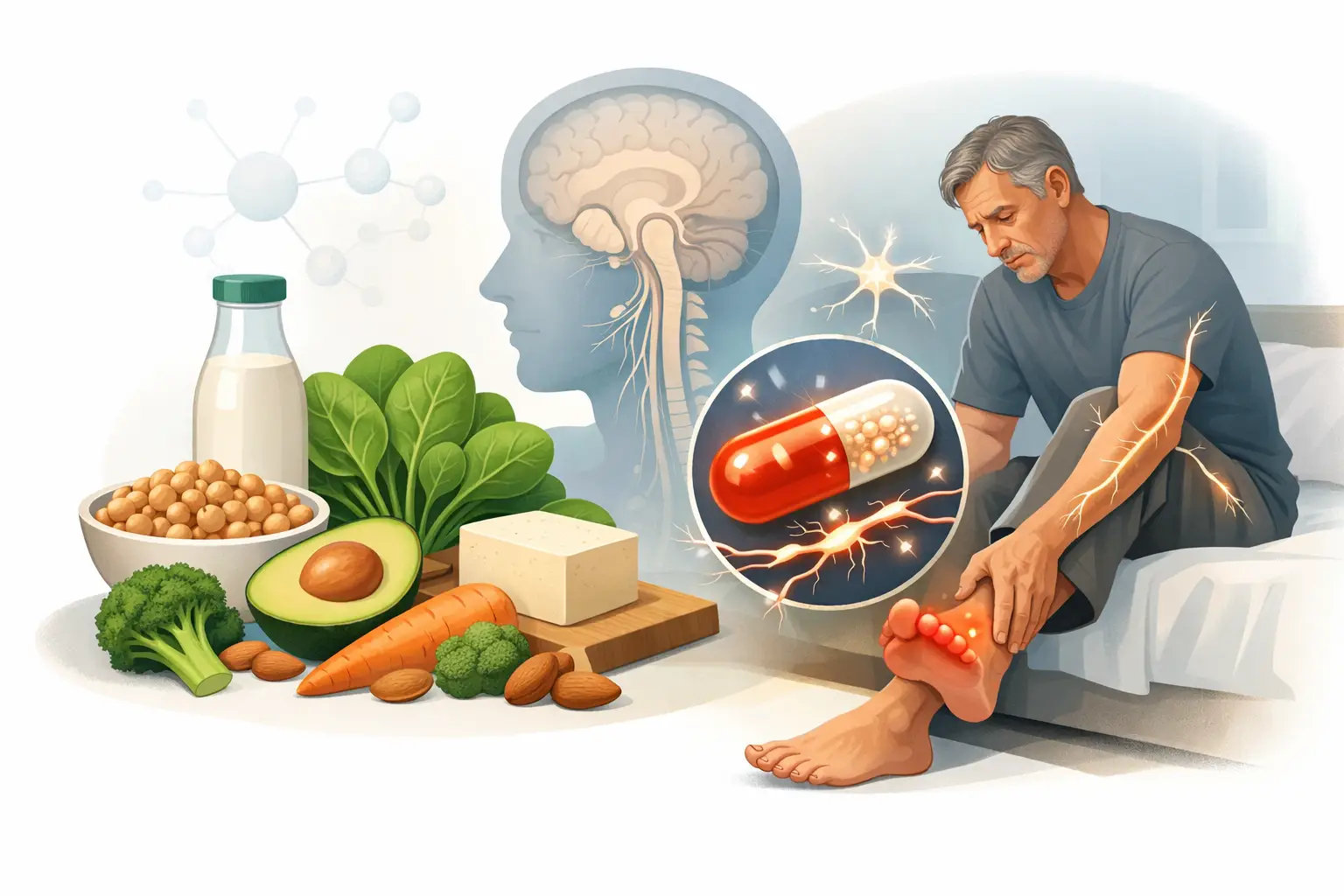
Vitamin B12 is one of the few nutrients that a strict vegan diet does not reliably provide on its own. Unlike fiber, folate, or vitamin C, B12 is not naturally abundant in plant foods. That matters because low B12 levels can affect red blood cell production, energy, cognition, and nerve function. For readers already concerned about tingling, numbness, burning feet, or balance changes, this is not a minor detail.
According to the NIH Office of Dietary Supplements, vitamin B12 is essential for neurological function, red blood cell formation, DNA synthesis, and maintaining healthy nerve signaling.
Why a vegan diet can lead to low B12
Vitamin B12 is made by microorganisms and is found naturally in meaningful amounts mainly in animal-derived foods such as meat, fish, dairy, and eggs. When someone removes all animal products, their regular dietary sources of B12 usually disappear as well.
This does not mean vegan eating is unsafe. It means B12 requires planning. Fortified foods and supplements can fill the gap, but without them, intake may become too low over time. The liver stores some B12, so deficiency may take months or even years to become obvious. That delay is one reason people often miss it.
Older adults face an added layer of risk. Even when B12 intake looks adequate on paper, absorption may be weaker due to age-related changes in stomach acid, digestive conditions, or use of certain medications. So for someone over 45 eating vegan, the question is not simply whether B12 is present in the diet. It is whether enough is being absorbed consistently.
Key Takeaways
- Vitamin B12 is not naturally abundant in plant foods.
- Vegans can maintain healthy B12 levels with fortified foods and supplements.
- B12 deficiency may cause fatigue, brain fog, numbness, tingling, and balance problems.
- Adults over 45 face additional absorption challenges.
- Symptoms may appear before severe laboratory abnormalities develop.
- Routine B12 monitoring is often worthwhile for long-term vegans.
Can a vegan diet cause vitamin B12 deficiency in everyone?
Not everyone following a vegan diet becomes deficient, but the risk is clearly higher without intentional B12 intake. A person who regularly consumes fortified plant milks, fortified cereals, nutritional yeast with added B12, or a B12 supplement may maintain normal status. A person relying only on whole plant foods, seaweed, mushrooms, or fermented foods is much more likely to fall short.
This is where misinformation causes problems. Some foods are marketed or discussed online as natural vegan B12 sources, but many contain inactive analogs rather than reliable, usable vitamin B12. In practical terms, they should not be treated as a dependable solution.
The key point is straightforward: vegan diets do not automatically cause deficiency, but they can absolutely create the conditions for it if B12 is not addressed on purpose.
What low B12 can feel like
Vitamin B12 deficiency can be subtle at first. People may dismiss the early signs as stress, aging, poor sleep, or circulation problems. That is one reason it often goes unnoticed.
Common symptoms include fatigue, weakness, pale skin, shortness of breath, memory changes, low mood, and tongue soreness. In some people, the more concerning signs involve the nervous system. Tingling in the hands or feet, numbness, burning sensations, reduced vibration sense, trouble walking, or poor balance can all occur when B12 status drops far enough.
For adults already researching nerve discomfort, this overlap matters. Symptoms linked with low B12 can resemble other issues, including diabetes-related nerve problems, spinal changes, thyroid disorders, or medication effects. B12 deficiency is only one possible explanation, but it is a medically relevant one because it is potentially identifiable and manageable.
Why adults over 45 should pay closer attention
Who Is Most Likely to Develop B12 Deficiency on a Vegan Diet?
| Risk Factor | Why It Matters |
|---|---|
| No B12 Supplement | No reliable dietary source available |
| Age Over 45 | Absorption often becomes less efficient |
| Metformin Use | Can reduce B12 absorption |
| Long-Term Acid Reducers | May interfere with B12 release from food |
| Digestive Disorders | Can impair nutrient absorption |
B12 status becomes more complicated with age. Stomach acid helps release vitamin B12 from food, and reduced acid production becomes more common over time. Conditions such as atrophic gastritis can interfere further. So can medications including proton pump inhibitors, H2 blockers, and metformin.
This means a vegan adult in their 50s, 60s, or 70s may face two separate issues at once: lower intake and reduced absorption. That combination raises the odds of deficiency compared with a younger person who absorbs B12 efficiently.
It also means symptoms should not be brushed off. If numbness, burning feet, weakness, or gait changes are appearing, a basic review of B12 intake and testing history is reasonable to discuss with a clinician.
How B12 deficiency is checked
Testing is not always as simple as one number. A serum B12 blood test is commonly used, but results near the low end of normal do not always rule out a functional problem. Depending on the situation, clinicians may also look at methylmalonic acid, homocysteine, complete blood count, and sometimes intrinsic factor-related testing when pernicious anemia is a concern.
That nuance matters because symptoms can appear before severe lab abnormalities show up. On the other hand, symptoms like tingling or fatigue should not automatically be blamed on B12 without evaluation. Several health issues can look similar.
For cautious supplement shoppers, this is where evidence-informed decision making matters most. Testing helps separate a true deficiency concern from guesswork.
Food sources, fortified foods, and supplements
Reliable vs Unreliable Vegan Sources of Vitamin B12
| Source | Reliability |
|---|---|
| B12 Supplements | High |
| Fortified Plant Milks | High |
| Fortified Cereals | High |
| Seaweed | Low |
| Mushrooms | Low |
| Fermented Foods | Low |
If you follow a vegan diet, B12 should be treated as a routine part of nutrition planning, not an optional extra. In practice, most reliable vegan B12 intake comes from fortified foods, supplements, or both.
Fortified plant milks, breakfast cereals, meat alternatives, and some nutritional yeast products can contribute useful amounts. Still, labels vary widely, and many people do not consume these foods every day in consistent amounts. That is why supplements are often the more dependable choice.
For many adults, an oral B12 supplement is a practical option. Cyanocobalamin is commonly used, stable, and well studied. Methylcobalamin is also available and popular, though it is not automatically superior for every consumer. The best choice depends on dose, consistency, tolerance, cost, and individual medical context.
A product should clearly list the form and amount of B12 per serving. Third-party testing, sensible dosing, and transparent labeling matter more than flashy marketing language. A quality review site such as vitb12supplement.com would reasonably focus on those details because they help consumers compare products without overstated claims.
How much B12 does a vegan adult need?
The official daily requirement for adults is relatively small, but absorption is not perfectly efficient, especially from supplements taken in larger doses or in older adults with digestive limitations. That is why many clinicians recommend either regular fortified food intake spread through the day or a dedicated supplement schedule.
Exact dosing should be individualized, particularly if deficiency has already been diagnosed. A maintenance dose for prevention is not the same as a treatment plan for someone with confirmed low levels, anemia, or neurologic symptoms. In more serious cases, clinicians may recommend higher-dose oral therapy or injections.
This is one area where self-treating based on symptoms alone can be misleading. B12 is generally considered safe, but choosing a random product without knowing whether your issue is actually B12-related may delay proper evaluation.
When symptoms need prompt medical attention
Mild fatigue and vague brain fog can have many causes, but some signs deserve faster follow-up. Progressive numbness, worsening balance, new weakness, confusion, or trouble walking should not be ignored. Neither should signs of anemia such as marked fatigue, shortness of breath, or unusual paleness.
The reason is practical, not alarmist. Some effects of prolonged B12 deficiency, particularly neurologic ones, may not fully resolve if low status continues for too long. Early attention gives you a better chance of correcting the problem before it becomes more disruptive.
⚠ Important
Vitamin B12 deficiency may develop slowly and remain unnoticed for years. Progressive numbness, worsening balance, weakness, memory changes, or difficulty walking should never be dismissed as normal aging, especially in long-term vegans.
The bottom line for vegan readers
A vegan diet can be healthy, but it does not reliably supply vitamin B12 unless fortified foods or supplements are used consistently. So yes, a vegan diet can cause vitamin B12 deficiency, especially in adults over 45 who may also absorb B12 less efficiently.
That does not mean vegan eating is flawed. It means B12 needs to be handled with the same seriousness as any other known nutrition gap. If you follow a vegan diet and have fatigue, numbness, burning feet, tingling, or balance changes, it is reasonable to review your B12 intake and speak with a healthcare professional about testing. A careful, evidence-based approach is usually far more helpful than guessing from symptoms alone.
If you’re trying to understand what may be behind numbness, tingling, burning feet, or nerve pain, our guide to peripheral neuropathy causes and relief explains the most common causes and what may help support nerve health.
Frequently Asked Questions
Can a vegan diet cause vitamin B12 deficiency?
Yes. Without fortified foods or supplements, a vegan diet can lead to vitamin B12 deficiency over time because reliable natural plant sources are limited.
How long does it take for B12 deficiency to develop on a vegan diet?
Because the liver stores vitamin B12, deficiency may take months or even several years to become apparent.
What are the first signs of vitamin B12 deficiency?
Fatigue, brain fog, weakness, tingling sensations, numbness, mood changes, and difficulty concentrating are among the most common early symptoms.
Are fortified foods enough to prevent deficiency?
They can be, provided they are consumed consistently and contain adequate amounts of vitamin B12.
Should vegans have their B12 levels tested?
Many healthcare professionals recommend periodic monitoring, especially for older adults, long-term vegans, and anyone experiencing symptoms suggestive of deficiency.
Medical Disclaimer: The information provided in this article is for educational purposes only and is not intended as medical advice. Dietary supplements are not a replacement for professional medical diagnosis or treatment. Always consult with a qualified healthcare professional before starting any new supplement, especially if you have pre-existing medical conditions or are taking prescription medications. Individual results may vary.

- Can Low B12 Cause Dizziness? - July 9, 2026
- B12 Deficiency and Cracked Corners of the Mouth - July 9, 2026
- Can Low B12 Cause Dry Mouth? - July 8, 2026