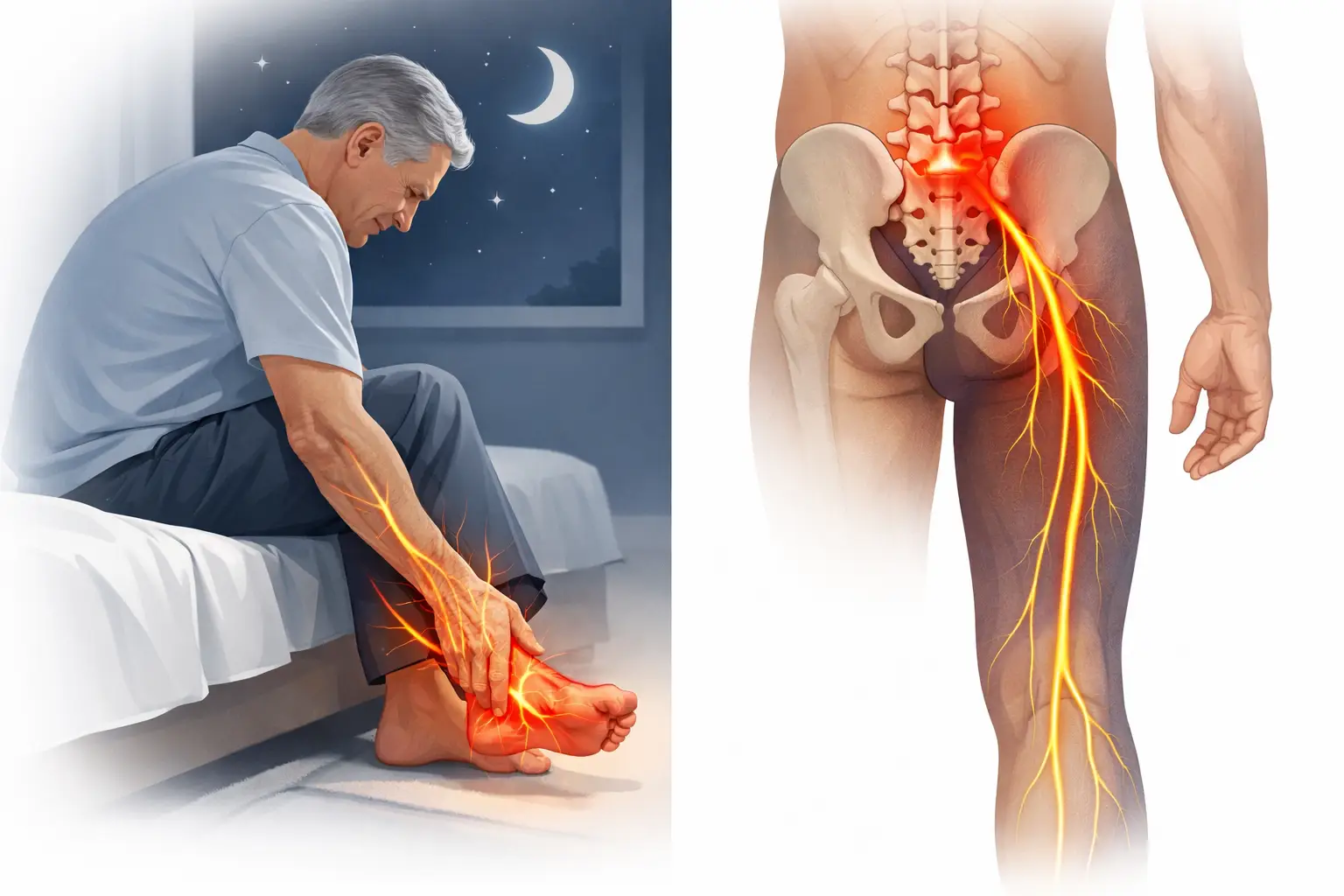
Sciatica usually causes one-sided pain that starts in the lower back or buttock and travels down the leg, while peripheral neuropathy more commonly affects both feet or legs gradually with numbness, tingling, burning, or reduced sensation. Although symptoms can overlap, the distribution and pattern often help tell them apart.
A lot of people use the terms interchangeably, but neuropathy vs sciatica is not the same comparison as one leg pain problem vs another. Sciatica is usually a specific pattern of nerve root irritation that starts in the lower back and travels down one leg. Neuropathy is a broader term for nerve damage or dysfunction, often affecting the feet, legs, or hands in a more diffuse and symmetrical way. If you are trying to make sense of burning feet, numb toes, or shooting pain down the leg, that distinction matters.
For adults over 45, the confusion is understandable. Nerve symptoms can overlap. Tingling, numbness, burning, weakness, and pain can show up in both conditions. But the underlying pattern, likely cause, and next step are often different.
Key Takeaways
- Sciatica usually affects one leg and often starts in the lower back or buttock.
- Peripheral neuropathy commonly affects both feet with gradual numbness, tingling, burning, or sensory loss.
- Back pain and sitting-related aggravation are more typical of sciatica.
- Vitamin B12 deficiency and diabetes are important possible contributors to neuropathy symptoms.
- Rapid weakness, falls, bowel changes, or severe back pain deserve prompt medical evaluation.
Neuropathy vs sciatica: the basic difference
The simplest way to separate them is by location and pattern. Sciatica usually involves the sciatic nerve pathway, with pain radiating from the lower back or buttock into the thigh, calf, or foot. It is commonly one-sided. Neuropathy often affects the peripheral nerves more broadly, especially in the feet, and symptoms tend to begin gradually and affect both sides.
Sciatica is often the result of compression or irritation of a spinal nerve root. A herniated disc, spinal stenosis, or degenerative changes in the lower back are common reasons. Neuropathy has many possible causes, including diabetes, alcohol use, certain medications, vitamin deficiencies such as low vitamin B12, thyroid disorders, kidney disease, and other metabolic or neurologic conditions.
That is why the question is not just, “Where does it hurt?” It is also, “How did it start, where exactly is it located, and is it affecting one side or both?”
How sciatica usually feels
Sciatica often has a more dramatic path. People describe sharp, shooting, electric, or searing pain that starts in the low back or buttock and runs down the back or side of one leg. Sitting for long periods, coughing, sneezing, or certain bending movements may make it worse. Some people also feel numbness, pins and needles, or weakness in the leg or foot.
The key feature is the radiating pattern. The discomfort tends to follow the course of the irritated nerve root. In some cases, back pain is mild or even absent, which can make the diagnosis less obvious. Even then, the one-sided leg pattern often points toward sciatica rather than generalized neuropathy.
Sciatica can be short-lived or persistent. A brief flare after lifting something awkward is different from progressive symptoms with weakness or walking difficulty. That difference shapes how urgently someone should be evaluated.
How neuropathy usually feels
Neuropathy often begins more quietly. Many people first notice numbness in the toes, a strange cotton-like feeling under the feet, or burning sensations that are worse at night. Others describe buzzing, tingling, coldness, sensitivity to touch, or trouble sensing the floor when walking.
A common pattern is called “stocking-glove” distribution. Symptoms start in the toes and feet, then gradually move upward. If the condition progresses, the hands may become involved as well. This symmetrical pattern strongly suggests peripheral neuropathy rather than sciatica.
Pain is not always the main symptom. For some, the bigger issue is reduced sensation, balance problems, or foot weakness. That matters because numbness can increase fall risk and may go unnoticed until daily function is affected.
Symptoms that can overlap
The reason these conditions are often confused is that both can involve tingling, numbness, burning, and weakness. A person with sciatica may say their foot feels numb. A person with neuropathy may say their legs burn or ache. The words people use are similar, but the distribution usually is not.
As a rule, sciatica is more likely when symptoms run from the back or buttock into one leg in a clear track. Neuropathy is more likely when symptoms begin in the feet, affect both sides, and develop gradually.
There are exceptions. A person can have both. Someone with diabetes may also have a lumbar disc problem. An older adult with spinal stenosis may report leg numbness that overlaps with signs of nerve damage from another cause. That is one reason self-diagnosis can be misleading.
Causes and risk factors
Neuropathy vs Sciatica: Side-by-Side Symptom Comparison
Although neuropathy and sciatica can both involve numbness, tingling, pain, or weakness, the overall symptom pattern is often very different.
| Feature | Peripheral Neuropathy | Sciatica |
|---|---|---|
| Usually affects both feet | ✓ | — |
| Usually one-sided | — | ✓ |
| Starts in the lower back or buttock | Less typical | ✓ |
| Burning feet | ✓ | Less common |
| Radiating leg pain | Less typical | ✓ |
| Stocking-glove pattern | ✓ | — |
| Balance problems | ✓ | Possible |
| Associated with vitamin B12 deficiency | ✓ | — |
Sciatica is commonly tied to structural issues in the spine. These include herniated discs, age-related disc degeneration, spinal stenosis, or less commonly, spondylolisthesis and other conditions that narrow or irritate the nerve root space. Long periods of sitting, repeated lifting, and reduced core strength may contribute in some individuals, though the picture is not always simple.
Neuropathy has a broader cause list. Diabetes is one of the most recognized causes, but it is far from the only one. Vitamin B12 deficiency deserves attention, especially in older adults, people taking metformin, and those using acid-suppressing medications for long periods. Low B12 can contribute to numbness, tingling, balance changes, and fatigue. Other contributors include excessive alcohol use, chemotherapy drugs, certain infections, autoimmune conditions, kidney problems, and inherited nerve disorders.
The NIH Office of Dietary Supplements notes that vitamin B12 plays an important role in neurological function and nervous system health.
This is where a cautious, evidence-informed approach matters. Nerve symptoms should not automatically be blamed on aging. If a correctable cause such as B12 deficiency is missed, symptoms may continue longer than necessary.
Neuropathy vs sciatica: clues that help tell them apart
One of the most useful clues is symmetry. Neuropathy often affects both feet. Sciatica usually affects one leg. Another clue is whether the back is involved. Sciatica often has at least some connection to low back or buttock discomfort, even if leg pain dominates.
Timing also helps. Neuropathy often builds slowly over months. Sciatica can start more suddenly after a movement, strain, or flare of a spinal condition. Triggers matter too. Sitting may aggravate sciatica, while nighttime discomfort and sheet sensitivity may be more typical of neuropathic pain.
Weakness has different patterns as well. Sciatica may affect specific muscle groups tied to the compressed nerve root, such as difficulty lifting the foot or pushing off the toes. Neuropathy may cause a more generalized sense of foot weakness, clumsiness, or balance trouble.
How doctors evaluate the difference
A careful history and physical exam usually provide the first major clues. A clinician may ask where symptoms started, whether they are one-sided or bilateral, how long they have been present, and what makes them better or worse. They may also check reflexes, strength, sensation, and gait.
If sciatica is suspected, the exam may include maneuvers that stretch the irritated nerve root. If neuropathy is suspected, the clinician may focus more on vibration sense, pinprick sensation, ankle reflexes, and balance.
Testing depends on the situation. Blood work may be used to look for diabetes, vitamin B12 deficiency, thyroid problems, or other metabolic causes of neuropathy. Nerve conduction studies and electromyography can help evaluate nerve function and may distinguish peripheral neuropathy from nerve root problems. Imaging such as lumbar MRI may be considered when sciatica is persistent, severe, or associated with red flags.
When symptoms need prompt medical attention
Some nerve symptoms should not be watched casually. Urgent evaluation is appropriate for new bowel or bladder changes, numbness around the groin area, rapidly worsening weakness, major difficulty walking, or severe back pain after trauma. These symptoms can signal more serious spinal compression.
For neuropathy-type symptoms, prompt attention is also wise if numbness is progressing quickly, balance has worsened, falls are happening, or symptoms are accompanied by unexplained weight loss, severe fatigue, or other systemic changes. Gradual nerve symptoms still deserve medical review, especially when the cause is not clear.
Where supplements fit, and where they do not
People researching nerve symptoms often look for nutritional support, especially when they read about B vitamins and nerve health. That can make sense in the right context, but only with realistic expectations. Supplements are not a substitute for proper diagnosis, and they are not a cure for sciatica or neuropathy.
That said, if testing shows vitamin B12 deficiency or another nutritional issue, correcting that deficiency may be a meaningful part of the plan. For adults 45+, this is a practical point because absorption problems become more common with age and certain medications. The smarter approach is to match the supplement to the documented need rather than guessing from symptoms alone.
For a health publisher like VitB12Supplement.com, this is where ingredient quality and evidence review matter most. Consumers deserve to know whether a product is addressing a likely deficiency, providing a sensible dose, and fitting into a broader care plan discussed with a healthcare professional.
The most useful takeaway for readers
If your symptoms start in the low back or buttock and shoot down one leg, sciatica moves higher on the list. If they begin in the toes or feet, affect both sides, and feel more like burning, numbness, or gradual sensory loss, neuropathy becomes more likely. The overlap is real, but the pattern usually tells the story.
The best next step is not to guess which label fits best. It is to notice the distribution, timing, and triggers, then bring those details to a clinician who can sort out whether the issue is spinal, metabolic, nutritional, or something else entirely. That conversation is often what turns a vague nerve complaint into a clear and safer plan.
Frequently Asked Questions
How can I tell the difference between neuropathy and sciatica?
Sciatica usually causes one-sided pain that starts in the lower back or buttock and travels down the leg. Neuropathy more often begins gradually in both feet with numbness, tingling, burning, or sensory loss.
Can neuropathy and sciatica happen together?
Yes. Some adults may have both peripheral neuropathy and spinal nerve irritation at the same time, especially with aging or diabetes.
Can vitamin B12 deficiency cause symptoms similar to sciatica?
Vitamin B12 deficiency is more strongly linked to neuropathy-like symptoms such as numbness, tingling, burning sensations, and balance changes.
Does sciatica always cause back pain?
No. Some people mainly notice radiating leg pain, numbness, or tingling even when back discomfort is mild or less noticeable.
When should nerve symptoms be medically evaluated?
Rapid weakness, falls, bowel or bladder changes, severe back pain, or rapidly worsening numbness deserve prompt medical evaluation.
Medical Disclaimer: The information provided in this article is for educational purposes only and is not intended as medical advice. Dietary supplements are not a replacement for professional medical diagnosis or treatment. Always consult with a qualified healthcare professional before starting any new supplement, especially if you have pre-existing medical conditions or are taking prescription medications. Individual results may vary.

- Can Low B12 Cause Dizziness? - July 9, 2026
- B12 Deficiency and Cracked Corners of the Mouth - July 9, 2026
- Can Low B12 Cause Dry Mouth? - July 8, 2026