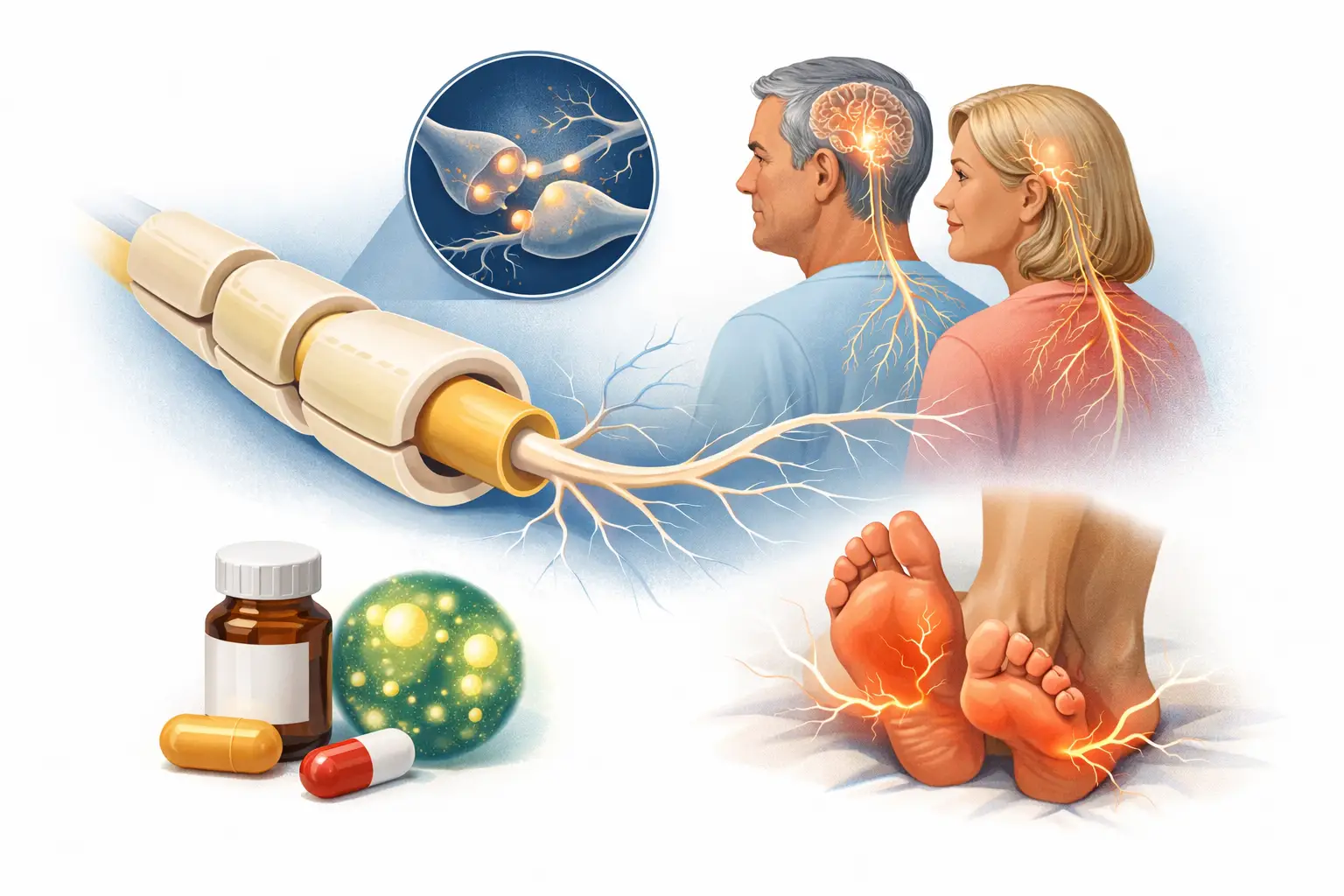
If you have been searching what is myelin, you are probably trying to make sense of symptoms like tingling, numbness, burning feet, weakness, or slower reflexes. Myelin is a fatty protective coating that wraps around many nerves. It helps electrical signals move quickly and efficiently from one part of the body to another. When myelin is damaged, those signals can slow down, misfire, or fail to get through at all.
That matters more than most people realize. Myelin affects movement, sensation, coordination, and even certain aspects of thinking. For adults over 45, changes in nerve health can be especially concerning because symptoms may overlap with vitamin deficiencies, diabetes, circulation problems, spinal issues, or age-related neurological changes. Understanding what myelin does is a useful first step before assuming any one cause.
What is myelin?
Myelin is often described as insulation around a wire, and that comparison is helpful up to a point. Just as insulation helps electrical current travel safely and efficiently, myelin helps nerve impulses travel faster and with less signal loss. Without healthy myelin, nerves still may function, but they tend to work less efficiently.
This coating is made largely of fat, along with proteins and other cellular components. In the brain and spinal cord, myelin is produced by cells called oligodendrocytes. In peripheral nerves, which include many of the nerves involved in sensation in the hands and feet, myelin is produced by Schwann cells. The location matters because different diseases and deficiencies can affect the central and peripheral nervous systems in different ways.
Myelin does not cover every part of a nerve continuously. Instead, it forms segments with small gaps between them called nodes of Ranvier. These gaps allow nerve signals to jump rapidly from one point to the next, a process that increases speed and efficiency. That is one reason myelin is so important for normal nerve communication.
Why myelin matters for nerve symptoms
When people notice tingling, numbness, burning sensations, or unusual sensitivity, they are often experiencing altered nerve signaling. Myelin damage is one possible reason. If the coating becomes thin, inflamed, or broken down, the signal traveling along the nerve may become delayed or distorted.
In practical terms, that can mean reduced sensation in the feet, a pins-and-needles feeling in the hands, balance problems, muscle weakness, or changes in coordination. Some people also notice that symptoms worsen with fatigue, illness, or heat. Others may feel as though their feet are wrapped in socks when they are not, or that they are less aware of where their body is in space.
Still, myelin is only one part of the picture. Nerves themselves can also be injured directly. Blood flow issues, metabolic problems, medication side effects, compression, and long-standing blood sugar elevation can all contribute to nerve-related symptoms. That is why it is medically cautious to think of myelin as a key factor, not the only factor.
What happens when myelin is damaged?
Damage to myelin is called demyelination. When this happens, nerves lose some of their ability to send messages properly. The result depends on which nerves are affected and how extensive the damage is.
If the damage affects sensory nerves, symptoms may include numbness, tingling, burning, buzzing, or electric-shock sensations. If motor nerves are affected, weakness, cramping, or slower movement can develop. If nerve pathways involved in balance or coordination are involved, people may feel unsteady or clumsy.
The body can sometimes repair myelin to a degree, a process called remyelination. But that repair may be incomplete or slower with age, chronic illness, or repeated injury. In some cases, the underlying problem continues to damage nerves faster than the body can recover. That helps explain why some symptoms come and go at first, then become more persistent.
Common reasons myelin can be affected
Several health issues can affect myelin directly or indirectly. One of the most relevant for this audience is vitamin B12 deficiency. B12 plays an essential role in nervous system function, and low levels can contribute to nerve damage and impaired myelin maintenance. In some people, the earliest signs are numbness, tingling, reduced vibration sense, poor balance, fatigue, or memory changes.
This does not mean every nerve symptom is caused by B12 deficiency, but it is one reason B12 is commonly discussed in nerve-health education. Adults over 45 may be at higher risk of low B12 for several reasons, including reduced stomach acid, long-term use of acid-reducing medications, certain digestive disorders, and dietary patterns that limit animal foods.
Other possible contributors include diabetes, excessive alcohol use, autoimmune disorders, infections, toxin exposure, and some neurological conditions. Mechanical pressure on a nerve, such as from spinal changes or carpal tunnel syndrome, usually causes a different kind of injury, but symptoms can overlap. That overlap is exactly why self-diagnosis can be misleading.
Myelin, aging, and slower nerve signaling
Aging does not automatically mean major myelin loss, but nerve signaling can become less efficient over time. Some changes are subtle and part of normal aging. Others reflect accumulated health stressors such as poor metabolic health, chronic inflammation, nutrient insufficiency, or vascular changes.
For example, older adults may notice slower reflexes, reduced sensation in the feet, or more difficulty recovering from nerve irritation. Those symptoms are not specific to myelin problems, but myelin integrity is part of the broader nerve-health picture. In editorial reviews of nerve-support ingredients, this is why nutrients related to methylation, red blood cell health, and neuronal maintenance often receive attention.
At the same time, caution is important. A supplement cannot be assumed to rebuild damaged myelin or fix a neurological disorder. The evidence may support a role in correcting deficiency or supporting normal nerve function, but that is different from a treatment claim.
What is myelin made of, and why does nutrition matter?
Myelin is rich in lipids, which means fats are a major structural component. It also depends on proteins and on normal cellular metabolism to be maintained. That is one reason nutrition matters, even though nutrition alone is rarely the whole story.
Vitamin B12 is one of the most discussed nutrients in relation to myelin because deficiency can impair nerve function and damage the nervous system if left uncorrected. Folate and vitamin B6 are also involved in related metabolic pathways. Copper, vitamin E, and overall protein status may matter in specific cases as well, though they are less commonly the first explanation for routine tingling or numbness.
This is where evidence-based caution helps. More is not always better. Taking large amounts of a supplement without knowing whether you are deficient can create confusion and, in some cases, side effects. For example, very high vitamin B6 intake from supplements can itself contribute to nerve symptoms in some people. A practical approach starts with identifying likely causes, not guessing based on marketing language.
Signs that deserve medical attention
Because myelin problems can overlap with many other conditions, it is wise to pay attention to pattern and progression. Symptoms that are spreading, worsening, one-sided, or accompanied by weakness, falls, vision changes, bowel or bladder changes, or sudden loss of function deserve prompt medical evaluation.
Even milder symptoms should not be ignored if they persist. Burning feet at night, worsening numbness, repeated tripping, or reduced hand coordination may reflect something that should be checked, including B12 deficiency, diabetes, thyroid problems, medication effects, or spinal nerve compression.
For many adults, basic evaluation may include a history, physical exam, medication review, and lab work. In some cases, nerve conduction studies, imaging, or specialist referral may be needed. That may sound extensive, but it is often the fastest way to separate a manageable deficiency from a more complex neurological issue.
What myelin means for supplement shoppers
If you are researching supplements because of nerve symptoms, understanding myelin helps you ask better questions. Instead of looking for products that promise dramatic nerve repair, it makes more sense to ask whether a formula addresses a documented deficiency, uses evidence-based forms of nutrients, and fits your health profile.
For example, with B12, the key question is not simply whether a product contains the vitamin. It is whether you actually need it, whether the dose is appropriate, and whether there is a reasonable basis for using it. People with confirmed or suspected low B12 may benefit from discussing supplementation with a healthcare professional, especially if symptoms are present. Timing matters because longer-standing deficiency can lead to more persistent nerve problems.
The broader point is simple. Myelin is essential to healthy nerve communication, but symptoms linked to myelin are not specific enough to diagnose on your own. The smartest next step is usually to combine symptom awareness with proper evaluation, especially when numbness, tingling, or burning sensations start interfering with daily life. That approach is slower than clicking on a miracle claim, but it is far more likely to lead to useful answers.
Frequently Asked Questions
What is myelin?
Myelin is a fatty protective coating that surrounds many nerves and helps electrical signals travel efficiently through the nervous system.
What happens when myelin is damaged?
Damaged myelin can slow or disrupt nerve communication, potentially leading to numbness, tingling, burning sensations, weakness, or coordination problems.
Can vitamin B12 deficiency affect myelin?
Yes. Vitamin B12 plays an important role in nervous system health, and deficiency may contribute to nerve dysfunction and neurological symptoms.
Can myelin repair itself?
The body may repair some myelin through a process called remyelination, although recovery depends on the underlying cause and overall nerve health.
What symptoms may suggest nerve signaling problems?
Common symptoms include tingling, numbness, burning feet, weakness, balance issues, and changes in sensation.
Medical Disclaimer: The information provided in this article is for educational purposes only and is not intended as medical advice. Dietary supplements are not a replacement for professional medical diagnosis or treatment. Always consult with a qualified healthcare professional before starting any new supplement, especially if you have pre-existing medical conditions or are taking prescription medications. Individual results may vary.

- Can Low B12 Cause Dizziness? - July 9, 2026
- B12 Deficiency and Cracked Corners of the Mouth - July 9, 2026
- Can Low B12 Cause Dry Mouth? - July 8, 2026