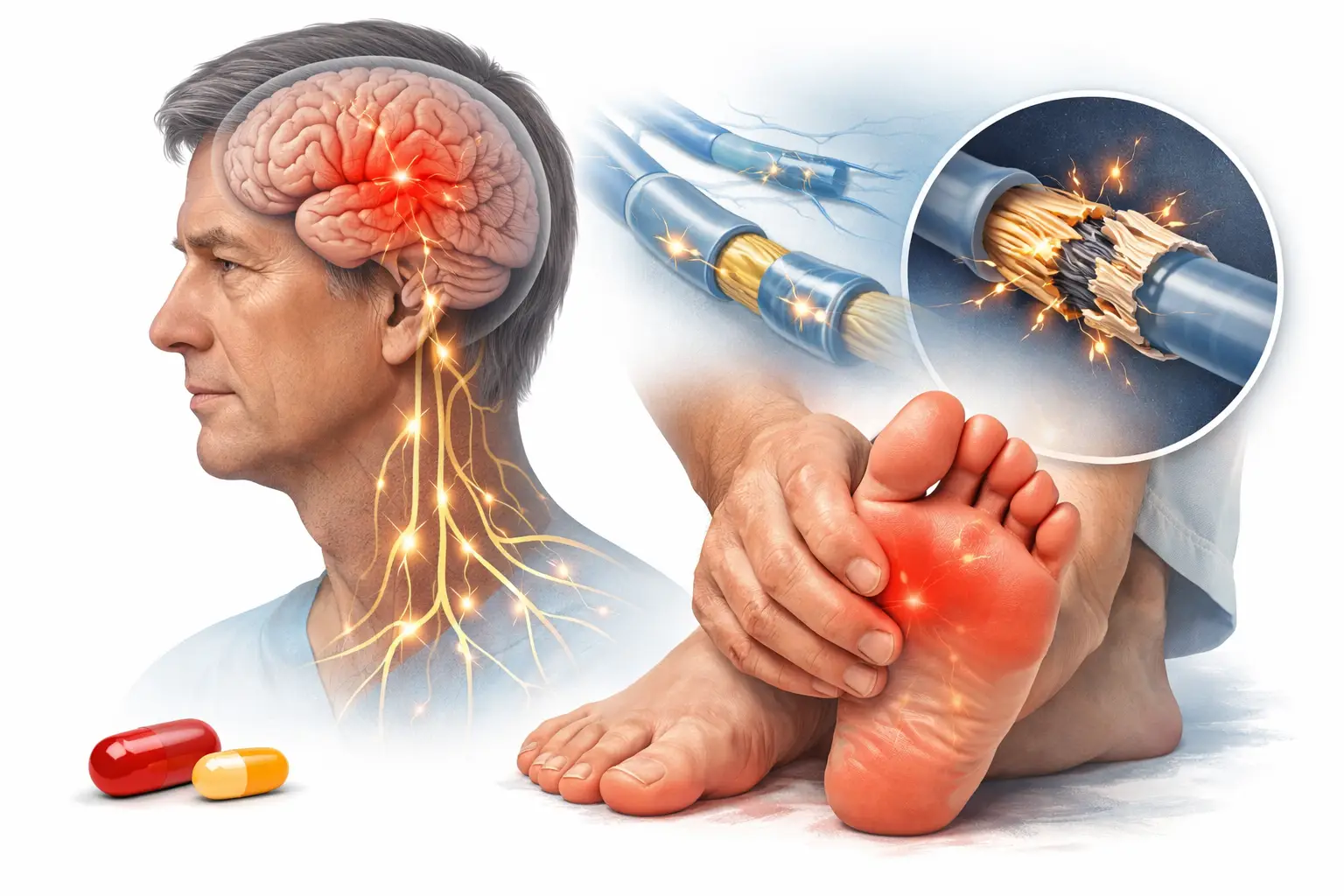
High homocysteine is not usually considered a direct cause of nerve damage by itself, but it may contribute to an environment that is less supportive of nerve health. Elevated homocysteine often signals underlying issues such as vitamin B12 deficiency, folate deficiency, vascular stress, or metabolic imbalance that may increase the risk of neuropathy symptoms.
Tingling feet, burning toes, and numb fingers often send people searching for one question: Can High Homocysteine Cause Nerve Damage? The short answer is that high homocysteine is not usually considered a direct stand-alone cause in the same way as diabetes or severe vitamin B12 deficiency, but it can be an important warning sign. In the right context, elevated homocysteine may reflect nutrient problems, vascular stress, and metabolic imbalances that can increase the risk of nerve-related symptoms.
For adults over 45, this matters because neuropathy symptoms rarely come from a single neat source. Nerves depend on adequate blood flow, healthy myelin, and the right balance of nutrients – especially vitamin B12, folate, and vitamin B6. When homocysteine rises, it often points to trouble somewhere in that system.
What high homocysteine actually means
Research Snapshot
Population studies estimate that elevated homocysteine affects approximately 5% to 15% of adults, with prevalence increasing significantly after age 60. Researchers have linked elevated homocysteine to vascular dysfunction, cognitive decline, and impaired nerve health, particularly when underlying vitamin B12 or folate deficiencies are present.
Homocysteine is an amino acid your body makes during normal metabolism. It is not something you need to get from food. Under healthy conditions, the body quickly recycles it into other useful compounds with the help of B vitamins, particularly folate, B12, and B6.
When that recycling process slows down, homocysteine can build up in the blood. This is called hyperhomocysteinemia. Mild elevations are common, especially in older adults, and they may be related to low B-vitamin status, certain medications, kidney issues, alcohol use, hypothyroidism, smoking, or genetic variants that affect methylation pathways.
A high homocysteine result does not automatically mean nerve damage is present. It also does not prove that homocysteine itself is the main driver of symptoms. What it does mean is that your clinician may need to look more closely at the bigger picture.
Can high homocysteine cause nerve damage or just signal a problem?
| Possible Effect | Why It Matters |
|---|---|
| Oxidative Stress | May increase cellular damage over time. |
| Vascular Stress | May affect blood flow to nerves. |
| Nutrient Deficiency Marker | Can suggest low B12 or folate status. |
| Neurologic Risk | May be associated with impaired nerve function. |
This is where nuance matters. Evidence suggests that elevated homocysteine may contribute to nerve injury through several mechanisms. It has been associated with oxidative stress, inflammation, and damage to blood vessels that supply peripheral nerves. Poor microcirculation can matter because nerves are metabolically active tissues that need a steady oxygen and nutrient supply.
Homocysteine may also have neurotoxic effects in certain settings. Some research has linked elevated levels to impaired nerve function, cognitive decline, and greater risk of vascular-related neurologic problems. That said, association is not the same as proof of direct causation. In many cases, high homocysteine travels with the actual underlying problem rather than acting alone.
One of the most clinically relevant examples is vitamin B12 deficiency. Low B12 can raise homocysteine and, separately, damage nerves. In that situation, homocysteine is less like the whole story and more like a metabolic clue. The same can be true with folate deficiency and, to a lesser extent, low vitamin B6.
So if you are asking whether high homocysteine can cause nerve damage, a more accurate answer is this: it may contribute to an environment that harms nerves, but it often signals an underlying issue that deserves more attention than the homocysteine number itself.
Why vitamin B12 is so often part of the conversation
For readers concerned about burning feet or numbness, vitamin B12 deserves special attention. B12 is essential for nerve maintenance and myelin integrity. When levels are low, symptoms can include tingling, numbness, balance problems, weakness, and sometimes memory changes.
The challenge is that B12 deficiency is not always obvious on a basic lab panel. A serum B12 result can fall into a low-normal range while functional markers still suggest a problem. That is one reason clinicians may also look at methylmalonic acid and homocysteine. If homocysteine is elevated, it can support the suspicion that B12 or folate status is not optimal.
Older adults are at higher risk for B12 issues because absorption can decline with age. Long-term use of certain medications, including metformin and acid-reducing drugs, may also make deficiency more likely. People who eat very little animal food can be at risk as well.
This does not mean everyone with tingling should start taking high-dose supplements on their own. It means B12 status should be evaluated carefully, especially when high homocysteine and nerve symptoms appear together.
How Different Nerve Types May Be Affected
| Nerve Type | Possible Symptoms | Why It Matters |
|---|---|---|
| Sensory Nerves | Tingling, numbness, burning feet, pins-and-needles sensations. | These nerves help transmit touch, temperature, and pain signals. |
| Motor Nerves | Weakness, reduced coordination, muscle fatigue, gait changes. | Motor nerves control voluntary muscle movement and stability. |
| Autonomic Nerves | Blood pressure changes, sweating abnormalities, digestive symptoms. | Autonomic nerves regulate automatic body functions. |
Symptoms that may overlap with elevated homocysteine and nerve problems
| Symptom | Description |
|---|---|
| Tingling | Pins-and-needles sensations. |
| Numbness | Reduced sensation in hands or feet. |
| Burning Feet | Hot, burning, or electric-like discomfort. |
| Balance Problems | Difficulty walking steadily. |
| Brain Fog | Difficulty concentrating or remembering. |
High homocysteine itself usually does not create a clear, unique symptom pattern. Most people do not feel a high homocysteine level. Instead, symptoms come from the underlying nutrient deficiency, vascular issue, or neurologic condition linked to it.
Nerve-related complaints that may overlap include tingling in the hands or feet, burning feet, numb patches, reduced sensation, balance trouble, muscle weakness, and a pins-and-needles feeling that worsens at night. Some people also report fatigue, brain fog, or mood changes if B12 or folate intake is low.
These symptoms are not specific. Diabetes, alcohol-related neuropathy, spinal problems, thyroid disease, medication side effects, and circulation disorders can produce similar complaints. That is why self-diagnosis based on one blood marker is risky.
Who should consider testing?
Testing may be worth discussing if you have unexplained tingling or numbness, a history of low B12 or anemia, digestive disorders that affect absorption, or long-term use of medications known to interfere with B12 status. It may also come up if routine blood work shows macrocytosis, if there is concern about cardiovascular risk, or if symptoms suggest a nutritional neuropathy.
In practice, homocysteine is rarely the only test that matters. A more useful workup may include vitamin B12, methylmalonic acid, folate, vitamin B6 in select cases, thyroid markers, blood sugar measures, kidney function, and a careful review of medications and diet. If neuropathy is suspected, a clinician may also evaluate reflexes, balance, strength, and sensory changes.
What to do if your homocysteine is high
The right next step depends on why it is high. If testing suggests low or borderline B12, folate, or B6, correcting that deficiency may help normalize homocysteine and support nerve health. The key word is support. Improvement in symptoms depends on how long the nerve issue has been present and whether another cause is also involved.
If kidney function is reduced, homocysteine may rise for reasons that have little to do with vitamin intake alone. If smoking, heavy alcohol use, hypothyroidism, or certain drugs are involved, those factors may need to be addressed as well.
From a practical supplement-review perspective, this is where consumers should slow down and read labels carefully. Products marketed for nerve health often combine methylcobalamin, folate, and B6, sometimes with alpha-lipoic acid or benfotiamine. That does not make every formula appropriate for every person. Very high B6 intake, for example, can itself cause nerve symptoms in some cases. More is not always better.
For people shopping for B12 support, the better questions are whether the dose is appropriate, whether the form makes sense for the individual, and whether the supplement fits into a plan based on actual lab findings or clinician guidance. Evidence-informed decisions are safer than buying the most aggressively marketed product.
Important:
High homocysteine is a clue, not a diagnosis. The most important question is why levels are elevated and whether the same underlying issue may also be affecting nerve health.
Metabolic Marker
High homocysteine often points to an underlying nutritional or metabolic issue.
B12 Matters
Vitamin B12 deficiency is one of the most common causes of elevated homocysteine.
Nerve Symptoms Overlap
Tingling, numbness, and burning feet may occur when B12 status is compromised.
Testing Helps
Homocysteine should be interpreted alongside B12, methylmalonic acid, and other markers.
Can lowering homocysteine improve neuropathy?
| Question | Short Answer |
|---|---|
| Can high homocysteine damage nerves? | It may contribute to nerve injury but often reflects another underlying issue. |
| Does B12 deficiency raise homocysteine? | Yes. Low B12 is a common cause of elevated homocysteine. |
| Can lowering homocysteine improve symptoms? | Sometimes, especially when an underlying deficiency is corrected. |
Sometimes, but not predictably. If high homocysteine reflects a reversible B12 or folate problem, bringing levels back into range may help prevent further strain on nerves and may improve symptoms over time. The earlier the problem is identified, the better the odds of meaningful recovery.
Still, lowering homocysteine on paper is not the same as fixing neuropathy. Studies on homocysteine-lowering strategies have shown mixed results depending on the condition being studied, the severity of deficiency, and whether the nerve damage was already established. Some people improve because the underlying deficiency is corrected. Others see little change because another cause is responsible.
That distinction matters for readers comparing supplements. A product that lowers homocysteine is not automatically a product that will noticeably reduce tingling or numbness. Claims should be judged carefully.
A practical way to think about the risk
High homocysteine is best viewed as a meaningful clue, not a final diagnosis. It can point toward nutritional issues that affect nerve health, especially low vitamin B12 or folate. It may also reflect processes that are less friendly to nerves, including vascular stress and inflammation.
But if you have symptoms such as burning feet, numbness, or electric-shock sensations, do not stop at the homocysteine result. The more useful question is why it is elevated and whether that same cause is also affecting your nerves.
For many adults 45 and older, that conversation starts with a careful review of B12 status, medications, diet, and common neuropathy causes. A high homocysteine level should not be ignored, but it should be interpreted in context. That is often where the most helpful answers begin.
If you’re trying to understand what may be behind numbness, tingling, burning feet, or nerve pain, our guide to peripheral neuropathy causes and relief explains the most common causes and what may help support nerve health.
Frequently Asked Questions
Can high homocysteine cause neuropathy?
High homocysteine may contribute to conditions that are less supportive of nerve health, such as vascular stress, oxidative stress, and low B-vitamin status. However, it is usually interpreted as a clue rather than a stand-alone diagnosis.
Is high homocysteine a sign of vitamin B12 deficiency?
It can be. Low vitamin B12 is one possible reason homocysteine rises, especially when folate or vitamin B6 status is also not optimal.
What homocysteine level is considered high?
Reference ranges vary by laboratory, but many clinicians consider fasting homocysteine above about 15 micromoles per liter elevated. Results should be interpreted with your medical history and other lab markers.
Can lowering homocysteine improve nerve symptoms?
Sometimes, especially when high homocysteine reflects a correctable vitamin B12, folate, or B6 issue. Improvement is less predictable if nerve symptoms come from another cause.
Should homocysteine be tested with vitamin B12?
In some cases, yes. Homocysteine may be useful alongside vitamin B12, methylmalonic acid, folate, and other markers when symptoms suggest a possible functional deficiency.
Medical Disclaimer: The information provided in this article is for educational purposes only and is not intended as medical advice. Dietary supplements are not a replacement for professional medical diagnosis or treatment. Always consult with a qualified healthcare professional before starting any new supplement, especially if you have pre-existing medical conditions or are taking prescription medications. Individual results may vary.

- Can Low B12 Cause Dizziness? - July 9, 2026
- B12 Deficiency and Cracked Corners of the Mouth - July 9, 2026
- Can Low B12 Cause Dry Mouth? - July 8, 2026