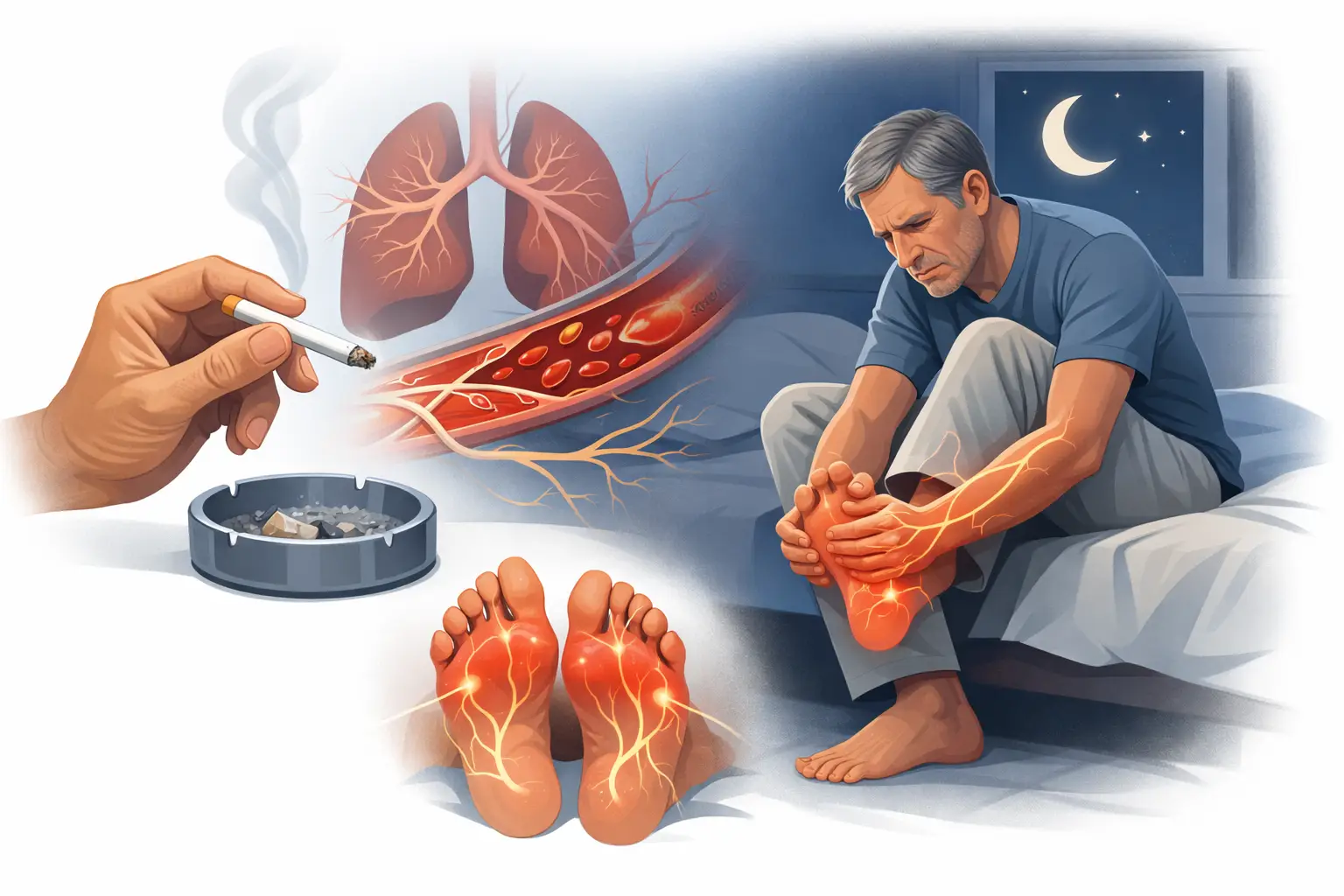
Smoking may make neuropathy worse in some people because it can reduce blood flow, lower oxygen delivery, increase oxidative stress, and worsen vascular health. It may be especially concerning in people with diabetes, poor circulation, or foot wounds. Quitting smoking does not guarantee neuropathy will reverse, but it may reduce one source of ongoing nerve and vascular stress.
If you already deal with burning feet, tingling, numbness, or sharp nerve pain, the question is not trivial: does smoking make neuropathy worse? Based on what is known about blood flow, inflammation, and nerve oxygen supply, smoking can make neuropathy symptoms worse and may also interfere with the body’s ability to support damaged nerves.
For many adults over 45, neuropathy is not caused by one single issue. It may involve diabetes, prediabetes, low vitamin B12, alcohol use, medication effects, spine problems, or circulation changes that build over time. Smoking adds another layer of stress to that picture, which is why clinicians often view it as a meaningful aggravating factor rather than a harmless habit.
Why smoking can worsen nerve symptoms
Peripheral nerves depend on a steady supply of oxygen and nutrients. Smoking works against that in several ways. Nicotine narrows blood vessels, carbon monoxide reduces oxygen delivery, and tobacco smoke contributes to oxidative stress and inflammation. When nerves already struggle, those effects can increase pain, numbness, or slow recovery.
Small blood vessels matter here. The longest nerves in the body, especially those traveling to the feet and lower legs, are often the first to show damage because they have high metabolic demands. If circulation is reduced even modestly, symptoms can become more noticeable. That is one reason many people report more burning, coldness, or pins-and-needles sensations in the feet.
Smoking may also affect pain signaling. Some people think cigarettes calm the nerves because nicotine can briefly change mood and attention. But that short-term effect is not the same as improving nerve function. Over time, smoking is associated with worse vascular health and can contribute to the conditions that often sit alongside neuropathy.
Does smoking make neuropathy worse in every case?
Not every case looks the same. A person with mild intermittent tingling may not notice an obvious difference after smoking, while someone with diabetic neuropathy or poor circulation may be much more sensitive to its effects. The answer depends on the cause of the neuropathy, how advanced it is, and whether other risks are involved.
Still, from a medical risk standpoint, smoking is more likely to push neuropathy in the wrong direction than the right one. If a person already has diabetes, peripheral artery disease, low B12, kidney disease, or chronic inflammation, smoking adds one more factor that can worsen symptom burden.
This is where realistic expectations matter. Quitting smoking does not guarantee that neuropathy will go away. If nerve damage is advanced, symptoms may improve only partially or may persist. But reducing a known source of vascular and inflammatory stress is still a practical step that can support overall nerve health.
The circulation connection
Many people use the word neuropathy to describe any numbness or foot discomfort, but circulation problems can overlap with nerve symptoms. Smoking affects both.
When blood vessels tighten and blood flow becomes less efficient, tissues in the feet and legs may receive less oxygen. That can lead to cold feet, slower healing, color changes, cramping with walking, and discomfort that may be confused with or added onto neuropathy. In some people, both conditions are present at the same time.
This overlap matters because the combination can feel worse than either issue alone. A person may notice numbness from nerve dysfunction, then add burning or aching from poor circulation. Smoking can intensify that combined burden, especially in older adults and in people with diabetes.
Smoking, diabetes, and neuropathy risk
If neuropathy is related to diabetes or prediabetes, smoking is especially concerning. High blood sugar can damage small blood vessels and nerves over time. Smoking can compound that process by worsening vascular function and making metabolic health harder to manage.
It may also affect wound healing. For readers with numb feet, this is not a small detail. Reduced sensation means you may not notice a blister, pressure spot, or minor injury right away. Smoking can make healing less efficient, which raises the stakes for routine foot care.
That does not mean every smoker with diabetes will develop severe neuropathy. But from a risk-reduction perspective, smoking works against several of the same body systems that diabetic nerve health depends on.
Where vitamin B12 fits in
Because this site focuses on evidence-informed supplement education, it is worth addressing a common point of confusion. Smoking itself is not usually described as the direct cause of vitamin B12 deficiency in the same way that pernicious anemia, certain medications, or digestive disorders are. But smokers may still have overlapping nutrition issues, dietary gaps, or lifestyle patterns that affect nerve health.
Vitamin B12 matters because deficiency can contribute to numbness, tingling, balance problems, fatigue, and cognitive changes. If someone has neuropathy symptoms and also smokes, it is reasonable to ask whether more than one factor is involved. That is why a proper medical workup can be more useful than guessing.
In practical terms, supplements may help support nerve health when a true deficiency or insufficiency is present, but they are not a substitute for addressing smoking, glucose control, alcohol intake, or other root contributors. A strong supplement routine cannot fully offset ongoing vascular stress from tobacco.
Signs smoking may be aggravating your symptoms
The pattern is not always obvious, but some clues can suggest smoking is making things harder on your nerves. Symptoms may flare after smoking, walking distance may shrink because of foot or calf discomfort, or your feet may feel both numb and unusually cold. Some people also notice slower healing of cuts, more color change in the toes, or worsening symptoms alongside other signs of poor circulation.
These signs do not prove smoking is the only cause. They do suggest it deserves attention in the bigger picture.
What to do if you have neuropathy and smoke
The most useful next step is not panic. It is assessment.
If you have ongoing tingling, burning, numbness, weakness, or balance changes, bring it up with a healthcare professional. Ask whether the pattern sounds more like peripheral neuropathy, circulation impairment, vitamin deficiency, medication side effects, or a combination. For adults over 45, the answer is often mixed rather than simple.
If you smoke, reducing or quitting is one of the most evidence-aligned changes you can make for vascular and nerve health. That is true even if your neuropathy has another main cause. Improvement may not be immediate, and symptoms may not fully reverse, but lowering ongoing stress on blood vessels is still worthwhile.
It also helps to look at the full risk profile. Blood sugar control, B12 status, alcohol use, thyroid health, medication review, and foot care all matter. If you are shopping for nerve-support supplements, keep expectations grounded. Look for transparent labeling, clinically relevant ingredients, and a clear reason for use, especially if B12 deficiency is part of the concern. Supplement choices make the most sense when they address a real need, such as a confirmed deficiency, and fit into a broader plan that may include medical evaluation, risk-factor management, and foot care.
When symptoms should not wait
Some symptoms deserve prompt medical attention rather than home monitoring. Rapidly worsening weakness, sudden foot drop, new bowel or bladder changes, severe balance loss, chest pain, shortness of breath, or wounds that are not healing should be evaluated quickly. The same goes for one foot becoming pale, blue, or markedly colder than the other.
These problems may go beyond routine neuropathy and can point to urgent circulation or neurologic issues.
Important: Do Not Assume It Is “Just Neuropathy”
Smoking can affect both nerves and blood vessels. Some symptoms that feel like neuropathy may also point to circulation problems that need prompt medical evaluation.
- Seek urgent care if one foot becomes pale, blue, suddenly cold, or much colder than the other.
- Do not ignore foot wounds, ulcers, blackened skin, or sores that are not healing.
- Get medical help for rapidly worsening weakness, sudden foot drop, severe balance loss, or new bowel or bladder changes.
- If you have diabetes and smoke, ask about foot checks, circulation assessment, blood sugar control, and vitamin B12 testing when symptoms suggest deficiency.
A practical bottom line
So, does smoking make neuropathy worse? In many cases, yes. Smoking can reduce blood flow, lower oxygen delivery, increase inflammatory stress, and add pressure to nerves that may already be compromised. It may not be the original cause of neuropathy, but it can be a very real amplifier of symptoms.
If you are trying to understand why your feet burn more, why numbness seems to spread, or why recovery feels slow, smoking belongs on the list of factors to discuss. The most helpful path is usually the least dramatic one: get the symptoms evaluated, check for common contributors like diabetes and B12 deficiency, and remove the risks you can still change.
Frequently Asked Questions
Does smoking make neuropathy worse?
Yes, smoking can make neuropathy worse in many people by reducing blood flow, lowering oxygen delivery, increasing vascular stress, and slowing healing. It may be especially harmful when neuropathy overlaps with diabetes, poor circulation, or foot wounds.
Can smoking cause nerve damage?
Smoking can contribute to conditions that damage nerves, especially by impairing blood vessels and oxygen supply. It may not be the only cause, but it can be an important factor when neuropathy symptoms are present.
Will quitting smoking reverse neuropathy?
Quitting smoking may not reverse established nerve damage, especially if neuropathy is advanced or has another cause. However, it can reduce ongoing vascular stress, improve overall health, and support better conditions for nerve and foot health.
Why do my feet burn more after smoking?
Burning feet after smoking may relate to changes in blood vessel tone, oxygen delivery, inflammation, or pain sensitivity. It does not prove smoking is the only cause, but it is a pattern worth discussing with a healthcare professional.
Is smoking worse for diabetic neuropathy?
Smoking is especially concerning in diabetic neuropathy because diabetes already affects nerves and small blood vessels. Smoking can further reduce blood flow to the feet and make wound healing more difficult.
Can nicotine make nerve pain worse?
Nicotine may temporarily change mood or attention, but that is not the same as improving nerve health. Because nicotine narrows blood vessels and tobacco smoke affects vascular function, smoking may worsen the conditions that support irritated nerves.
Does smoking lower vitamin B12?
Smoking is not usually described as a direct cause of vitamin B12 deficiency in the same way as pernicious anemia, digestive disorders, strict vegan diets, metformin, or long-term acid-reducing medications. Still, smokers with numbness, tingling, fatigue, or balance changes may need B12 status checked as part of a broader evaluation.
When should foot numbness in a smoker be urgent?
Foot numbness should be evaluated promptly if one foot becomes pale, blue, very cold, painful, weak, or if wounds are not healing. Sudden weakness, foot drop, severe balance loss, or bowel and bladder changes also need urgent medical attention.
Medical Disclaimer:
This content is for educational purposes only and does not diagnose, treat, cure, or replace professional medical care. Vitamin B12 deficiency, neuropathy symptoms, nerve pain, numbness, tingling, burning feet, balance problems, fatigue, and related health concerns can have many possible causes, including diabetes, vitamin deficiencies, medication effects, alcohol exposure, autoimmune conditions, infections, circulation problems, gastrointestinal or absorption issues, spinal conditions, or nerve compression.
Information about supplements, nutrition, lifestyle, sleep, movement, testing, or symptom support should not be used as a substitute for evaluation by a qualified healthcare professional. Supplements may not be appropriate for everyone and may interact with medications or medical conditions.
New, worsening, spreading, severe, one-sided, or unexplained symptoms — including numbness, weakness, balance problems, falls, wounds, foot ulcers, skin color changes, severe pain, chest pain, shortness of breath, bowel or bladder changes, facial drooping, trouble speaking, confusion, or sudden neurologic symptoms — should be discussed with a qualified healthcare professional or emergency service promptly.

- Can Low B12 Cause Dizziness? - July 9, 2026
- B12 Deficiency and Cracked Corners of the Mouth - July 9, 2026
- Can Low B12 Cause Dry Mouth? - July 8, 2026