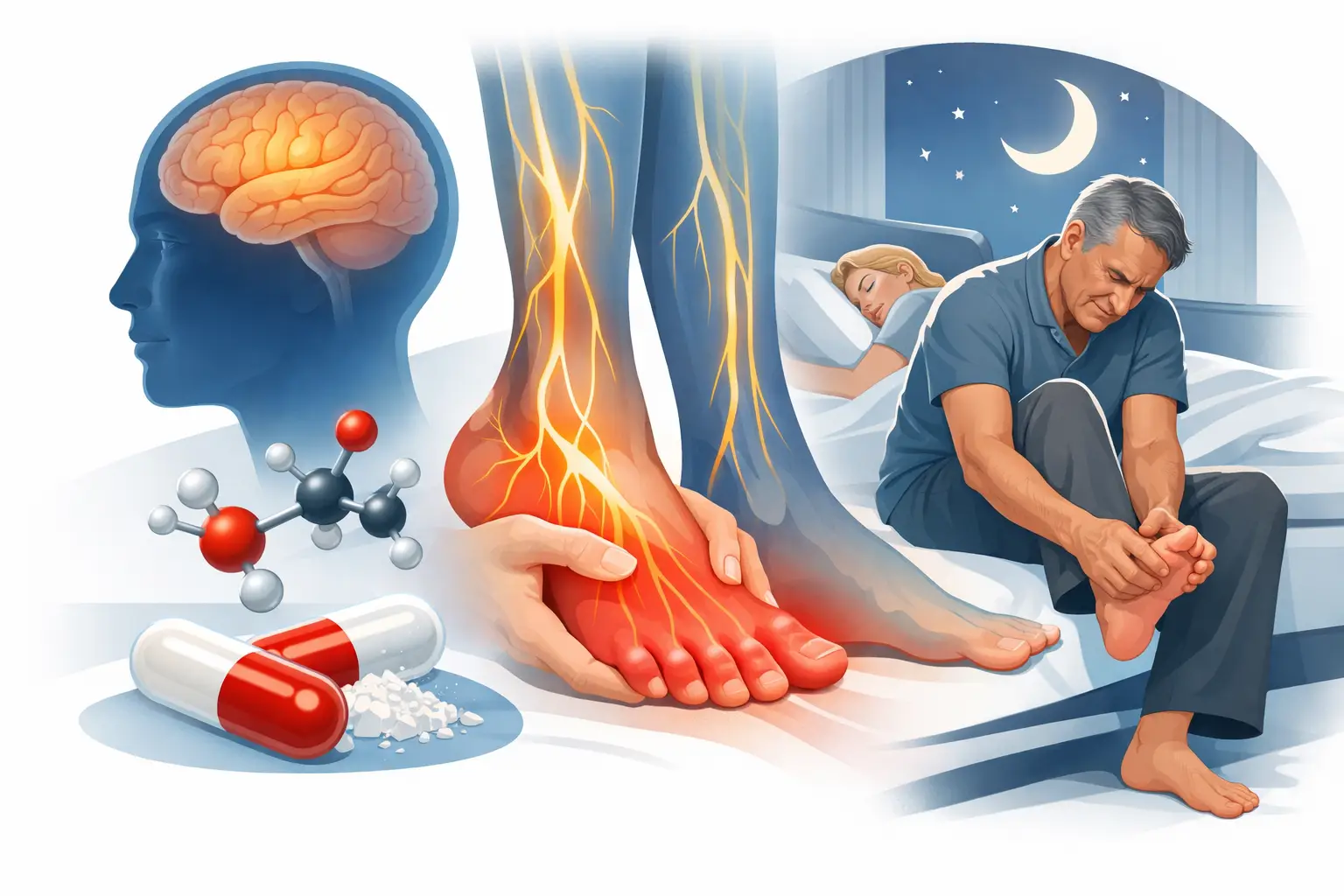
Acetyl-L-Carnitine may help some people with neuropathy symptoms, especially painful diabetic peripheral neuropathy, but evidence is mixed and it is not a cure or guaranteed nerve-regeneration treatment. People with chemotherapy-induced neuropathy, cancer history, seizures, bipolar disorder, thyroid disease, blood thinner use, or multiple medications should ask a healthcare professional before using it.
Burning feet, pins-and-needles, and numb toes often send people looking for anything that might calm irritated nerves. Acetyl-l-carnitine for neuropathy comes up often in that search, usually because it has been studied for nerve pain, chemotherapy-related nerve symptoms, and diabetic nerve problems. The real question is not whether it is popular, but whether the evidence is strong enough to make it worth discussing with your clinician.
Acetyl-L-carnitine, often abbreviated ALCAR, is a form of carnitine involved in energy production inside cells. Unlike plain L-carnitine, the acetyl form crosses into nervous system tissue more readily, which is one reason researchers have studied it for cognitive and nerve-related concerns. Supplement marketing sometimes presents this as proof that it “repairs” nerves. That goes too far. What the research suggests is more modest: ALCAR may help with certain neuropathy symptoms in some people, but results are mixed, and it is not a stand-alone answer.
What acetyl-L-carnitine is thought to do for nerves
Nerves are metabolically active tissue. They need energy, stable cell membranes, and protection from ongoing stressors such as high blood sugar, inflammation, toxin exposure, or medication side effects. ALCAR has drawn interest because it may support mitochondrial energy metabolism and may influence nerve signaling and regeneration pathways.
That sounds promising, but biological plausibility is not the same as real-world benefit. In supplement review terms, the mechanism makes sense on paper, yet outcomes matter more than theory. For adults dealing with neuropathy symptoms, the practical issue is whether it improves pain, tingling, burning, or daily function enough to justify the cost and potential side effects.
What the evidence says about acetyl-l-carnitine for neuropathy
The strongest interest in ALCAR has been in diabetic peripheral neuropathy and chemotherapy-induced peripheral neuropathy. Some clinical trials have reported improvements in pain scores and nerve fiber measures, while others have shown limited or inconsistent benefit. That mixed picture is common in neuropathy research because causes vary, symptom severity differs, and study designs are often small.
In diabetic neuropathy, a few studies have suggested that ALCAR may reduce pain intensity and possibly support nerve fiber regeneration markers over time. Those findings are encouraging, especially because diabetic neuropathy can be difficult to manage with lifestyle measures alone. Still, not every study has found a meaningful difference, and even positive trials do not show a cure or full symptom resolution.
In chemotherapy-related neuropathy, the picture is even more cautious. Some early research generated interest, but later findings raised concern that ALCAR might not help in all cases and could potentially worsen symptoms in certain chemotherapy settings. That does not mean the supplement is universally harmful. It means people with current or past cancer treatment should not assume that a nerve supplement is automatically appropriate.
For idiopathic neuropathy, meaning nerve symptoms without a clear cause, evidence is thinner. There is not enough high-quality research to say that ALCAR reliably helps this group. If someone has unexplained numbness or burning, a more important first step is often finding the reason. Vitamin B12 deficiency, diabetes, thyroid disease, medication effects, alcohol use, spinal issues, and circulation problems can overlap in ways that look similar to “neuropathy” in everyday conversation.
Where it may fit in a broader nerve-health plan
For the right person, ALCAR may be one piece of a broader strategy, not the strategy itself. That distinction matters. Neuropathy symptoms often reflect an ongoing driver. If blood sugar is uncontrolled, if B12 is low, if a medication is contributing, or if nerve compression is involved, no supplement is likely to overcome that by itself.
This is especially relevant for adults over 45, because numbness and tingling can have more than one cause at the same time. Someone may have mild diabetic nerve irritation and low-normal B12 status together. Another person may blame burning feet on circulation when the actual issue is nerve irritation, or the reverse. Good supplement decisions start with a reasonably clear understanding of what is causing the symptoms.
That is why acetyl-L-carnitine should be viewed as a possible support option, not a miracle treatment. If ALCAR is used, it should be part of a broader plan that may include medical evaluation, blood sugar management, foot care, medication review, and correction of nutrient deficiencies when present.
Dosage and timing: what studies commonly use
Many studies on ALCAR have used daily amounts in the range of 1,000 to 3,000 mg, often divided into two or three doses. That does not mean more is better. Higher doses may increase the chance of side effects without clearly improving results.
For general consumer use, the practical takeaway is that research doses are usually well above the tiny amounts sometimes found in “nerve support” blends. If a product includes a proprietary blend with no meaningful disclosed dose of ALCAR, it may not reflect the doses used in clinical trials. On the other hand, jumping to the top end of the research range without guidance is not a good idea either, especially for people taking multiple medications or managing complex health conditions.
Because ALCAR can feel somewhat stimulating for some users, earlier-in-the-day dosing may be easier than taking it late in the evening. Some people notice no immediate effect at all. That is not unusual. When benefits occur, they tend to be gradual rather than dramatic.
Side effects, interactions, and who should be cautious
ALCAR is generally considered reasonably well tolerated, but “well tolerated” does not mean risk-free. Possible side effects include nausea, stomach upset, restlessness, headache, and insomnia. Some people report a fishy body odor, which is related to carnitine metabolism.
There are also situations where extra caution makes sense. People with a history of seizures should be careful, as carnitine-related supplements may affect seizure threshold in susceptible individuals. Those with bipolar disorder or significant mood instability may also want to avoid self-prescribing stimulating supplements without medical input. If someone is being treated for thyroid disease, takes blood thinners, or uses multiple prescription medications, reviewing the plan with a pharmacist or clinician is sensible.
Cancer patients and survivors deserve special mention here. Given the uncertainty in chemotherapy-related neuropathy research, this is not a category for trial-and-error supplement use without oncology guidance.
How ALCAR compares with other nerve-support options
ALCAR is not the only supplement people consider for neuropathy symptoms. Alpha-lipoic acid, B vitamins, especially B12 when deficiency is present, and benfotiamine are common alternatives. Each has a different evidence profile.
The key difference is that ALCAR is not a substitute for correcting a true deficiency. If neuropathy symptoms are related to low vitamin B12, then replacing B12 is more direct and more important than adding ALCAR. Similarly, if high blood sugar is driving nerve irritation, glucose management remains foundational.
This is where shoppers can get misled by broad “nerve support” marketing. A product may combine ALCAR with several trendy ingredients and imply broad benefits for everyone with tingling or burning feet. In reality, the best option depends on the likely cause. A person with metformin-related B12 depletion may need a very different supplement strategy than someone with longstanding diabetic neuropathy and normal B12 status.
What to look for in a supplement product
If you and your clinician decide ALCAR is worth trying, product quality matters. Choose a supplement that clearly lists acetyl-L-carnitine as the active ingredient and provides the amount per serving in plain numbers, not buried inside a proprietary blend. Third-party testing and a straightforward label are better signs than flashy claims about “rebuilding nerves fast.”
It also helps to avoid formulas that stack too many stimulant-like ingredients into one capsule. Older adults may be more sensitive to combinations that include high-dose caffeine, multiple herbal extracts, or megadoses of B vitamins that are unnecessary. Cleaner formulas make it easier to judge tolerance and effectiveness.
A realistic way to judge whether it is helping
Neuropathy symptoms can fluctuate from day to day, which makes supplement testing tricky. If you try ALCAR, define what improvement would actually look like before starting. Maybe it is less burning at night, fewer episodes of stabbing pain, better walking tolerance, or improved sleep due to fewer symptoms.
Then give it a fair but limited trial period, often several weeks rather than several days, while keeping other variables as steady as possible. If symptoms are worsening, if side effects appear, or if there is no meaningful change after a reasonable trial, that is useful information. “I hoped it would work” is not the same as “it worked.”
Just as important, seek medical review for red flags. Progressive weakness, sudden symptom changes, one-sided symptoms, falls, ulcers, or significant balance problems deserve professional evaluation rather than supplement experimentation.
Is acetyl-l-carnitine for neuropathy worth considering?
For some adults, yes – but cautiously and with realistic expectations. The evidence suggests ALCAR may help certain neuropathy symptoms, particularly in some cases of diabetic neuropathy, yet the research is not strong enough to treat it as a dependable answer for every form of nerve pain or numbness. It is better viewed as a potentially useful option than a proven fix.
The smartest next step is not to chase the boldest label claim. It is to match the supplement decision to the likely cause of the symptoms, review safety issues, and use a product and dose that resemble what has actually been studied. For people living with persistent tingling, burning, or numbness, that careful approach is usually more valuable than any promise on the front of a bottle.
Frequently Asked Questions
Does acetyl-L-carnitine help neuropathy?
Acetyl-L-carnitine may help some people with neuropathy symptoms, especially pain related to diabetic peripheral neuropathy, but results are mixed. It should be viewed as a possible support option, not a cure or stand-alone treatment.
How long does acetyl-L-carnitine take to work for neuropathy?
When benefit occurs, it is usually gradual rather than immediate. Many people judge response over several weeks, while tracking symptoms such as burning pain, night discomfort, walking tolerance, or sleep quality.
What dose of acetyl-L-carnitine is used for neuropathy?
Many neuropathy studies have used about 1,000 to 3,000 mg per day, often divided into two or three doses. This does not mean everyone should use that range. Dose decisions should account for medical history, medications, tolerance, and clinician guidance.
Is acetyl-L-carnitine safe for diabetic neuropathy?
Acetyl-L-carnitine appears reasonably tolerated for many adults, and some studies in diabetic neuropathy are encouraging. However, it should not replace blood sugar management, foot care, medication review, or evaluation for vitamin deficiencies such as B12.
Should cancer patients use acetyl-L-carnitine for chemotherapy neuropathy?
Cancer patients and survivors should not use acetyl-L-carnitine for chemotherapy-related neuropathy without oncology guidance. Some research has raised concern that it may worsen chemotherapy-induced neuropathy in certain settings.
Can acetyl-L-carnitine repair nerves?
Supplement marketing sometimes implies that ALCAR repairs nerves, but that overstates the evidence. Some research suggests possible effects on pain and nerve-related measures, but it has not been proven to reliably reverse nerve damage for everyone.
What are the side effects of acetyl-L-carnitine?
Possible side effects include nausea, stomach upset, restlessness, headache, insomnia, and a fishy body odor. People with seizure history, bipolar disorder, thyroid disease, blood thinner use, or multiple medications should ask a clinician before using it.
Is acetyl-L-carnitine better than vitamin B12 for neuropathy?
Not if neuropathy symptoms are related to vitamin B12 deficiency. In that case, correcting B12 status is more direct and important. ALCAR and B12 address different issues, so the right choice depends on the likely cause of symptoms.
Medical Disclaimer:
This content is for educational purposes only and does not diagnose, treat, cure, or replace professional medical care. Vitamin B12 deficiency, neuropathy symptoms, nerve pain, numbness, tingling, burning feet, balance problems, fatigue, and related health concerns can have many possible causes, including diabetes, vitamin deficiencies, medication effects, alcohol exposure, autoimmune conditions, infections, circulation problems, gastrointestinal or absorption issues, spinal conditions, or nerve compression.
Information about supplements, nutrition, lifestyle, sleep, movement, testing, or symptom support should not be used as a substitute for evaluation by a qualified healthcare professional. Supplements may not be appropriate for everyone and may interact with medications or medical conditions.
New, worsening, spreading, severe, one-sided, or unexplained symptoms — including numbness, weakness, balance problems, falls, wounds, foot ulcers, skin color changes, severe pain, chest pain, shortness of breath, bowel or bladder changes, facial drooping, trouble speaking, confusion, or sudden neurologic symptoms — should be discussed with a qualified healthcare professional or emergency service promptly.

- Can Low B12 Cause Dizziness? - July 9, 2026
- B12 Deficiency and Cracked Corners of the Mouth - July 9, 2026
- Can Low B12 Cause Dry Mouth? - July 8, 2026