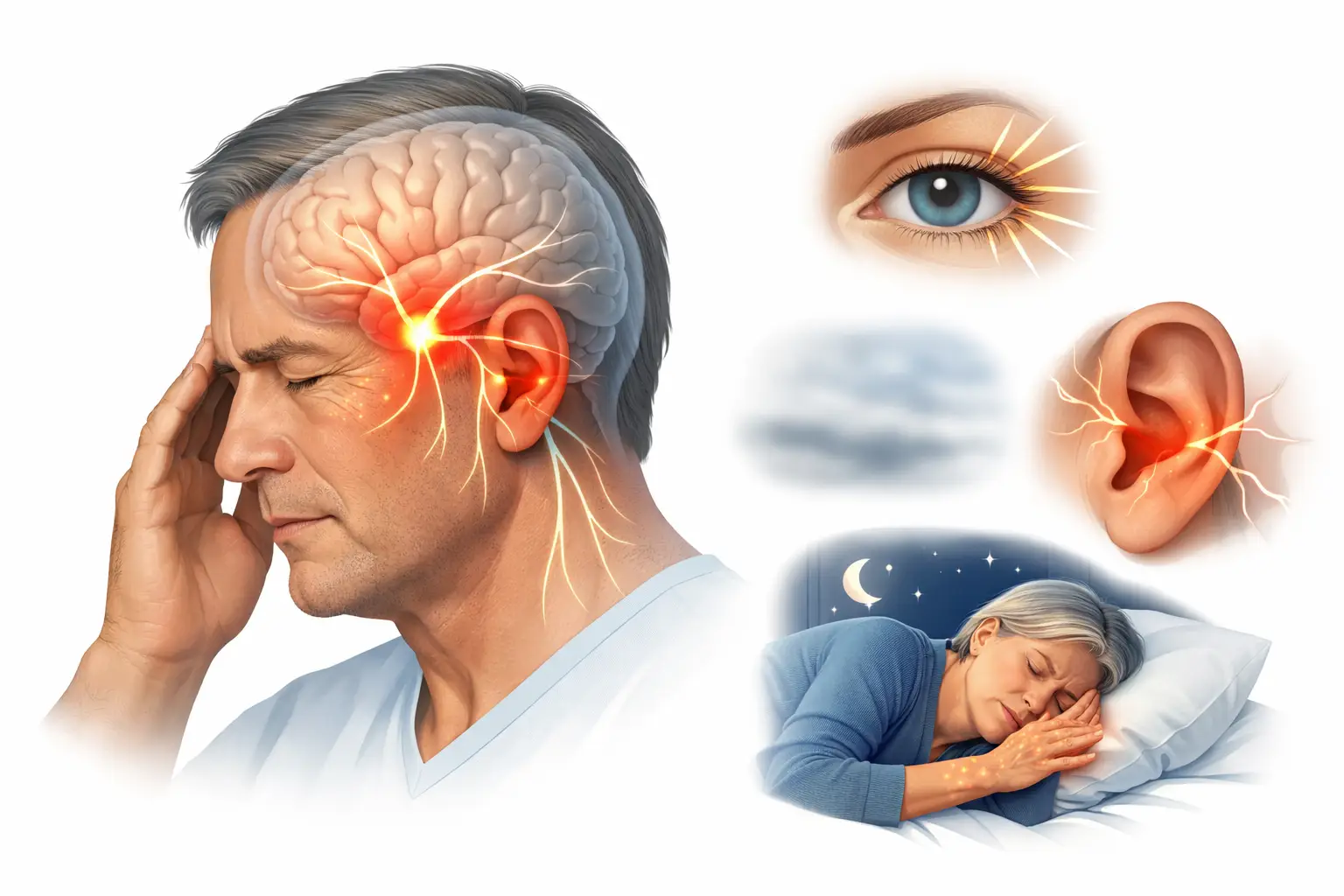
Cranial neuropathy means one or more cranial nerves are not working normally. Symptoms may include facial weakness, double vision, drooping eyelid, facial numbness, facial pain, hearing changes, dizziness, trouble swallowing, hoarseness, tongue weakness, or balance problems. Causes can include diabetes-related nerve injury, inflammation, infection, trauma, autoimmune disease, vitamin B12 deficiency, tumors, aneurysm, stroke, or other structural problems. New facial drooping, sudden double vision, trouble swallowing, severe headache, or rapidly worsening symptoms should be medically evaluated promptly rather than treated with supplements alone.
A drooping face, sudden double vision, trouble swallowing, or numbness that seems to involve the eye, tongue, or jaw can feel very different from the foot tingling most people associate with nerve problems. Cranial neuropathy refers to damage or dysfunction affecting one or more of the cranial nerves – the nerves that control facial movement, eye movement, hearing, balance, swallowing, and parts of sensation in the face. Because these nerves do such specific jobs, symptoms often appear in a clear pattern rather than as vague whole-body numbness.
For adults over 45, that pattern matters. Cranial nerve symptoms can sometimes stem from relatively manageable issues such as inflammation, diabetes-related nerve injury, or nutritional deficiency, but they can also point to conditions that need prompt medical evaluation. The key is not to guess based on a single symptom, especially if the change was sudden.
What cranial neuropathy means
The brain connects to 12 pairs of cranial nerves. Each one has a specific role. Some move the eyes. Others control facial expression, hearing, taste, swallowing, or shoulder movement. When one of these nerves stops working properly, the result is called cranial neuropathy.
For a medical overview of cranial nerve functions and symptoms, see the Merck Manual overview of the cranial nerves.
This is not one disease. It is a descriptive term. In practice, that means the real question is not only whether a cranial nerve is involved, but which nerve, how quickly symptoms started, and what may be affecting it.
A person with trigeminal nerve involvement may notice facial pain or numbness. Someone with facial nerve involvement may develop one-sided facial weakness. If the oculomotor, trochlear, or abducens nerves are involved, eye movement problems and double vision become more likely. The pattern helps clinicians narrow the cause.
Cranial Neuropathy vs Peripheral Neuropathy
Cranial neuropathy and peripheral neuropathy both involve nerve dysfunction, but they usually affect different nerve groups and create different symptom patterns. Cranial neuropathy often involves the face, eyes, hearing, balance, swallowing, or speech, while peripheral neuropathy more often affects the feet, legs, hands, or arms.
| Feature | Cranial Neuropathy | Peripheral Neuropathy | Why It Matters |
|---|---|---|---|
| Main area | Face, eyes, hearing, balance, swallowing, speech, tongue, or jaw | Feet, legs, hands, arms, and sometimes autonomic nerves | The body area involved helps guide which nerve system is being evaluated. |
| Nerves involved | Cranial nerves connected to the brain and brainstem | Peripheral nerves outside the brain and spinal cord | Different nerves often require different exams, tests, and urgency decisions. |
| Common pattern | One cranial nerve or several cranial nerves, often with a specific function affected | Stocking-glove, focal, multifocal, symmetric, asymmetric, or cause-dependent | A drooping face or double vision is different from gradual burning in both feet. |
| Symptoms | Facial weakness, double vision, drooping eyelid, facial numbness, hearing changes, balance changes, hoarseness, swallowing problems | Burning, tingling, numbness, weakness, reduced sensation, balance problems, pins-and-needles sensations | Symptom location and function help separate cranial nerve involvement from broader peripheral neuropathy. |
| Evaluation | Cranial nerve exam, eye exam, hearing or balance review, swallowing assessment, imaging or labs when needed | Blood tests, neurologic exam, medication review, EMG/NCS, and cause-specific workup | Cranial symptoms may require imaging or urgent assessment sooner than routine foot tingling. |
| B12 relevance | Considered when broader neurologic symptoms, dietary risk, absorption issues, anemia signs, or deficiency clues exist | More commonly reviewed in numbness, tingling, burning feet, gait changes, and neuropathy workups | B12 can matter, but it should not be assumed to explain new cranial nerve symptoms without evaluation. |
Clinical note: New facial drooping, double vision, swallowing trouble, slurred speech, severe headache, or rapidly worsening balance problems should be assessed promptly. These symptoms should not be treated as routine peripheral neuropathy or managed with supplements alone.
Common cranial neuropathy symptoms
Symptoms depend on the affected nerve, but a few presentations come up often. Double vision is a common warning sign when the nerves controlling the eye muscles are affected. One eyelid may droop, or the eye may not move normally in one direction.
Facial weakness is another common presentation. People sometimes first notice that one side of the mouth does not move the same way, or that blinking feels uneven. In other cases, the symptom is not weakness but altered sensation – facial numbness, burning, sharp pain, or a strange crawling feeling.
Hearing changes, ringing in the ear, dizziness, and balance trouble can happen when the vestibulocochlear nerve is involved. Difficulty swallowing, hoarseness, tongue weakness, or reduced gag reflex can occur when lower cranial nerves are affected.
Loss of smell or taste can involve cranial pathways too, although these symptoms are less specific and can have many explanations. The bigger point is that cranial nerve symptoms usually match the function of one nerve or a small group of nearby nerves.
Cranial Neuropathy Symptoms by Nerve Pattern
Cranial neuropathy symptoms often follow the job of the affected nerve. This pattern can help clinicians decide whether symptoms fit eye movement, facial movement, facial sensation, hearing, balance, swallowing, or tongue involvement.
| Cranial Nerve Area | Possible Symptoms | Pattern Clue | Why It Matters |
|---|---|---|---|
| Eye movement nerves | Double vision, drooping eyelid, trouble moving one eye, eye misalignment | Symptoms may change depending on gaze direction. | New double vision may need urgent evaluation, especially if sudden or painful. |
| Facial nerve | One-sided facial weakness, uneven smile, trouble closing one eye, drooling | Weakness often affects facial expression on one side. | Sudden facial drooping can mimic stroke and should be assessed promptly. |
| Trigeminal nerve | Facial numbness, facial pain, jaw sensory changes, altered chewing sensation | Symptoms may follow cheek, jaw, forehead, or eye-area sensation. | Facial numbness can come from local nerve, brainstem, dental, inflammatory, or structural causes. |
| Hearing and balance nerve | Hearing changes, ringing, dizziness, vertigo, balance trouble | Symptoms may involve both hearing and equilibrium. | Persistent or sudden hearing and balance changes may need focused evaluation. |
| Lower cranial nerves | Trouble swallowing, hoarseness, choking, reduced gag reflex, tongue weakness | Symptoms affect speech, swallowing, voice, or tongue movement. | Swallowing or airway-related symptoms deserve timely medical attention. |
Causes of cranial neuropathy
Cranial neuropathy has a broad list of possible causes, and the cause often matters more than the label itself. Diabetes is one well-known cause, particularly when a person develops sudden double vision from an eye movement nerve palsy. Microvascular ischemia – reduced blood flow to tiny vessels supplying the nerve – is one mechanism behind this.
Inflammation and infection are also important. Viral infections can affect facial nerve function, and other infections may inflame or compress cranial nerves. Autoimmune conditions can play a role as well, especially when more than one nerve is involved or symptoms keep progressing.
Structural problems matter too. A tumor, aneurysm, or other mass can compress a cranial nerve along its path. That possibility is one reason new eye movement problems, facial weakness, or swallowing difficulty should not be self-diagnosed.
Trauma can injure cranial nerves directly. So can prior surgery in the head and neck region. In some cases, causes include increased intracranial pressure, stroke, or disorders affecting the brainstem.
Nutritional factors are not the most common cause of cranial neuropathy, but they belong in the discussion. Vitamin B12 deficiency is better known for causing peripheral nerve symptoms such as numbness, tingling, gait changes, and cognitive effects, yet deficiency can also contribute to broader neurologic dysfunction. For readers already exploring nerve health, that is one reason lab assessment may be worthwhile when symptoms and risk factors line up.
Which deficiencies may matter
For a site focused on evidence-informed supplement education, this is where caution is important. Deficiencies can contribute to nerve dysfunction, but supplements are not a substitute for diagnosis, and they should not be viewed as a direct fix for cranial nerve symptoms.
Vitamin B12 is the most relevant deficiency to review when nerve complaints are part of the picture. Low B12 becomes more common with age, reduced stomach acid, certain medications, restrictive diets, gastrointestinal disorders, and malabsorption. Symptoms can include numbness, tingling, weakness, balance problems, memory changes, and fatigue. While cranial neuropathy has many causes besides B12 deficiency, checking B12 status may be reasonable in a broader neurologic workup.
Other nutrients may matter depending on the person. Folate, vitamin B6, copper, and vitamin E can all affect neurologic function when severely deficient or, in the case of B6, when taken in excessive amounts for too long. That last point is easy to miss. Some over-the-counter nerve formulas contain high doses of vitamin B6, and too much can itself contribute to neuropathy symptoms.
That is why better supplement decisions start with the question, “Do I actually need this nutrient, and at what dose?” not “What is the strongest formula I can buy?”
How doctors evaluate cranial neuropathy
Evaluation starts with the symptom pattern. Which side is affected? Did symptoms begin suddenly or gradually? Is only one cranial nerve involved, or several? Are there headaches, weakness elsewhere, speech changes, or coordination problems?
A neurological exam usually follows. Clinicians test eye movements, facial symmetry, sensation, hearing, palate movement, tongue strength, and reflexes. Depending on the findings, imaging such as MRI or CT may be needed to look for compression, stroke, inflammation, or other structural causes.
Blood work may be used to look for diabetes, infection, inflammatory markers, autoimmune clues, or nutritional deficiencies. In selected cases, more specialized testing is considered. The exact workup depends on the nerve involved and the urgency of the presentation.
This is one of the clearest examples of why self-treatment has limits. A burning sensation in the feet may lead someone to browse general nerve-support supplements, but sudden facial droop or new double vision belongs in a different category.
Tests That May Help Evaluate Cranial Neuropathy
Testing depends on which cranial nerve appears affected, how quickly symptoms began, and whether there are warning signs such as headache, weakness, swallowing problems, or multiple nerves involved.
| Evaluation Step | What It May Help Assess | Important Limitation |
|---|---|---|
| Cranial nerve exam | Eye movement, facial symmetry, facial sensation, hearing, palate movement, tongue strength, speech, and swallowing clues | Exam findings often need imaging or lab context. |
| MRI or CT imaging | Stroke, tumor, aneurysm, inflammation, compression, brainstem or skull-base causes | Not every case needs imaging, but sudden or concerning symptoms may. |
| Blood sugar testing | Diabetes or microvascular nerve injury risk | Normal glucose testing does not rule out structural or inflammatory causes. |
| Inflammatory, infectious, or autoimmune labs | Possible systemic inflammation, infection, or autoimmune contributors | Test selection depends on symptoms, exposure history, and exam findings. |
| Vitamin B12 and related nutrient testing | Potential nutritional contributors to neurologic symptoms | B12 deficiency is not the default explanation for cranial nerve symptoms. |
| Specialist evaluation | Neurology, ophthalmology, ENT, or swallowing evaluation depending on symptoms | The right specialist depends on the nerve and symptom pattern. |
When symptoms need urgent attention
Some cranial nerve symptoms should be treated as time-sensitive. Sudden facial drooping, especially with arm weakness, speech trouble, or confusion, can suggest stroke. Sudden double vision, severe headache, rapidly worsening swallowing problems, or new hoarseness with choking should also prompt urgent medical care.
Progressive symptoms deserve attention too, even if they are not dramatic at first. A slowly worsening change in hearing, persistent facial numbness, or gradual eye movement problems can still signal an underlying problem that should not be ignored.
A practical rule is simple: if the symptom involves the face, eyes, swallowing, or balance and is new, unusual, or worsening, start with medical assessment before thinking about supplements.
Research Snapshot: Cranial Neuropathy
Medical education sources describe cranial nerve disorders by the function of the affected nerve. That is why symptom pattern, timing, and associated neurologic signs are central to evaluation.
| Research Finding | Clinical Relevance |
|---|---|
| Cranial nerve symptoms depend on which nerve is affected | Vision, eye movement, facial sensation, facial expression, hearing, balance, swallowing, voice, and tongue movement can all point to different nerves. |
| Causes can be local or systemic | Tumors, inflammation, trauma, systemic disease, diabetes-related microvascular injury, infection, stroke, and structural compression may all be considered. |
| Sudden cranial nerve symptoms can be time-sensitive | Sudden facial droop, double vision, swallowing difficulty, severe headache, or one-sided weakness may require urgent assessment. |
| Nutritional deficiencies are part of the broader neurologic discussion | B12 deficiency can cause neurologic symptoms, but it should not be assumed to be the cause of new cranial nerve deficits without evaluation. |
| Pattern recognition guides testing | The affected nerve, number of nerves involved, speed of onset, pain, systemic symptoms, and neurologic exam findings shape the workup. |
Editorial note: This snapshot summarizes broad medical education themes. It is not intended to diagnose cranial neuropathy, identify the affected nerve, or replace evaluation by a qualified healthcare professional.
Where supplements fit – and where they do not
Supplements may have a supportive role when a documented deficiency, poor dietary intake, or increased nutritional need is part of the picture. They are most useful when chosen to correct a real gap rather than as a catch-all response to unexplained neurologic symptoms.
For example, a person with confirmed low vitamin B12 may need dietary counseling or supplementation, sometimes in oral form and sometimes in a clinician-directed form depending on the cause of deficiency. But that is different from assuming any facial numbness or eye symptom is caused by low B12.
For cautious consumers, label quality and dosing matter. Look for products with transparent ingredient amounts, reasonable serving sizes, and forms that match the evidence rather than flashy marketing. Avoid mega-dose formulas unless a clinician has identified a reason for them. More is not automatically better, particularly with nutrients that can cause problems when overused.
A safer approach is to identify the likely cause first, then decide whether a supplement has a rational place in the plan.
Important: Sudden facial drooping, new double vision, trouble swallowing, slurred speech, severe headache, confusion, one-sided weakness, or rapidly worsening balance problems should not be handled as routine nerve discomfort.
These symptoms may involve stroke, aneurysm, brainstem disease, infection, inflammation, or another urgent neurologic condition. Cranial neuropathy is a pattern, not a final diagnosis, so new or severe symptoms deserve prompt medical assessment.
Practical questions to ask your clinician
If cranial nerve symptoms are being evaluated, it helps to ask focused questions. Which cranial nerve seems affected? What causes are most likely in my case? Do I need imaging? Should I be checked for diabetes, vitamin B12 deficiency, or other nutrient issues? Are any of my medications relevant? If a supplement is being considered, what dose makes sense and for how long?
These questions keep the conversation grounded in evidence. They also reduce the chance of spending money on products that do not match the problem.
Cranial neuropathy is a useful term because it points to a pattern, but the real value lies in finding the reason behind that pattern. For readers dealing with strange facial sensations, visual changes, or swallowing trouble, the smartest next step is usually not a supplement aisle decision – it is getting the right diagnosis first.
If you’re trying to understand what may be behind numbness, tingling, burning feet, or nerve pain, our guide to peripheral neuropathy causes and relief explains the most common causes and what may help support nerve health.
Frequently Asked Questions About Cranial Neuropathy
These answers are for education only and should not replace medical evaluation.
What is cranial neuropathy?
Cranial neuropathy means one or more cranial nerves are not working normally. These nerves control functions such as eye movement, facial movement, facial sensation, hearing, balance, swallowing, voice, and tongue movement.
What are common symptoms of cranial neuropathy?
Symptoms may include double vision, drooping eyelid, facial weakness, facial numbness, facial pain, hearing changes, dizziness, balance trouble, hoarseness, swallowing difficulty, tongue weakness, or changes in taste or smell.
Is cranial neuropathy serious?
It can be. Some causes are relatively manageable, but sudden or progressive cranial nerve symptoms can be related to stroke, aneurysm, infection, inflammation, tumor, or other conditions that need timely evaluation.
Can diabetes cause cranial neuropathy?
Diabetes can contribute to cranial nerve palsies, especially eye movement nerve problems related to microvascular nerve injury. However, new double vision or eye movement symptoms still need medical evaluation to rule out other causes.
Can B12 deficiency cause cranial neuropathy?
Vitamin B12 deficiency can cause neurologic symptoms, including numbness, tingling, weakness, gait changes, cognitive symptoms, and fatigue. It may be checked as part of a broader workup, but it should not be assumed to be the cause of cranial nerve symptoms without evaluation.
What tests are used for cranial neuropathy?
Evaluation may include a cranial nerve exam, eye movement testing, facial sensation and strength testing, hearing or swallowing assessment, blood work, and imaging such as MRI or CT depending on the symptom pattern and urgency.
When should cranial nerve symptoms be urgent?
Urgent evaluation is important for sudden facial drooping, double vision, severe headache, trouble swallowing, slurred speech, confusion, one-sided weakness, fainting, or rapidly worsening balance problems.
Should I take nerve supplements for cranial neuropathy?
Supplements should not be the first response to new cranial nerve symptoms. They may be considered when a deficiency or nutritional gap is documented or likely, but diagnosis and safety evaluation should come first.
Medical Disclaimer:
This article is for educational purposes only and does not diagnose, treat, or replace medical care. Cranial neuropathy symptoms can have multiple causes, including neurologic, infectious, metabolic, inflammatory, traumatic, vascular, or structural conditions. Sudden or progressive facial weakness, double vision, vision loss, sudden hearing loss, severe headache, trouble speaking, trouble swallowing, confusion, one-sided weakness, new severe balance problems, fever with neurologic symptoms, recent head trauma, or symptoms affecting breathing or choking should be discussed with a qualified healthcare professional or emergency service promptly.

- Can Low B12 Cause Dizziness? - July 9, 2026
- B12 Deficiency and Cracked Corners of the Mouth - July 9, 2026
- Can Low B12 Cause Dry Mouth? - July 8, 2026