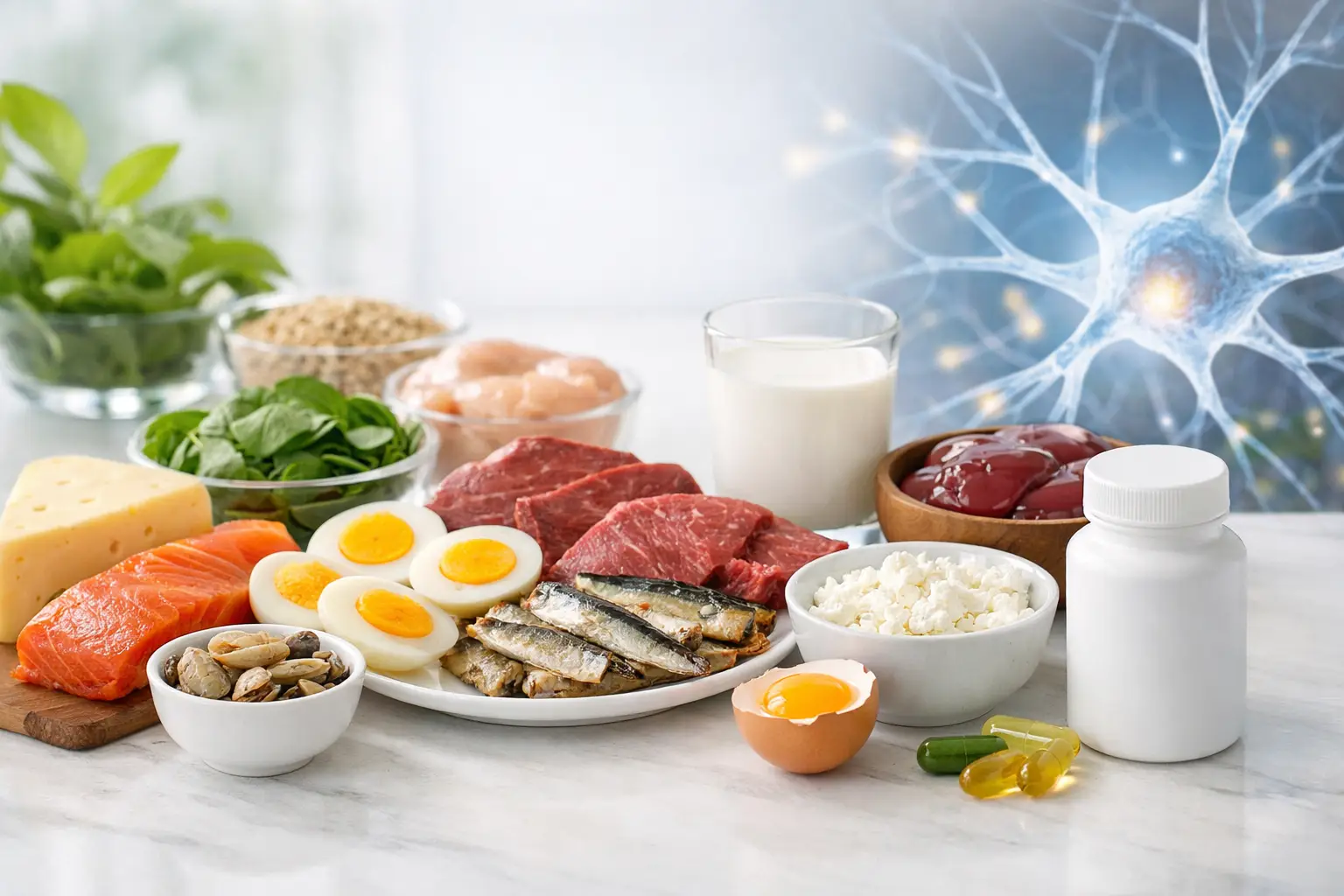
Reviewed for medical accuracy and based on current nutritional research.
Peripheral neuropathy often starts subtly.
A little tingling in the toes.
Pins-and-needles in the hands.
Burning feet at night that seem worse after lying down.
For some people, these symptoms gradually become impossible to ignore.
That’s one reason vitamin B12 receives so much attention in conversations about nerve health. Low B12 levels can affect the nervous system, interfere with myelin maintenance, and contribute to numbness, weakness, balance problems, and abnormal sensations in the feet and hands.
But here’s the part many articles oversimplify:
Eating more B12 is not always the same as absorbing more B12.
That distinction matters — especially for older adults, people taking acid-reducing medications, individuals with digestive disorders, and those following restrictive diets.
If you’ve been searching for the best B12-rich foods for peripheral neuropathy, the real goal is not simply increasing intake. It’s understanding which foods are most useful, when diet may help, and when persistent symptoms deserve a more clinical evaluation.
Why Vitamin B12 Matters for Nerve Health
Vitamin B12 plays a critical role in:
- Maintaining the myelin sheath that protects nerves
- Supporting healthy nerve signaling
- Red blood cell formation
- DNA synthesis
- Cognitive and neurological function
When B12 levels drop too low, nerve-related symptoms may appear gradually.
Common signs include:
- Tingling in the feet or hands
- Burning sensations
- Numbness
- Weakness
- Poor balance
- Fatigue
- Brain fog or memory changes
Not every case of peripheral neuropathy is caused by vitamin B12 deficiency. Diabetes, alcohol overuse, autoimmune conditions, chemotherapy, spinal problems, and certain medications can also damage peripheral nerves.
Still, B12 deficiency is one of the most clinically relevant nutritional causes because it can often be identified through blood testing and addressed relatively early.
According to the National Institutes of Health (NIH), vitamin B12 is essential for keeping the body’s nerve and blood cells healthy. Research published through PubMed has also linked B12 deficiency with neurological dysfunction and peripheral nerve degeneration, particularly in older adults and individuals with impaired absorption.
Top 10 B12-Rich Foods for Peripheral Neuropathy
B12 Content in Common Foods for Peripheral Neuropathy (Per 100g)
| Food | Vitamin B12 | % Daily Value | Best For | Neuropathy Benefit | Best for Adults 50+ |
|---|---|---|---|---|---|
| Clams | 84 mcg | 3500%+ | Rapid B12 replenishment | High-potency support for severe deficiency risk | Yes |
| Beef Liver | 70 mcg | 2900%+ | Intensive nutritional support | Extremely rich in B12 and iron for nerve health | Moderate |
| Sardines | 8.9 mcg | 370% | Weekly maintenance | Combines B12 with omega-3 support | Yes |
| Trout | 4.5 mcg | 190% | Balanced nerve-support diet | Supports neurological and cardiovascular health | Yes |
| Salmon | 3.2 mcg | 130% | Long-term consistency | Provides B12 alongside anti-inflammatory fats | Yes |
| Beef | 2.6 mcg | 110% | Everyday meals | Helps maintain steady B12 intake | Moderate |
| Tuna | 2.5 mcg | 100% | Convenient meal planning | Simple way to increase B12 intake | Moderate |
| Eggs | 1.1 mcg | 45% | Easy daily intake | Supports baseline neurological function | Yes |
| Plain Yogurt | 0.9 mcg | 40% | Digestive-friendly protein | Useful for consistent daily nutrition | Yes |
| Milk | 0.5 mcg | 20% | Baseline B12 support | Helps reinforce daily intake habits | Moderate |
Important: Even highly nutritious foods may not fully correct vitamin B12 deficiency if absorption is impaired due to aging, digestive conditions, low stomach acid, or certain medications.
Note: Daily values are based on an average adult requirement of 2.4 mcg of vitamin B12.
1. Clams
Clams are one of the most concentrated natural sources of vitamin B12 available.
A relatively small serving can provide several times the recommended daily intake, making clams especially useful for people trying to increase B12 intake through food quickly.
They also contain:
- Iron
- Protein
- Selenium
- Zinc
That combination may be helpful when fatigue overlaps with nerve-related symptoms.
Best for:
- Rapid dietary B12 intake
- Severe intake gaps
- High-density nutrition
Important consideration:
Prepared clam products can be extremely high in sodium. Fresh or minimally processed options are generally preferable.
2. Beef Liver
Beef liver is exceptionally rich in vitamin B12 and remains one of the most nutrient-dense foods overall.
It also provides:
- Vitamin A
- Copper
- Riboflavin
- Iron
- Folate
For individuals with low dietary intake, liver can dramatically increase B12 exposure in small portions.
Best for:
- Maximum B12 concentration
- Nutrient density
- Occasional “repletion-focused” meals
Important consideration:
Liver is not ideal for everyone. Frequent large servings may provide excessive vitamin A or copper for certain individuals.
3. Sardines
Sardines combine vitamin B12 with omega-3 fatty acids, protein, calcium, and selenium.
That combination is especially interesting because peripheral neuropathy often overlaps with broader metabolic and cardiovascular concerns.
Unlike many “superfoods,” sardines are also practical:
- Affordable
- Shelf-stable
- Easy to store
- Easy to portion
Best for:
- Weekly maintenance intake
- Heart-friendly eating patterns
- Convenient B12 support
Important consideration:
Taste preference is the main barrier. Some people simply struggle with long-term adherence.
4. Salmon
Salmon is one of the most sustainable long-term B12 foods because it balances:
- Moderate-to-high B12 content
- Protein
- Healthy fats
- Accessibility
It may not contain as much B12 as clams or liver, but consistency often matters more than nutritional extremes.
Best for:
- Long-term dietary consistency
- Anti-inflammatory eating patterns
- Balanced nutrition
Important consideration:
Wild and farmed salmon both contain vitamin B12. For most readers, the practical differences involve price and availability more than nerve-health relevance.
5. Trout
Trout is frequently overlooked despite being naturally rich in vitamin B12.
It also supplies:
- Selenium
- Protein
- Omega-3 fats
For people who want variety beyond salmon or tuna, trout is an excellent rotation option.
Best for:
- Dietary variety
- Moderate weekly B12 support
- Lean protein intake
Important consideration:
Preparation matters. Grilled or baked trout is generally more supportive of overall health goals than heavily breaded versions.
6. Tuna
Tuna remains one of the easiest ways to increase B12 intake without dramatically changing eating habits.
Canned tuna is:
- Widely available
- Convenient
- Affordable
- High in protein
Best for:
- Simplicity
- Busy schedules
- Convenient meal planning
Important consideration:
Some tuna species contain higher mercury levels. Regular intake should be balanced with lower-mercury seafood options.
Signs Food Alone May Not Be Enough
This is where many neuropathy articles stop too early.
A food may contain large amounts of vitamin B12 on paper… yet still fail to correct deficiency if absorption is impaired.
Vitamin B12 absorption depends on:
- Stomach acid
- Intrinsic factor
- Proper intestinal function
If any step breaks down, dietary intake may not fully translate into usable B12.
This becomes more common in:
- Adults over 50
- People taking proton pump inhibitors
- Long-term metformin users
- Individuals with gastritis
- Pernicious anemia
- Crohn’s disease
- Celiac disease
- Gastrointestinal surgery history
That’s why some people continue experiencing tingling, numbness, or burning sensations despite eating B12-rich foods regularly.
7. Beef
Lean beef is a dependable everyday source of vitamin B12 and tends to be more realistic for long-term use than organ meats.
It also contributes:
- Zinc
- Iron
- Protein
Best for:
- Consistent intake
- Everyday meals
- Protein support
Important consideration:
Leaner cuts are generally preferable for people already managing cardiovascular risk factors.
8. Yogurt
Plain yogurt provides moderate vitamin B12 along with protein and beneficial bacterial cultures.
For some people, dairy products are easier to include consistently than seafood or red meat.
Best for:
- Daily intake habits
- Breakfast routines
- Digestive-friendly protein
Important consideration:
Sweetened yogurts often contain excessive added sugar, which may work against broader metabolic health goals.
9. Milk
Milk is not the highest B12 source on this list, but it contributes steady baseline intake.
That consistency matters more than many people realize.
Best for:
- Mild intake gaps
- Daily reinforcement
- Easy dietary integration
Important consideration:
Plant-based milks are often fortified rather than naturally rich in vitamin B12.
10. Eggs
Eggs contain vitamin B12 primarily in the yolk and remain one of the easiest foods to incorporate regularly.
They also provide:
- Protein
- Choline
- Selenium
Best for:
- Simple meal planning
- Breakfast-based intake
- Moderate daily support
Important consideration:
Eggs help support intake but are rarely enough to correct significant deficiency by themselves.
Absorption Changes the Equation
This is where nutrient intake and real-world absorption become very different things. B12 from food must be released in the stomach and then absorbed through a process involving intrinsic factor and the small intestine. If any step is impaired, a B12-rich diet may underperform.
Food alone may be less effective if you are over 50, follow a vegan diet, have a history of gastritis, inflammatory bowel disease, gastrointestinal surgery, or pernicious anemia, or take long-term acid-lowering medication. In these situations, consumers often compare food-first strategies with encapsulated B12 products because convenience and dose consistency become more important.
That does not mean everyone with tingling needs a supplement. It means persistent symptoms deserve proper evaluation, especially if fatigue, memory changes, pale skin, or balance issues are also present.
Which B12 Foods Are Most Useful in Real Life?
If the goal is sheer vitamin B12 concentration:
- Clams
- Beef liver
stand out immediately.
But in everyday life, sustainability matters more than perfection.
For many adults, a more practical pattern looks like:
- Eggs or yogurt several times weekly
- Fish once or twice per week
- Lean beef occasionally
- Consistent protein intake overall
That approach often works better than relying on one extremely high-B12 meal once in a while.
When Neuropathy Symptoms Should Not Be Ignored
Persistent nerve symptoms deserve proper medical attention — especially when accompanied by:
- Balance problems
- Muscle weakness
- Memory changes
- Severe fatigue
- Pale skin
- Difficulty walking
While nutritional deficiencies are important, not all neuropathy is caused by vitamin B12 deficiency.
Peripheral nerve symptoms can also be associated with:
- Diabetes
- Thyroid disease
- Autoimmune disorders
- Medication side effects
- Alcohol-related nerve damage
- Spinal compression
- Circulation problems
If symptoms continue despite dietary improvements, testing vitamin B12 levels — and sometimes methylmalonic acid or homocysteine — may help clarify whether deficiency is contributing.
Food vs Supplements for Peripheral Neuropathy
Diet is the foundation.
But in some cases, supplements become more practical than food alone.
This is especially true when:
- Absorption is impaired
- Intake is chronically low
- Symptoms are persistent
- Animal foods are limited
The goal is not choosing between “food” and “supplements” as opposing strategies.
The real question is:
Is your body absorbing enough vitamin B12 to support healthy nerve function?
For some individuals, a clinically appropriate B12 supplement may provide more reliable dose consistency than food alone.
You can also explore:
- alpha lipoic acid vs vitamin B12 for neuropathy
- best supplements for neuropathy
- signs of low B12 nerve damage
- why neuropathy gets worse at night
to better understand how nutritional deficiencies interact with nerve symptoms.
Frequently Asked Questions
Can low B12 cause burning feet at night?
Yes. Vitamin B12 deficiency can contribute to burning sensations, tingling, and numbness in the feet. Some people notice symptoms become more noticeable at night due to reduced distractions and changes in circulation or nerve sensitivity.
Are eggs enough to raise vitamin B12 levels?
Eggs help support daily intake, but they usually do not provide enough B12 alone to correct significant deficiency.
What blocks vitamin B12 absorption?
Common causes include aging, low stomach acid, pernicious anemia, gastrointestinal disorders, certain medications, and digestive surgeries.
Can metformin lower vitamin B12?
Yes. Long-term metformin use has been associated with reduced vitamin B12 absorption in some individuals.
Which fish has the highest B12 for nerve health?
Sardines, trout, salmon, and tuna are all useful options. Sardines typically provide one of the strongest combinations of B12, omega-3 fats, and convenience.
How long does it take for B12 to improve nerve symptoms?
Nerve recovery varies significantly. Some individuals notice improvements within weeks, while others may require several months depending on the severity and duration of deficiency.
Can Low Stomach Acid Reduce Vitamin B12 Absorption?
Yes. Low stomach acid can significantly reduce vitamin B12 absorption.
Vitamin B12 from food must first be released in the stomach before it can bind to intrinsic factor and become absorbable in the small intestine. When stomach acid levels are too low, that process becomes less efficient.
This becomes more common with:
- Aging
- Long-term acid reflux medication use
- Proton pump inhibitors (PPIs)
- Chronic gastritis
- Digestive disorders
Some people may continue experiencing tingling, numbness, fatigue, or burning feet even while eating B12-rich foods regularly because the body is not absorbing the vitamin effectively.
Can Nerve Damage From Vitamin B12 Deficiency Become Permanent?
Yes — in some cases, prolonged vitamin B12 deficiency can lead to permanent nerve damage.
Early symptoms such as tingling, numbness, burning sensations, balance problems, or weakness may improve when deficiency is identified and treated early. However, long-standing neurological damage becomes harder to fully reverse over time.
The risk increases when symptoms are ignored for months or years.
That’s why persistent neuropathy symptoms should not be dismissed as “just aging,” especially when accompanied by fatigue, memory changes, pale skin, or difficulty walking.
Is Tingling From Low Vitamin B12 Reversible?
Often, yes.
Many people experience partial or significant improvement after correcting vitamin B12 deficiency, particularly when treatment begins early.
Recovery speed varies depending on:
- How long the deficiency has been present
- Severity of nerve involvement
- Underlying absorption problems
- Overall health status
- Whether other causes of neuropathy are also present
Some individuals notice improvements within weeks, while others may require several months for nerve symptoms to gradually improve.
Final Takeaway
For people dealing with tingling, numbness, or burning feet, vitamin B12 is one of the most important nutritional factors worth evaluating.
Clams, liver, fish, beef, dairy, and eggs can all help support healthy B12 intake — but absorption ultimately determines how useful those foods become.
That’s why the best approach is rarely about finding a single “perfect” food.
It’s about:
- consistent intake
- realistic eating patterns
- proper testing when symptoms persist
- understanding whether absorption may be limiting results
And if nerve symptoms continue despite a solid diet, that’s usually the point where a deeper clinical evaluation becomes important.
References
- National Institutes of Health Office of Dietary Supplements — Vitamin B12 Fact Sheet
- PubMed — Vitamin B12 Deficiency and Peripheral Neuropathy
- Mayo Clinic — Peripheral Neuropathy Overview
- Cleveland Clinic — Vitamin B12 Deficiency
Medical Disclaimer: The information provided in this Review is for educational purposes only and is not intended as medical advice. Dietary supplements are not a replacement for professional medical diagnosis or treatment. Always consult with a qualified healthcare professional before starting any new supplement, especially if you have pre-existing medical conditions or are taking prescription medications. Individual results may vary.

- Can Low B12 Cause Dizziness? - July 9, 2026
- B12 Deficiency and Cracked Corners of the Mouth - July 9, 2026
- Can Low B12 Cause Dry Mouth? - July 8, 2026