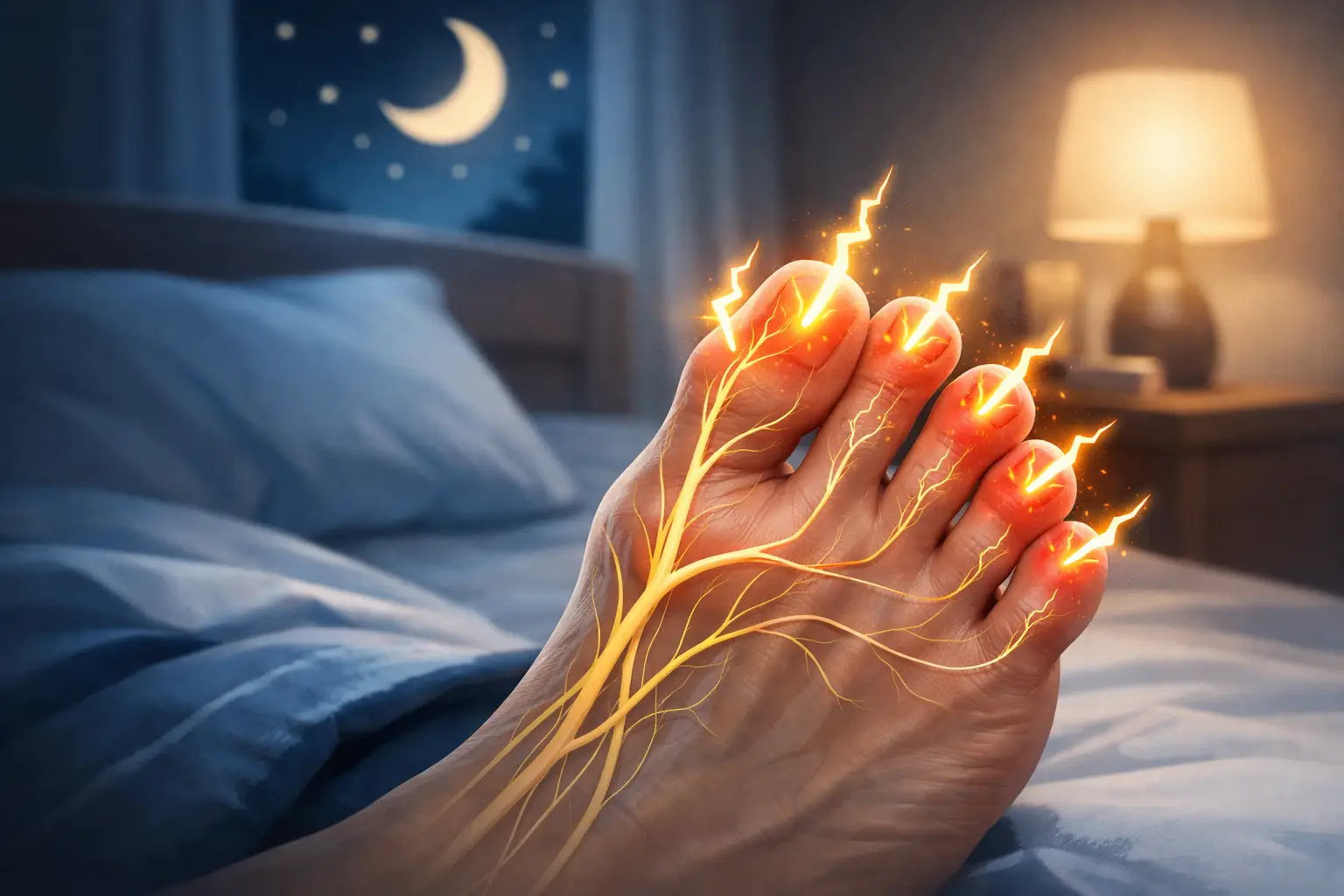
An electric shock feeling in toes at night can be surprisingly hard to ignore. For many adults, it shows up just as the body settles down – a quick zap, a stabbing jolt, or a sudden tingling surge that makes sleep difficult and raises an obvious question: is this a nerve problem, a circulation issue, or something else entirely?
That sensation is often described as buzzing, shooting, prickling, or a brief pulse of pain. While occasional odd nerve sensations can happen for harmless reasons, repeated nighttime symptoms deserve attention, especially if they are new, worsening, or paired with numbness, burning, weakness, or balance changes. In adults over 45, the most common explanations involve nerve irritation, pressure on the nerves, metabolic issues, medication effects, or nutritional gaps such as low vitamin B12.
Why an electric shock feeling in toes at night happens
Night tends to make nerve symptoms more noticeable. During the day, movement and distraction can mask mild discomfort. Once you lie down and the room gets quiet, small abnormal sensations may feel stronger. Position also matters. Sleeping with the ankles bent, crossing the legs, or having pressure on the lower back can aggravate already sensitive nerves.
The feeling itself usually points more toward nerve involvement than a simple muscle cramp. Nerves that are irritated or not functioning normally can misfire and send sudden signals that feel like shocks, pins and needles, or brief stabs. This does not automatically mean serious nerve damage, but it does suggest the nervous system is part of the picture.
Common causes to consider
Peripheral neuropathy is one of the most common reasons for shock-like toe sensations, especially in older adults. This term refers to damage or dysfunction in the peripheral nerves, often starting in the feet. Symptoms can include tingling, burning, numbness, heightened sensitivity, or electric pain. Diabetes is a well-known cause, but it is not the only one.
Vitamin B12 deficiency is another important possibility. B12 plays a key role in nerve health and red blood cell production. Low levels may contribute to numbness, tingling, balance problems, fatigue, and abnormal sensations in the feet and toes. In some people, the symptoms come on gradually and are easy to dismiss at first. Adults over 45 may be at higher risk if they have digestive disorders, long-term acid-reducing medication use, low intake of animal foods, or a history of poor B12 absorption.
Nerve compression can also cause nighttime zaps. A pinched nerve in the lower back may create radiating sensations into the toes. Tarsal tunnel syndrome, which involves compression of a nerve near the ankle, can produce tingling, burning, or shooting pain in the foot that worsens at night. Footwear, swelling, injury, and structural foot changes may all play a role.
Circulation issues are sometimes blamed first, but poor circulation more often causes coldness, color changes, cramping with walking, or slow-healing skin changes than true electric shocks. That said, circulation and nerve health can overlap, and reduced blood flow may make existing nerve symptoms feel worse.
Other possible contributors include alcohol overuse, thyroid disorders, kidney disease, chemotherapy exposure, certain antibiotics, statins in some cases, and low levels of other nutrients such as folate, vitamin B6, or vitamin E. There is also an important caution here: too much vitamin B6 from supplements can itself cause neuropathy-like symptoms. More is not always better.
When the symptom may point to nerve-related causes
If the sensation is recurring in the same toes or both feet, comes with burning or numbness, or feels worse when bedsheets touch the feet, nerve irritation becomes more likely. Some people notice that symptoms begin in the toes and slowly move upward over time. That pattern can fit peripheral neuropathy.
If the shock feeling appears mainly with certain sleep positions or after back pain, a compressed nerve may be more likely. If it happens after long periods in tight shoes, prolonged standing, or ankle swelling, local nerve pressure in the foot or ankle deserves consideration.
A single symptom rarely tells the whole story. The pattern matters more than the wording. Frequency, symmetry, triggers, associated numbness, and whether symptoms are progressing all help narrow the possibilities.
Can vitamin B12 deficiency cause toe shocks at night?
Yes, it can. Low B12 is one of the better-known nutritional causes of tingling and abnormal nerve sensations in the feet. The toes are often affected early because the longest nerves in the body tend to show symptoms first. Some people describe the feeling as electric, others as buzzing, burning, or crawling.
Still, B12 deficiency should not be assumed without testing. Fatigue, pale skin, memory changes, mouth soreness, and balance trouble may occur alongside nerve symptoms, but some people have only mild neurologic complaints at first. Blood testing is usually needed to confirm whether B12 is low or borderline. In certain cases, clinicians may also look at methylmalonic acid or homocysteine to get a clearer picture.
For readers researching nerve-health supplements, this is where caution matters. B12 supplementation may be helpful when intake is low or deficiency is confirmed, and it is commonly included in nerve-support products. But a supplement is not a shortcut to diagnosis. If the real cause is diabetes, spinal nerve compression, medication toxicity, or another medical issue, simply taking B12 may not address the problem.
What to track before you speak with a clinician
A short symptom log can make the conversation much more useful. Note when the electric sensation happens, how long it lasts, whether it affects one foot or both, and whether numbness, burning, weakness, or cramping are also present. Write down any recent medication changes, alcohol intake, back pain, new exercise, or changes in footwear.
It also helps to note whether you have risk factors for low B12. These may include metformin use, long-term proton pump inhibitor use, digestive surgery, vegan or very low animal-food intake, or a history of anemia. This kind of detail often helps a clinician decide what to test first.
What may help in the short term
If symptoms are mild and occasional, simple adjustments sometimes reduce nighttime irritation. A neutral foot position during sleep may help if nerve compression is involved. Looser bedding, avoiding tight socks, and checking that shoes are not compressing the forefoot can also make a difference. If back positioning seems related, gentle posture changes or pillow support under the knees may reduce strain.
Hydration, blood sugar management, and limiting alcohol may also help some people, depending on the cause. For those considering a supplement, it is reasonable to focus on evidence-informed products with clearly labeled forms and doses rather than megadoses or proprietary blends. On a site like VitB12Supplement.com, the most useful reviews are the ones that separate likely benefit from marketing claims.
What should be avoided? Self-prescribing high doses of multiple nerve vitamins for long periods without knowing the cause. This is especially true for vitamin B6, which can worsen nerve symptoms if overused.
When to seek medical attention sooner
An electric shock feeling in toes at night is not always an emergency, but some situations should not wait. Prompt medical evaluation is important if you also have new weakness, foot drop, trouble walking, severe back pain, loss of bladder or bowel control, rapidly progressing numbness, or one foot becoming pale, cold, or suddenly painful.
You should also make an appointment if the symptom is recurring more than occasionally, interrupting sleep, spreading upward, or paired with burning, numbness, or balance trouble. Persistent nighttime nerve symptoms are worth evaluating because earlier identification of the cause often leads to better management.
The bottom line on nighttime toe shocks
When toes feel as if they are getting brief electric zaps at night, the most likely explanation is some form of nerve irritation rather than a simple circulation problem. Common causes include peripheral neuropathy, nerve compression, medication effects, metabolic conditions, and vitamin B12 deficiency. Because several of these can look similar at first, guessing is not the best strategy.
A practical next step is to track the pattern, review medications and supplement use, and ask a healthcare professional whether testing for B12 status, blood sugar issues, thyroid function, or nerve compression makes sense. The goal is not to chase every possible cause at once. It is to identify the most likely one and make decisions based on evidence, not assumptions.
Frequently Asked Questions
Why do I feel electric shocks in my toes at night?
Electric shock feelings in the toes at night often happen when irritated or compressed nerves send sudden abnormal signals. This may occur with peripheral neuropathy, nerve compression, vitamin B12 deficiency, diabetes, medication effects, alcohol use, or other causes that affect nerve function.
Can neuropathy cause electric shock sensations in the toes?
Yes. Peripheral neuropathy can cause electric pain, tingling, burning, numbness, buzzing, pins and needles, or sudden zaps in the toes and feet. Symptoms are often more noticeable at night when there are fewer distractions.
Can vitamin B12 deficiency cause toe shocks at night?
Yes, vitamin B12 deficiency can contribute to abnormal nerve sensations, including tingling, numbness, burning, balance problems, or electric shock-like feelings in the feet and toes. Testing is important because B12 deficiency should not be assumed from symptoms alone.
Why are nerve symptoms worse at night?
Nerve symptoms may feel worse at night because the body is still, there are fewer distractions, bedding may place pressure on the feet, and certain sleep positions can irritate nerves in the back, legs, ankles, or feet.
Can a pinched nerve cause electric shocks in the toes?
Yes. A pinched nerve in the lower back, leg, ankle, or foot can send shooting, electric, tingling, or burning sensations into the toes. This may be more likely if symptoms change with posture, walking, back pain, or ankle position.
Can too much vitamin B6 cause electric shock sensations?
Too much vitamin B6 from supplements can cause neuropathy-like symptoms in some people, including tingling, burning, numbness, or abnormal sensations. Long-term high-dose nerve supplements should not be used without medical guidance.
Are electric shocks in the toes a circulation problem?
Electric shock sensations usually point more toward nerve irritation than circulation alone. Circulation problems more often cause coldness, color changes, cramping with walking, pain, or slow-healing wounds. However, nerve and circulation problems can overlap, especially in older adults or people with diabetes.
When should I see a doctor for electric shocks in my toes?
See a healthcare professional if the shocks are recurring, worsening, spreading, interrupting sleep, or paired with numbness, burning, weakness, balance problems, severe back pain, foot drop, color changes, wounds, or trouble walking.
Medical Disclaimer:
This content is for educational purposes only and does not diagnose, treat, cure, or replace professional medical care. Vitamin B12 deficiency, neuropathy symptoms, nerve pain, numbness, tingling, burning feet, balance problems, fatigue, and related health concerns can have many possible causes, including diabetes, vitamin deficiencies, medication effects, alcohol exposure, autoimmune conditions, infections, circulation problems, gastrointestinal or absorption issues, spinal conditions, or nerve compression.
Information about supplements, nutrition, lifestyle, sleep, movement, testing, or symptom support should not be used as a substitute for evaluation by a qualified healthcare professional. Supplements may not be appropriate for everyone and may interact with medications or medical conditions.
New, worsening, spreading, severe, one-sided, or unexplained symptoms — including numbness, weakness, balance problems, falls, wounds, foot ulcers, skin color changes, severe pain, chest pain, shortness of breath, bowel or bladder changes, facial drooping, trouble speaking, confusion, or sudden neurologic symptoms — should be discussed with a qualified healthcare professional or emergency service promptly.

- Can Low B12 Cause Dizziness? - July 9, 2026
- B12 Deficiency and Cracked Corners of the Mouth - July 9, 2026
- Can Low B12 Cause Dry Mouth? - July 8, 2026