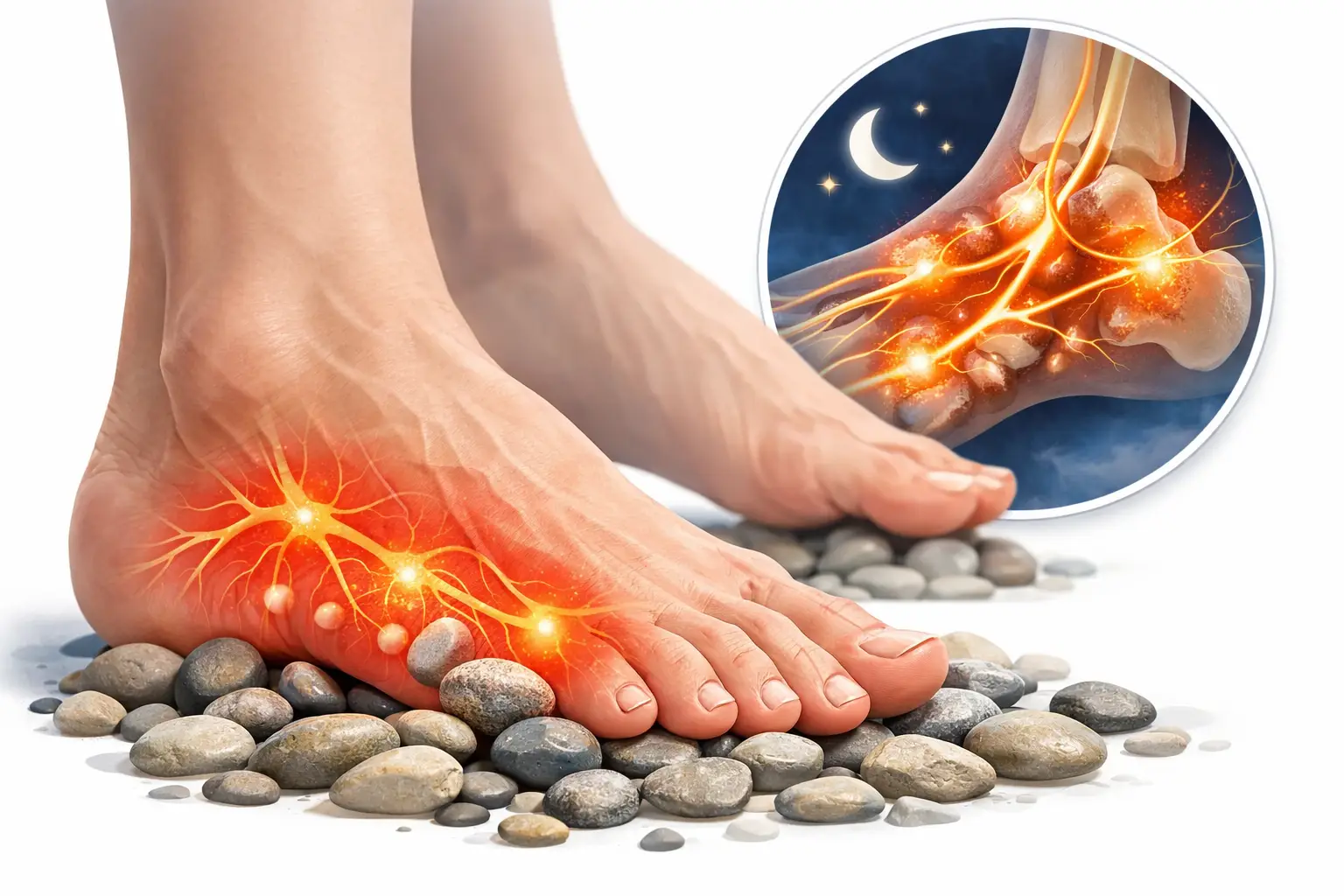
That odd sensation often shows up the same way – you stand up, take a few steps, and it feels as if there are small pebbles stuck inside your shoes, even when the soles are completely clear. If you have been asking, why do my feet feel like I’m walking on pebbles?, the answer usually comes down to how the nerves, soft tissues, joints, or pressure points in the feet are behaving.
This symptom is common in adults over 45, and it does not point to one single explanation. Sometimes it is mechanical, such as a thickened area of tissue under the ball of the foot. Sometimes it is neurological, especially when the feeling comes with burning, tingling, numbness, or unusual sensitivity. The challenge is that several different problems can feel surprisingly similar at first.
Why do my feet feel like I’m walking on pebbles when nothing is there?
The “walking on pebbles” feeling is usually a sensation problem, a pressure problem, or both. Your brain interprets signals coming from the bottom of the foot, the small joints, the fatty cushioning under the skin, and the peripheral nerves. If any of those structures are irritated, compressed, inflamed, or not signaling normally, the result can feel like stepping on something lumpy, hard, or uneven.
That is why the symptom can occur even when the foot looks normal from the outside. The source may be deep in the forefoot, around a nerve between the toes, within a tendon or ligament, or related to reduced nerve function from a broader health issue.
Common causes of the pebble sensation in the feet
One common cause is a forefoot problem called metatarsalgia. This is a broad term for pain and tenderness around the ball of the foot. People often describe it as walking on a marble, pebble, or bunched-up sock. It can develop when the foot is under repeated pressure from hard surfaces, unsupportive shoes, high-impact activity, foot shape changes, or age-related thinning of the fat pad that normally cushions the forefoot.
Morton’s neuroma is another possibility, especially if the sensation sits between the third and fourth toes. This involves thickening or irritation around a nerve in the forefoot. It may cause burning, stinging, numbness, or the strong impression that something is trapped under the ball of the foot. Tight shoes and shoes with a narrow toe box can make it worse.
Calluses can also create a pebble-like feeling, particularly if they become thick and concentrated over one pressure point. Unlike a general ache, a callus often feels more localized, as though one spot is catching the floor with each step.
Plantar fibromas, small nodules in the plantar fascia, are less common but can produce a similar sensation. So can arthritis in the small joints of the foot, which may alter how your weight is distributed when walking.
Then there is peripheral neuropathy, which matters especially for readers searching symptoms alongside numbness, tingling, or burning feet. Neuropathy changes how sensory nerves transmit information. Instead of sending clear, accurate signals, damaged or irritated nerves may create distorted ones – buzzing, pins and needles, electric shocks, burning, or the false sense that you are stepping on grit or pebbles.
When nerve issues are more likely
If the sensation is paired with tingling, reduced feeling, burning pain, sharp shooting discomfort, or symptoms that worsen at night, nerve involvement moves higher on the list. Peripheral neuropathy has many possible contributors, including diabetes, alcohol overuse, certain medications, nerve compression, and nutritional deficiencies.
Vitamin B12 deserves special attention because low B12 can affect nerve function over time. Not everyone with low B12 develops foot symptoms, and not every case of tingling or numbness is caused by B12 deficiency. Still, it is one of the better-known nutritional factors clinicians consider when evaluating unexplained sensory changes.
This is where caution matters. A supplement should not be treated as a shortcut to diagnosis. If B12 is low, correcting it may support normal nerve health, but that is different from claiming it will cure chronic foot symptoms. The more responsible approach is to match the symptom pattern with proper medical evaluation, and then discuss whether testing for B12 or other nutrient issues makes sense.
Clues that point away from nerves and toward pressure or structure
If the feeling is strongest only when standing or walking, and eases when you sit down, a pressure-related foot problem becomes more likely. If you can press on one exact spot and reproduce the sensation, that also leans more toward a local mechanical issue than a generalized nerve problem.
Shoes matter more than many people expect. A worn-out insole, inadequate arch support, or a shoe that compresses the front of the foot can create or amplify the sensation. In adults over 45, natural changes in foot structure and fat-pad thickness can make footwear problems much more noticeable than they were years earlier.
Morning stiffness may suggest joint involvement or plantar fascia irritation. A spreading numbness pattern that affects both feet more evenly may point more toward neuropathy or another systemic issue. It depends on the pattern, timing, and associated symptoms.
What you can check at home before assuming the worst
Start with the simple factors. Look at the soles of your shoes. If the tread is uneven or the insole is compressed, replace them. Shoes with a roomy toe box and better cushioning can reduce forefoot pressure significantly.
Check the skin on the bottom of the foot for thick callused areas, cracks, or focal tenderness. Think about whether the symptom is tied to one foot or both. One foot often suggests a local foot issue. Both feet, especially with tingling or numbness, can raise suspicion for a broader nerve or circulation problem.
Also notice whether the feeling comes with balance changes. When normal sensation is reduced, some people say they feel as if they are walking on foreign objects because the foot is not feeding the brain accurate information about the ground.
When to talk to a clinician
A pebble-like sensation is worth medical attention if it keeps returning, interferes with walking, or comes with burning, numbness, weakness, or progressive pain. It also deserves prompt evaluation if you have diabetes, a history of low B12, significant alcohol use, recent medication changes, or back problems that could affect the nerves.
A clinician may look at footwear, gait, foot structure, pressure points, reflexes, circulation, and sensation testing. In some cases, lab work is considered to check for contributors such as blood sugar issues or nutrient deficiencies, including vitamin B12.
If symptoms are severe, sudden, or paired with foot color changes, swelling, open sores, or one-sided weakness, do not wait to see if it passes.
Can supplements help if your feet feel like you’re walking on pebbles?
Sometimes they may support an identified deficiency, but they are not a one-size-fits-all answer. If the symptom is caused by a neuroma, a callus, arthritis, or poor footwear, a nerve-health supplement is unlikely to address the main issue. If a deficiency is confirmed, targeted nutritional support may be part of the plan, but the right choice depends on the reason for the symptom.
For consumers comparing nerve-support products, the useful question is not which formula sounds most impressive. It is whether the ingredients match a real need, whether the dose is sensible, and whether there is evidence behind the nutrient for that specific context. That is the standard an evidence-focused site such as VitB12Supplement.com aims to apply.
What may help in the meantime
While you are figuring out the cause, reducing mechanical stress is a reasonable first step. Better-cushioned shoes, avoiding tight toe boxes, limiting long periods on hard floors, and using supportive insoles may ease symptoms caused by pressure or foot structure.
If the area is very tender, scaling back high-impact activity for a short period can help calm irritation. For suspected calluses, careful foot care may help, though aggressive self-trimming is risky, especially if sensation is reduced.
If you also notice tingling, numbness, or burning, keep track of when it happens and whether it affects both feet evenly. That pattern can help a clinician sort out whether the sensation is more likely coming from local foot mechanics or from the nerves.
The pebble feeling is not always serious, but it is rarely meaningless. Your feet are giving you useful information about pressure, cushioning, circulation, or nerve signaling. Paying attention early usually leads to a clearer answer – and often a simpler path forward.
Frequently Asked Questions
Why do my feet feel like I’m walking on pebbles?
A pebble-like feeling in the feet can happen when pressure points, soft tissues, joints, or sensory nerves are irritated. Common possibilities include metatarsalgia, Morton’s neuroma, calluses, plantar fibromas, arthritis, footwear pressure, or peripheral neuropathy.
Can neuropathy make it feel like I’m walking on pebbles?
Yes. Peripheral neuropathy can distort sensory signals from the feet. Some people describe this as walking on pebbles, grit, sand, marbles, or a bunched-up sock, especially when the feeling comes with tingling, burning, numbness, or symptoms in both feet.
Can vitamin B12 deficiency cause a pebble feeling in the feet?
Vitamin B12 deficiency can affect nerve function and may contribute to tingling, numbness, burning, balance problems, or unusual foot sensations. A pebble feeling alone does not prove B12 deficiency, so testing is better than guessing.
What is metatarsalgia?
Metatarsalgia is pain or tenderness around the ball of the foot. It may feel like walking on a pebble, marble, or bunched-up sock. It is often related to pressure, footwear, high-impact activity, foot shape changes, or reduced cushioning under the forefoot.
Can Morton’s neuroma feel like walking on a pebble?
Yes. Morton’s neuroma can cause the feeling of a pebble, lump, or folded sock under the ball of the foot, often between the third and fourth toes. It may also cause burning, tingling, numbness, or pain that worsens in tight shoes.
Can calluses make my feet feel like I’m stepping on stones?
Yes. Thick calluses can create a hard pressure point under the foot. This may feel like stepping on a small stone, especially if the discomfort is localized to one spot and becomes worse with walking or standing.
How do I know if the pebble feeling is from nerves or foot pressure?
A pressure-related cause is more likely if the feeling appears mainly when standing or walking, improves with rest, or can be reproduced by pressing on one spot. A nerve-related cause is more likely if it comes with tingling, burning, numbness, balance changes, nighttime symptoms, or a similar pattern in both feet.
When should I see a doctor for a pebble feeling in my feet?
See a healthcare professional if the sensation keeps returning, interferes with walking, worsens over time, affects both feet, or comes with burning, numbness, weakness, balance problems, swelling, wounds, color changes, diabetes, or a history of vitamin B12 deficiency.
Medical Disclaimer:
This content is for educational purposes only and does not diagnose, treat, cure, or replace professional medical care. Vitamin B12 deficiency, neuropathy symptoms, nerve pain, numbness, tingling, burning feet, balance problems, fatigue, and related health concerns can have many possible causes, including diabetes, vitamin deficiencies, medication effects, alcohol exposure, autoimmune conditions, infections, circulation problems, gastrointestinal or absorption issues, spinal conditions, or nerve compression.
Information about supplements, nutrition, lifestyle, sleep, movement, testing, or symptom support should not be used as a substitute for evaluation by a qualified healthcare professional. Supplements may not be appropriate for everyone and may interact with medications or medical conditions.
New, worsening, spreading, severe, one-sided, or unexplained symptoms — including numbness, weakness, balance problems, falls, wounds, foot ulcers, skin color changes, severe pain, chest pain, shortness of breath, bowel or bladder changes, facial drooping, trouble speaking, confusion, or sudden neurologic symptoms — should be discussed with a qualified healthcare professional or emergency service promptly.

- Can Low B12 Cause Dizziness? - July 9, 2026
- B12 Deficiency and Cracked Corners of the Mouth - July 9, 2026
- Can Low B12 Cause Dry Mouth? - July 8, 2026