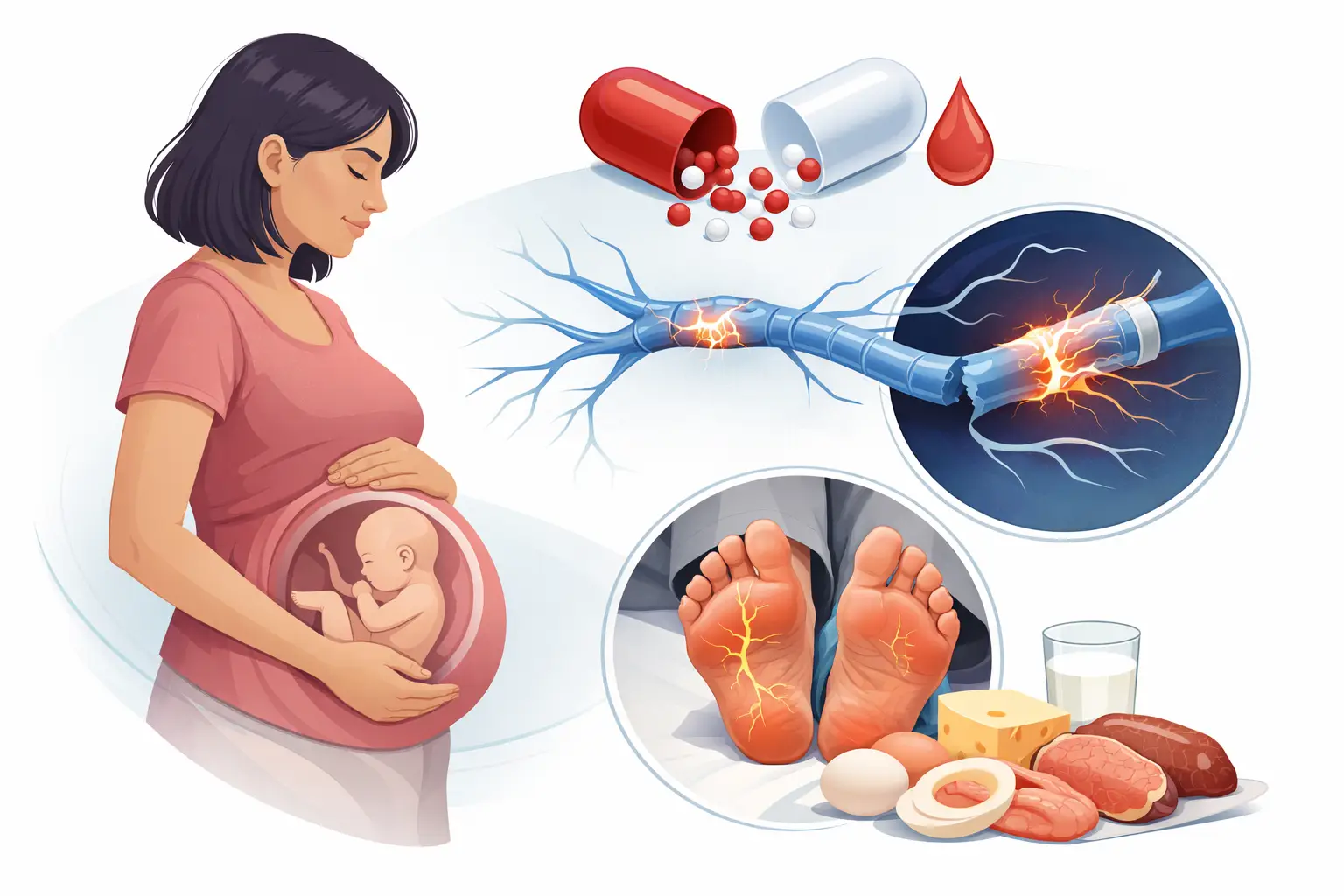
Vitamin B12 deficiency during pregnancy can contribute to fatigue, weakness, shortness of breath, dizziness, numbness, tingling, burning sensations, memory changes, and megaloblastic anemia. It matters because B12 supports red blood cell production, nerve function, DNA synthesis, and fetal development. Pregnant people at higher risk include those following vegan or very low-animal-food diets, people with absorption problems, prior stomach or intestinal surgery, pernicious anemia, inflammatory bowel disease, long-term metformin use, or long-term acid-reducing medication use. Testing and treatment should be guided by an obstetric clinician rather than symptoms or supplements alone.
Feeling unusually exhausted in pregnancy is common. Feeling exhausted, short of breath, forgetful, lightheaded, or bothered by tingling that seems out of proportion is where the conversation should get more specific. B12 deficiency during pregnancy can be easy to miss because some of its signs overlap with ordinary pregnancy changes, yet it deserves careful attention because vitamin B12 supports red blood cell formation, nerve function, and fetal development.
This is one of those topics where context matters. A low B12 level does not automatically mean severe deficiency, and symptoms do not always track neatly with lab numbers. Still, when B12 status is poor during pregnancy, the potential consequences are significant enough that it should be assessed thoughtfully rather than brushed aside.
1. Symptoms can be misleading
Fatigue, dizziness, and brain fog may look like routine pregnancy symptoms, but persistent or severe symptoms deserve evaluation.
2. Nerve symptoms matter
Tingling, numbness, burning sensations, balance changes, or memory issues should not be dismissed as normal pregnancy discomfort.
3. Intake and absorption both count
Vegan diets, GI disorders, stomach surgery, pernicious anemia, metformin, and acid-reducing medications can increase risk.
4. Do not self-treat blindly
The safest next step is testing, medical review, and a pregnancy-appropriate plan rather than choosing a high-dose supplement from marketing claims.
Why B12 Deficiency During Pregnancy Matters
Vitamin B12 is essential for DNA synthesis, healthy nerve signaling, and the production of red blood cells.
For a detailed medical overview of vitamin B12 functions, food sources, deficiency risks, and clinical considerations, see the NIH Office of Dietary Supplements vitamin B12 fact sheet.
During pregnancy, those jobs become even more important because the body is supporting both maternal tissues and a developing baby. B12 also works closely with folate, which means a problem with one can complicate the interpretation of the other.
For the pregnant person, inadequate B12 may contribute to megaloblastic anemia, fatigue, weakness, numbness or tingling, balance issues, mood changes, or cognitive complaints such as poor concentration. For the fetus, low maternal B12 has been associated with concerns around normal neurologic development. The exact degree of risk depends on how low levels are, how long the deficiency has been present, and whether other nutritional problems exist at the same time.
One complication is that folic acid supplementation, which is standard in pregnancy, can improve certain blood abnormalities while leaving neurologic effects of B12 deficiency less obvious. That is one reason clinicians do not rely on symptoms alone.
Mother vs Baby: Why B12 Status Matters During Pregnancy
Vitamin B12 status can matter for both maternal health and fetal development. The effects are not always the same, and risk depends on severity, duration, timing, absorption, folate status, overall nutrition, and whether low B12 is identified and addressed.
How B12 Deficiency May Affect the Mother
Vitamin B12 deficiency during pregnancy may affect the mother in several ways, especially when levels are low enough to interfere with red blood cell production or nerve function. Possible symptoms may include unusual fatigue, weakness, dizziness, shortness of breath, pale skin, sore tongue, numbness, tingling, burning sensations, balance changes, memory changes, or poor concentration.
Some symptoms can look similar to ordinary pregnancy changes, iron deficiency, folate issues, thyroid problems, blood sugar changes, or medication effects. That overlap is why testing matters. A clinician may consider symptoms, diet pattern, medication history, gastrointestinal history, blood counts, serum B12, folate, methylmalonic acid, homocysteine, and iron status when appropriate.
Neurologic symptoms deserve special attention. Tingling, numbness, burning sensations, trouble walking steadily, or balance changes should not be dismissed as routine pregnancy discomfort, especially if they are persistent, progressive, or out of proportion.
How Low B12 May Affect the Baby
Vitamin B12 also matters during pregnancy because it supports DNA synthesis and normal nervous system development. Low maternal B12 has been associated in some research with concerns related to fetal development and certain pregnancy outcomes, especially when deficiency is severe, prolonged, or occurs alongside other nutritional problems.
This does not mean every borderline or low B12 result will harm the baby. Risk depends on the severity of deficiency, how long it has been present, timing during pregnancy, folate status, overall nutrition, absorption, and whether the issue is identified and corrected. The safest response is not panic or self-treatment, but prompt discussion with an obstetric clinician.
If B12 deficiency is suspected or confirmed, a pregnancy-appropriate plan may include reviewing diet, prenatal vitamins, absorption risk factors, medication history, lab results, and follow-up testing. For some people, standard prenatal support may be enough. For others, especially those with true deficiency or absorption problems, a clinician may recommend a different B12 dose, form, or treatment route.
Clinical note: This section is for education only. It should not be used to diagnose B12 deficiency, estimate fetal risk, choose a supplement dose, or replace individualized prenatal care.
Symptoms can look ordinary at first
The early signs of B12 deficiency are often nonspecific. Fatigue, weakness, and dizziness may sound like routine pregnancy complaints. So can brain fog or reduced stamina. That overlap is part of the reason deficiency may be recognized late.
The symptoms that raise more concern are tingling in the hands or feet, numbness, burning sensations, trouble walking steadily, memory changes, sore tongue, pale skin, and persistent shortness of breath. Not everyone develops all of these. Some people mainly notice anemia-related symptoms, while others develop neurologic symptoms with little obvious anemia.
People who entered pregnancy with borderline or low B12 stores may have less reserve as nutritional demands increase. This can be especially relevant when diet, absorption, medications, or prior gastrointestinal history already affect B12 status.
Important: Do not assume severe fatigue, tingling, numbness, burning feet, balance problems, memory changes, or shortness of breath are automatically “normal pregnancy symptoms.”
These symptoms can have several causes, including iron deficiency, vitamin B12 deficiency, folate issues, thyroid disease, diabetes, medication effects, or pregnancy-related complications. If symptoms are persistent, progressive, neurologic, or out of proportion, they should be discussed with an obstetric clinician promptly.
Who Is More Likely to Develop B12 Deficiency During Pregnancy?
Risk is not evenly distributed. People who avoid animal foods entirely are at higher risk because natural B12 is found primarily in meat, fish, eggs, and dairy. Vegetarian diets vary widely, so the risk depends on how much dairy, eggs, and fortified food are consumed.
Absorption problems also matter. Prior stomach or intestinal surgery, pernicious anemia, inflammatory bowel disease, and chronic gastrointestinal conditions can reduce B12 absorption. Long-term use of metformin or acid-reducing medications may also contribute in some individuals. Even a well-planned diet may not be enough if absorption is impaired.
Nausea and food aversions can further narrow intake during pregnancy. Someone who normally eats B12-rich foods may temporarily stop tolerating them. That does not guarantee deficiency, but it can lower intake at the exact time needs become more pressing.
B12 Deficiency During Pregnancy: Symptoms, Risk Factors, and Next Steps
Symptoms of B12 deficiency can overlap with ordinary pregnancy changes, which is why pattern, severity, diet history, medications, and lab testing all matter.
| Concern | Possible Signs | Why It Matters in Pregnancy | Practical Next Step |
|---|---|---|---|
| Low B12 intake | Vegan diet, vegetarian diet with little dairy or eggs, low intake of meat, fish, eggs, or dairy | B12 is naturally found mainly in animal foods and is important for blood, nerve, and fetal development support. | Review diet and prenatal vitamin label with a clinician. |
| Anemia-like symptoms | Fatigue, weakness, dizziness, shortness of breath, pale skin, reduced stamina | B12 deficiency can contribute to megaloblastic anemia, but iron deficiency can also coexist during pregnancy. | Ask about CBC, iron studies, B12, and folate when appropriate. |
| Neurologic symptoms | Tingling, numbness, burning feet, balance problems, memory changes, poor concentration | Neurologic symptoms may occur even when anemia is not obvious. | Report symptoms promptly instead of self-treating with supplements alone. |
| Absorption problems | Pernicious anemia, stomach surgery, intestinal surgery, inflammatory bowel disease, chronic GI symptoms | A normal diet or standard prenatal vitamin may not be enough if B12 absorption is impaired. | Discuss whether higher-dose oral B12 or injections may be needed. |
| Medication-related risk | Long-term metformin use or long-term acid-reducing medication use | Some medications may contribute to lower B12 status in certain people. | Bring medication and supplement lists to prenatal visits. |
How doctors evaluate low B12 status
Testing usually starts with a serum B12 level, but that number alone is not always definitive. Borderline results can be difficult to interpret, particularly if symptoms suggest deficiency despite a lab value that is not frankly low.
Depending on the situation, a clinician may also review a complete blood count, folate status, methylmalonic acid, and homocysteine. Methylmalonic acid can be useful because it tends to rise when B12 is functionally inadequate. Homocysteine may also increase with low B12, although it is less specific because folate and vitamin B6 status can affect it too.
This layered approach matters because pregnancy care should be precise, not guess-based. Self-diagnosing from symptoms alone is not ideal, but neither is dismissing symptoms because a single marker looks close to normal.
Tests That May Help Evaluate B12 Deficiency During Pregnancy
A single serum B12 result may not answer every question. Clinicians may combine symptoms, exam findings, blood counts, and additional markers to understand whether B12 is functionally inadequate.
| Test or Review | What It May Show | Important Limitation |
|---|---|---|
| Serum vitamin B12 | A starting point for assessing B12 status. | Borderline results may require context and additional testing. |
| Complete blood count | May show anemia or enlarged red blood cells. | Neurologic B12 symptoms may occur without obvious anemia. |
| Methylmalonic acid | May rise when B12 is functionally inadequate. | Interpretation during pregnancy should be clinician-guided. |
| Homocysteine | May be elevated with low B12. | Less specific because folate and vitamin B6 status can also affect it. |
| Folate and iron evaluation | Helps identify overlapping anemia contributors. | Normal or treated folate status can complicate interpretation of B12-related anemia signs. |
| Diet, medication, and GI history | May reveal low intake, poor absorption, or medication-related risk. | History should be combined with symptoms and labs. |
Diet, supplements, and the question of what is enough
If intake is low but absorption is normal, diet and supplementation may correct the problem. Good food sources include fish, lean meats, eggs, milk, yogurt, and fortified cereals or fortified nutritional products. Prenatal vitamins often contain B12, but the amount varies, and not every product provides enough for someone who already has low stores.
That is where readers should be cautious about assuming any prenatal is automatically sufficient. Label strength is only part of the story. The form of B12, the dose, overall diet, and individual absorption all influence whether supplementation is likely to help. In evidence reviews of vitamin products, this is a recurring pattern: a supplement can be reasonable on paper yet inadequate for a person with a true deficiency state.
For people with mild deficiency related mainly to low intake, oral supplementation may be appropriate under medical guidance. For those with significant deficiency or absorption problems, clinicians may recommend higher-dose oral therapy or injections. The right approach depends on cause, severity, symptoms, and follow-up labs.
Can Low B12 Harm the Baby? What Risk Depends On
Maternal B12 deficiency has been linked to concerns around fetal neurologic development and, in some studies, adverse pregnancy outcomes. However, risk is not determined by one lab result alone. Severity, duration, timing, folate status, absorption, and overall nutrition all matter.
A mild issue identified and addressed early is different from a severe or prolonged deficiency that goes untreated. That is why prompt evaluation is more useful than worrying over internet anecdotes or starting high-dose supplements without medical guidance.
Practical takeaway: A low or borderline B12 result during pregnancy should be discussed with an obstetric clinician, especially if symptoms, dietary risk, absorption problems, or abnormal blood work are also present.
Research Snapshot: B12 Deficiency and Pregnancy
Research and medical education sources consistently highlight that B12 status matters during pregnancy because it supports maternal blood health, nerve function, and fetal development. The clinical importance depends on severity, duration, timing, diet, absorption, and coexisting deficiencies.
| Research Finding | Clinical Relevance |
|---|---|
| B12 supports DNA synthesis and red blood cell formation | Low B12 may contribute to megaloblastic anemia, fatigue, weakness, dizziness, and shortness of breath. |
| B12 supports nerve function | Neurologic symptoms may include tingling, numbness, burning sensations, balance problems, or cognitive complaints. |
| Pregnancy increases the importance of adequate nutritional status | Maternal B12 status may matter for fetal development, especially when deficiency is severe, prolonged, or combined with other nutritional problems. |
| Folate can complicate recognition | Folic acid may improve some blood abnormalities while neurologic symptoms related to B12 deficiency still require attention. |
When symptoms suggest more than routine pregnancy fatigue
A practical rule is to pay closer attention when symptoms are persistent, progressive, or neurologic. Tingling, numbness, burning feet, clumsiness, or unusual weakness deserve discussion with an obstetric clinician. Those symptoms have multiple possible causes, and B12 deficiency is only one of them, but it is an important one because it is identifiable and often correctable.
Anemia symptoms also deserve follow-up, especially if iron treatment is not fully explaining the picture. B12 and iron issues can coexist, which can muddy the lab pattern and delay recognition if the evaluation stops too early.
What not to do
It is tempting to solve this with a high-dose supplement chosen from a quick search. That approach can miss the underlying cause. If the issue is poor absorption, swallowing more of a low-quality product may not solve it. If symptoms are significant, relying on a supplement without follow-up testing can create false reassurance.
It is also unwise to assume that because a product is marketed for energy or nerve health, it is appropriate during pregnancy. Formulas differ, ingredient combinations can be unnecessary, and some products are not designed with pregnancy-specific needs in mind. A simpler, evidence-informed option chosen with clinical input is usually the better path.
A practical next step if you are concerned
If B12 deficiency during pregnancy is on your radar, bring it up directly at a prenatal visit and be specific about symptoms, diet pattern, medications, and any history of stomach or bowel disorders. If you already use a prenatal or B12 supplement, bring the label or a photo. That small step can save time and sharpen the discussion.
For readers who compare supplements carefully, the best mindset is not to hunt for the most dramatic marketing claim. Look for a product with a transparent label, an appropriate dose, and a clear reason for using it. Then let testing and symptom follow-up guide whether it is working.
Pregnancy is full of changes that are easy to normalize. When fatigue, numbness, brain fog, or weakness seem off, trust that instinct and ask better questions. Sometimes the most useful health decision is not buying a new product at all, but getting the right lab work and a treatment plan that fits the real cause.
Frequently Asked Questions About B12 Deficiency During Pregnancy
These answers are for general education and should not replace individualized prenatal care.
Can B12 deficiency happen during pregnancy?
Yes. B12 deficiency can occur during pregnancy, especially when intake is low, absorption is impaired, or a person enters pregnancy with already low stores. Vegan diets, gastrointestinal disorders, pernicious anemia, stomach or intestinal surgery, and some long-term medications can increase risk.
What are the symptoms of low B12 in pregnancy?
Possible symptoms include unusual fatigue, weakness, dizziness, shortness of breath, pale skin, sore tongue, numbness, tingling, burning sensations, balance changes, memory problems, or poor concentration. These symptoms can overlap with other pregnancy issues, so testing is important.
Can low B12 affect the baby?
Maternal B12 deficiency has been associated with concerns related to fetal development and some adverse pregnancy outcomes, but risk depends on severity, duration, timing, folate status, and overall nutrition. A low result should be discussed with a prenatal clinician rather than treated with panic or ignored.
Is a prenatal vitamin enough B12?
Sometimes, but not always. Prenatal vitamins vary in B12 dose and form. A standard prenatal may be enough for routine support, but it may not be enough for someone with true deficiency, vegan intake, absorption problems, or neurologic symptoms.
Can B12 deficiency cause tingling during pregnancy?
Yes, B12 deficiency can contribute to tingling, numbness, burning sensations, or balance problems. However, pregnancy-related nerve compression, diabetes, thyroid disease, iron deficiency, and other causes can also contribute, so symptoms should be evaluated clinically.
How is B12 deficiency tested during pregnancy?
Testing often begins with serum B12 and a complete blood count. Depending on symptoms and borderline results, clinicians may also consider methylmalonic acid, homocysteine, folate, iron studies, medication review, and assessment of diet or gastrointestinal history.
Should I take high-dose B12 while pregnant?
Do not start high-dose supplementation during pregnancy without discussing it with your obstetric clinician, especially if symptoms are significant. The right dose and form depend on the cause, severity, absorption, current prenatal vitamin, diet, and follow-up labs.
Can folic acid hide B12 deficiency?
Folic acid can improve some blood-related abnormalities of megaloblastic anemia, which may make B12 deficiency harder to recognize if clinicians look only at anemia patterns. Neurologic symptoms can still require attention and B12-specific evaluation.
Medical Disclaimer: This article is for educational purposes only and does not replace prenatal medical care. Pregnant people should discuss symptoms, lab results, and supplement use with a qualified obstetric or healthcare professional.

- Can Low B12 Cause Dizziness? - July 9, 2026
- B12 Deficiency and Cracked Corners of the Mouth - July 9, 2026
- Can Low B12 Cause Dry Mouth? - July 8, 2026