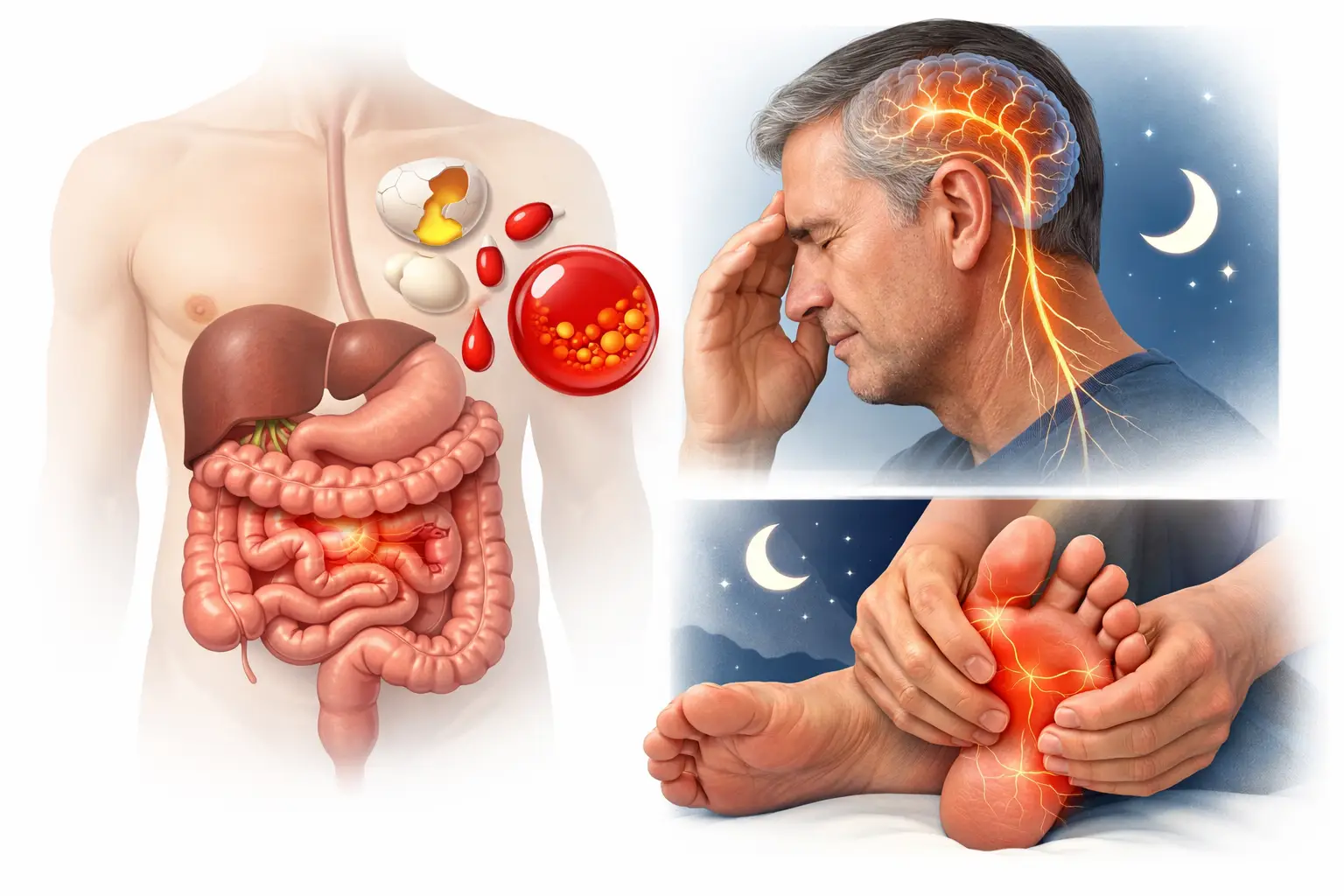
Yes. Celiac disease can contribute to vitamin B12 deficiency in some individuals, and low B12 may contribute to neuropathy symptoms such as tingling, numbness, burning feet, balance problems, and weakness. However, neuropathy in celiac disease can have multiple causes, making proper testing and evaluation essential.
Burning feet, tingling hands, balance problems, and numbness are often blamed on aging, diabetes, or poor circulation. But celiac disease b12 deficiency neuropathy is a real clinical pattern worth understanding, especially for adults over 45 who may have overlapping digestive symptoms, fatigue, and unexplained nerve discomfort.
For some people, the connection starts in the small intestine. Celiac disease damages the intestinal lining after gluten exposure, which can reduce absorption of several nutrients, including iron, folate, vitamin D, and sometimes vitamin B12. When B12 levels fall low enough, nerves can suffer. The result may be peripheral neuropathy symptoms that creep in gradually or become hard to ignore.
That does not mean every case of neuropathy in celiac disease is caused by low B12. Neuropathy can have many causes, and celiac-related nerve symptoms may involve more than one mechanism. Still, B12 deficiency is one of the most practical and medically relevant possibilities to evaluate because it is testable, common enough to matter, and potentially correctable when identified early.
How celiac disease, B12 deficiency, and neuropathy connect
Celiac disease is an autoimmune condition triggered by gluten in genetically susceptible people. The classic picture includes diarrhea, weight loss, and bloating, but many adults present differently. Some have constipation, reflux, fatigue, anemia, brain fog, thinning bones, or nerve symptoms with little obvious digestive trouble.
The reason neuropathy enters the conversation is that the small intestine is central to nutrient absorption. In untreated celiac disease, chronic inflammation and villous damage can impair uptake of nutrients needed for normal nerve function. Vitamin B12 is especially important because it supports myelin integrity, red blood cell production, and normal neurologic signaling.
Strictly speaking, B12 is absorbed mainly in the terminal ileum rather than the upper small bowel, so the relationship is not always straightforward. That is one reason medically cautious articles should avoid oversimplifying this topic. Even so, adults with celiac disease may still develop low B12 due to broader malabsorption, coexisting digestive conditions, bacterial overgrowth, autoimmune gastritis, dietary restriction, or long-term use of acid-suppressing medication. In real life, several factors may stack together.
Neuropathy itself is a broad term. It usually refers to damage or dysfunction in peripheral nerves, often causing tingling, pins and needles, burning, numbness, altered sensation, weakness, or reduced coordination. Some people notice symptoms mostly in the feet. Others first feel them in the fingertips. The pattern matters, and so does the speed of onset.
Not all neuropathy in celiac disease is caused by vitamin B12 deficiency. Autoimmune mechanisms, other vitamin deficiencies, diabetes, thyroid disease, medication effects, and unrelated nerve disorders can also contribute to similar symptoms.
What B12 deficiency neuropathy can feel like
Common Symptoms Associated With B12 Deficiency Neuropathy
| Symptom | Description |
|---|---|
| Burning Feet | Hot, burning, or electric-like sensations. |
| Tingling | Pins and needles in the feet, legs, or hands. |
| Numbness | Reduced ability to feel touch or vibration. |
| Balance Problems | Difficulty walking steadily or feeling stable. |
| Weakness | Reduced muscle strength and endurance. |
Vitamin B12 deficiency often develops slowly. Early signs can be vague: fatigue, poor stamina, mild memory trouble, dizziness, or pale skin. As deficiency worsens, neurologic symptoms may become more apparent. People may describe burning soles, electric-shock sensations, reduced vibration sense, trouble feeling the floor under their feet, or increasing clumsiness in the dark.
Not everyone with low B12 gets severe neuropathy, and not everyone with neuropathy has low B12. But when B12 deficiency is involved, symptoms can include numbness, tingling, balance difficulty, leg weakness, and gait changes. Some individuals also develop mood changes, irritability, or cognitive complaints alongside the sensory symptoms.
This is one reason delayed evaluation can be risky. A borderline deficiency may be overlooked if the focus stays only on pain or circulation. If neuropathy is related to B12 depletion, earlier recognition generally offers a better chance of symptom improvement than waiting until nerve injury becomes more established.
Key Takeaways
Celiac Disease May Affect B12
Intestinal damage may reduce absorption of nutrients that support normal nerve function.
Neuropathy Has Many Causes
Low B12 is one possibility, but diabetes, thyroid disease, and other conditions may also contribute.
Early Testing Matters
Identifying B12 deficiency sooner may improve the chances of symptom improvement.
Supplements Are Not Diagnosis
A supplement may help correct deficiency, but proper testing remains the first step.
When celiac disease may be part of the picture
Adults often search for neuropathy answers after months or years of partial explanations. If you have numbness or burning feet and also deal with chronic bloating, unexplained anemia, unintentional weight change, recurrent low iron, mouth ulcers, or a family history of autoimmune disease, celiac disease deserves consideration.
There are also cases where celiac disease is relatively silent from a digestive standpoint. Neuropathy, fatigue, or low nutrient levels may be the first clue. That is especially relevant for older adults who assume mild gastrointestinal symptoms are normal or unrelated.
Another point that deserves attention is the overlap with other common causes. Diabetes, prediabetes, alcohol use, thyroid disease, kidney disease, certain medications, spinal problems, and vitamin deficiencies other than B12 can all contribute to similar symptoms. A person can also have more than one issue at the same time. Celiac disease does not rule out diabetic neuropathy, and low B12 does not rule out mechanical nerve compression.
Testing and diagnosis: what to ask your doctor
Tests Commonly Used During Evaluation
| Test | Purpose |
|---|---|
| Serum B12 | Measures circulating vitamin B12. |
| Methylmalonic Acid | May reveal functional B12 deficiency. |
| Homocysteine | Can be elevated when B12 is insufficient. |
| CBC | Looks for anemia and blood cell abnormalities. |
| Celiac Antibody Testing | Helps identify possible celiac disease. |
A good workup is usually broader than a single B12 blood test. Basic serum B12 can be helpful, but it is not perfect. Some people with low-normal B12 still have functional deficiency, while others with abnormal numbers may not have symptoms from it. Depending on the clinical picture, a healthcare professional may also consider methylmalonic acid, homocysteine, complete blood count, iron studies, folate, thyroid testing, glucose markers, and celiac-specific blood tests.
If celiac disease is suspected, testing should generally be done before starting a strict gluten-free diet. Removing gluten too early can reduce antibody levels and make diagnosis harder. That is an easy mistake to make when people self-treat after reading about gluten online.
If neuropathy symptoms are significant, your clinician may also evaluate reflexes, vibration sensation, gait, and strength, or recommend nerve conduction testing in selected cases. The goal is not just to label the problem, but to narrow down the likely cause and avoid missing something more urgent.
Can fixing B12 help neuropathy symptoms?
If B12 deficiency is confirmed, correcting it is an important step. That may involve oral supplementation, sublingual products, or injections, depending on severity, lab findings, underlying absorption issues, and clinician preference. In celiac disease, the best approach depends on whether the gut is healing well on a gluten-free diet and whether there are additional reasons B12 absorption may be impaired.
Improvement can happen, but expectations need to stay realistic. Some people notice better energy first, followed by gradual reduction in tingling or burning. Others improve only partially, especially if symptoms have been present for a long time. Nerves heal slowly, and not all neuropathy is reversible.
This is where evidence-based supplement decisions matter. A high-dose B12 product may be reasonable in some situations, but more is not automatically better, and it does not replace diagnosis. The right supplement form, dose, and route should make sense for the person’s labs, symptoms, medications, and digestive history. For cautious consumers, that is a much better standard than choosing a product based on marketing promises.
Practical guidance for adults comparing B12 options
If you are researching B12 because of neuropathy symptoms and possible celiac-related malabsorption, focus on quality and fit rather than hype. The most useful questions are whether the dose is appropriate, whether the form aligns with your clinician’s advice, whether the product is clearly labeled, and whether it has been manufactured with credible quality controls.
For adults with confirmed celiac disease, gluten-free labeling may matter for peace of mind and consistency. It is also worth reviewing the full ingredient panel for unnecessary additives if you have a sensitive digestive system. Beyond that, no supplement should be viewed as a stand-alone answer for ongoing numbness, weakness, or balance changes.
A practical consumer mindset is simple: first identify the likely cause, then match the supplement strategy to the medical picture. That approach is less flashy than miracle-claim marketing, but it is safer and more likely to produce useful results.
Red flags that should not wait
Some neuropathy symptoms warrant prompt medical attention rather than supplement shopping. Rapidly worsening weakness, falls, bowel or bladder changes, sudden one-sided symptoms, severe gait instability, or numbness spreading quickly up the legs deserve timely evaluation. The same goes for unexplained weight loss, persistent vomiting, black stools, or marked anemia.
Even milder symptoms deserve a proper conversation if they persist. Burning feet at night may sound minor, but in the right context it can be an early clue to something worth catching sooner.
The bottom line on celiac disease and nerve symptoms
The relationship between celiac disease, B12 deficiency, and neuropathy is real, but it is not always linear. Celiac disease can contribute to nutrient deficiencies, and B12 deficiency can contribute to nerve symptoms, yet many patients have mixed causes that need careful sorting out. That is why the smartest next step is usually not guessing, but getting the right testing and using supplement support as part of a broader plan.
For adults 45 and older, especially those with unexplained tingling, numbness, burning feet, fatigue, or digestive issues, this is a worthwhile discussion to bring to a healthcare professional. A thoughtful evaluation can separate marketing noise from meaningful action, which is often the difference between chasing symptoms and understanding them.
If you’re trying to understand what may be behind numbness, tingling, burning feet, or nerve pain, our guide to peripheral neuropathy causes and relief explains the most common causes and what may help support nerve health.
Frequently Asked Questions
Can celiac disease cause neuropathy without digestive symptoms?
Yes. Some adults with celiac disease have few or no obvious digestive symptoms. Neuropathy, fatigue, anemia, brain fog, or low nutrient levels may sometimes be part of the presentation.
Is B12 deficiency common in celiac disease?
B12 deficiency can occur in people with celiac disease, especially when malabsorption, restricted diet, autoimmune gastritis, bacterial overgrowth, or acid-suppressing medications are also involved.
Can B12 deficiency cause burning feet and tingling hands?
Yes. Low vitamin B12 may contribute to nerve-related symptoms such as burning feet, tingling hands, numbness, balance problems, weakness, and altered sensation.
Can a gluten-free diet improve neuropathy symptoms?
A strict gluten-free diet may help if celiac disease is contributing to inflammation or nutrient malabsorption. However, nerve symptoms may also require testing and correction of deficiencies such as B12, iron, folate, or vitamin D.
What does B12 deficiency neuropathy feel like?
It may feel like pins and needles, burning, numbness, reduced vibration sense, electric-like sensations, poor balance, or difficulty feeling the floor under the feet.
How long does nerve recovery take after B12 treatment?
Recovery varies. Some people notice better energy first, while nerve symptoms may improve slowly over weeks or months. Long-standing neuropathy may improve only partially.
Should adults with unexplained neuropathy be tested for celiac disease?
Testing may be reasonable when neuropathy appears with digestive symptoms, unexplained anemia, low iron, fatigue, family history of autoimmune disease, or other signs suggestive of celiac disease.
Can low iron and low B12 occur together in celiac disease?
Yes. Celiac disease can affect absorption of multiple nutrients. Iron deficiency is common, and B12 deficiency may occur in some people, especially when other absorption issues are present.
Medical Disclaimer: The information provided in this article is for educational purposes only and is not intended as medical advice. Dietary supplements are not a replacement for professional medical diagnosis or treatment. Always consult with a qualified healthcare professional before starting any new supplement, especially if you have pre-existing medical conditions or are taking prescription medications. Individual results may vary.

- Can Low B12 Cause Dizziness? - July 9, 2026
- B12 Deficiency and Cracked Corners of the Mouth - July 9, 2026
- Can Low B12 Cause Dry Mouth? - July 8, 2026