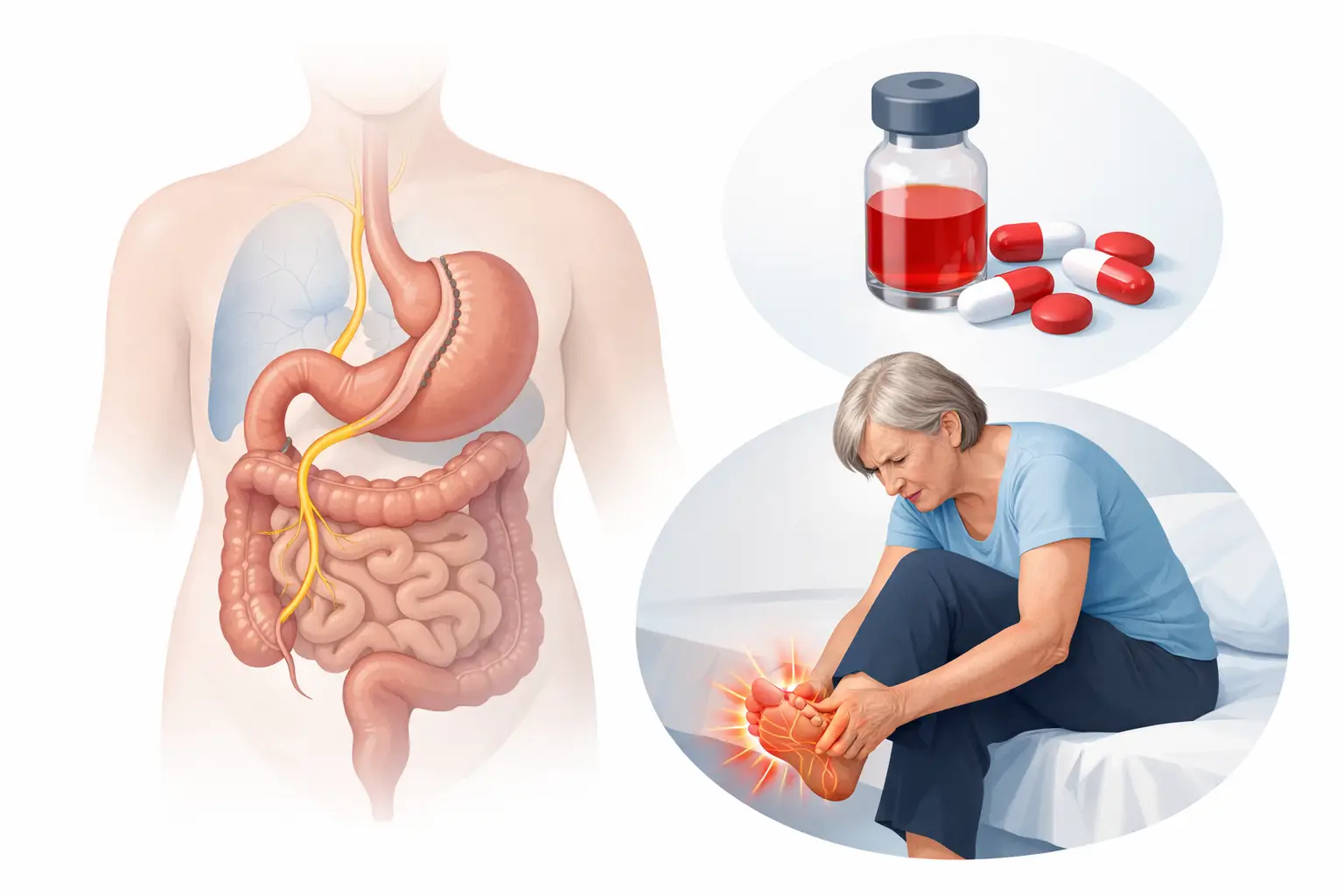
Yes. B12 deficiency after gastric bypass is common enough that it deserves ongoing attention. The surgery changes how vitamin B12 is released and absorbed, increasing the risk of deficiency months or even years later. Symptoms may include fatigue, tingling, numbness, burning feet, poor balance, brain fog, weakness, and anemia. Regular monitoring and appropriate supplementation are important for long-term health.
Feeling unusually tired months after surgery is easy to dismiss. So is tingling in the feet, trouble concentrating, or a sore tongue. But b12 deficiency after gastric bypass is common enough that these symptoms deserve real attention, especially because the problem can build slowly before it becomes obvious.
For adults researching nerve symptoms, energy changes, or balance issues, this is one of the more important nutrition complications to understand after bariatric surgery. The reason is simple: gastric bypass changes how the body handles vitamin B12 in ways that make deficiency more likely, even when food intake seems adequate.
Why b12 deficiency after gastric bypass happens
Vitamin B12 absorption is more complicated than many people realize. It does not depend only on eating enough B12-rich foods such as meat, fish, eggs, or dairy. It also depends on stomach acid, a stomach protein called intrinsic factor, and proper absorption farther down in the small intestine.
After gastric bypass, several parts of that process are disrupted. The smaller stomach pouch produces less acid, and food no longer moves through the digestive tract in the usual way. That matters because stomach acid helps release B12 from food proteins, and intrinsic factor is needed later for absorption. When the anatomy changes, the body may absorb much less B12 from meals, even if the diet looks reasonable on paper.
This is also why deficiency may show up gradually. The liver stores vitamin B12, so some people feel fine for a while after surgery. Then symptoms begin to appear over months or even years. That delay can create false reassurance.
Tingling, numbness, burning feet, balance problems, worsening fatigue, or memory changes after gastric bypass should not automatically be dismissed as aging or normal recovery. Vitamin B12 deficiency can affect the nervous system, and earlier diagnosis may improve the chances of symptom improvement.
Symptoms that should not be brushed off
Common Symptoms of B12 Deficiency After Gastric Bypass
Symptoms can be subtle at first. The table below shows warning signs that may deserve medical evaluation.
| Symptom | What It May Feel Like | Why It Matters |
|---|---|---|
| Fatigue | Low energy, weakness, heavy body feeling | May suggest anemia or low nutrient status |
| Tingling Feet | Pins and needles, buzzing, crawling sensation | Can be related to nerve irritation |
| Numbness | Reduced feeling in feet, toes, hands, or fingers | Should be checked early if it worsens |
| Burning Feet | Heat, burning, or electric-like discomfort | May overlap with neuropathy-like symptoms |
| Brain Fog | Trouble focusing, forgetfulness, mental fatigue | B12 is important for nervous system function |
| Poor Balance | Feeling unsteady or less coordinated | Can indicate neurological involvement |
| Sore Tongue | Smooth, red, painful, or sensitive tongue | A classic but often overlooked sign |
B12 deficiency can look vague at first. Early signs often overlap with other issues common after surgery, including reduced calorie intake, iron deficiency, or general recovery. Still, certain patterns should raise suspicion.
Fatigue is common, but it is not the only clue. Some people notice numbness or tingling in the hands and feet, burning sensations, weakness, poor balance, memory lapses, low mood, or trouble focusing. Others develop pale skin, shortness of breath, or a smooth, sore tongue.
Nerve-related symptoms can matter most
For readers concerned about neuropathy-like symptoms, B12 deserves special attention. Low B12 can affect nerve function and may contribute to tingling, numbness, or burning feet. These symptoms are not specific to B12 deficiency, and they can have many causes, but they should not be ignored. The longer a deficiency goes unrecognized, the greater the risk that nerve symptoms become harder to fully correct.
That does not mean every case of tingling after gastric bypass is caused by B12. It means B12 belongs on the list of things to check promptly.
Key Takeaways
- Gastric bypass increases the risk of vitamin B12 deficiency.
- Symptoms may appear months or years after surgery.
- Tingling, numbness, and burning feet deserve evaluation.
- Routine laboratory monitoring remains important long-term.
- Some patients require oral B12, while others need injections.
- Early treatment may reduce the risk of long-term nerve complications.
Who is at higher risk
Gastric bypass itself raises risk, but some factors make deficiency more likely. People who eat very little animal protein may have lower intake to begin with. Long-term use of acid-reducing medications can further interfere with absorption. Poor adherence to prescribed bariatric vitamins is another major factor, and this is more common than many clinics like to admit.
Age may also matter. Adults over 45 are already more likely to have lower stomach acid or other digestive changes that affect B12 status. When gastric bypass is added on top of that, the margin for error becomes smaller.
How doctors usually test for it
Common Tests Used to Evaluate B12 Status
| Test | What It Checks | Why It May Help |
|---|---|---|
| Serum B12 | Amount of B12 in the blood | Often the first screening test |
| Methylmalonic Acid | Functional B12 activity | May rise when B12 is insufficient |
| Homocysteine | A related blood marker | May be elevated with B12 or folate issues |
| Complete Blood Count | Red blood cells and anemia signs | Can show anemia patterns linked to deficiency |
| Folate and Iron Markers | Other nutrients that affect energy and blood health | Helps rule out overlapping deficiencies |
A standard blood B12 test is often the starting point, but it is not always the full story. Some people can have symptoms with a borderline serum B12 level. That is why clinicians may also check methylmalonic acid, homocysteine, a complete blood count, and sometimes folate or iron markers, depending on the situation.
This is one area where interpretation matters. A lab result that falls barely within range does not always rule out a functional problem, especially if symptoms fit. On the other hand, symptoms such as fatigue or numbness are not proof of B12 deficiency by themselves. Good evaluation means looking at the whole picture rather than one number in isolation.
Timing matters after surgery
Routine follow-up labs are typically recommended after bariatric surgery, and B12 is often part of that panel. If symptoms appear between scheduled visits, waiting months for the next routine check is not ideal. A sooner conversation with the surgical team or primary care clinician makes more sense.
Treatment is usually straightforward, but the approach varies
The encouraging part is that B12 deficiency is often manageable once identified. The less encouraging part is that the best form of supplementation depends on the person, the severity of deficiency, and whether symptoms are already affecting the nervous system.
Some patients do well with high-dose oral or sublingual B12. Others are advised to use intramuscular injections, especially when deficiency is more severe or absorption is a concern. There is no single answer for every post-bypass patient.
If nerve symptoms, marked fatigue, or significant lab abnormalities are present, clinicians may prefer a more aggressive replacement plan at first. Once levels are corrected, long-term maintenance becomes the next priority. That maintenance matters because gastric bypass does not stop affecting absorption after the first year.
Can supplements prevent deficiency after gastric bypass?
Often, yes, but only when the supplement plan is appropriate and used consistently. This is where readers should be careful about assuming that any over-the-counter B12 product is automatically enough.
The useful question is not whether a supplement contains B12. It is whether the dose, form, and schedule match the needs of someone after gastric bypass. Some bariatric protocols use daily oral B12, while others rely on periodic injections. The right choice depends on medical history, lab trends, symptoms, and how reliably a person can follow the regimen.
From a supplement-review perspective, quality still matters. Label accuracy, dose transparency, and sensible formulation are more helpful than flashy claims. But no consumer should use a supplement label as a substitute for follow-up testing after bariatric surgery. Evidence-informed supplementation works best when paired with monitoring.
What can happen if the problem is missed
Contact your healthcare provider promptly if you notice worsening numbness, tingling, burning feet, balance problems, unusual weakness, shortness of breath, dizziness, or memory changes after gastric bypass.
These symptoms do not always mean B12 deficiency, but they should be evaluated because early treatment may reduce the risk of long-term nerve complications.
Mild deficiency may start with subtle fatigue or concentration problems. More established deficiency can lead to anemia and worsening nerve-related symptoms. In some cases, people describe walking less steadily, feeling pins and needles more often, or noticing a drop in memory and mental sharpness.
This is why medically cautious guidance matters here. The goal is not alarm. The goal is early recognition. A slow-developing deficiency can be easy to normalize, especially when someone assumes their symptoms are just part of aging, stress, or surgery recovery.
Practical questions to ask your clinician
If you have had gastric bypass and suspect low B12, a productive appointment often starts with a few clear questions. Ask whether your current symptoms fit possible deficiency, whether your recent labs included more than a basic serum B12, and whether your current supplement routine still matches your post-surgery needs.
It is also reasonable to ask how often B12 should be monitored in your case, especially if you have had prior low levels, numbness, balance problems, or poor tolerance of standard bariatric vitamins. These details can change the plan.
A realistic view for long-term health
Not every person with gastric bypass will develop a clinically meaningful B12 deficiency, and not every symptom after surgery points back to B12. Iron, folate, thiamine, blood sugar swings, medication effects, and unrelated neurologic issues can all overlap. That is the trade-off with self-education online: awareness is useful, but self-diagnosis has limits.
Still, this is one topic where caution pays off. B12 deficiency after gastric bypass is common, biologically plausible, and often preventable or correctable with proper follow-up. For adults 45 and older, especially those noticing tingling, numbness, burning feet, fatigue, or brain fog, it is a smart issue to bring up early rather than later.
The best next step is usually not guessing which supplement to buy first. It is pairing symptom awareness with proper testing, then using those results to build a plan you can realistically maintain for the long run.
If you’re trying to understand what may be behind numbness, tingling, burning feet, or nerve pain, our guide to peripheral neuropathy causes and relief explains the most common causes and what may help support nerve health.
Frequently Asked Questions
How common is B12 deficiency after gastric bypass?
B12 deficiency is common enough after gastric bypass that regular monitoring is usually recommended. The risk exists because surgery changes stomach acid production, intrinsic factor exposure, and nutrient absorption.
How long after gastric bypass can B12 deficiency appear?
It may appear within months, but it can also develop years later. The body stores vitamin B12 in the liver, so symptoms may be delayed until those stores decline.
Can B12 deficiency cause nerve symptoms after gastric bypass?
Yes. Low vitamin B12 can contribute to tingling, numbness, burning feet, poor balance, and other neuropathy-like symptoms. These symptoms should be evaluated instead of ignored.
Is oral B12 enough after gastric bypass?
For some patients, high-dose oral or sublingual B12 may be enough. Others may need B12 injections, especially if deficiency is severe, symptoms are neurological, or absorption is poor.
What blood tests help detect B12 deficiency?
A serum B12 test is often the starting point. Clinicians may also check methylmalonic acid, homocysteine, a complete blood count, folate, and iron markers depending on symptoms and history.
Can nerve damage from B12 deficiency be reversed?
Early treatment may improve nerve symptoms significantly. However, symptoms that have been present for a long time may be harder to fully reverse.
Should gastric bypass patients take B12 for life?
Many gastric bypass patients require long-term B12 supplementation and routine monitoring because the surgery permanently changes nutrient absorption.
Medical Disclaimer: The information provided in this article is for educational purposes only and is not intended as medical advice. Dietary supplements are not a replacement for professional medical diagnosis or treatment. Always consult with a qualified healthcare professional before starting any new supplement, especially if you have pre-existing medical conditions or are taking prescription medications. Individual results may vary.

- Can Low B12 Cause Dizziness? - July 9, 2026
- B12 Deficiency and Cracked Corners of the Mouth - July 9, 2026
- Can Low B12 Cause Dry Mouth? - July 8, 2026