Quick Answer:
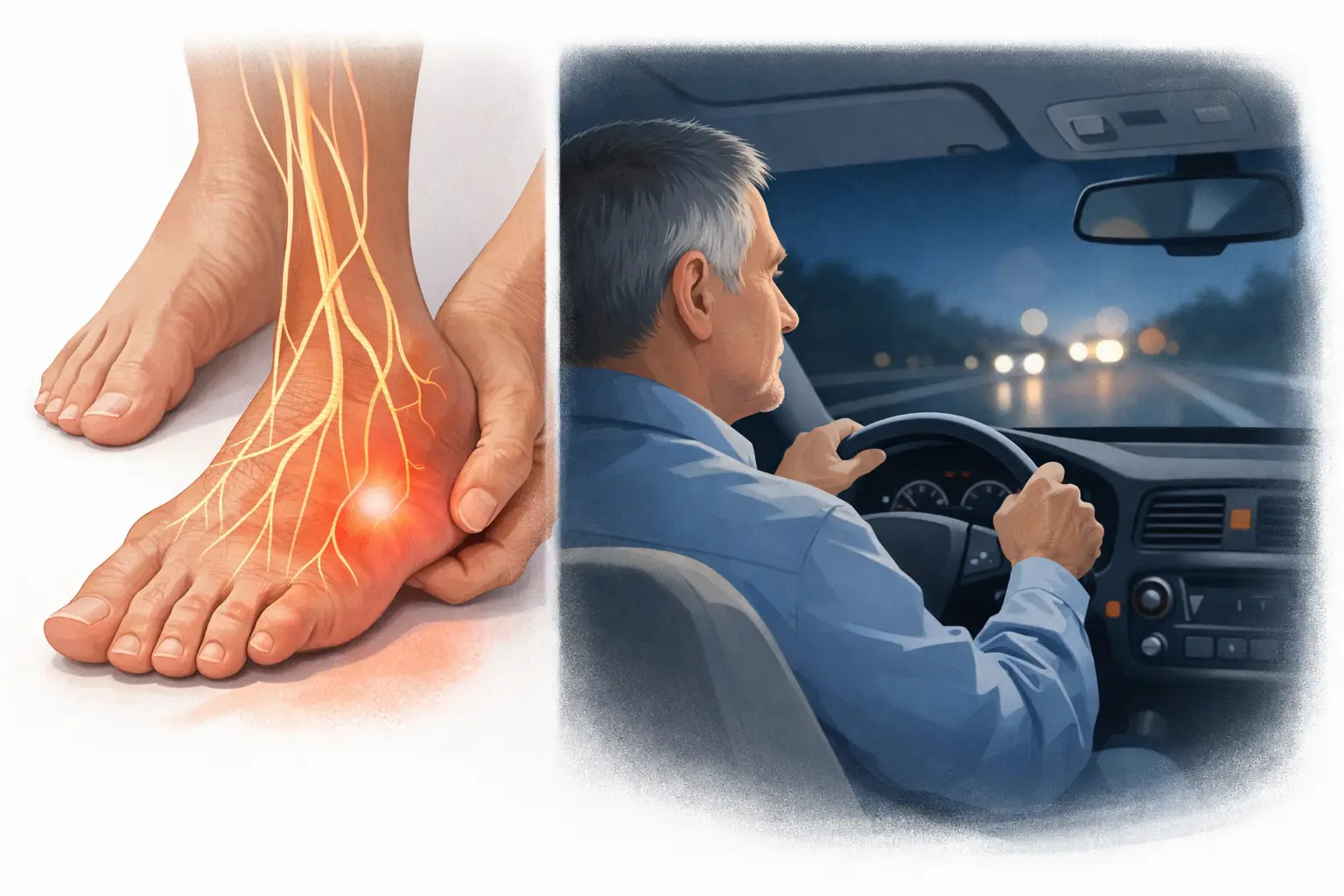
Neuropathy can affect driving safety when numbness, weakness, pain, poor ankle control, or delayed reaction time interfere with pedal control. It does not automatically mean someone must stop driving, but symptoms that affect the ability to feel, press, or switch between pedals should be taken seriously and discussed with a healthcare professional.
A numb foot on the gas pedal is not a small problem. For many adults, neuropathy and driving safety become a real concern long before anyone brings it up at a doctor visit. If your feet burn, tingle, feel weak, or go partially numb, the issue is not just comfort. It is whether you can accurately feel the pedals, move between them quickly, and react in time.
This topic deserves a practical, measured look. Neuropathy does not automatically mean a person must stop driving. But it can affect the skills that safe driving depends on, especially in the legs and feet. The challenge is that symptoms often change gradually, which makes it easy to adapt without fully noticing how much control has been lost.
Why neuropathy can affect driving
Peripheral neuropathy refers to nerve damage or dysfunction, often involving the feet, legs, hands, or arms. In driving, the greatest concern is usually lower-extremity involvement. Safe pedal control requires sensation, coordination, muscle strength, and timing. Neuropathy can interfere with all four.
A driver may have trouble judging how firmly the accelerator is being pressed, whether the foot is centered on the brake, or how fast the foot can move in an emergency. Even mild sensory loss can matter in stop-and-go traffic, bad weather, or situations that require split-second braking.
Pain can also be a factor. Burning, stabbing, or electric-like sensations may distract attention from the road. Some people drive with one foot shifted or tense because a normal pedal position is uncomfortable. That kind of compensation may seem minor, but it can reduce precision over time.
Symptoms that raise driving safety concerns
Neuropathy Symptoms That May Affect Driving
| Symptom | Why It Matters for Driving |
|---|---|
| Foot Numbness | May make it harder to feel the gas or brake pedal accurately. |
| Burning Pain | Can distract attention and make normal foot position uncomfortable. |
| Weakness | May reduce the ability to press or release pedals quickly. |
| Poor Ankle Control | Can interfere with precise movement between gas and brake. |
| Delayed Reaction Time | May increase stopping distance during sudden braking. |
Not every neuropathy symptom affects driving the same way. Tingling alone may be annoying but not disabling. Numbness, weakness, and delayed response are usually more concerning.
The symptoms most relevant to driving include reduced ability to feel the pedals, trouble lifting the front of the foot, cramping, poor ankle control, leg weakness, and slowed reaction time. Some people describe a “sock-like” numbness that makes the pedal feel far away or vague under the foot. Others notice they are pressing harder than intended, or they hesitate before braking because they do not fully trust what they are feeling.
If symptoms flare after sitting for a while, that matters too. Long drives can worsen stiffness, numbness, and discomfort. The first few seconds after moving the foot from the floor to the pedal may be less controlled than expected.
Neuropathy and driving safety: when risk goes up
Risk is rarely based on one symptom alone. It tends to rise when several problems overlap, such as numbness plus weakness, or pain plus sedating medication.
Driving may be less safe when you cannot consistently tell the difference between gas and brake by feel, when you have had near-misses because your foot slipped or hesitated, or when your symptoms are noticeably worse at night. Reduced sensation can be more dangerous in unfamiliar vehicles, since pedal spacing and resistance may differ from what your body has learned.
Medication is another variable. Some people with neuropathy take drugs that can cause drowsiness, dizziness, or slower thinking. In that situation, the concern is not just the nerve symptoms. It is the combined effect on alertness and reaction time.
Fatigue also deserves attention. Neuropathy often feels more intense later in the day. A person who seems fine on a short morning drive may struggle during a long evening trip home.
Key Takeaways
- Neuropathy can affect pedal control, reaction time, and foot placement.
- Numbness, weakness, poor ankle control, and delayed braking are more concerning than tingling alone.
- Symptoms may become worse during long drives or later in the day.
- Medication side effects can add to driving risk if they cause drowsiness or dizziness.
- Supportive footwear, shorter trips, and medical evaluation may help reduce risk.
- If pedal control becomes unreliable, driving should be paused until the issue is evaluated.
Warning signs you should not ignore
Most drivers do not need a formal test to know something is off. The body usually gives clues first.
Pay attention if you have accidentally hit the wrong pedal, needed to look down at your feet to reposition them, or found it harder to brake smoothly. The same applies if family members comment on delayed stops, jerky acceleration, drifting attention because of foot pain, or reluctance to drive in traffic.
Another warning sign is changing your route to avoid left turns, highways, or crowded roads because your feet do not feel dependable. That kind of self-limiting behavior can be sensible, but it may also signal that your current driving ability needs a more direct review.
⚠ Important
If neuropathy symptoms make it difficult to reliably feel, press, or switch between pedals, driving may not be safe until the issue is evaluated. Near-misses, delayed braking, foot slips, or needing to look down at the pedals should be treated as serious warning signs.
What causes the problem matters
Neuropathy is a broad term, not one diagnosis. The impact on driving depends partly on the cause, pattern, and severity of nerve involvement.
For example, diabetic neuropathy often affects sensation in the feet and can progress gradually. Vitamin B12 deficiency can also contribute to numbness, tingling, balance problems, and weakness. Alcohol-related neuropathy, chemotherapy-related neuropathy, nerve compression, and certain autoimmune or metabolic conditions may present differently. Some forms are mainly sensory. Others involve significant motor weakness.
According to the NIH Office of Dietary Supplements, vitamin B12 is essential for neurological function and low levels may contribute to numbness, tingling, balance problems, and other nerve-related symptoms.
That distinction matters because weakness can be more dangerous than mild tingling. A person with preserved strength but reduced sensation may still compensate reasonably well. A person with foot drop or poor ankle control may not.
Since this site focuses on evidence-informed supplement education, it is worth saying clearly that nutritional issues, including low vitamin B12 in some individuals, deserve proper medical evaluation rather than guesswork. Supplements may be appropriate in some cases, but they should not be used as a substitute for assessing driving risk or identifying the actual cause of nerve symptoms.
How to assess your own driving ability realistically
Self-assessment is imperfect, but it is still useful when done honestly. Start with specific questions, not general confidence. Ask yourself whether you can feel both pedals clearly, move between them without hesitation, and maintain control after 20 to 30 minutes of driving.
Think about recent situations rather than assumptions. Have you missed a pedal edge, braked later than intended, or felt unsure in parking lots or heavy traffic? Have symptoms changed in the last few months? Gradual decline is easy to normalize.
If possible, test your comfort in a safe setting such as an empty parking lot with another adult present. Notice whether braking is smooth and immediate, whether your foot placement is accurate without looking, and whether pain or numbness increases as you drive.
Steps that may improve safety
Some drivers can continue driving more safely by adjusting habits and getting the right evaluation. That does not mean ignoring symptoms. It means reducing risk while figuring out what is contributing to the problem.
Supportive footwear can help, especially shoes with a stable sole and predictable grip. Extremely thick soles, loose slippers, or shoes that reduce pedal feel further are generally a poor choice. Some people do better driving shorter distances, taking breaks on longer trips, and avoiding nighttime or heavy-traffic driving when symptoms are at their worst.
Vehicle type matters as well. Cars with lighter pedal pressure or better seat positioning may be easier to control than others. If entering, sitting, or repositioning the feet is awkward, that can add another layer of risk.
For some individuals, a clinician may recommend physical therapy, a driving evaluation, or adaptive equipment. These options depend on the pattern of weakness or sensory loss. They are not necessary for everyone, but they can be very helpful when standard driving has become unreliable.
When to talk to a healthcare professional
A healthcare visit makes sense if neuropathy symptoms are new, worsening, asymmetrical, painful enough to distract you, or affecting daily activities such as walking and driving. Mention driving specifically. Many patients talk about numbness but do not explain that they feel unsure at the pedals.
A clinician may assess sensation, strength, balance, reflexes, medication effects, and possible causes such as diabetes, vitamin deficiencies, thyroid issues, alcohol use, or medication side effects. If needed, they may suggest further neurologic evaluation. The goal is not simply to label the problem. It is to understand whether your current symptoms create a meaningful driving risk.
When it may be time to stop driving, at least for now
This is the hardest part of the discussion, but avoiding it helps no one. If you cannot reliably feel or control the pedals, if you have had repeated close calls, or if pain and weakness are making you drive unpredictably, stepping back from driving may be the safest choice until you are evaluated.
For some people, the pause is temporary while the cause is investigated or symptoms are better managed. For others, it may lead to permanent changes in how they get around. Either way, making that decision early is far better than waiting for a crash to make it for you.
The most useful mindset is not fear. It is honesty. Neuropathy can affect driving in subtle ways before it becomes obvious, and the safest drivers are often the ones willing to notice those changes early.
Frequently Asked Questions
Can neuropathy affect driving?
Yes. Neuropathy can affect driving when numbness, weakness, pain, poor ankle control, or delayed reaction time interfere with safe pedal control.
Does neuropathy mean I have to stop driving?
Not always. Some people with mild symptoms can continue driving safely, but symptoms that affect pedal control should be medically evaluated.
What neuropathy symptoms are most concerning for driving?
Reduced pedal sensation, foot weakness, poor ankle control, delayed braking, foot slips, and trouble moving between pedals are important warning signs.
Can vitamin B12 deficiency affect driving safety?
Vitamin B12 deficiency may contribute to numbness, tingling, weakness, and balance problems, which can indirectly affect driving ability in some people.
When should I stop driving because of neuropathy?
Driving should be paused if you cannot reliably feel or control the pedals, have repeated near-misses, experience delayed braking, or feel unsafe behind the wheel.
Medical Disclaimer: The information provided in this article is for educational purposes only and is not intended as medical advice. Dietary supplements are not a replacement for professional medical diagnosis or treatment. Always consult with a qualified healthcare professional before starting any new supplement, especially if you have pre-existing medical conditions or are taking prescription medications. Individual results may vary.

- Can Low B12 Cause Dizziness? - July 9, 2026
- B12 Deficiency and Cracked Corners of the Mouth - July 9, 2026
- Can Low B12 Cause Dry Mouth? - July 8, 2026