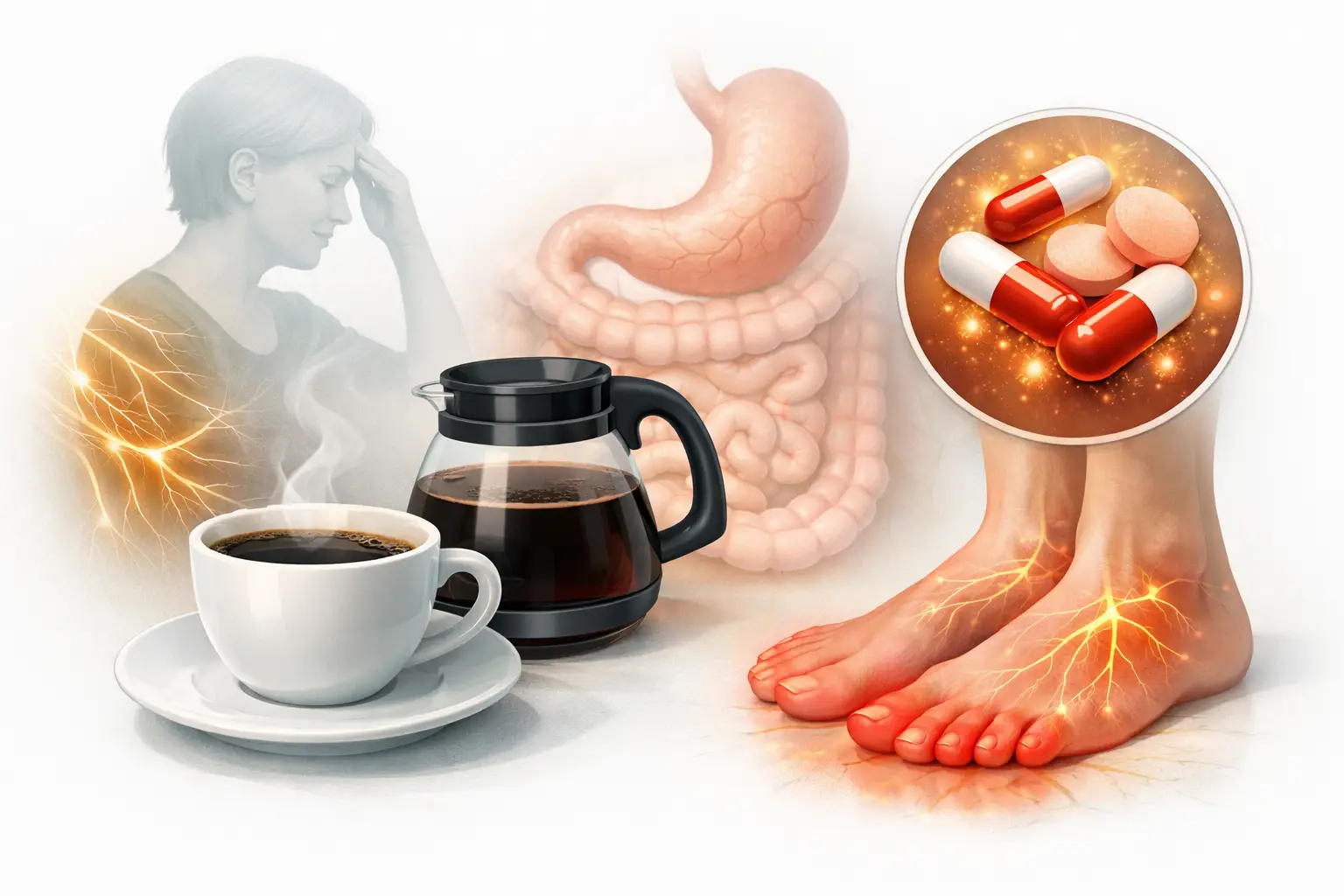
Coffee does not appear to significantly block vitamin B12 absorption in most adults. The bigger factors are usually stomach acid, intrinsic factor, medications, digestive health, diet quality, and whether coffee is replacing actual meals over time.
If you take vitamin B12 for low energy, tingling, numbness, or general nerve-health support, one question comes up often: does coffee affect vitamin B12 absorption? The short answer is probably not in a major way for most people, but the full answer depends on why your B12 is low, how you take it, and whether coffee is replacing food or irritating your digestion.
For adults over 45, this distinction matters. B12 deficiency is not always about what you eat. Quite often, it is tied to age-related changes in stomach acid, certain medications, digestive conditions, or reduced intrinsic factor, which is the protein needed to absorb B12 properly. Coffee can be part of the picture, but it is rarely the main reason someone becomes deficient.
Key Takeaways
- Coffee is unlikely to strongly block vitamin B12 absorption by itself.
- Low stomach acid, medications, and digestive conditions are usually more important causes of low B12.
- Metformin, acid blockers, pernicious anemia, and aging may significantly affect absorption.
- Heavy coffee intake may indirectly reduce nutrient intake if meals are skipped regularly.
- Persistent fatigue, numbness, tingling, balance issues, or burning sensations deserve proper medical evaluation.
Does coffee affect vitamin B12 absorption directly?
Based on current evidence, coffee does not appear to block vitamin B12 absorption in the same clear, well-established way that some compounds can interfere with minerals such as iron. There is no strong clinical evidence showing that a normal cup of coffee directly prevents the body from absorbing meaningful amounts of vitamin B12 from food or supplements.
That said, there are a few reasons coffee still gets blamed.
First, coffee can stimulate digestion and, in some people, speed up gastric emptying or bowel activity. That may lead people to assume nutrients are passing through too quickly to be absorbed. In reality, B12 absorption is a fairly specific process that starts in the stomach and continues in the small intestine. It depends more on stomach acid, intrinsic factor, pancreatic function, and the health of the small intestine than on coffee itself.
Second, some people drink coffee instead of eating breakfast. If that habit lowers overall intake of B12-rich foods such as fish, dairy, eggs, or fortified foods, coffee may be associated with lower B12 status without actually causing poor absorption. In other words, the problem may be diet pattern, not a direct nutrient interaction.
Third, coffee can aggravate reflux, gastritis, or stomach discomfort in some adults. If you already have digestive issues that affect B12 absorption, coffee might worsen symptoms around the edges. That is different from saying coffee alone causes malabsorption.
Why B12 absorption is more complicated than most people think
What Actually Affects Vitamin B12 Absorption
Many adults focus heavily on coffee timing while overlooking the factors that have a much larger effect on vitamin B12 status.
| Factor | Potential Effect on B12 | How Important It Usually Is |
|---|---|---|
| Low stomach acid | Reduces release of food-bound B12 | Very important |
| Intrinsic factor problems | Impairs absorption in the intestine | Very important |
| Metformin use | May lower long-term B12 levels | Clinically important |
| Acid-reducing medications | Reduce stomach acid needed for release | Clinically important |
| Coffee consumption | Usually minimal direct effect | Often overestimated |
| Skipping meals | May reduce dietary B12 intake | Moderately important |
Vitamin B12 has one of the most complex absorption pathways of any vitamin. Food-bound B12 must be released from protein in the stomach, which requires adequate stomach acid and digestive enzymes. It then binds to intrinsic factor and is absorbed in the last part of the small intestine.
The NIH Office of Dietary Supplements explains how vitamin B12 absorption depends on stomach acid, intrinsic factor, digestion, and overall gastrointestinal health.
This is why many adults with low B12 are dealing with underlying factors such as reduced stomach acid with age, long-term use of acid-reducing drugs, metformin use, gastrointestinal surgery, autoimmune pernicious anemia, or digestive disorders affecting the ileum. In these cases, worrying about coffee timing may distract from the bigger issue.
Supplemental B12 can behave differently from food-based B12. Crystalline B12 found in tablets, capsules, sublingual products, and fortified foods is not tightly bound to protein, so it does not require the same release process in the stomach. That can make it easier to absorb than B12 from food for some people, especially older adults with low stomach acid.
Coffee, stomach acid, and the over-45 reader
Many adults 45 and older assume that if coffee increases stomach acid or causes a “sour stomach,” it must also damage nutrient absorption. The reality is less straightforward.
Some people have symptoms of reflux or indigestion and also have low stomach acid or altered digestion overall. Others take proton pump inhibitors or H2 blockers for years, which can reduce the release of B12 from food. In that situation, the medication history is often more relevant than the morning coffee habit.
Coffee may still matter if it makes you skip meals, worsens nausea, or leads you to avoid animal foods because your stomach feels unsettled early in the day. Over time, that can indirectly reduce B12 intake. This tends to be more of a lifestyle pattern issue than a direct absorption problem.
Does coffee affect vitamin B12 supplements?
For most people, having coffee around the same time as a B12 supplement is unlikely to make a meaningful difference. There is no widely accepted evidence-based rule that says coffee must be separated from B12 by hours.
Still, practical timing can help in a few situations. If you take a standard oral B12 tablet with breakfast and coffee and feel stomach discomfort, it may be worth taking the supplement later with food and water. If you use a sublingual B12 lozenge or dissolvable tablet, some clinicians and consumers prefer taking it with a relatively clear mouth rather than immediately after coffee, especially if coffee changes saliva flow or leaves residue in the mouth. This is a practical preference, not a proven requirement.
If your B12 status is borderline or you are supplementing because of known deficiency, consistency matters more than perfect timing. Taking the supplement regularly and using an appropriate dose based on your clinician’s guidance is more important than micromanaging your coffee schedule.
Who should pay closer attention?
Coffee is usually not the main concern, but some readers should be more careful about the full picture.
Adults with fatigue, burning feet, tingling, numbness, memory changes, balance issues, or unexplained weakness should not assume coffee is the cause of low B12. Those symptoms deserve a proper medical evaluation because B12 deficiency can overlap with other issues, including folate deficiency, diabetes-related nerve problems, thyroid disorders, anemia, or circulation concerns.
People at higher risk of low B12 include older adults, vegans, vegetarians with low intake of fortified foods, long-term metformin users, those taking acid-suppressing medication, and people with digestive conditions affecting absorption. If you fall into one of these groups, focusing only on whether coffee interferes with B12 may miss the real reason levels are low.
Heavy coffee consumption can also be a clue to broader habits. If several large cups of coffee are replacing meals, hydration, or nutrient-dense foods, then your nutrient status may suffer overall. Again, that is less about B12 absorption chemistry and more about daily intake and routine.
What the research suggests in plain language
Research on coffee and B vitamins is mixed and not always specific to B12 absorption itself. Some observational studies have looked at coffee intake and blood levels of various nutrients, but those studies cannot easily separate coffee from diet quality, smoking, alcohol use, medications, and other lifestyle factors.
What is more established is that B12 deficiency often develops slowly and for reasons unrelated to coffee. Pernicious anemia, atrophic gastritis, reduced stomach acid, gastrointestinal disease, and medication effects are far better documented causes. That is why a person can drink very little coffee and still be B12 deficient, while another drinks coffee daily and maintains normal levels.
This distinction is useful for supplement shoppers. If a product claims coffee is a major hidden reason your B12 is not working, that is stronger than the evidence supports. A more credible explanation is that your absorption capacity, dose, supplement form, adherence, and underlying health factors all matter.
Practical guidance if you drink coffee and take B12
A reasonable approach is simple. If coffee does not upset your stomach and you tolerate your supplement well, there is usually no need to avoid coffee completely. If you want to be cautious, take your B12 with water and give coffee a little space before or after, especially if you notice stomach irritation.
It also helps to look at the bigger context. Make sure your breakfast or first meal includes actual nutrition rather than coffee alone. Review medications that can affect B12. If you have persistent symptoms or known low levels, ask your healthcare professional whether testing is appropriate and whether oral, sublingual, or other forms of B12 make sense for your situation.
When evaluating a B12 supplement, avoid treating caffeine timing as the main marker of quality. More useful questions include whether the dose is appropriate, whether the form is clearly labeled, whether the product is suitable for your diet, and whether your symptoms have been medically assessed rather than self-diagnosed.
The bottom line for adults concerned about low B12
Coffee is unlikely to significantly block vitamin B12 absorption in most healthy adults. For many people, the larger concerns are age-related digestive changes, low dietary intake, medication use, or conditions that reduce absorption. Coffee can still play an indirect role if it replaces meals or worsens digestive discomfort, but it is rarely the central explanation.
If you are dealing with symptoms that make you wonder about B12, the most useful next step is not cutting out coffee in a panic. It is stepping back and looking at the full pattern: your diet, your medications, your digestive health, your lab history, and the type of supplement you are actually using. That is usually where the real answer is found.
Frequently Asked Questions
Does coffee block vitamin B12 absorption?
Current evidence does not show that normal coffee intake strongly blocks vitamin B12 absorption in most healthy adults.
Can coffee indirectly affect vitamin B12 levels?
Yes. Heavy coffee intake may indirectly contribute if it replaces meals or worsens digestive discomfort that affects eating patterns.
What causes low vitamin B12 more often than coffee?
Reduced stomach acid, intrinsic factor problems, metformin, acid-reducing medications, aging, digestive disorders, and low dietary intake are much more established causes.
Should vitamin B12 supplements be separated from coffee?
Usually not. Most adults do not need to separate coffee and B12 supplements unless coffee worsens stomach discomfort personally.
What symptoms may overlap with low vitamin B12?
Fatigue, numbness, tingling, burning sensations, weakness, memory changes, and balance problems may sometimes overlap with low vitamin B12 status.
Medical Disclaimer: The information provided in this article is for educational purposes only and is not intended as medical advice. Dietary supplements are not a replacement for professional medical diagnosis or treatment. Always consult with a qualified healthcare professional before starting any new supplement, especially if you have pre-existing medical conditions or are taking prescription medications. Individual results may vary.

- Can Low B12 Cause Dizziness? - July 9, 2026
- B12 Deficiency and Cracked Corners of the Mouth - July 9, 2026
- Can Low B12 Cause Dry Mouth? - July 8, 2026