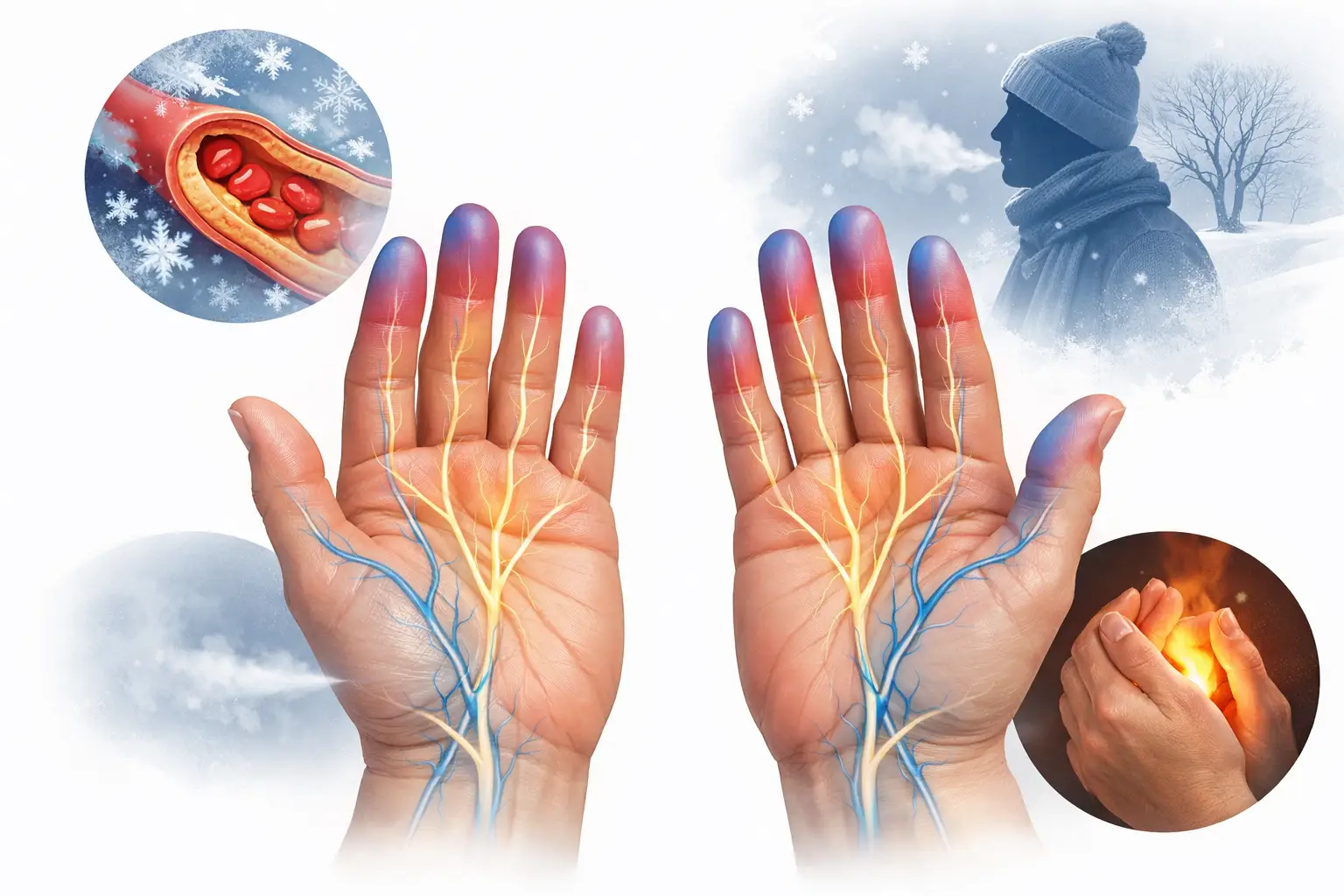
Hands may get cold easily because of blood vessel narrowing, low body temperature regulation, thyroid problems, anemia, medication effects, circulation changes, or altered nerve sensation. When coldness appears alongside numbness, tingling, pain, or color changes, a broader medical evaluation may be needed.
Cold hands are common, but when hands get cold easily even in a mild room or long after everyone else feels comfortable, people often wonder whether it is just poor circulation or something more. For adults over 45, this symptom can have several explanations, ranging from normal sensitivity to cold to blood vessel changes, thyroid problems, anemia, medication effects, or nerve-related issues that deserve a closer look.
A useful starting point is this: cold hands are a symptom, not a diagnosis. The temperature of your hands depends on blood flow, nerve signaling, body temperature regulation, and the surrounding environment. That is why the same complaint can come from very different underlying causes.
Key Takeaways
- Cold hands may result from circulation changes, temperature regulation, or altered nerve sensation.
- Raynaud’s phenomenon commonly causes cold fingers with color changes.
- Thyroid disease, anemia, diabetes, medication effects, and peripheral neuropathy are important possible contributors.
- Vitamin B12 deficiency may affect nerve signaling and temperature perception in some adults.
- Severe pain, skin discoloration, weakness, numbness, or one-sided coldness deserve medical evaluation.
Why hands get cold easily in some people
The body protects its core organs first. When you are exposed to cold air, emotional stress, or a sudden temperature shift, blood vessels in the hands can narrow. This is called vasoconstriction. It helps preserve body heat, but it also makes the fingers and palms feel noticeably colder.
Some people are simply more sensitive to this response. Age can play a role. So can lower body weight, reduced muscle mass, smoking history, and certain medications. In many cases, cold hands are occasional and harmless. The bigger question is whether the symptom is new, getting worse, or happening alongside numbness, tingling, pain, color changes, or fatigue.
Common causes of cold hands
One of the most common explanations is reduced blood flow to the hands. That does not always mean a serious blockage. It may reflect normal vessel narrowing in response to cold, but it can also occur with vascular conditions that make circulation less efficient.
Raynaud’s phenomenon is a well-known example. In Raynaud’s, small blood vessels in the fingers overreact to cold or stress. Fingers may turn white, then blue, and later red as blood flow returns. This can be uncomfortable and, in some cases, painful. Raynaud’s can occur on its own or alongside autoimmune conditions, so recurring color changes are worth discussing with a clinician.
Low thyroid function is another possibility. When thyroid hormone levels are low, metabolism slows and people often feel cold more easily overall. Dry skin, constipation, fatigue, weight gain, and hair thinning can appear with it. Cold hands by themselves do not prove a thyroid issue, but they can fit the pattern.
Anemia can also contribute. If the blood carries less oxygen than it should, people may feel tired, weak, short of breath, or unusually cold in the hands and feet. Iron deficiency is one cause, but not the only one. In older adults, anemia deserves proper evaluation rather than self-treatment.
Medication effects are sometimes overlooked. Some blood pressure medicines, migraine medications, stimulants, and decongestants can narrow blood vessels or change circulation in the extremities. If cold hands started after a medication change, that timing matters.
Diabetes and prediabetes can enter the picture as well, especially when coldness is mixed with burning, tingling, reduced sensation, or pain. In those cases, the issue may not be temperature alone. It may reflect nerve dysfunction, altered circulation, or both.
Cold hands and nerve-related symptoms
Many people assume cold hands always mean poor circulation. That is not necessarily true. Nerves help the body sense temperature accurately, and when nerves are irritated or damaged, a person may feel coldness even when the skin is not objectively very cold.
This distinction matters for adults researching numbness or tingling. Peripheral nerves carry sensory messages from the hands to the brain. If those nerves are not working well, temperature sensations can become distorted. A person may describe cold hands, pins and needles, patchy numbness, burning, or reduced grip at the same time.
Vitamin B12 is relevant here because inadequate B12 can affect nerve health.
The NIH Office of Dietary Supplements explains that vitamin B12 plays an important role in neurological function and nervous system health.
Not everyone with low B12 develops hand symptoms, and not everyone with cold hands has a deficiency. Still, when coldness appears with tingling, numbness, balance changes, memory concerns, fatigue, or glossitis, B12 status is one of several issues a healthcare professional may consider. The same applies to folate, vitamin B6 excess, diabetes, alcohol overuse, and certain medications that can affect nerve function.
For a site focused on evidence-based supplement reviews, this is where caution matters. A supplement may help support nutritional intake if a true deficiency or insufficiency exists, but it should not be presented as a cure for cold hands. The smarter approach is to identify the cause first.
When circulation may be the bigger concern
Cold Hands: Circulation vs Nerve-Related Clues
The overall symptom pattern often provides better clues than temperature sensation alone.
| Feature | More Suggestive of Circulation Issues | More Suggestive of Nerve Involvement |
|---|---|---|
| Main sensation | True coldness to the touch | Cold sensation despite normal skin temperature |
| Color changes | White, blue, or mottled fingers | Less prominent |
| Numbness or tingling | Possible but less dominant | Common feature |
| Symmetry | May vary between hands | Often affects both hands |
| Associated symptoms | Color change, pain with cold exposure | Burning, sensory changes, grip issues |
| Possible causes | Raynaud’s, vascular disease | Peripheral neuropathy, vitamin deficiency |
If your hands get cold easily and also look pale, bluish, or mottled, blood flow deserves more attention. The same is true if one hand is much colder than the other, or if symptoms appear during walking, climbing stairs, or other situations that suggest broader vascular strain.
Peripheral artery disease is more often discussed in the legs, but systemic circulation problems can affect the extremities in different ways. Risk factors include smoking, high blood pressure, high cholesterol, diabetes, and older age. In this setting, cold hands may be only one clue among many.
There is also a practical point here: people often use the term poor circulation loosely. Sometimes it is accurate. Sometimes the real issue is vasospasm, thyroid dysfunction, anemia, low calorie intake, or nerve-related sensory change. The label sounds simple, but the cause often is not.
Signs you should not ignore
Persistent cold hands are not always urgent, but a few patterns deserve prompt medical attention. Sudden severe coldness, new weakness, significant pain, skin ulcers, dark discoloration, or loss of pulse should not be brushed off.
More commonly, the symptom becomes worth a scheduled medical discussion when it is frequent, worsening, interfering with daily life, or combined with other symptoms such as fatigue, dizziness, shortness of breath, numbness, tingling, hand pain, or recurring finger color changes.
What a clinician may look for
A basic evaluation usually starts with history and pattern recognition. Does the coldness happen only in winter or year-round? Is it both hands or one? Is there numbness, burning, or color change? Are there medication changes, smoking exposure, weight changes, or thyroid symptoms?
From there, clinicians may examine pulses, skin color, capillary refill, temperature difference between hands, and neurologic function. Depending on the situation, testing might include blood work for anemia, thyroid function, glucose control, vitamin B12, and other relevant markers. Some cases need vascular testing or rheumatology input, especially when Raynaud’s or autoimmune disease is suspected.
Practical steps that may help
If no urgent cause is apparent, basic self-care can reduce symptoms. Keeping the whole body warm often works better than focusing only on gloves. Warm layers, regular movement, and avoiding sudden cold exposure can make a real difference because the body prioritizes core temperature.
Smoking cessation is important if relevant, since nicotine narrows blood vessels. Regular physical activity may improve circulation over time, though it is not an instant fix. If symptoms tend to come with stress, relaxation strategies can help some people because stress can trigger vessel tightening.
Nutrition also matters, but with realistic expectations. If a person is low in iron, B12, or other key nutrients, correcting that deficiency may support energy levels and nerve or blood health. What it should not do is replace evaluation when symptoms are persistent or unexplained. More is not always better, especially with supplements like vitamin B6, which can cause problems at high intake levels.
Should you consider a supplement?
That depends on the reason your hands feel cold. If the problem is environmental cold exposure, Raynaud’s, medication effects, or thyroid disease, a random supplement is unlikely to solve it. If testing suggests a nutrient shortfall, targeted supplementation may be reasonable under professional guidance.
This is where product quality and labeling matter. Adults over 45 often take multiple medications or have several health concerns at once, so it makes sense to choose supplements based on ingredient form, dose, third-party quality signals, and whether the product matches a documented need. Broad promises about circulation or nerve support should be viewed carefully.
Cold hands can be a minor annoyance, but they can also be the body’s way of signaling a vascular, metabolic, or neurologic issue that deserves more than guesswork. If the symptom is new, persistent, or paired with numbness, color changes, fatigue, or pain, a proper medical review is more useful than assuming it is just part of getting older.
Frequently Asked Questions
Why do my hands get cold so easily?
Cold hands may result from blood vessel narrowing, cold sensitivity, low thyroid function, anemia, medication effects, circulation changes, or altered nerve sensation.
Can neuropathy make hands feel cold?
Yes. Peripheral nerve dysfunction may alter how temperature sensations are processed, causing cold sensations even when the hands are not objectively cold.
Can vitamin B12 deficiency affect temperature sensation?
Low vitamin B12 may contribute to tingling, numbness, balance changes, fatigue, and altered nerve signaling that affects sensory perception.
What symptoms make cold hands more concerning?
Color changes, pain, ulcers, weakness, numbness, one-sided coldness, or worsening symptoms deserve medical evaluation.
Can stress make hands cold?
Yes. Emotional stress may trigger blood vessel narrowing and temporarily reduce blood flow to the fingers and hands.
Medical Disclaimer: The information provided in this article is for educational purposes only and is not intended as medical advice. Dietary supplements are not a replacement for professional medical diagnosis or treatment. Always consult with a qualified healthcare professional before starting any new supplement, especially if you have pre-existing medical conditions or are taking prescription medications. Individual results may vary.

- Can Low B12 Cause Dizziness? - July 9, 2026
- B12 Deficiency and Cracked Corners of the Mouth - July 9, 2026
- Can Low B12 Cause Dry Mouth? - July 8, 2026