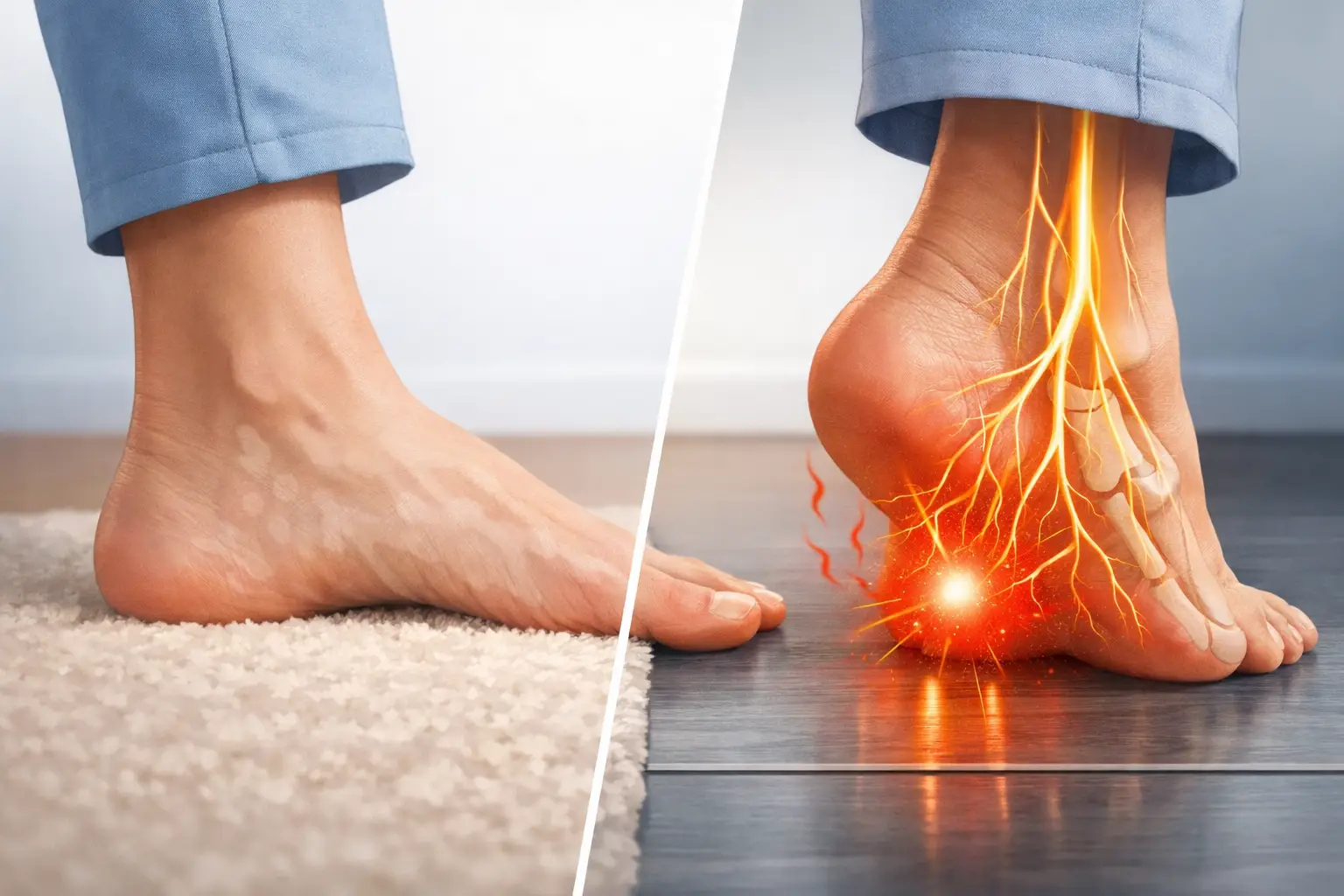
Hard floors may feel more uncomfortable over time because of reduced foot cushioning, joint strain, footwear issues, or changes in nerve sensitivity. Burning, tingling, numbness, or unusual floor sensitivity may suggest nerve involvement rather than simple soreness alone.
If floors feel harder on my feet than they used to, that change is worth paying attention to. Many adults notice it gradually – tile feels harsher, standing in the kitchen gets tiring faster, and even short walks indoors leave the soles aching or unusually sensitive. While this can be related to simple wear and tear, it can also reflect changes in the foot’s natural cushioning, joint mechanics, circulation, or nerve function.
This symptom is common after midlife because the foot changes with age. The fatty padding under the heel and ball of the foot can thin out, joints may become stiffer, and muscles that help support the arch can weaken. The result is not always sharp pain. Sometimes it is simply the sense that every hard surface feels less forgiving.
Key Takeaways
- Hard floors may feel harsher because of reduced natural foot cushioning and biomechanical strain.
- Walking barefoot indoors often worsens pressure on the heel and forefoot.
- Burning, tingling, numbness, or unusual floor sensitivity may point toward nerve involvement.
- Vitamin B12 deficiency, diabetes, circulation issues, arthritis, and plantar fasciitis are important possible contributors.
- Rapid numbness, balance changes, weakness, swelling, or non-healing sores deserve medical evaluation.
Why floors feel harder on my feet
The foot is designed to absorb force. With each step, your heel pad, forefoot tissues, arches, tendons, and small muscles work together to reduce impact. When one part of that system changes, you may feel more pressure from the floor itself.
One of the most common reasons is fat pad atrophy. The heel and ball of the foot have specialized cushioning that acts like a natural shock absorber. Over time, that padding may become thinner or shift slightly. When that happens, pressure is less evenly distributed, and hard floors can feel much more noticeable than carpet or cushioned surfaces.
Footwear also plays a major role. Many people wear supportive shoes outdoors but spend long periods at home barefoot or in thin slippers. That matters more than it seems. Hardwood, concrete, laminate, and tile create repeated pressure on the same areas of the sole. If your feet already have reduced padding or mild inflammation, walking barefoot indoors may amplify the problem.
There is also the question of nerve sensitivity. Some people do not just feel soreness – they feel heightened awareness of the floor, odd tenderness, tingling, burning, or a sensation that the surface is somehow “too hard” or “too sharp.” That can happen when the nerves in the feet become irritated or less able to process sensation normally.
Common causes beyond simple soreness
Mechanical strain is one possibility. Plantar fasciitis, for example, often causes heel pain that is worst with the first steps in the morning, but it can also make hard surfaces feel less tolerable throughout the day. Arthritis in the midfoot or toes can change how pressure moves through the foot. High arches may concentrate weight on the heel and forefoot, while flatter feet may contribute to fatigue and strain after standing.
Loss of soft tissue padding is another major factor, especially in adults over 45. This does not always look dramatic from the outside. A foot can appear normal but still have less shock absorption than it once did. People often describe this as feeling like they are “walking directly on bone” or that the floor seems much less forgiving than before.
Nerve-related issues deserve careful attention. Peripheral neuropathy can cause burning, numbness, tingling, electric sensations, or altered sensitivity. In some cases, the earliest complaint is not classic pain but a change in how the floor feels. A person may say the ground feels unusually hard, strangely textured, or uncomfortable even when there is no visible injury.
Vitamin B12 status can matter here because B12 plays an essential role in nerve health. Low B12 levels may contribute to numbness, tingling, balance changes, or other sensory symptoms in some people. That does not mean every case of foot discomfort points to a deficiency, and supplements are not a blanket solution. Still, if hard floors now feel distinctly uncomfortable along with other nerve-type symptoms, B12 is one of several reasonable issues to discuss with a clinician.
Circulation can also affect how your feet feel. Poor blood flow may lead to cold feet, cramping, color changes, or discomfort with activity. It is less likely to cause the specific sensation of hard floors by itself, but it can add to foot fatigue and reduced tissue resilience.
Clues that suggest a nerve issue
Hard Floor Sensitivity: Cushioning Loss vs Nerve Symptoms
The overall symptom pattern often helps distinguish mechanical foot strain from possible nerve-related causes.
| Feature | More Common With Cushioning Loss | More Common With Nerve Issues |
|---|---|---|
| Main sensation | Pressure soreness or tenderness | Burning, tingling, numbness |
| When symptoms worsen | Standing barefoot on hard floors | Nighttime or even at rest |
| Footwear response | Improves with cushioning | May remain abnormal despite support |
| Balance changes | Less common | More concerning for sensory loss |
| Typical causes | Fat pad thinning, plantar strain | Peripheral neuropathy, vitamin deficiency |
| Foot appearance | Often normal externally | May also appear normal early on |
Not every sore foot is neuropathy, but certain patterns make nerve involvement more likely. If the sensation is paired with burning, pins and needles, numb patches, or increased sensitivity to touch, that shifts the picture. Symptoms in both feet, especially if they are fairly symmetrical, also raise the possibility of a systemic cause rather than a single strained tendon or sore spot.
Pay attention to timing. Mechanical problems are often worse after long standing, after specific activity, or when barefoot on hard surfaces. Nerve symptoms may also worsen at night, occur even at rest, or come with unusual sensory changes such as feeling like socks are bunched under the toes when they are not.
Balance changes are another clue. If you feel less steady in dim light or have trouble sensing the ground clearly, it is worth mentioning. Reduced sensation in the feet can affect gait before pain becomes severe.
When hard floors point to cushioning loss instead
If the main complaint is pressure pain in the heel or ball of the foot, especially on tile or concrete, fading natural cushioning may be the more likely explanation. This often feels better in supportive sneakers and worse when barefoot. You may notice tenderness directly under the heel, discomfort under the ball of the foot, or a general sense that standing still is more uncomfortable than walking.
The distinction matters because management is different. Nerve symptoms call for a broader health review, while fat pad loss and biomechanical strain are often improved with better footwear, inserts, and changes in standing habits.
Practical steps that often help
Start with footwear inside the house, not just outside. For many adults, this is the simplest and most effective change. A shoe or structured house sandal with cushioning and arch support can reduce repetitive stress on the heel and forefoot. Thin flip-flops and flat slippers usually do very little.
If one area of the foot is especially tender, cushioned insoles or metatarsal pads may help redistribute pressure. The right choice depends on the location of symptoms. Heel cups can help with heel discomfort, while forefoot padding may reduce pressure under the ball of the foot. More cushioning is not always better, though. Some people need a balance of softness and support rather than a very squishy insert that destabilizes the foot.
Activity patterns matter too. Long periods of standing on hard floors can aggravate symptoms even if walking is tolerable. Short sitting breaks, supportive mats in work areas like the kitchen, and rotating shoes can make a meaningful difference.
Gentle calf and plantar fascia stretching may help if stiffness is part of the problem. If the foot muscles are weak or the arch is poorly supported, targeted exercises can sometimes improve comfort over time. But if symptoms are clearly neurological – burning, numbness, or progressing sensory changes – stretching alone is unlikely to address the main issue.
Should you think about vitamin deficiencies or supplements?
For readers who are already researching nerve health, it is reasonable to wonder whether nutrient status is playing a part. Vitamin B12 is one of the better-known nutrients connected to nerve function, and deficiency can occur for several reasons, including low dietary intake, digestive absorption issues, certain medications, and age-related changes.
The NIH Office of Dietary Supplements explains that vitamin B12 plays an important role in neurological function and nervous system health.
That said, self-diagnosing from symptoms alone is unreliable. Foot discomfort can come from shoes, biomechanics, arthritis, skin changes, circulation issues, or nerve problems unrelated to B12. If you are considering a supplement, evidence-informed use starts with identifying whether there is a plausible reason you might be low and whether testing makes sense. More is not always better, and not every nerve symptom improves with supplementation.
For a health editorial site such as VitB12Supplement.com, the most responsible approach is straightforward: supplements may support normal nutrient intake when a deficiency or increased need exists, but they are not a substitute for diagnosing the cause of new foot symptoms.
When to seek medical evaluation
You do not need an emergency visit for every sore sole, but some patterns deserve prompt attention. New numbness, rapidly worsening pain, weakness, balance problems, skin color changes, swelling in one foot, or a sore that is not healing should not be ignored. The same applies if you have diabetes, known circulation problems, or a history of B12 deficiency and your symptoms are changing.
A clinician may look at footwear, foot structure, skin condition, circulation, and sensation. Depending on the pattern, they may consider issues such as plantar fasciitis, fat pad atrophy, arthritis, nerve compression, peripheral neuropathy, or nutritional factors. That broader view is often what separates guesswork from useful treatment.
If floors suddenly seem much less forgiving than they used to, the floor itself is usually not the real problem. More often, your feet are signaling a change in cushioning, support, or nerve sensation – and the sooner you identify which one, the easier it is to make everyday standing and walking more comfortable.
Frequently Asked Questions
Why do hard floors suddenly feel uncomfortable on my feet?
Reduced foot cushioning, joint strain, plantar fascia irritation, footwear issues, or changes in nerve sensitivity may all make hard surfaces feel less tolerable.
Can neuropathy make floors feel harder or sharper?
Yes. Peripheral neuropathy may alter how the nerves process pressure and sensation, causing the ground to feel unusually harsh, sharp, or uncomfortable.
Does walking barefoot indoors make symptoms worse?
Often yes. Hard indoor surfaces may increase repetitive pressure on the heel and forefoot, especially when natural foot padding has become thinner.
Can vitamin B12 deficiency affect foot sensation?
Low vitamin B12 may contribute to tingling, numbness, balance changes, burning sensations, and altered nerve sensitivity in some adults.
When should hard-floor sensitivity be medically evaluated?
Rapid numbness, weakness, balance decline, swelling, non-healing sores, severe pain, or progressive sensory changes deserve medical evaluation.
Medical Disclaimer: The information provided in this article is for educational purposes only and is not intended as medical advice. Dietary supplements are not a replacement for professional medical diagnosis or treatment. Always consult with a qualified healthcare professional before starting any new supplement, especially if you have pre-existing medical conditions or are taking prescription medications. Individual results may vary.

- Can Low B12 Cause Dizziness? - July 9, 2026
- B12 Deficiency and Cracked Corners of the Mouth - July 9, 2026
- Can Low B12 Cause Dry Mouth? - July 8, 2026