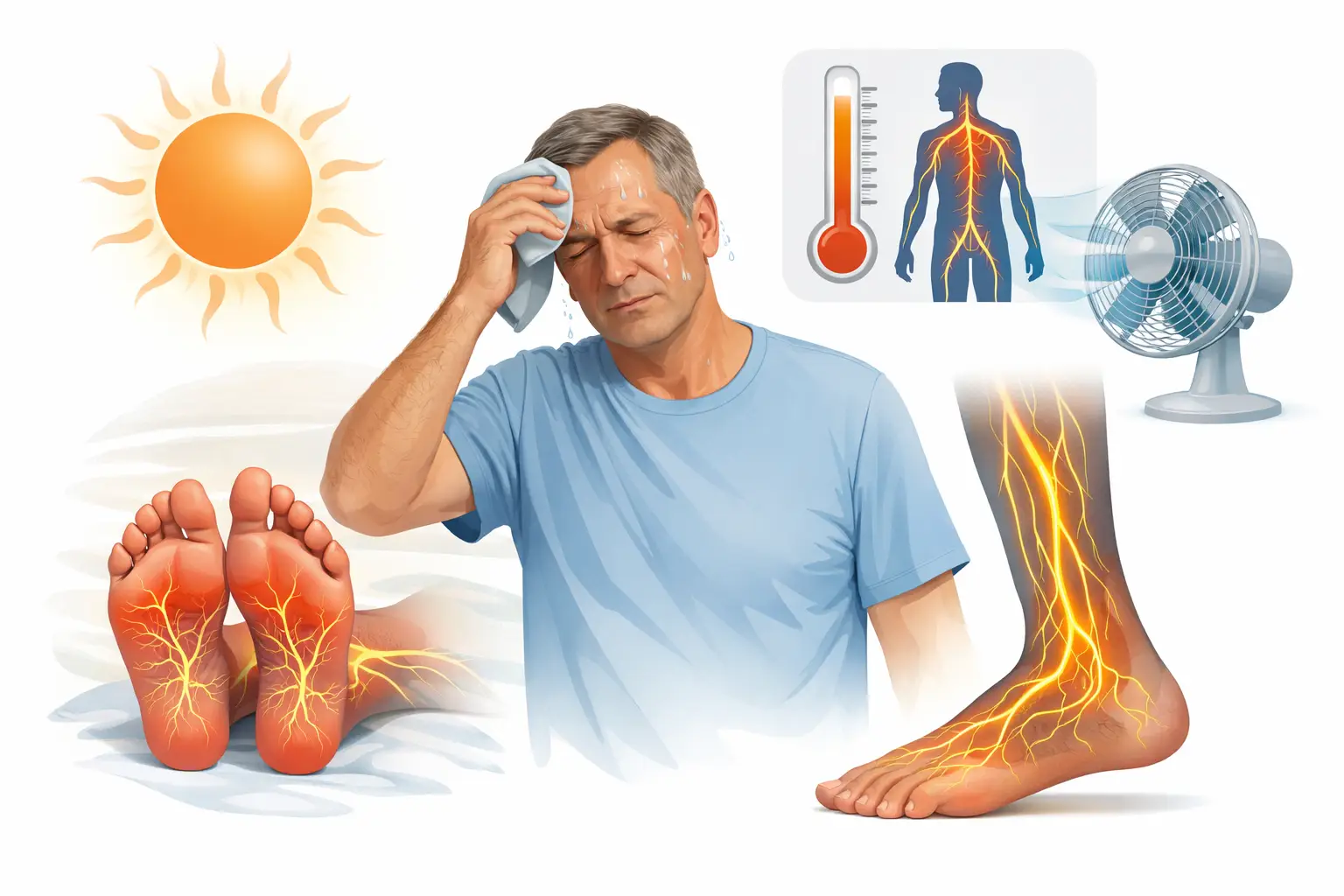
Neuropathy heat intolerance happens when warm temperatures, hot water, exercise, or overheating make nerve symptoms feel worse. People may notice increased burning, tingling, weakness, dizziness, sweating changes, or fatigue because damaged nerves can struggle with temperature regulation and sensory signaling.
If warm weather, hot showers, or even a heated room seem to make your tingling, burning, or weakness worse, neuropathy heat intolerance may be part of the picture. Many people notice that nerve-related symptoms feel more intense in heat, but they are not always told why that happens or what to do about it.
This matters because heat sensitivity can easily be mistaken for poor circulation, dehydration, aging, or simply being “bad with summer.” In reality, some forms of neuropathy can affect how nerves sense temperature, regulate sweating, and respond to stress on the body. For adults already dealing with numbness, foot pain, or unexplained burning sensations, understanding that connection can make symptoms feel less mysterious and more manageable.
Key Takeaways
- Heat can intensify neuropathy symptoms such as burning, tingling, swelling, weakness, and fatigue.
- Small fiber and autonomic nerve involvement may affect sweating, temperature regulation, and heat tolerance.
- Hot showers, summer weather, exercise, and tight footwear are common symptom triggers.
- Vitamin B12 deficiency, diabetes, medication effects, and dehydration are important contributors to consider.
- Severe dizziness, chest discomfort, fainting, or rapidly worsening symptoms deserve prompt medical evaluation.
What neuropathy heat intolerance means
Neuropathy is a broad term for nerve damage or nerve dysfunction. Heat intolerance refers to feeling unusually unwell or symptomatically worse in warm conditions. Put together, neuropathy heat intolerance usually means that heat aggravates existing nerve symptoms or causes the body to handle heat poorly.
That can show up in different ways. Some people notice more burning feet, stinging pain, or electric-shock sensations. Others feel weak, lightheaded, sweaty, or oddly unable to sweat enough. In some cases, the issue is not just discomfort from hot temperatures. It may reflect changes in the small nerves that help control temperature sensation and automatic body functions.
This is one reason symptoms vary so much from person to person. Peripheral neuropathy is not one single condition. Symptoms depend on which nerves are affected, how severely, and what the underlying cause is.
Why heat can make neuropathy symptoms worse
Heat tends to increase nerve symptom awareness in several ways. First, damaged nerves often send faulty signals. When body temperature rises, those unstable nerves may become even more irritable, which can intensify burning, prickling, or pain.
Second, heat causes blood vessels to widen. That is a normal cooling response, but in some people it can contribute to swelling in the feet or lower legs. Even mild swelling may increase pressure around already sensitive nerves, especially late in the day or after standing for long periods.
Third, heat places extra demands on the autonomic nervous system, the network that helps regulate sweating, heart rate, and temperature control. If neuropathy involves autonomic nerves, the body may struggle to cool itself efficiently. A person might overheat faster, feel flushed, become dizzy, or notice a mismatch between how hot they feel and how much they are sweating.
There is also a practical factor. Heat can worsen fatigue, reduce physical stamina, and disrupt sleep. When that happens, nerve symptoms often feel harder to tolerate. The nerves may not be objectively more damaged in summer, but the overall symptom burden becomes more noticeable.
Neuropathy heat intolerance and small fiber nerve involvement
Heat sensitivity is often discussed in relation to small fiber neuropathy. Small nerve fibers help carry pain and temperature signals, and they also play a role in autonomic functions such as sweating. When these fibers are affected, a person may experience burning pain, altered hot-cold sensation, or unusual sweating patterns.
That does not mean every person with heat intolerance has small fiber neuropathy. Still, the association is worth knowing because it helps explain why standard nerve testing can sometimes appear normal even when symptoms are very real. Traditional nerve conduction studies are better at evaluating large nerve fibers than small ones.
For readers researching burning feet, warm-sensitive pain, or unexplained tingling that worsens in hot environments, this distinction is often clinically relevant. It is one reason persistent symptoms deserve a thoughtful medical evaluation rather than guesswork.
Common triggers that make heat intolerance more noticeable
Outdoor heat is the obvious trigger, but it is not the only one. Many people feel worse after a hot bath, shower, exercise session, or time spent in a poorly ventilated room. Tight socks, heavy shoes, electric blankets, and thick bedding can also amplify foot burning.
Alcohol may contribute as well. It can widen blood vessels, worsen dehydration, and aggravate neuropathy symptoms in some individuals. The same goes for prolonged standing, which can increase warmth and swelling in the lower extremities.
Some medications can complicate the picture. Drugs that affect sweating, hydration, blood pressure, or alertness may reduce heat tolerance. That does not mean the medication is wrong for you, but it is something worth reviewing with a clinician if symptoms changed after starting a new prescription.
Could a vitamin deficiency play a role?
Common Heat Triggers That May Worsen Neuropathy Symptoms
Many people with neuropathy notice that certain environments or activities consistently intensify symptoms.
| Trigger | Why It May Worsen Symptoms | Common Effects |
|---|---|---|
| Hot weather | Raises body temperature and stress on nerves | Burning feet, fatigue, dizziness |
| Hot showers or baths | Heat and blood vessel dilation | More tingling or flushing |
| Exercise in warm conditions | Higher body temperature and exertion | Weakness or overheating |
| Tight shoes or thick socks | Traps heat and pressure | Worsening foot burning |
| Alcohol | Can worsen dehydration and nerve irritation | More tingling or instability |
| Standing for long periods | Increases swelling and heat buildup | Heavy, painful feet |
It can. Vitamin B12 deficiency is a well-known cause of nerve-related symptoms, including numbness, tingling, balance changes, and sometimes burning discomfort.
The NIH Office of Dietary Supplements explains that vitamin B12 plays an important role in neurological function and nervous system health.
While B12 deficiency is not the only reason someone may develop neuropathy heat intolerance, it belongs on the list of reversible or partially reversible contributors that should not be overlooked.
This is especially relevant for adults over 45, people taking metformin or acid-reducing medication, and anyone with digestive disorders that impair nutrient absorption. Low B12 does not automatically explain all heat-related symptoms, but if neuropathy is present, checking nutritional status is a reasonable part of the workup.
Other nutritional issues may matter too, including low folate, vitamin B6 imbalance, low copper, or general malnutrition. Supplement decisions should be based on individual context rather than marketing promises. More is not always better, and some nutrients can cause problems when taken inappropriately.
When heat intolerance may point to something more than simple neuropathy
Not every case is straightforward. Heat intolerance can overlap with thyroid disorders, medication side effects, dehydration, menopause, cardiovascular issues, dysautonomia, and glucose dysregulation. Diabetes and prediabetes are particularly important because they can affect both peripheral nerves and autonomic function.
That overlap is why self-diagnosis has limits. If symptoms include rapid heartbeat, faintness, chest discomfort, severe weakness, confusion, or inability to cool down, medical attention is more urgent. Those signs go beyond ordinary heat sensitivity.
Even without emergency symptoms, a change in pattern matters. If a person previously tolerated heat and suddenly cannot, or if numbness is spreading, balance is worsening, or walking feels different, those are meaningful developments.
What to do if heat worsens your neuropathy symptoms
The most useful first step is pattern tracking. Notice whether symptoms flare with weather, hot water, exercise, alcohol, or certain shoes. A simple log can help separate random bad days from a repeatable trigger.
Cooling strategies are often helpful, but they need to be safe. Lukewarm showers are usually better tolerated than very hot ones. Breathable socks, roomy footwear, and lightweight bedding may reduce nighttime foot burning. If swelling is part of the problem, elevating the legs after long periods of standing can help some people.
Hydration also matters, especially in summer or during activity. For people with autonomic symptoms, fluid and electrolyte balance can influence dizziness and heat tolerance. That said, anyone with heart disease, kidney disease, or fluid restrictions should follow personalized medical guidance rather than general advice.
Exercise is still important, but the setup may need adjustment. Shorter sessions, cooler times of day, and lower-impact options can be more realistic than trying to push through worsening symptoms. A person who overheats easily may tolerate recumbent cycling or indoor walking better than outdoor exertion in peak heat.
If supplements are part of your routine, it is wise to think in terms of evidence and fit rather than broad nerve-health claims. For example, B12 supplementation may be appropriate when deficiency, low-normal status with risk factors, or absorption concerns are present. It is less useful as a blanket solution for every case of burning feet or heat sensitivity.
When to talk with a healthcare professional
Medical review is a good idea if heat intolerance is frequent, worsening, or paired with neuropathy symptoms such as numbness, tingling, burning pain, reduced sensation, muscle weakness, or balance changes. It is especially worth discussing if symptoms interfere with walking, sleep, exercise, or daily function.
A clinician may look at blood sugar, vitamin B12, thyroid function, medication effects, alcohol use, circulation concerns, and signs of autonomic involvement. Depending on the symptom pattern, they may also consider whether the presentation fits large fiber neuropathy, small fiber neuropathy, or another neurologic issue entirely.
The goal is not to chase every rare diagnosis. It is to avoid missing common and meaningful contributors, particularly the ones that can be corrected or better managed.
Heat intolerance linked with nerve symptoms can feel oddly invisible because the trigger is ordinary. Everyone gets warm. Not everyone develops burning feet, dizziness, or a surge in tingling from a hot room or summer walk. If that sounds familiar, the pattern is worth paying attention to, because understanding it is often the first step toward asking better questions and making day-to-day symptoms easier to live with.
Frequently Asked Questions
Can heat make neuropathy worse?
Yes. Warm temperatures may intensify burning, tingling, swelling, fatigue, dizziness, or weakness in some people with neuropathy.
Why do my feet burn more in hot weather?
Damaged sensory nerves may become more irritable with heat, while swelling and blood vessel dilation can increase pressure around sensitive nerves.
Can vitamin B12 deficiency contribute to heat-sensitive neuropathy symptoms?
Low vitamin B12 may contribute to numbness, tingling, balance changes, burning discomfort, and other nerve-related symptoms in some adults.
What is small fiber neuropathy?
Small fiber neuropathy affects tiny sensory and autonomic nerve fibers involved in pain, temperature sensation, sweating, and other automatic body functions.
When should heat intolerance symptoms be medically evaluated?
Frequent overheating, fainting, chest discomfort, worsening weakness, balance decline, or rapidly spreading numbness deserve medical evaluation.
Medical Disclaimer: The information provided in this article is for educational purposes only and is not intended as medical advice. Dietary supplements are not a replacement for professional medical diagnosis or treatment. Always consult with a qualified healthcare professional before starting any new supplement, especially if you have pre-existing medical conditions or are taking prescription medications. Individual results may vary.

- Can Low B12 Cause Dizziness? - July 9, 2026
- B12 Deficiency and Cracked Corners of the Mouth - July 9, 2026
- Can Low B12 Cause Dry Mouth? - July 8, 2026