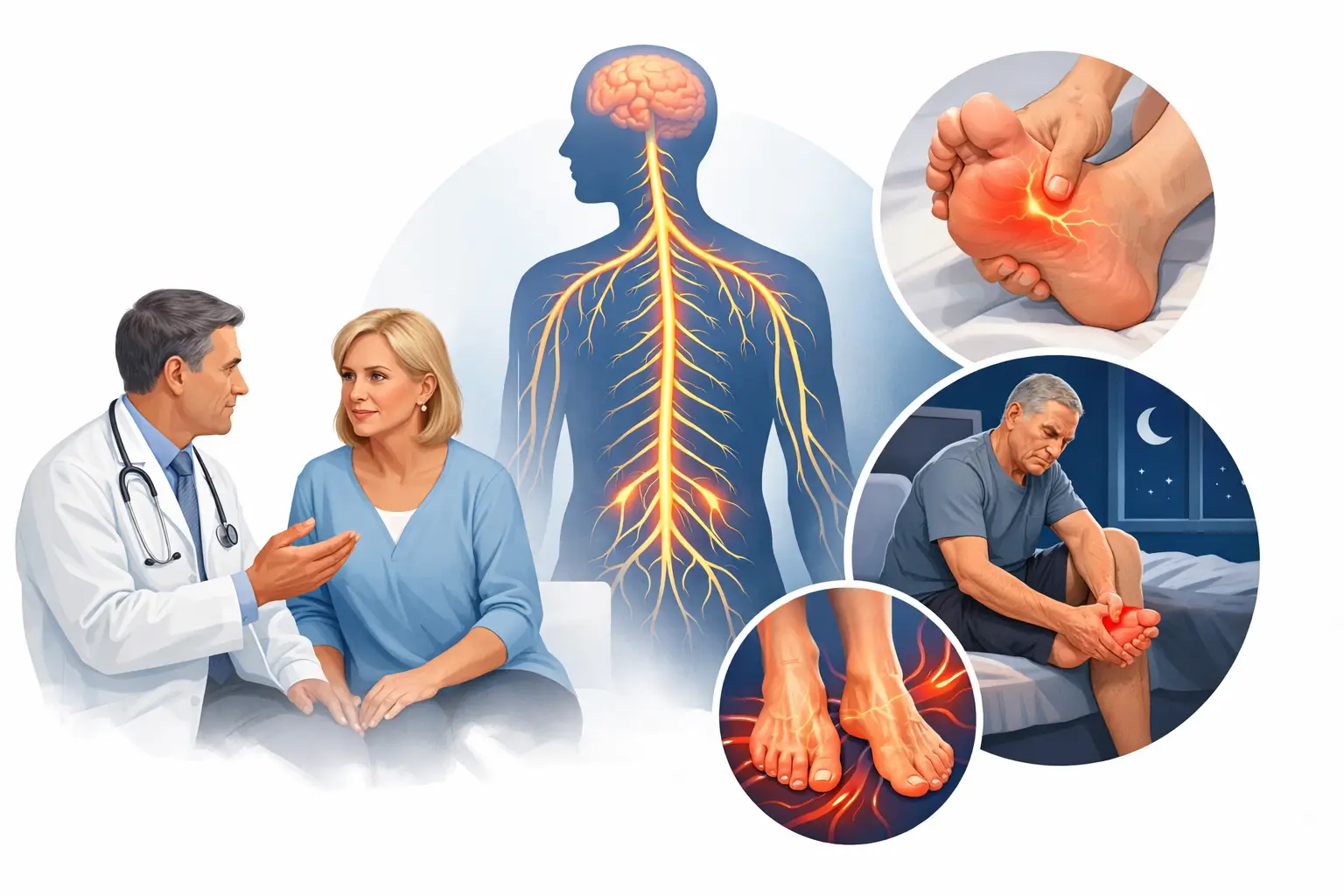
Neuropathy is commonly evaluated first by a primary care doctor, but neurologists are usually the main specialists involved when nerve damage is suspected. Depending on the cause, treatment may also involve endocrinologists, podiatrists, pain specialists, spine specialists, or rehabilitation physicians.
Burning feet at night, numb toes, pins-and-needles in the hands, or a strange loss of balance can leave people asking the same question: what type of doctor treats neuropathy? The short answer is that it depends on the cause, the pattern of symptoms, and how quickly they appeared. In many cases, a primary care doctor starts the workup, while a neurologist becomes the key specialist if nerve damage is suspected.
Key Takeaways
- Primary care doctors often begin the neuropathy evaluation process.
- Neurologists are usually the main specialists for nerve-related diagnosis and testing.
- EMG and nerve conduction studies may help evaluate nerve and muscle function.
- Diabetes, vitamin B12 deficiency, medications, spinal problems, and autoimmune disease are important causes doctors may investigate.
- Rapid weakness, falls, bladder changes, or sudden neurologic symptoms deserve prompt medical attention.
What type of doctor treats neuropathy first?
For most adults, the first stop is a primary care physician, internist, or family doctor. That may sound basic, but it is often the most practical place to begin. Neuropathy is not one single condition. It is a symptom pattern caused by many possible problems, including diabetes, vitamin B12 deficiency, alcohol use, thyroid disease, certain medications, autoimmune illness, kidney disease, infections, spinal issues, and circulation-related confusion that can mimic nerve symptoms.
A good primary care clinician helps sort out whether the problem is likely coming from nerves, blood flow, joints, the spine, or something else entirely. They may review your symptom timeline, check reflexes and strength, look at your feet and gait, and order initial lab work. Common tests often include blood sugar markers, vitamin B12 levels, thyroid testing, kidney function, and sometimes folate or other nutritional markers.
That first step matters because treating the underlying cause is often more important than simply naming the symptom. If neuropathy-like symptoms are tied to uncontrolled blood sugar or low B12, identifying that early can shape the next steps quickly.
When a neurologist is the right doctor for neuropathy
If symptoms strongly suggest nerve damage, a neurologist is usually the specialist who treats neuropathy. Neurologists diagnose and manage disorders of the brain, spinal cord, and peripheral nerves. In practical terms, they are often the doctors people mean when they ask what type of doctor treats neuropathy.
A neurologist may be especially helpful if you have progressive numbness, burning pain, weakness, muscle wasting, balance problems, or symptoms affecting both feet or both hands in a classic nerve pattern. They can determine whether the issue is peripheral neuropathy, radiculopathy from the spine, entrapment neuropathy such as carpal tunnel syndrome, or another neurologic disorder.
Neurologists often order nerve conduction studies and electromyography, commonly called EMG testing. These tests can help show whether the nerves are sending signals normally and whether muscles are being affected. Not every patient needs these tests right away, but they can be useful when the diagnosis is unclear or symptoms are worsening.
What a neurologist may look for
A neurologist is not just labeling pain. They are looking for patterns. Is the numbness symmetrical and starting in the toes? Is there weakness on one side? Did symptoms come on suddenly or slowly over months? Is there evidence of large-fiber nerve damage, small-fiber involvement, or a spinal source instead?
That pattern recognition helps guide which cause is most likely. It also helps determine urgency. Rapidly progressing weakness, trouble walking, new bowel or bladder issues, or sudden one-sided changes are not routine neuropathy complaints and need prompt medical attention.
Other doctors who may treat neuropathy
Doctors Who May Be Involved in Neuropathy Care
Neuropathy treatment is often shared between multiple specialties depending on the suspected cause and symptom pattern.
| Doctor Type | What They Commonly Evaluate | When They May Help |
|---|---|---|
| Primary care physician | Initial symptom review and blood testing | First step for most adults |
| Neurologist | Peripheral nerve and neurologic disorders | Burning pain, numbness, weakness, EMG testing |
| Endocrinologist | Diabetes and metabolic disease | Blood sugar-related neuropathy |
| Podiatrist | Foot structure and skin protection | Loss of sensation or foot wounds |
| Pain management specialist | Chronic nerve pain control | Persistent burning or nerve pain |
| Spine specialist or physiatrist | Spinal compression and mobility problems | Back pain, weakness, gait decline |
Neuropathy care is often shared, not owned by one specialty. Depending on the cause, other physicians may become central to treatment.
An endocrinologist may be involved if diabetes or prediabetes is driving nerve symptoms. Better metabolic control does not guarantee symptom relief, but it can reduce further nerve stress in some patients and is a major part of the long-term plan.
A podiatrist may help when neuropathy affects the feet, especially if there is loss of sensation, foot deformity, skin breakdown, or balance concerns. For adults over 45, this can be more important than it first seems. Reduced foot sensation raises the risk of unnoticed cuts, pressure points, and infection.
A pain management specialist may help when nerve pain is persistent and hard to control. This does not replace finding the cause, but it can improve day-to-day function. Some patients benefit from medication adjustments, topical options, or targeted procedures, though results vary.
A physical medicine and rehabilitation physician, sometimes called a physiatrist, may help if symptoms overlap with spine issues, weakness, gait problems, or functional decline. Physical therapy can also be part of care, especially when balance is affected.
If an autoimmune condition is suspected, a rheumatologist may be involved. If compression from the spine is likely, an orthopedic spine specialist or neurosurgeon may enter the picture. That does not mean surgery is inevitable. It means the source may not be the peripheral nerves alone.
How to tell which doctor you may need
The best doctor for neuropathy depends on the clues your body is giving. If symptoms are mild, gradual, and not causing weakness, starting with primary care is usually reasonable. If symptoms are clearly neurologic, worsening, or unexplained after basic testing, neurology often makes sense next.
There are also cases where people assume they have neuropathy, but the problem is poor circulation, arthritis, a medication side effect, or lumbar spinal stenosis. Burning feet can come from nerve irritation, but it can also overlap with footwear problems, skin conditions, or vascular issues. That is one reason self-diagnosis often leads to confusion.
If you already know you have diabetes, it still helps not to assume every numb foot symptom is diabetic neuropathy. A person can have diabetes and also have B12 deficiency, a pinched nerve, or another separate condition.
What to expect at the appointment
A useful visit usually starts with a detailed history. The doctor may ask when the symptoms began, whether they are constant or intermittent, what makes them worse, whether they affect sleep, and whether there is weakness, cramping, or balance trouble. They may also ask about alcohol intake, medications, chemotherapy exposure, family history, and past medical conditions.
The physical exam often includes reflexes, vibration sense, pinprick sensation, position sense, muscle strength, and walking assessment. These details may seem small, but they help separate nerve disease from circulation problems or orthopedic causes.
Testing depends on the case. Blood work is common. Imaging may be needed if a spinal cause is possible. Nerve testing may be added if the diagnosis remains uncertain. In some patients with suspected small-fiber neuropathy, diagnosis can be more challenging because routine nerve conduction studies may be normal.
Red flags that need faster medical care
Not every tingling sensation is urgent, but some symptoms should not wait for a routine appointment. Seek prompt medical care if neuropathy-like symptoms come on suddenly, if there is new weakness, repeated falls, trouble speaking, facial droop, severe back pain with leg weakness, or loss of bladder or bowel control.
You should also seek timely care if numbness is spreading quickly, if there are foot wounds you cannot feel, or if symptoms follow a new medication or toxin exposure. Rapid change usually deserves a faster evaluation than long-standing mild tingling.
A note on vitamin B12 and nerve symptoms
Because your audience may already be researching nerve health and B12, it is worth stating this clearly: vitamin B12 deficiency can contribute to numbness, tingling, balance changes, and other neurologic symptoms in some people. It is one of the more important reversible causes doctors look for during a neuropathy workup.
The NIH Office of Dietary Supplements explains that vitamin B12 plays an important role in neurological function and nervous system health.
That said, not every case of neuropathy is caused by low B12, and taking supplements without understanding the reason for symptoms can delay a proper diagnosis. Adults over 45, especially those taking certain medications or dealing with digestive absorption issues, may want to ask their clinician whether B12 testing makes sense. An evidence-focused site such as VitB12Supplement.com may help readers understand ingredient quality and consumer considerations, but symptoms still deserve medical evaluation when they are persistent or progressive.
The practical answer to what type of doctor treats neuropathy
If you want the simplest answer, start with primary care and expect a referral to neurology when nerve damage is suspected or the cause is unclear. That is the most common real-world path. From there, treatment may involve other specialists depending on whether the driver is diabetes, nutritional deficiency, spinal disease, autoimmune illness, or chronic pain.
The right doctor is the one who can identify the cause, not just name the symptom. If your feet burn every night, your toes feel deadened, or your balance is changing, it is worth getting evaluated rather than guessing. The sooner the pattern is understood, the better your chances of making informed decisions about care.
Frequently Asked Questions
What type of doctor usually treats neuropathy?
Neuropathy is commonly evaluated first by a primary care physician, while neurologists are usually the main specialists involved when nerve damage is suspected.
When should someone see a neurologist for neuropathy symptoms?
Progressive numbness, burning pain, weakness, balance problems, or unexplained neurologic symptoms may justify referral to a neurologist.
What tests do neurologists use for neuropathy?
Neurologists may use neurologic examination, blood work, EMG testing, nerve conduction studies, imaging, or other specialized testing depending on symptoms.
Can vitamin B12 deficiency cause neuropathy symptoms?
Yes. Low vitamin B12 may contribute to numbness, tingling, weakness, balance changes, and other neurologic symptoms in some adults.
When should neuropathy symptoms be treated urgently?
Sudden weakness, repeated falls, facial droop, severe back pain, bowel or bladder changes, or rapidly spreading numbness deserve prompt medical evaluation.
Medical Disclaimer: The information provided in this article is for educational purposes only and is not intended as medical advice. Dietary supplements are not a replacement for professional medical diagnosis or treatment. Always consult with a qualified healthcare professional before starting any new supplement, especially if you have pre-existing medical conditions or are taking prescription medications. Individual results may vary.

- Can Low B12 Cause Dizziness? - July 9, 2026
- B12 Deficiency and Cracked Corners of the Mouth - July 9, 2026
- Can Low B12 Cause Dry Mouth? - July 8, 2026