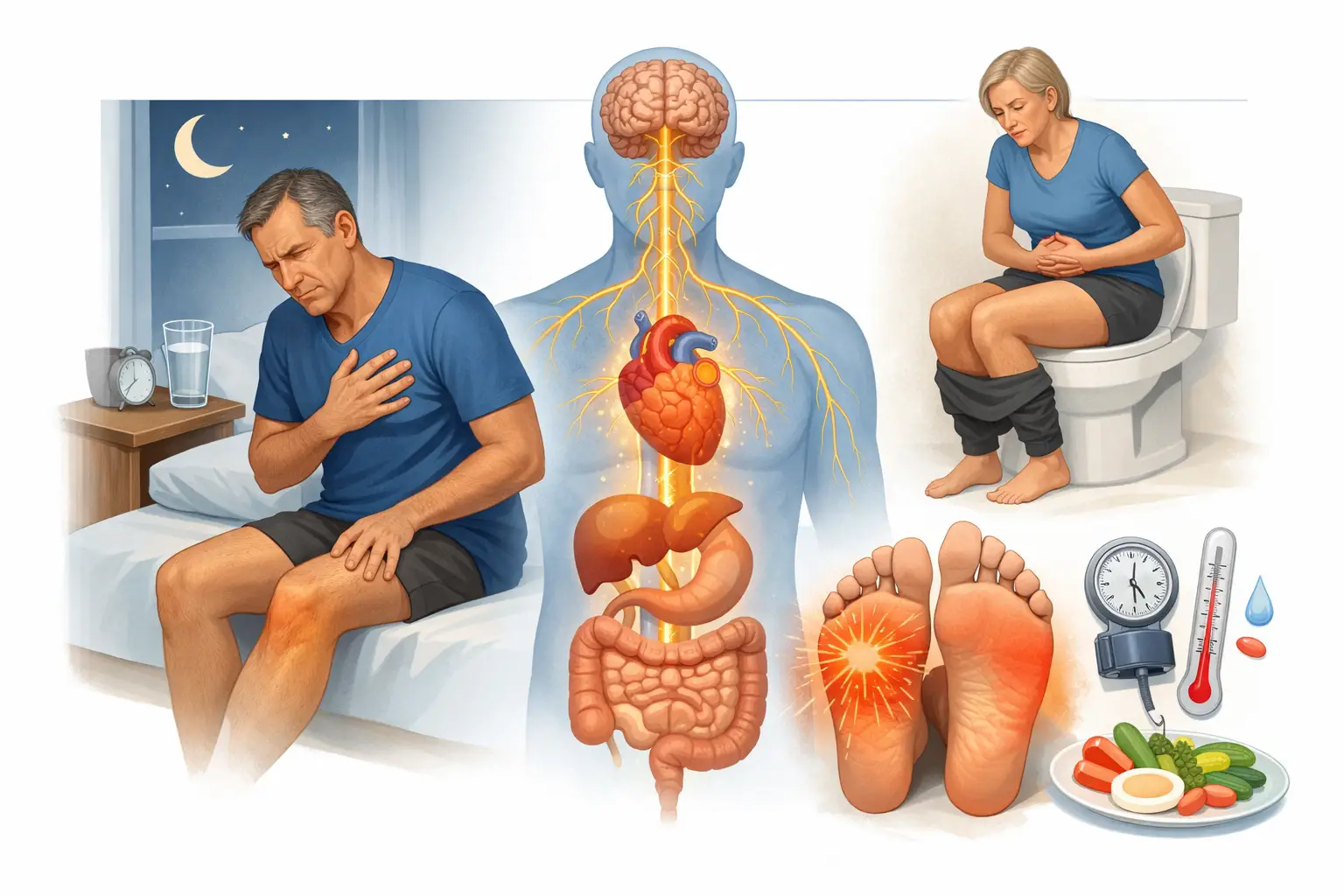
Autonomic neuropathy symptoms can include dizziness when standing, digestive slowdown, abnormal sweating, bladder problems, sexual dysfunction, heart-rate changes, and exercise intolerance. Because autonomic nerves control automatic body functions, symptoms may affect several body systems at the same time.
When people think about nerve problems, they usually picture numb feet or tingling hands. But autonomic neuropathy symptoms can look very different. They often show up as dizziness when standing, unusual sweating, bladder trouble, digestive changes, or sexual dysfunction – problems that may seem unrelated until a clinician connects them.
That mismatch is part of why autonomic neuropathy can be missed. The autonomic nervous system helps control blood pressure, heart rate, digestion, sweating, bladder function, and other automatic body processes. When those nerves are damaged, symptoms can involve several body systems at once. For adults over 45, that overlap matters because similar symptoms can also come from medication effects, dehydration, circulation problems, diabetes, vitamin deficiencies, or age-related changes.
Key Takeaways
- Autonomic neuropathy affects automatic body functions such as blood pressure, digestion, sweating, bladder function, and heart-rate regulation.
- Dizziness when standing, digestive changes, and urinary symptoms are common warning signs.
- Symptoms are often misread because they involve multiple body systems at the same time.
- Diabetes, vitamin B12 deficiency, medications, and autoimmune disorders are important possible contributors.
- Fainting, chest pain, severe weakness, or rapidly worsening symptoms deserve prompt medical evaluation.
What autonomic neuropathy symptoms can feel like
Autonomic neuropathy does not look the same in every person. Some people notice one dominant issue, while others develop a cluster of symptoms over time. A common early complaint is lightheadedness or feeling faint when standing up. This can happen because the body is not adjusting blood pressure quickly enough.
Digestive symptoms are also common. You might feel full very quickly, deal with nausea, bloating, constipation, or unpredictable diarrhea. Some people notice that food seems to “sit” in the stomach longer than it should. Others have trouble swallowing or feel reflux symptoms worsen.
Sweating patterns can change in either direction. A person may sweat too little, which can make heat intolerance more obvious, or sweat too much, sometimes in unusual areas or at odd times. Skin may feel unusually dry in one area and overly damp in another.
Bladder and sexual symptoms often get overlooked, especially if people assume they are simply part of aging. Trouble emptying the bladder, more frequent urinary tract infections, incontinence, erectile dysfunction, or reduced sexual response can all fit the broader picture.
Heart-rate changes can be subtle but important. Some people notice a racing heartbeat with minimal activity, poor exercise tolerance, or less awareness of warning signs like chest discomfort. In certain cases, the body may not regulate pulse and blood pressure normally during daily activities.
Why the symptoms are easy to misread
One reason these symptoms are confusing is that they cross specialties. Dizziness may seem cardiac. Digestive problems may seem gastrointestinal. Bladder changes may seem urologic. Sweating changes may seem hormonal. Yet autonomic nerve dysfunction can connect all of them.
Another challenge is that symptoms may come on gradually. Many adults adjust their routine without realizing it. They stand up more slowly, avoid large meals, stop walking in hot weather, or plan outings around bathroom access. These workarounds can mask the progression of the problem.
Medication effects can complicate the picture. Blood pressure medicines, some antidepressants, sedatives, diuretics, and other drugs can worsen dizziness, dry mouth, constipation, or urinary symptoms. That does not mean autonomic neuropathy is not present, only that a careful review is needed before jumping to conclusions.
Common signs by body system
Blood pressure and circulation changes
A classic symptom is orthostatic intolerance – feeling dizzy, weak, or faint after standing. Some people describe blurred vision, neck ache, fatigue, or a “wash over” sensation rather than obvious vertigo. These symptoms may be worse in the morning, after meals, in warm rooms, or after dehydration.
Digestive symptoms
Autonomic nerve damage can affect how quickly food moves through the stomach and intestines. That may lead to early fullness, nausea, bloating, constipation, or alternating bowel habits. For someone already wondering whether symptoms are from diet, stress, or supplements, this overlap can be frustrating.
Bladder and urinary symptoms
The bladder may not empty fully or contract normally. That can cause hesitancy, dribbling, urgency, leakage, or recurrent infections. In older adults, these symptoms are often blamed on prostate enlargement, pelvic floor changes, or menopause, but nerve involvement may also play a role.
Sweating and temperature regulation
Reduced sweating can raise the risk of overheating. Excess sweating can be socially disruptive and uncomfortable. Some people notice they flush easily or do not tolerate warm weather the way they used to.
Sexual function changes
Erectile dysfunction in men and reduced arousal or vaginal dryness in women can be part of autonomic nerve dysfunction. These symptoms are common and have many possible causes, so they should be evaluated in context rather than assumed to come from one source.
What can cause autonomic neuropathy?
Common Autonomic Neuropathy Symptoms by Body System
Because autonomic nerves help regulate many automatic body functions, symptoms can appear across several systems at once.
| Body System | Possible Symptoms | Common Clues |
|---|---|---|
| Blood pressure regulation | Dizziness or fainting when standing | Symptoms worse after standing or meals |
| Digestive system | Bloating, nausea, constipation, diarrhea | Feeling full very quickly |
| Bladder function | Urgency, leakage, incomplete emptying | Frequent urinary infections |
| Sweating regulation | Too much or too little sweating | Heat intolerance or flushing |
| Heart-rate control | Racing heartbeat or exercise intolerance | Pulse changes with minimal activity |
| Sexual function | Reduced arousal or erectile dysfunction | Symptoms overlap with aging and hormones |
Diabetes is one of the best-known causes, particularly when blood sugar has been elevated for years. But it is not the only one. Alcohol misuse, autoimmune disorders, certain infections, some medications, inherited conditions, and nerve-toxic exposures may also contribute.
Vitamin deficiencies matter too, especially in people with digestive disorders, poor dietary intake, long-term acid-reducing medication use, or a history of gastric surgery. Vitamin B12 gets a great deal of attention because low levels can affect nerve health, though deficiency is only one possible explanation and should be confirmed through proper medical evaluation.
The NIH Office of Dietary Supplements explains that vitamin B12 plays an important role in neurological function and nervous system health.
In some cases, no clear cause is found right away. That is one reason symptom patterns, history, lab work, and physical examination are so important. A single symptom rarely tells the full story.
When autonomic neuropathy symptoms need prompt attention
Some symptoms should not be handled with wait-and-see thinking. Recurrent fainting, chest pain, severe shortness of breath, sudden inability to urinate, black or bloody stool, repeated vomiting, or rapidly worsening weakness deserve prompt medical attention.
Even less dramatic symptoms warrant evaluation if they are persistent, progressive, or affecting daily function. Frequent dizziness on standing, unexplained digestive slowdown, repeated urinary issues, or major exercise intolerance should not be brushed off as normal aging.
This is especially true if symptoms appear alongside numbness, tingling, burning feet, balance changes, unexplained weight loss, or signs of poor blood sugar control. Mixed nerve symptoms can offer useful diagnostic clues.
How doctors evaluate these symptoms
Diagnosis usually starts with a detailed symptom history. The pattern matters. Are symptoms worse after meals, with standing, in heat, or at night? Did they begin after a medication change? Is there known diabetes, B12 deficiency, alcohol overuse, autoimmune disease, or unexplained weight loss?
A clinician may check blood pressure and pulse while lying down and again after standing. Blood tests may look at glucose status, vitamin levels, thyroid function, blood counts, kidney and liver markers, and other relevant factors depending on the situation.
Some people need additional testing for autonomic function, gastric emptying, bladder function, or heart-rate response. The goal is not just to label the condition but to identify possible causes and rule out more urgent problems.
Where supplements fit – and where they do not
For readers researching nerve health products, caution is warranted. Supplements may make sense in specific situations, especially when a confirmed nutrient gap exists or a clinician recommends support based on diet, labs, or overall risk factors. But a supplement should not replace medical evaluation for unexplained dizziness, urinary symptoms, digestive changes, or suspected neuropathy.
This is particularly relevant with vitamin B12. Low B12 can contribute to neurologic symptoms, and correcting a deficiency is important. Still, taking more is not automatically better, and not every case of suspected nerve dysfunction is related to B12 status. Evidence-informed use starts with identifying whether there is an actual deficiency, a reason for poor absorption, or another explanation entirely.
For a site like VitB12Supplement.com, the most responsible approach is to treat supplements as one part of a broader decision process. Product quality, dose, form, interactions, and realistic expectations all matter. What they cannot do is diagnose the reason symptoms are happening.
Practical steps before your appointment
If you suspect autonomic involvement, keeping a brief symptom log can help. Note when symptoms occur, what you were doing, whether you had just eaten, your fluid intake, and any recent medication or supplement changes. This kind of detail often reveals patterns that are easy to forget in the exam room.
It also helps to bring a complete list of prescriptions, over-the-counter products, and supplements. Several common products can affect blood pressure, heart rate, bowel habits, or urinary symptoms, and that context can save time.
Finally, try not to self-diagnose based on one symptom alone. Dizziness can come from many causes. So can constipation, sexual dysfunction, or sweating changes. What makes autonomic neuropathy worth considering is the pattern across systems, the persistence of symptoms, and the presence of possible risk factors.
If your body seems to be handling everyday automatic functions differently than it used to, that change is worth taking seriously and discussing with a qualified clinician.
Frequently Asked Questions
What are common autonomic neuropathy symptoms?
Common symptoms include dizziness when standing, digestive changes, abnormal sweating, bladder problems, sexual dysfunction, and exercise intolerance.
Can autonomic neuropathy cause digestive problems?
Yes. Autonomic nerve dysfunction may slow digestion and contribute to nausea, bloating, constipation, diarrhea, or early fullness after meals.
Can vitamin B12 deficiency contribute to autonomic symptoms?
Low vitamin B12 may contribute to neurologic symptoms in some adults, including numbness, balance changes, weakness, and nerve-related dysfunction.
Why does autonomic neuropathy affect several body systems?
Autonomic nerves help regulate automatic functions throughout the body, including blood pressure, digestion, sweating, bladder control, and heart-rate regulation.
When should autonomic symptoms be medically evaluated?
Fainting, chest pain, severe weakness, repeated vomiting, inability to urinate, or rapidly worsening symptoms deserve prompt medical evaluation.
Medical Disclaimer: The information provided in this article is for educational purposes only and is not intended as medical advice. Dietary supplements are not a replacement for professional medical diagnosis or treatment. Always consult with a qualified healthcare professional before starting any new supplement, especially if you have pre-existing medical conditions or are taking prescription medications. Individual results may vary.

- Can Low B12 Cause Dizziness? - July 9, 2026
- B12 Deficiency and Cracked Corners of the Mouth - July 9, 2026
- Can Low B12 Cause Dry Mouth? - July 8, 2026