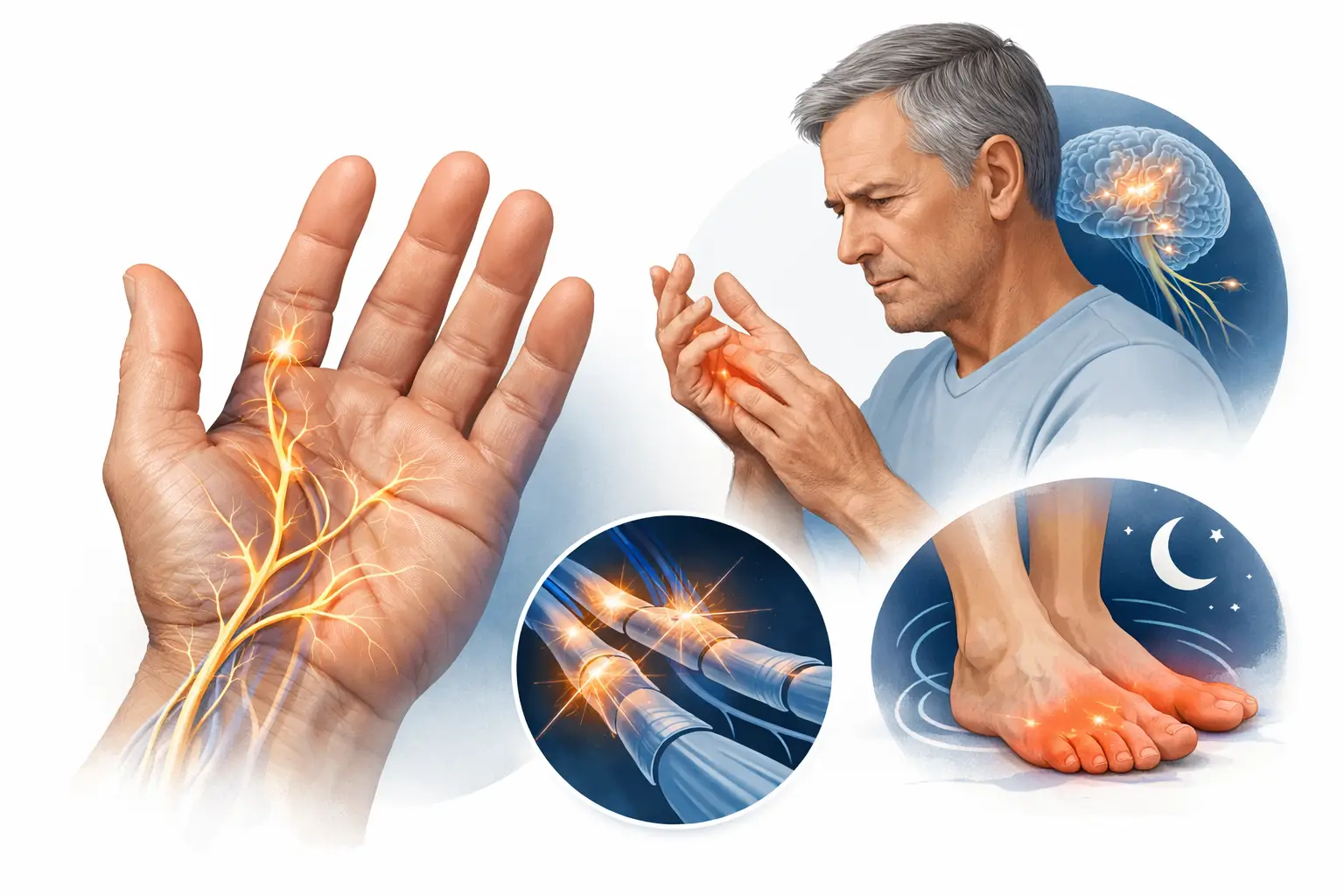
Neuropathy can cause hand weakness when nerve dysfunction affects muscle activation, coordination, grip strength, or sensory feedback. People may notice dropping objects, clumsy finger movements, weak grip, numb fingertips, or difficulty with fine motor tasks such as buttoning clothes or turning keys.
Losing grip strength is easy to dismiss at first. A jar feels harder to open, buttons take longer, or your hand seems clumsy for no clear reason. When neuropathy hand weakness shows up with tingling, numbness, burning, or pain, it often points to a nerve problem rather than ordinary aging.
Hand weakness related to neuropathy can interfere with writing, cooking, lifting, typing, and even holding a phone. For adults over 45, that matters because several common issues become more likely with age, including nerve compression, diabetes, cervical spine changes, and nutrient deficiencies such as low vitamin B12. The challenge is that “weakness” can mean different things, and the cause is not always in the hand itself.
Key Takeaways
- Hand weakness from neuropathy may affect grip strength, coordination, and fine motor control.
- Median nerve and ulnar nerve problems create different symptom patterns depending on which fingers are affected.
- Vitamin B12 deficiency, diabetes, nerve compression, and cervical spine problems are important possible contributors.
- Numbness can make the hand feel weak even when muscle strength is partly preserved.
- Rapid weakness, muscle wasting, or spreading symptoms deserve prompt medical evaluation.
What neuropathy hand weakness actually feels like
Many people use the word weakness when they mean discomfort, stiffness, or reduced confidence using the hand. True weakness usually means the muscles are not producing normal force. You may notice dropping objects, trouble pinching, difficulty turning a key, reduced grip, or trouble spreading the fingers.
Neuropathy can also affect sensation, and sensory loss can make the hand feel weak even when muscle strength is partly preserved. If your fingertips are numb, your brain gets less feedback about pressure and position. That can make routine tasks feel awkward and less controlled.
Symptoms often vary by which nerve is involved. Median nerve problems may affect the thumb, index finger, middle finger, and part of the ring finger. Ulnar nerve problems often affect the ring finger, little finger, and fine motor control. More diffuse neuropathy may affect both hands in a broader, less localized pattern.
Common causes of neuropathy hand weakness
The most common explanation is not one single condition but a group of nerve-related problems. Compression neuropathies are high on the list. Carpal tunnel syndrome, which affects the median nerve at the wrist, can cause numbness, tingling, nighttime symptoms, and later weakness in thumb movements. Cubital tunnel syndrome, involving the ulnar nerve at the elbow, can lead to weak grip and reduced finger coordination.
Peripheral neuropathy is another possibility. This term refers to damage or dysfunction of peripheral nerves and can result from diabetes, alcohol overuse, certain medications, kidney disease, autoimmune disorders, infections, or nutritional deficiencies. When the cause is systemic, symptoms may affect both sides and may also involve the feet.
Vitamin B12 deficiency deserves attention because it can contribute to numbness, tingling, balance problems, and weakness. It is more relevant in adults 45+ because absorption problems become more common with age, and risk rises with certain medications, digestive disorders, or dietary restrictions. That said, not every case of hand weakness is related to B12, and supplementation should follow a sensible evaluation rather than guesswork.
Cervical radiculopathy is another important cause. In this case, a nerve root in the neck is irritated or compressed, and the symptoms travel down into the arm and hand. People may assume the hand is the problem when the source is actually higher up.
When the pattern points to a specific nerve
Common Hand Weakness Patterns and Possible Nerve Involvement
The location and behavior of symptoms often provide useful clues about which nerves may be affected.
| Symptom Pattern | Possible Nerve Involvement | Common Clues |
|---|---|---|
| Weak thumb grip or pinching | Median nerve | Carpal tunnel symptoms at night |
| Weak grip with ring and little finger symptoms | Ulnar nerve | Elbow pressure or finger clumsiness |
| Both hands gradually affected | Peripheral neuropathy | Burning feet or numb toes may coexist |
| Hand symptoms with neck pain | Cervical nerve root irritation | Pain radiating down the arm |
| Numb fingertips with clumsy movements | Sensory nerve dysfunction | Reduced position and pressure feedback |
| Rapidly worsening weakness or wasting | More serious neurological involvement | Needs prompt medical evaluation |
The location of symptoms can offer useful clues. Weak thumb opposition, trouble pinching, and numbness in the first three fingers often suggest median nerve involvement. Weak finger spreading, loss of grip strength, or clumsiness with keys and shirt buttons can suggest ulnar nerve dysfunction.
If the whole hand feels weak and the forearm or shoulder is also involved, the problem may be more proximal, such as the neck or brachial plexus. If both hands are gradually affected along with burning feet or reduced ankle sensation, clinicians may think more about generalized peripheral neuropathy.
Pattern recognition helps, but it does not replace an exam. Different nerve disorders can overlap, and arthritis, tendon problems, or prior injury can complicate the picture.
Why vitamin B12 comes up so often
Vitamin B12 supports normal nerve function, red blood cell formation, and neurologic health. Low levels can contribute to numbness, paresthesias, balance trouble, and weakness. In some people, deficiency develops slowly, and symptoms are blamed on aging, stress, or repetitive strain.
The NIH Office of Dietary Supplements notes that vitamin B12 plays an important role in neurological function and nervous system health.
Still, B12 is not a one-size-fits-all answer. A low-normal lab value may not always explain significant symptoms, and taking a supplement does not automatically mean symptoms will improve. The benefit depends on whether deficiency or insufficiency is truly part of the problem, how long symptoms have been present, and whether there are other contributing factors such as diabetes, nerve compression, or cervical spine disease.
For cautious consumers, the practical point is this: B12 can be relevant, but it should be viewed as one piece of a workup, not a shortcut around diagnosis. That editorial approach is central to how evidence-informed sites such as VitB12Supplement.com evaluate nerve-health products and nutrient claims.
Signs you should not ignore
Some cases can wait for a routine visit, but others need prompt medical attention. Rapidly worsening weakness, hand muscle wasting, severe neck pain with arm symptoms, new balance trouble, facial drooping, speech changes, or weakness affecting one side of the body should not be brushed off.
It is also wise to seek evaluation sooner if weakness is interfering with daily tasks, if symptoms wake you at night, or if numbness is spreading. When nerve compression is the issue, prolonged pressure can lead to more lasting dysfunction if it goes unaddressed.
How clinicians evaluate hand weakness from neuropathy
A medical evaluation usually starts with the symptom pattern, timing, and triggers. Your clinician may ask whether symptoms are worse at night, whether certain fingers are involved, whether the neck hurts, whether you have diabetes, and whether you use medications that can affect nerve health.
The physical exam often includes checking grip, finger abduction, thumb strength, reflexes, and sensation. Maneuvers at the wrist, elbow, and neck may help localize the source. Depending on the case, testing may include blood work for glucose, vitamin B12, thyroid function, and other markers, along with nerve conduction studies or electromyography.
This step matters because treatment depends on the cause. Compression neuropathy, generalized peripheral neuropathy, and cervical radiculopathy are not managed the same way.
Practical steps while you are seeking answers
If symptoms are mild and not progressing rapidly, a few simple adjustments may reduce strain. Avoid prolonged elbow bending if the ring and little fingers are affected. If symptoms seem wrist-related, limit repetitive wrist flexion and awkward hand positions. Review workstation setup if typing worsens symptoms.
Pay attention to sleep position. Many people bend the wrist or elbow for hours at night without realizing it, which can aggravate compression neuropathies. Short-term splinting is sometimes used, but the right approach depends on the suspected nerve.
Also consider the broader health picture. Blood sugar control, alcohol intake, medication review, and nutrition all matter in nerve health. If B12 status is uncertain, asking a clinician whether testing makes sense is more useful than self-diagnosing based on internet symptom lists.
What to expect from supplements
This is where realistic expectations matter. Some supplements are marketed for nerve support, but the evidence is uneven, product quality varies, and the response depends heavily on the underlying cause. A person with true vitamin B12 deficiency may benefit from correction of that deficiency. A person with severe carpal tunnel syndrome from mechanical compression may not notice meaningful change from a supplement alone.
That does not make supplements irrelevant. It means they should be evaluated in context. Ingredients, dose, form, safety, medication interactions, and the reason for use all matter. For adults 45+, this cautious approach is especially important because nerve symptoms can have more than one contributor at the same time.
The bottom line on hand weakness and nerve symptoms
Neuropathy-related hand weakness is not just an annoyance. It is a symptom that can reflect nerve compression, systemic peripheral neuropathy, vitamin deficiency, or a problem starting in the neck. The details matter – which fingers are affected, whether numbness is present, how fast symptoms are changing, and whether weakness is becoming noticeable in daily life.
If your hand feels weaker, clumsier, or less reliable than it used to, do not assume it is simply age. A careful evaluation can help sort out whether the issue is local, systemic, nutritional, or mechanical, and that is the step that gives any next choice – including lifestyle changes or supplements – a much better chance of being appropriate.
Frequently Asked Questions
Can neuropathy cause weak hands?
Yes. Neuropathy can affect grip strength, coordination, finger control, and muscle activation depending on which nerves are involved.
Why do my hands feel weak even if strength seems normal?
Sensory nerve dysfunction may reduce feedback from the fingertips, making the hands feel clumsy, awkward, or less controlled even when strength is partly preserved.
Can vitamin B12 deficiency cause hand weakness?
Yes. Low vitamin B12 may contribute to numbness, tingling, balance changes, weakness, and other nerve-related symptoms in some adults.
What is the difference between carpal tunnel syndrome and neuropathy?
Carpal tunnel syndrome is a specific compression neuropathy affecting the median nerve at the wrist, while peripheral neuropathy is a broader term involving peripheral nerve dysfunction from many possible causes.
When should hand weakness be medically evaluated?
Rapid weakness, muscle wasting, severe neck pain, spreading numbness, or difficulty performing daily tasks deserve prompt medical evaluation.
Medical Disclaimer: The information provided in this article is for educational purposes only and is not intended as medical advice. Dietary supplements are not a replacement for professional medical diagnosis or treatment. Always consult with a qualified healthcare professional before starting any new supplement, especially if you have pre-existing medical conditions or are taking prescription medications. Individual results may vary.

- Can Low B12 Cause Dizziness? - July 9, 2026
- B12 Deficiency and Cracked Corners of the Mouth - July 9, 2026
- Can Low B12 Cause Dry Mouth? - July 8, 2026