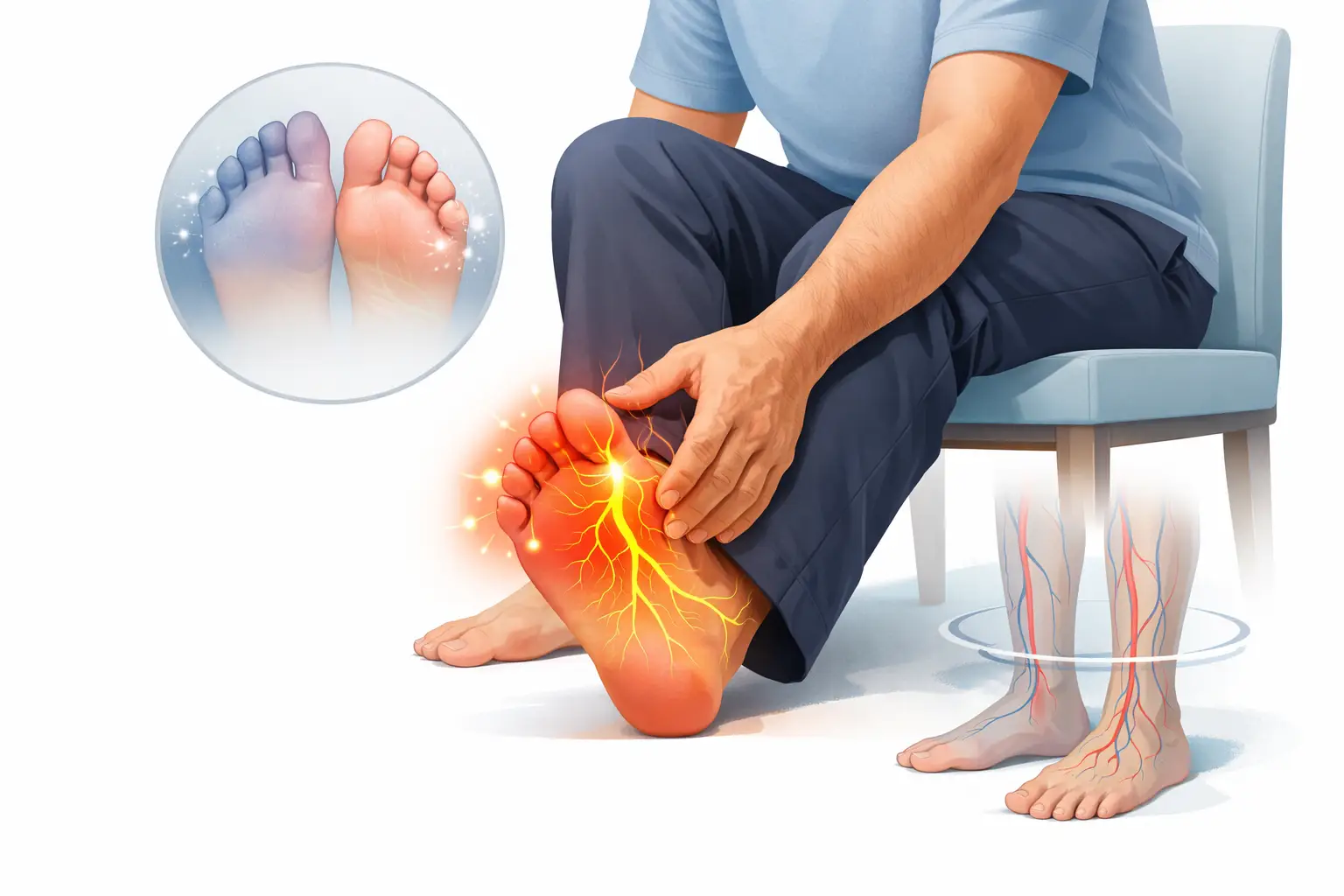
Feet can feel numb after sitting when pressure temporarily compresses nerves or reduces blood flow in the legs and feet.
This is often harmless if sensation returns quickly after moving. But numbness that keeps coming back, lasts longer, affects balance, or appears with burning, weakness, diabetes, or vitamin B12 deficiency risk should be medically evaluated.
Few things get your attention faster than standing up and realizing your foot feels dead, tingly, or strangely disconnected. If you have ever wondered, “Why Do My Feet Feel Numb After Sitting?” the short answer is that nerves or blood flow are often being temporarily compressed. The more useful answer is that occasional numbness can be harmless, but repeated episodes, worsening symptoms, or numbness paired with burning, weakness, or balance changes deserve closer attention.
For many adults over 45, this sensation is not just annoying. It can raise reasonable questions about circulation, nerve health, aging, diabetes, vitamin status, or spinal issues. In most cases, context matters more than the symptom alone. How long the numbness lasts, whether it affects one foot or both, and what other symptoms show up alongside it can help point to the most likely cause.
Why your feet can go numb after sitting
Numbness usually happens when a nerve is irritated or when blood flow is briefly reduced. Sitting in one position too long, crossing your legs, squatting, or placing pressure behind the knee can compress nerves that travel down the leg into the foot. That pressure can interfere with normal signaling, leading to the classic “pins and needles” feeling when you move again.
There is also a circulation component. When you sit still for long periods, especially in a tight chair or with your knees bent sharply, blood flow may be less efficient. As you stand and shift position, normal sensation often returns within seconds to minutes.
That temporary version is common. Persistent numbness is different. If your foot still feels numb well after changing position, or if this happens often without a clear trigger, it may reflect an underlying problem rather than simple posture.
Common reasons feet feel numb after sitting
| Possible Cause | Typical Clues | When It May Need Evaluation |
|---|---|---|
| Posture-Related Compression | Numbness after crossing legs or sitting too long | If symptoms become frequent or stop resolving quickly |
| Reduced Circulation | Cold feet, heaviness, tightness, swelling | Skin color changes, pain while walking, slow healing |
| Peripheral Neuropathy | Burning, tingling, numbness in both feet | Persistent symptoms or worsening balance problems |
| Vitamin B12 Deficiency | Tingling, fatigue, balance changes, weakness | Recurrent numbness with neurological symptoms |
| Sciatica / Spine Irritation | Back pain radiating into the leg or foot | Leg weakness, ongoing numbness, walking difficulty |
Posture-related nerve compression
This is the most common explanation. Crossing your legs, sitting on one foot, or leaning in a way that compresses the outside of the knee can affect the peroneal nerve. Pressure around the ankle or the ball of the foot can also irritate smaller nerves.
This kind of numbness usually improves quickly once you stand, stretch, or walk. It may be accompanied by tingling but not significant pain. If that matches your experience, the cause is often mechanical rather than dangerous.
Reduced circulation from prolonged sitting
Sitting still for a long time can slow blood movement in the lower legs and feet. This is more noticeable in people with vascular disease, swelling, varicose veins, obesity, or limited mobility. The foot may feel numb, cool, tight, or heavy.
Temporary circulation changes are common, but ongoing poor circulation is not something to ignore. If numbness comes with leg pain while walking, skin color changes, slow-healing wounds, or one foot that stays colder than the other, a medical evaluation is appropriate.
Peripheral neuropathy
Peripheral neuropathy refers to damage or dysfunction in the nerves outside the brain and spinal cord. It often starts in the feet and may cause numbness, burning, tingling, stabbing discomfort, or a feeling like socks are bunched under the toes.
Unlike simple posture-related numbness, neuropathy tends to be more persistent. Sitting may make you notice it more, but sitting is not always the true cause. Diabetes is one of the best-known contributors, but alcohol use, certain medications, thyroid disorders, kidney disease, and nutritional deficiencies can also play a role.
Vitamin B12 deficiency
Vitamin B12 is essential for nerve function. Low B12 levels can contribute to numbness, tingling, balance problems, fatigue, and sometimes memory changes. Older adults may be at greater risk because B12 absorption can decline with age, and some common medications can interfere with absorption.
B12 deficiency does not automatically explain every case of numb feet, and supplementation is not a substitute for diagnosis. Still, when numbness is recurrent or accompanied by other neurological symptoms, B12 status is one reasonable factor to discuss with a clinician. For readers researching nerve-health supplements, this is one area where evidence-based review matters more than marketing claims.
Sciatica or lower back nerve irritation
Sometimes the problem starts in the lower back, not the foot. Nerves that exit the spine travel down the legs, and compression from a herniated disc, spinal stenosis, or degenerative changes can cause numbness in the foot after sitting.
This pattern often comes with low back pain, buttock pain, or symptoms that travel down one leg. Sitting may worsen it because spinal position can increase pressure on an already irritated nerve root.
Tarsal tunnel syndrome and other local nerve entrapments
The tibial nerve passes through a narrow area near the ankle called the tarsal tunnel. If that nerve is compressed, you may notice numbness, tingling, or burning in the foot. Symptoms may worsen after sitting, standing, or activity depending on the exact cause.
Footwear, swelling, joint changes, and prior injuries can all contribute. This is less common than posture-related numbness, but it is worth considering when symptoms are focused in one area of the foot.
When occasional numbness is usually less concerning
If your foot falls asleep only after you sit in an awkward position, and sensation returns soon after you move, that is usually less worrisome. The same is true if the numbness is brief, clearly linked to posture, and not getting more frequent.
A simple test is pattern recognition. Ask yourself whether the sensation only happens when your leg is crossed, when you sit in one chair, or during long car rides. If the answer is yes and it resolves quickly, temporary compression is more likely than a chronic nerve problem.
Signs that numb feet may need medical attention
The symptom becomes more concerning when it changes from occasional to regular, or from brief to persistent. Recurrent numbness in both feet can suggest peripheral neuropathy or a systemic issue. Numbness in one foot may point more toward local nerve compression, injury, or a spinal source.
It is wise to seek medical advice sooner if you notice any of the following:
- numbness that lasts longer than a few minutes after standing
- burning pain, electric-shock sensations, or increasing tingling
- weakness, foot drop, or trouble walking
- back pain that radiates into the leg
- loss of balance or frequent tripping
- skin discoloration, cold feet, or nonhealing sores
- known diabetes, heavy alcohol use, or a history of B12 deficiency
Sudden numbness with facial drooping, severe weakness, chest pain, or loss of bladder or bowel control calls for urgent care.
What you can do at home first
If your symptoms seem mild and posture-related, simple adjustments may help. Change position more often, avoid sitting on your feet, and try not to cross your legs for long periods. During desk work, place both feet flat on the floor and stand up every 30 to 60 minutes.
Gentle walking often restores normal sensation by reducing pressure and improving circulation. Some people also benefit from checking chair height, using supportive footwear, or doing calf and ankle movements during long periods of sitting.
If you suspect numbness is becoming more common, keep notes before your appointment. Document when it happens, whether one foot or both are affected, how long it lasts, and whether you also notice burning, cramps, swelling, or back pain. That kind of symptom pattern is often more helpful than a vague description.
How doctors typically evaluate numb feet
Medical evaluation usually starts with history and exam rather than immediate imaging. A clinician may ask about diabetes risk, alcohol use, medications, prior injuries, thyroid disease, and digestive conditions that may affect nutrient absorption. They may test reflexes, sensation, foot strength, skin temperature, and pulses.
Depending on the pattern, lab work may be used to check blood sugar, vitamin B12, thyroid function, or other markers. If symptoms suggest a spine issue or significant nerve dysfunction, imaging or nerve testing may be considered.
This step matters because numbness is a symptom, not a diagnosis. The right next step depends on the cause. Mechanical compression, vascular disease, neuropathy, and nutritional deficiency can all feel similar at first.
Where supplements fit, and where they do not
For adults researching numbness and nerve health, supplements often enter the conversation quickly. That is understandable, especially when vitamin B12 deficiency is one potential contributor. Still, a supplement should match a real need. Taking B12 may be sensible if deficiency is confirmed or strongly suspected, but it is not a universal solution for every tingling foot.
The same caution applies to broader nerve-support formulas. Ingredient quality, dosage, and evidence vary widely. A scientifically cautious approach is better than assuming every product marketed for neuropathy symptoms will be useful. An evidence-first approach is usually more useful than relying on marketing promises alone.
If you are considering a supplement, it helps to ask practical questions: Is there a plausible reason you might be deficient? Are you taking medications that affect absorption? Has your clinician recommended testing? Those answers are usually more valuable than label promises.
The bottom line on numb feet after sitting
Feet that feel numb after sitting are often reacting to pressure on nerves or temporary changes in blood flow. In many cases, the fix is as simple as changing position and moving around. But if the numbness keeps coming back, lasts longer, or starts to overlap with burning, weakness, or balance issues, it deserves a more careful look.
The goal is not to panic over every tingling episode. It is to pay attention to the pattern. Your body usually gives clues before a minor annoyance becomes a bigger functional problem, and numb feet are one of those clues worth noticing.
Frequently Asked Questions
Feet can go numb after sitting because pressure temporarily compresses nerves or reduces blood flow in the legs and feet. This commonly happens after crossing the legs, sitting too long, or remaining in one position for extended periods.
Not always. Temporary numbness is often related to posture and nerve compression. However, circulation problems may become more likely when numbness is paired with cold feet, swelling, skin discoloration, or leg pain while walking.
Yes. Vitamin B12 deficiency may contribute to nerve-related symptoms such as numbness, tingling, burning sensations, balance problems, and weakness. Older adults and people with absorption issues may be at higher risk.
Medical evaluation becomes more important when numbness is persistent, happens frequently, affects balance, causes weakness, or appears with burning pain, diabetes, back pain, or walking difficulty.
Yes. Sitting for long periods may place pressure on nerves in the legs, knees, ankles, or lower back. That pressure can temporarily disrupt normal nerve signaling and create pins-and-needles sensations or numbness.
Medical Disclaimer: The information provided in this article is for educational purposes only and is not intended as medical advice. Dietary supplements are not a replacement for professional medical diagnosis or treatment. Always consult with a qualified healthcare professional before starting any new supplement, especially if you have pre-existing medical conditions or are taking prescription medications. Individual results may vary.

- Can Low B12 Cause Dizziness? - July 9, 2026
- B12 Deficiency and Cracked Corners of the Mouth - July 9, 2026
- Can Low B12 Cause Dry Mouth? - July 8, 2026