Quick Answer:
Peripheral neuropathy has been reported in some statin users, but current research does not show a large or consistent risk for most people. While a small subset of individuals may experience nerve-related symptoms associated with statin use, conditions such as diabetes, vitamin B12 deficiency, thyroid disorders, and other common causes are often more likely explanations for tingling, numbness, burning feet, or nerve pain.
A new burning or tingling sensation in the feet often sends people looking in two directions at once – medication side effects and vitamin deficiencies. That is why statins and peripheral neuropathy: what the research actually shows is a question worth answering carefully, especially for adults over 45 who may also be managing cholesterol, diabetes, or low vitamin B12.
The short version is this: peripheral neuropathy has been reported in some statin users, but the overall research does not show a large, consistent risk for most people. The signal is possible, not settled. And in real-world cases, other explanations are often more likely than the statin itself.
Why this question is harder than it sounds
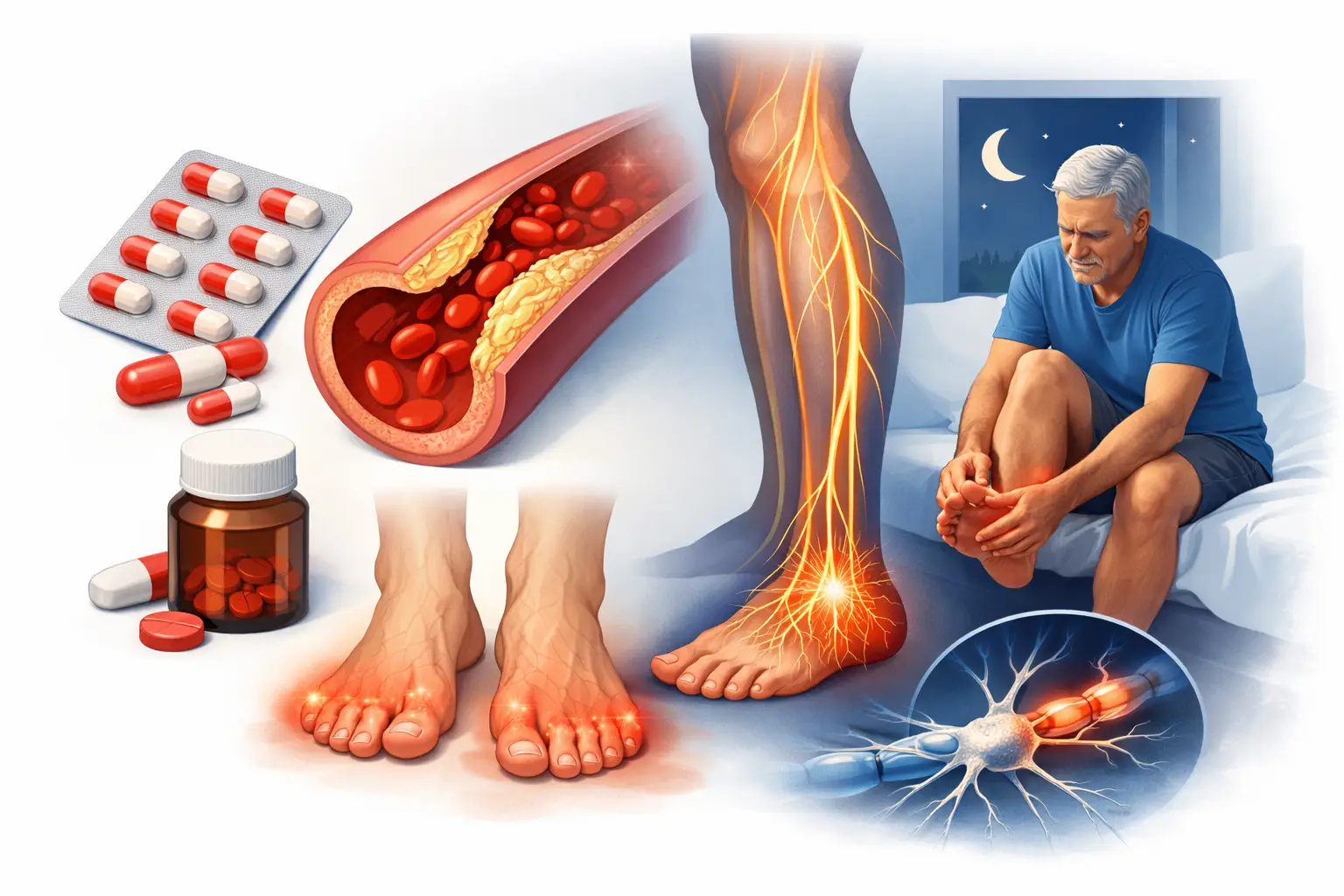
Peripheral neuropathy is not one disease. It is a symptom pattern caused by damage or dysfunction in peripheral nerves. People describe it as numbness, pins and needles, burning, electric shocks, increased sensitivity, or weakness, usually starting in the feet and sometimes the hands.
That symptom pattern has many possible causes. Diabetes is one of the most common. Vitamin B12 deficiency can also contribute, especially in older adults, people taking metformin, and those using acid-reducing medications long term. Alcohol use, thyroid disorders, kidney disease, spinal problems, infections, autoimmune conditions, and some chemotherapy drugs also belong on the list.
Common Causes of Neuropathy Compared
| Possible Cause | Common Symptoms | Often Checked With |
|---|---|---|
| Diabetes | Burning feet, numbness, tingling | Blood glucose, HbA1c |
| Vitamin B12 Deficiency | Tingling, balance problems, fatigue | Vitamin B12 blood test |
| Thyroid Disorders | Numbness, weakness, fatigue | Thyroid function tests |
| Chronic Kidney Disease | Tingling, cramps, numbness | Kidney function tests |
| Statin-Associated Symptoms | Symptoms appearing after starting treatment | Medication review |
That matters because many people prescribed statins already have risk factors that can overlap with neuropathy risk. Someone with high cholesterol may also have prediabetes, diabetes, metabolic syndrome, obesity, or vascular disease. In research, that makes cause and effect difficult to sort out.
Statins and peripheral neuropathy: what the research actually shows
The evidence comes from case reports, observational studies, and a smaller number of studies using nerve testing. Case reports can raise concern, but they cannot prove that a medication caused the problem. Observational studies can suggest an association, but they are vulnerable to confounding. In this area, both issues are common.
Some older studies found that statin users were more likely to have peripheral neuropathy diagnoses than non-users. A few also suggested a possible dose or duration effect, meaning the risk might rise with longer exposure. These findings helped create the idea that statins could sometimes contribute to nerve symptoms.
But larger and more recent studies have been less convincing. Several analyses have found little to no meaningful increase in neuropathy risk after adjusting for age, diabetes, and other health conditions. Others have shown mixed results depending on the population studied, the statin used, and how neuropathy was defined.
That leaves us with a cautious middle ground. There may be a small risk in a subset of users, but the available evidence does not support the claim that statins commonly cause peripheral neuropathy. If there is an effect, it appears uncommon and probably smaller than many people assume after reading anecdotal reports online.
What major safety reviews generally suggest
Drug safety reviews and clinical references usually acknowledge neuropathy as a reported but uncommon adverse effect. They do not treat it as one of the hallmark statin problems. By contrast, muscle symptoms and liver enzyme changes have a much clearer place in the safety discussion.
This difference matters. When a side effect is real but rare, the right question is not “Do statins ever cause this?” It is “How confident can we be that the statin is the main cause in this specific person?” Those are not the same question.
For many patients, the cardiovascular benefit of statins is better established than the neuropathy risk. That does not mean nerve symptoms should be dismissed. It means they should be evaluated with the full medical picture in mind.
Why symptoms can be blamed on statins too quickly
Tingling feet and numb toes are common in midlife and older adulthood. They can also develop gradually, which makes timing hard to judge. If someone starts a statin and notices symptoms months later, it is natural to suspect the drug. Sometimes that suspicion is correct. Sometimes it is coincidence.
Vitamin B12 is a good example. Low B12 can cause numbness, tingling, balance problems, and fatigue. It may be missed because symptoms can build slowly. In adults over 45, B12 status deserves attention, particularly when neuropathy symptoms appear without an obvious explanation.
Diabetes and prediabetes are another major source of confusion. Nerve damage can begin before diabetes is formally diagnosed. A person may blame a cholesterol medication when the actual driver is elevated blood sugar over time.
Even circulation concerns can complicate the picture. Poor circulation can cause cold feet, pain with walking, and color changes, but it does not always create the same nerve symptom pattern as neuropathy. Many patients use the terms interchangeably, which can blur the evaluation.
⚠ Important
New tingling, numbness, or burning feet should never be automatically attributed to a statin. Diabetes, prediabetes, vitamin B12 deficiency, thyroid disorders, kidney disease, alcohol-related nerve injury, and spinal conditions are often more common explanations for peripheral neuropathy symptoms. A thorough evaluation is usually needed before identifying the most likely cause.
Why Nerves Become Damaged
Peripheral nerves depend on healthy axons, protective myelin, and steady communication between sensory, motor, and autonomic fibers. The axon is the long nerve fiber that carries the signal, while myelin helps that signal travel efficiently. Sensory nerves carry feeling, motor nerves control movement, and autonomic nerves regulate automatic functions such as sweating, blood pressure, and digestion. When medication effects, metabolic problems, inflammation, or nutrient deficiencies disrupt any part of this system, nerve symptoms may appear.
Are some statins more likely to be involved?
Researchers have explored whether fat-soluble statins might be more likely to affect nerve tissue than water-soluble statins, but the evidence is not strong enough to make a firm clinical rule. Different statins vary in potency, metabolism, and tissue distribution, yet no single agent has been consistently proven to carry a major neuropathy risk.
Dose and duration may matter more than brand-specific theories, but even there the findings are mixed. A person taking a high-intensity statin for years may deserve a closer look if symptoms begin and no other cause is obvious. That is still different from saying the statin is the likely cause.
What to do if neuropathy symptoms start after a statin
Do not stop a prescribed statin on your own, especially if you have a history of heart attack, stroke, diabetes, or high cardiovascular risk. For many people, suddenly abandoning treatment creates a more immediate health concern than the possibility of a rare side effect.
A practical next step is to document the pattern. When did symptoms begin? Are they constant or intermittent? Is there burning, numbness, weakness, balance trouble, or pain? Did anything else change around the same time, such as blood sugar, alcohol intake, other medications, or digestive issues that could affect nutrient absorption?
Bring that history to your clinician and ask for a targeted review. Depending on the case, that may include a medication review, blood sugar testing, vitamin B12 testing, thyroid labs, kidney function, and a neurological exam. Sometimes the answer is straightforward. Often it takes a bit of sorting.
If the statin remains a possible contributor, a clinician may consider adjusting the dose, switching to a different statin, or trying a temporary pause in selected cases. That decision should be individualized. It depends on symptom severity, cardiovascular risk, and whether other causes have been reasonably assessed.
Where vitamin B12 fits into the conversation
Because this site focuses on evidence-informed supplement education, B12 deserves a careful mention here. Vitamin B12 supports nerve function, and low levels can overlap with neuropathy symptoms in a way that is easy to miss. That does not mean everyone with tingling feet needs a supplement, and it does not mean B12 is the answer to statin-related complaints.
It does mean B12 status is worth discussing when symptoms are unexplained, especially in older adults or those with known risk factors for deficiency. If a deficiency is found, correcting it may help prevent further nerve-related problems. Realistic expectations matter, though. Symptoms from longstanding nerve injury may improve slowly, and sometimes only partially.
According to the NIH Office of Dietary Supplements, vitamin B12 is essential for neurological function and helps maintain healthy nerve signaling throughout the peripheral nervous system.
When the evidence supports more caution
A stronger medication-related suspicion tends to come from a few clues happening together: symptoms started after the drug was introduced or the dose was increased, other common causes have been checked, and symptoms improve after supervised adjustment. Even then, certainty can be elusive.
On the other hand, if someone has diabetes, low B12, significant alcohol intake, spinal disease, or thyroid dysfunction, the statin may be a side issue rather than the main driver. That is why broad claims online can be misleading. They flatten a complicated problem into a simple story.
A realistic way to interpret the risk
The best current reading of the literature is measured rather than alarmist. Statins may be linked to peripheral neuropathy in some cases, but the association is not strong or consistent enough to treat nerve symptoms in statin users as proof of drug harm. Most people taking statins will not develop neuropathy because of the medication.
For consumers, the practical takeaway is simple. Take new numbness, burning, or tingling seriously, but do not assume the cause. Ask for an evaluation that includes common metabolic and nutritional causes, especially vitamin B12 and blood sugar issues. If you and your clinician decide the statin could be involved, changes should be made thoughtfully, not out of fear.
Good health decisions usually come from pattern recognition, not guesswork. When nerve symptoms show up, the most useful question is not whether the internet says statins are to blame. It is which explanation best fits your symptoms, your labs, your medications, and your overall risk profile.
Frequently Asked Questions
Can statins cause peripheral neuropathy?
Peripheral neuropathy has been reported in some statin users, but current research does not show a strong or consistent risk for most people. If a connection exists, it appears to be uncommon.
What are the symptoms of peripheral neuropathy?
Common symptoms include tingling, numbness, burning sensations, pins-and-needles feelings, weakness, balance problems, and nerve pain that often starts in the feet.
Can vitamin B12 deficiency cause symptoms similar to neuropathy?
Yes. Vitamin B12 deficiency may contribute to tingling, numbness, balance difficulties, fatigue, and other neurological symptoms that can resemble peripheral neuropathy.
Should I stop taking a statin if I develop tingling or numbness?
No. Statins should not be stopped without medical guidance. A healthcare professional can help determine whether symptoms are related to the medication or another underlying condition.
What tests may be useful when neuropathy symptoms appear?
Depending on the situation, evaluation may include blood sugar testing, vitamin B12 levels, thyroid function tests, kidney function tests, medication review, and a neurological examination.
Medical Disclaimer: The information provided in this article is for educational purposes only and is not intended as medical advice. Dietary supplements are not a replacement for professional medical diagnosis or treatment. Always consult with a qualified healthcare professional before starting any new supplement, especially if you have pre-existing medical conditions or are taking prescription medications. Individual results may vary.

- Can Low B12 Cause Dizziness? - July 9, 2026
- B12 Deficiency and Cracked Corners of the Mouth - July 9, 2026
- Can Low B12 Cause Dry Mouth? - July 8, 2026